






















服务热线


电源管理基础知识
2022-03-16
268
本章将介绍电源管理的基础知识,包括不同应用所需的电路设计类型。您还将了解什么是电源管理集成电路 (PMIC),以及为什么如今功能多样的 PMIC 可以替代各种类型的稳压器。
掌握电源基础知识
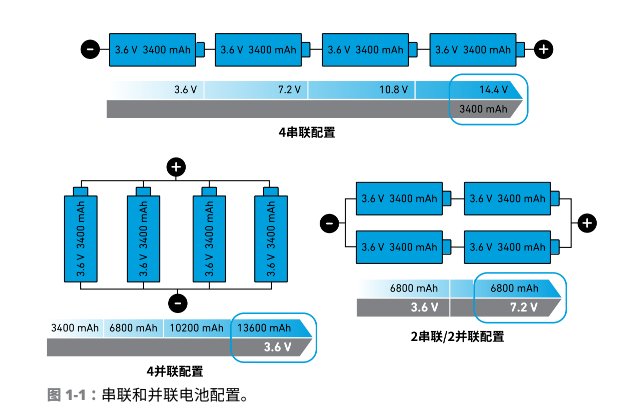
特定设备或电子系统所需的直流电源管理子系统类型取决于该设备或系统的电源。可能的电源包括交流电、电池、直流电和超低功耗直流电(能量采集)。绝大多数电池供电的电子设备使用锂离子 (Li-ion) 或锂聚合物 (LiPo) 电池。电池组可能包含多个串联或并联的电池单元。图 1-1 展示了一些示例。
以下是每种连接配置的电压和电流性能:
-
串联电池它可以提高电池组的电压,并增加整个电池组的容量。
-
电池并联它不能提高电池组的电压,但可以提高整个电池组的电流控制能力和电流容量。
-
串联和并联电池它可以同时提高电压和电流控制能力以及电流容量。
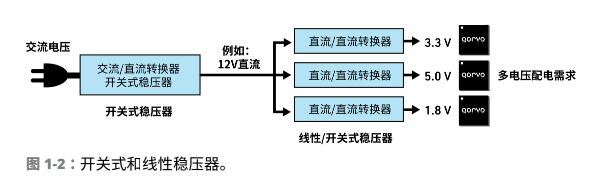
In some battery-powered applications, system components may not be able to use battery power directly. These components may require a lower or higher voltage to operate properly. During the charging and discharging process, the voltage of the battery will also change. A DC-DC converter can be used to monitor this unregulated battery input voltage and keep it stable. These converters are often called voltage regulators because they can increase, decrease, or regulate the voltage as needed (shown in Figure 1-2) and then provide the adjusted voltage to the system subcomponents.
DC-DC regulators are available in isolated and non-isolated versions, depending on whether the input ground is connected to the output ground:
-
隔离式转换器用于隔离输入和输出电压,通常使用变压器或电容式功率传输。
-
Non-isolated converter输入地和输出地之间有一条直流通路,输入地和输出地共用一个接地连接。
DC-DC电压调节器分类
直流稳压器根据其电压转换方式可分为两大类:线性稳压器和开关稳压器。这两种基本类型的稳压器广泛应用于相机、手机、可穿戴设备和计算机等电子设备中。设计工程师会根据输入电压、输出电压和所需的电流负载,为系统设计选择合适的直流稳压器。
线性稳压器
线性稳压器转换输入电压(V)。IN) converts to different output voltages (VOUT使用线性元件(即电阻元件)来调节输出电压 VOUT线性稳压器的一般特性:
-
耗散电能。
-
For use with low current and low power rails.
-
效率不高。
-
适用于低噪声电源。
-
The low ripple and low noise characteristics make it suitable for sensitive analog integrated circuits such as sensors, phase-locked loops, etc.
对于线性稳压器而言,一种重要的类型是低压差(LDO)线性稳压器。IN和V.OUT当差异很小时,LDO可以持续输出稳定的电压。OUT。
开关稳压器
开关稳压器通过开关元件转换电压。INto a different VOUT并使用外部电感器和电容器来稳定输出电压 VOUT开关稳压器通常比线性稳压器效率更高,并且支持更高的输出电流。但是,即使经过滤波,输出稳压后仍然存在纹波或开关噪声。
According to the relationship between input and output voltage, switching regulators are classified as follows:
-
降压开关稳压器:VOUT 低于 VIN
-
升压开关稳压器:VOUT 上方 VIN
-
Buck-Boost Switching Regulator: VOUT 变量,可以低于、高于或等于 V。IN
以上是设计工程师常用的四种电压调节器拓扑结构:低压差线性稳压器 (LDO) 和三种开关稳压器(降压、升压、升降压)。以下章节将详细介绍这四种电压调节器。
LDO voltage regulator
低压差线性稳压器(LDO)是一种直流线性稳压器,用于在电源电压和输出电压非常接近时调节输出电压。对于LDO而言,压差应尽可能小,以最大限度地降低功耗并提高系统效率(如图1-3所示)。
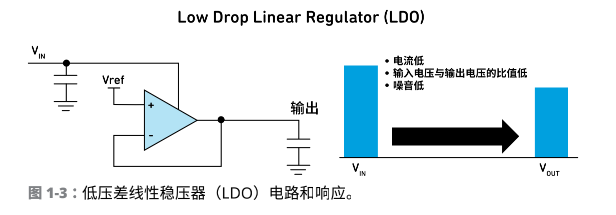
低压差线性稳压器 (LDO) 通常比开关稳压器具有更高的电源抑制比 (PSRR),这意味着 LDO 可以产生低噪声输出电压。LDO 通常不会产生纹波,因此非常适用于降低输入电源噪声或纹波。LDO 的低待机电流消耗使其成为便携式和无线应用的理想选择。
降压转换器
开始 降压means "to lower" or "to weaken". The buck converter is a reduced switching regulator that efficiently outputs less than VIN 的VOUT降压电路包含一个电感器、一个开关场效应晶体管 (FET) 或二极管、一个电容器以及一个带有开关控制电路的误差放大器(如图 1-4 所示)。降压转换器通过改变金属氧化物半导体场效应晶体管 (MOSFET) 的导通时间来为传感器供电。降压转换器具有高效率,因为 MOSFET 要么完全导通,要么完全关断。与线性稳压器不同,降压转换器在导通和关断(阻抗)状态之间不工作。
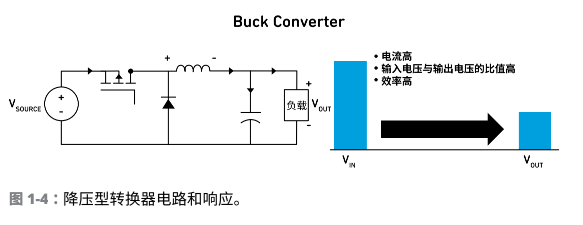
The buck converter generates switching waveforms in pulse width modulation (PWM) mode or pulse frequency modulation (PFM) mode, which are then filtered using external inductor and capacitor filter components to produce a smooth output voltage V出去。这种电压转换方法非常高效,可以延长电池寿命,降低系统发热量,并减小产品尺寸。
Buck converters are used in many applications that draw power from USB and other computer peripherals. It is also used in smartphones, tablets, mobile devices, and many other electronic devices.
升压转换器
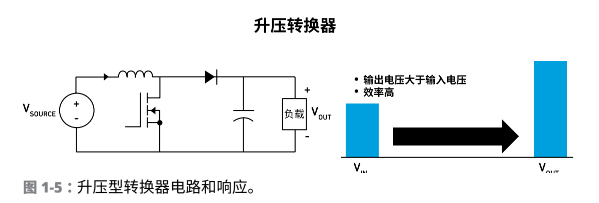
提高 这里指的是“增强型”。升压转换器将电压变为V。IN上升,产生VOUT例如,当您想要将 3.3 伏直流输入电压转换为 5.0 伏输出电压时。OUT这时,升压转换器就派上用场了。这种升压操作在许多锂离子或锂聚合物电池应用中都很常见。
升压电路包含与降压电路相同的元件(电感器、开关场效应晶体管[FET]或二极管、电容器、带开关控制电路的误差放大器),但连接方式不同。升压电路的工作原理也是通过控制MOSFET的导通时间来向电感器供电。(如图1-5所示)。
升降压转换器
升降压转换器是一种开关模式转换器,它将降压和升压功能集成在一个稳压器中。它可以处理很宽范围的输入和输出电压。控制电路调节 MOSFET 的开关时间,降低或升高输入电压,并根据需要生成 V<sub>in</sub>。OUT(As shown in Figure 1-6).
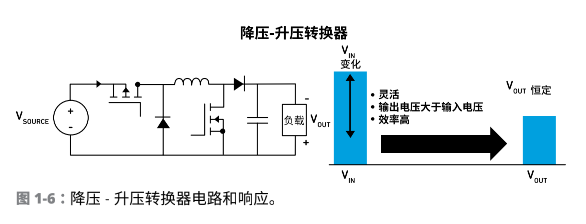
除了图 1-6 所示的标准升降压型转换器之外,还有其他类型的升降压转换器,例如 Sepic、Cuk 和 Zeta 型。这些转换器可以调节电压 VOUT使其低于、高于或等于 VIN。
电源管理集成电路简介
PMIC is an integrated circuit used for voltage conversion, voltage stabilization, and battery management. They can handle power system sequencing, power a variety of loads, and provide protection against overvoltage, undervoltage, overcurrent, thermal faults, and more.
A single PMIC can manage multiple external power supplies, mapping different system requirements to the appropriate regulator output voltage. They can also be used on a variety of processors, system controllers, and end applications by simply changing the relevant register settings or firmware without redesigning a new integrated circuit (IC).
The PMIC market is growing rapidly because of several current trends. One trend is consumers' pursuit of wireless mobility, which has brought about a large demand for small, battery-operated devices, which in turn requires more highly integrated power management solutions, as shown in Figure 1-7. This figure shows how Qorvo's PMIC solution significantly reduces component count and overall solution size.
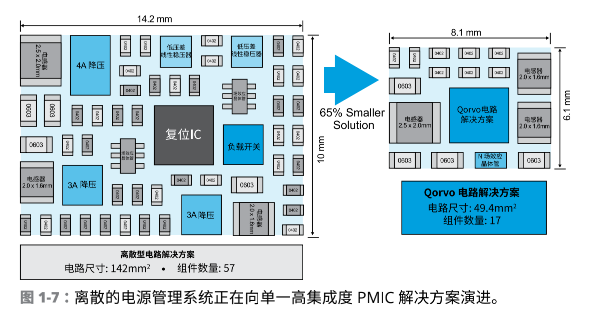
At the same time, consumers and manufacturers are increasingly demanding products that are energy-saving, environmentally friendly, and reduce carbon emissions. The global "green" trend has increased the demand for electronic products equipped with efficient power management, making power management a very important and popular feature.
一体化PMIC
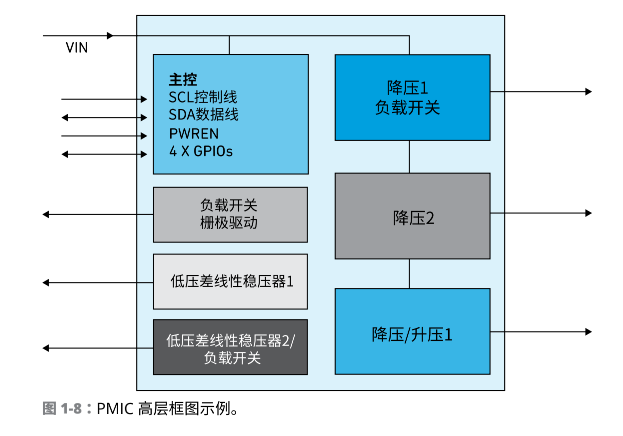
An important reason why today's PMICs are widely used is that they can satisfy many or even all voltage regulation functions in an application (as shown in Figure 1-8). These versatile PMICs can be customized through firmware for many different applications, eliminating the high cost of hardware circuit changes. These features allow them to switch smoothly between applications, thereby shortening time to market.
免责声明:本文转载自“新存社”,该社支持知识产权保护。转载请注明原出处及作者。如有侵权,请联系我们删除。
公司电话号码:+86-0755-83044319
传真:+86-0755-83975897
电子邮件:1615456225@qq.com
QQ:3518641314 李经理
QQ:332496225 邱经理
地址:深圳市龙华新区民治大道1079号展涛科技大厦C座809室
相关推荐
云帆瑞达李刚专访:毫米波雷达产品的精准性与人文关怀
2026-07-22
273
明年见!| Slkor 出席 2026 年中国电子音乐节精彩回顾
2026-07-14
330
射频激情,匠人之路:三十余载的坚定奉献——金海姆首席工程师秦宏祥先生访谈录
2026-06-26
617
数万家企业选择中国品牌——金海姆和斯尔科在全球畅销!
2026-06-24
563
两连冠之后,我们仍在进步——Slkor专访孙高飞
2026-06-11
564





 粤公网安备44030002007346号