
























सेवा हॉटलाइन
समाचार

समाचार
क्या घरेलू एमसीयू को वास्तव में प्रतिस्थापित किया जा सकता है?
2022-03-16
1037
MCU, जिसे माइक्रोकंट्रोलर या माइक्रोकंट्रोल यूनिट भी कहा जाता है। व्यावहारिक दृष्टि से, MCU एक ऐसा उत्पाद है जो CPU की आवृत्ति और विशिष्टताओं को कम करते हुए मेमोरी, USB, PLC, DMA और अन्य इंटरफेस को एक ही चिप में एकीकृत करता है।
बिट्स की संख्या के आधार पर, MCU को 4-बिट, 8-बिट, 16-बिट, 32-बिट और 64-बिट में विभाजित किया जा सकता है। इसके मुख्य अनुप्रयोग क्षेत्र निम्नलिखित हैं:
मानचित्रकला | Yifei.com (नीचे भी यही जानकारी है)
(Platform compression and other issues, to view clearer pictures, send the message "local MCU" to obtain)
बायडू एनसाइक्लोपीडिया पर मौजूद कुछ एप्लिकेशन परिचय अपेक्षाकृत पुराने हैं। निर्माता की प्रचार जानकारी के आधार पर, 64-बिट एमसीयू का उपयोग उच्च-रिज़ॉल्यूशन मानव-मशीन इंटरफेस, एम्बेडेड विज़न, एम्बेडेड आर्टिफिशियल इंटेलिजेंस और रीयल-टाइम कंट्रोल जैसे क्षेत्रों में किया जाएगा।
Due to product updates and demand changes, 4-bit MCUs have gradually withdrawn from the stage of history. Although some manufacturers still use them with the belief that "cheapness is the biggest advantage", they already account for a small proportion. Since 16-bit MCUs live in the gap between 8-bit and 32-bit, their living space is getting smaller and smaller.
पिछले सप्ताह प्रकाशित एमसीयू की कीमतों में वृद्धि से संबंधित लेख के बाद (MCU shortage seems to be unsolvable, 40 local manufacturers are already in place)
इसके बाद, मुझे कुछ टिप्पणियाँ मिलीं, और जब हम घरेलू एमसीयू के प्रतिस्थापन के बारे में बात करते हैं, तो हम वास्तव में स्थायी 8-बिट, लोकप्रिय 32-बिट और भविष्य के सितारे 64-बिट के बारे में बात कर रहे होते हैं।
They are both 32-bit, what’s the difference?
Source | Network
व्यापक बाजार विश्लेषण संस्थानों के आंकड़ों के अनुसार, 2010 से 32-बिट एमसीयू का बाजार हिस्सा पहले स्थान पर पहुंचने लगा है, और 2015 में यह 4 + 8 + 16 बिट्स के संयुक्त बाजार हिस्से के बराबर पहुंच गया। प्रदर्शन में सुधार और बिजली की खपत में कमी के साथ, 32-बिट एमसीयू बाजार की अग्रणी स्थिति और भी स्पष्ट हो गई है, और यह घरेलू एमसीयू निर्माताओं के लिए भी एक महत्वपूर्ण क्षेत्र बन गया है।
हाल के वर्षों में, घरेलू एमसीयू ने महत्वपूर्ण प्रगति की है, और यहां तक कि ऑटोमोटिव प्री-इंस्टॉलेशन बाजार में 32-बिट उत्पाद भी लॉन्च किए गए हैं, जिनमें उच्च सीमाएं, लंबे चक्र और मजबूत सुरक्षा विशेषताएं हैं।
At the end of 2018, Jiefa Technology launched AC781X, which is the first domestically independently developed automotive-grade 32-bit MCU chip to achieve mass production. In the first half of 2020, Jiefa Technology once again launched the AC7801X series of automotive-grade MCUs, with more subdivided functions, and optimized product functions and cost control. At present, Jiefa Technology's automotive-grade MCU chips have been incorporated into their supply chain systems by many automotive electronic parts manufacturers.
Also making breakthroughs in automotive-grade MCUs is Xinwang Micro. On November 26, 2020, Xinwang's micro-car grade 32-bit MCU KF32A15X won the "5th Lingxuan Award Forward-looking Integrated Circuit Excellence Award". The jury was composed of 22 purchasing leaders from mainstream Chinese automobile companies, including Mercedes-Benz, BMW, Audi, Volkswagen, General Motors, Toyota, Honda, Nissan, FAW, SAIC, Changan, Geely, Great Wall, and Chery. At present, the KF32A15X series MCU has been initially introduced to domestic automobile manufacturers.
So, is there a significant gap between the domestic automotive-grade MCUs that have just started and those from international manufacturers? Let’s look at the pictures and talk:

यह देखा जा सकता है कि घरेलू निर्माता Arm Cortex-M0+ का उपयोग करने में काफी कुशल हैं, और मुख्य आवृत्ति और फ्लैश कॉन्फ़िगरेशन पर्याप्त हैं। Xinwang Micro का स्व-विकसित KF32 कोर भी अच्छा प्रदर्शन करता है और इसमें प्रचुर मात्रा में IO और परिधीय इंटरफ़ेस संसाधन उपलब्ध हैं। तो इस मामले में कमी कहाँ है? NXP की आधिकारिक वेबसाइट के अनुसार, सबसे बड़ी कमी उत्पाद की दीर्घकालिक स्थिरता और विश्वसनीयता पर भरोसे की है। NXP का कहना है कि इसकी दीर्घकालिक आपूर्ति कम से कम 15 वर्षों तक चलेगी। अधिकांश घरेलू MCU निर्माताओं को 15 वर्ष भी नहीं हुए हैं। Xinwang Micro की स्थापना 2012 में हुई थी, और Jiefa Technology की स्थापना 2013 में हुई थी।
At the same time, we have actually noticed that domestic manufacturers are indeed still in their infancy in terms of automotive-grade MCUs. The use of Arm Cortex?-M4 cores is still in the research and development stage, and there is no product supply available from the official websites of each company.
वर्तमान अंतरराष्ट्रीय परिदृश्य में, ऑटोमोटिव ग्रेड एमसीयू एक कठिन समस्या है जिसे हमें हल करना होगा। बेशक, इसमें अच्छे अवसर भी मौजूद हैं। सांख्यिकी एजेंसियों के आंकड़ों के अनुसार, 2019 में वैश्विक एमसीयू डाउनस्ट्रीम अनुप्रयोगों (बिक्री के आधार पर) में ऑटोमोटिव इलेक्ट्रॉनिक्स का हिस्सा 33% था। कारों में लगे सभी सेमीकंडक्टर उपकरणों में से लगभग 30% एमसीयू होते हैं। औसतन, प्रत्येक वाहन में 70 से अधिक एमसीयू चिप्स का उपयोग किया जाता है। भविष्य में, बुद्धिमत्ता और नेटवर्किंग के उन्नयन के साथ, यह संख्या और भी अधिक होगी। आज, घरेलू ऑटोमोबाइल में धीरे-धीरे सुधार हो रहा है, ऐसे में घरेलू एमसीयू निर्माताओं के पास इस गति का लाभ उठाने और आगे बढ़ने का सुनहरा अवसर है।
According to the purpose of MCU, it can generally be divided into commercial grade, industrial grade, automotive grade and military grade. In addition to playing an important role in the automotive field, 32-bit MCUs are also indispensable in the other three fields. According to data from IC Insights, global MCU product shipments reached 36.065 billion units in 2020, and the unit price of MCUs also increased from US$0.72 in 2015 to US$0.78 in 2020. Among them, the automation control required by Industry 4.0 has played a big driving role. Industrial control/medical accounted for 25% of the MCU market in 2019 based on sales statistics.
We also select several domestic MCUs and products from international manufacturers for comparison. This time, let’s take a look at the company’s own introduction:
GigaDevice Innovations 32-bit general-purpose MCU based on Arm? Cortex?-M4 core
Xinwang Micro Industrial Grade Universal KungFu Core 32-bit MCU
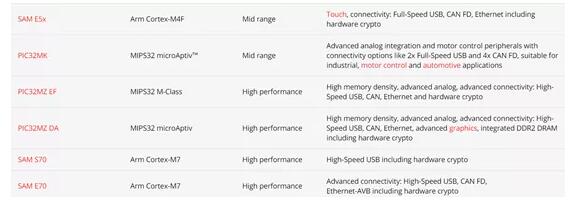
Smart micro part is a 32-bit general-purpose MCU based on Arm? Cortex?-M3 core
Microchip Universal 32-bit MCU
Partial product introductions have already explained the problem. Domestic MCU manufacturers are still followers. There are already rich product choices for the use of cores from Arm Cortex The coverage of Arm Cortex-M23 or Arm Cortex-M33 is only seen in the news of GigaDevice and Nuvoton Technology.
Let’s take a comprehensive look at the comparison of several MCUs based on Arm? Cortex?-M3 core:
NXP की आधिकारिक वेबसाइट पर, LPC1812JBD144 को Arm® Cortex®-M3 कोर पर आधारित सबसे उच्च-प्रदर्शन वाले MCU में से एक बताया गया है। इससे पता चलता है कि घरेलू MCU की उच्चतम आवृत्ति में कुछ अंतर होने के बावजूद, लिंगडोंग माइक्रो के उत्पाद इसके बेहद करीब हैं।
आज, इंटरनेट ऑफ थिंग्स के तीव्र विकास के साथ, विद्युत खपत और चिप का आकार भी एमसीयू के चयन के लिए महत्वपूर्ण मानदंड बन गए हैं, जो प्रक्रिया से निकटता से संबंधित हैं। आइए सबसे पहले विद्युत खपत की बात करते हैं। विभिन्न अनुप्रयोगों के लिए, एमसीयू की कार्य परिस्थितियाँ बहुत भिन्न होती हैं। वर्तमान खपत, स्थिति प्रतिधारण, वेक-अप समय और वेक-अप स्रोत, ये सभी कारक विद्युत खपत को प्रभावित करते हैं। परिधीय उपकरणों की उपलब्धता भी विद्युत खपत को प्रभावित करती है। इसलिए, इस संबंध में, लोगों की राय अलग-अलग हो सकती है। लेकिन एक बात तो स्पष्ट है कि अंतर है। एसटी द्वारा प्रदान किए गए अल्ट्रा-लो-पावर एमसीयू उत्पाद समूह में, कई कोर का उपयोग किया जाता है। आर्म कॉर्टेक्स-एम0, आर्म कॉर्टेक्स-एम0+, आर्म कॉर्टेक्स-एम3, आर्म कॉर्टेक्स-एम0 और आर्म कॉर्टेक्स-एम0+, यह निस्संदेह एक अंतर है।
Let’s look at the chip size. This is actually related to the start of domestic MCUs. We will find that the chip size is very close to the products of international manufacturers. Of course, this is a development strategy.
चलिए आर्म कॉर्टेक्स-एम4 कोर पर आधारित कुछ और उदाहरणों पर नज़र डालते हैं:
केवल मुख्य आवृत्ति के संदर्भ में ही, हुआडा सेमीकंडक्टर के उत्पादों ने वास्तव में घरेलू एमसीयू के साथ प्रतिस्पर्धा की है।
गैर-ऑटोमोटिव क्षेत्रों में, कंप्यूटर क्षेत्र का विपणन राजस्व में 23% (2019) और उपभोक्ता इलेक्ट्रॉनिक्स क्षेत्र का 11% (2019) हिस्सा था, जो वास्तव में औद्योगिक नियंत्रण/चिकित्सा क्षेत्र के समान है। सामान्य प्रयोजन वाले एमसीयू के क्षेत्र में, कुछ घरेलू एमसीयू हमेशा मौजूद रहेंगे जो आर्म कॉर्टेक्स-एम0/एम0/एम3/एम4/एम23/एम33 जैसे कोर पर अंतरराष्ट्रीय निर्माताओं के एमसीयू के साथ प्रतिस्पर्धा कर सकते हैं और कुछ क्षेत्रों में निश्चित परिणाम प्राप्त कर चुके हैं।
लक्ष्य।
Currently, there are dozens of MCU manufacturers in China, and their products are highly homogeneous at the core. Although each company focuses on different technology development directions, subtle differences are easily overlooked when purchasing and selecting material numbers. On the other hand, when looking at the products of international manufacturers, comprehensiveness is essential, including core, products and fields. For example, they are all products based on the Arm® Cortex®-M4 core, but the NXP LPC54000 series comes with an optional Cortex®-M0+ coprocessor, which undoubtedly enriches the product's application scenarios.
जैसा कि ऊपर बार-बार उल्लेख किया गया है, उच्च-प्रदर्शन वाले एमसीयू के लेआउट के संदर्भ में, घरेलू एमसीयू का उत्पादन अभी तक शुरू नहीं हुआ है, और बाजार पूरी तरह से अंतरराष्ट्रीय निर्माताओं के हाथों में है।
After looking at the product, the next step is software and ecology.
सॉफ्टवेयर के स्तर पर, Huada Semiconductor और NXP की वेबसाइटों को सरसरी तौर पर देखने पर आपको पता चलेगा कि विकास उपकरणों के मामले में, NXP द्वारा उल्लिखित संबंधित उपकरण Huada Semiconductor की वेबसाइट पर भी उपलब्ध हैं। अगर वास्तव में कमी की बात करें, तो शायद यही है कि Huada Semiconductor अपनी वेबसाइट पर विकास बोर्ड का सीधा परिचय नहीं देता है और उसका विकास बोर्ड NXP जितना समृद्ध नहीं है।
पारिस्थितिकी को दो स्तरों में विभाजित किया गया है। पहला स्तर यह है कि डिज़ाइन से लेकर उत्पादन परीक्षण तक की कड़ी पूर्ण है या नहीं। यद्यपि विनिर्माण प्रक्रिया में कुछ कमियाँ हो सकती हैं, फिर भी घरेलू एमसीयू इस कड़ी से जुड़े होते हैं। दूसरा स्तर बाह्य पारिस्थितिकी है। साझेदारों की संख्या, नेटवर्क संसाधनों की प्रचुरता, उद्योग में प्रतिष्ठा और ट्रैफ़िक समर्थन घरेलू एमसीयू की स्पष्ट कमियाँ हैं।
Therefore, in summary, the points that domestic MCUs currently need to accumulate and improve mainly include the following aspects. The first is the long-term reputation accumulation of product stability; the second is continued research on high-performance products; the third is the continuous improvement of ecological construction. Considering the law of semiconductor development, there is a fourth point of optimization for domestic MCUs, which is integration, pooling resources, complementing shortcomings, and using limited resources where they are needed more.
8-bit is a good business opportunity, RISC-V is a breakthrough point
The continued development of the Internet of Things has enriched the application scenarios of MCUs, not only for the current mainstream 32-bit MCUs, but also for 8-bit MCUs. Especially in the field of consumer electronics, 8-bit MCUs still control their own territory.
According to information released by CISA, 8-bit MCU and 32-bit MCU chips accounted for 40% and 45% of the Chinese market respectively in 2019. Maybe Microchip’s idea can bring everyone the direction of 8-bit MCU innovation. It believes that the innovation space of 8-bit MCU is very huge. The new generation of 8-bit MCU is developing more in the direction of intelligent simulation and innovative peripherals. Another market worthy of attention is lighting.
विज्ञान और प्रौद्योगिकी के विकास और उत्पादन प्रौद्योगिकी की प्रगति के साथ, यह अनुमान लगाया जा सकता है कि 32-बिट एमसीयू का बाजार हिस्सा बढ़ेगा और अन्य एमसीयू उत्पादों के बाजार हिस्से को कम करेगा। हालांकि, कम लागत और कम बिजली खपत के फायदों के कारण, 8-बिट एमसीयू लंबे समय तक एक स्थिर लाभप्रद बाजार बना रहेगा।
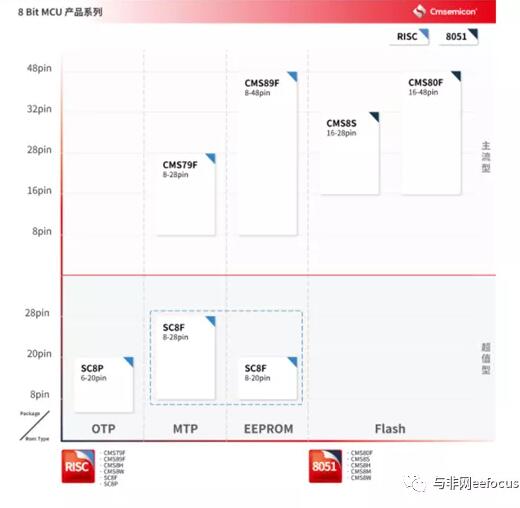
घरेलू 8-बिट एमसीयू के मामले में, चाइना माइक्रो सेमीकंडक्टर 10 वर्षों से अधिक समय से लगातार अग्रणी भूमिका निभा रहा है। नीचे दिए गए चित्र से स्पष्ट है कि चाइना माइक्रो सेमीकंडक्टर के पास वर्तमान में 8-बिट एमसीयू उत्पादों का एक विशाल भंडार है।
नुवोटन टेक्नोलॉजी कई वर्षों से 8051 माइक्रोकंट्रोलर के क्षेत्र में गहराई से जुड़ी हुई है, और इसके उत्पादों का उपयोग विभिन्न औद्योगिक या उपभोक्ता उत्पाद अनुप्रयोगों में किया जा सकता है। इसके अलावा, चिपसी टेक्नोलॉजी, शेंगसी माइक्रोइलेक्ट्रॉनिक्स, शिनवांग माइक्रोइलेक्ट्रॉनिक्स और न्यूसॉफ्ट कैरियर माइक्रोइलेक्ट्रॉनिक्स जैसे कई निर्माता भी 8-बिट एमसीयू उत्पाद उपलब्ध कराते हैं, जिससे घरेलू स्तर पर विकल्पों की भरमार हो जाती है।
लक्ष्य।
Domestic 8-bit MCUs and 32-bit MCUs have been criticized for serious homogeneity. In today's increasingly rich terminal market, differentiated competition or five-finger success is more beneficial to the development of the entire industry and can better leverage the value of this stable market.
संक्षेप में, पारंपरिक एमसीयू क्षेत्र में, घरेलू एमसीयू ने कुछ हद तक सफलता हासिल की है और कुछ क्षेत्रों में उत्पाद प्रतिस्थापन करने में सक्षम हैं, लेकिन अभी भी अंतर बना हुआ है, और वे इस पहलू में लंबे समय तक अनुगामी भूमिका निभाते रहेंगे। लेकिन जब RISC-V कोर पर आधारित एमसीयू बनाने की बात आती है, तो घरेलू निर्माताओं की भूमिका कहीं अधिक महत्वपूर्ण हो जाती है।
हालांकि RISC-V इंस्ट्रक्शन सेट पहला ओपन सोर्स इंस्ट्रक्शन सेट नहीं है, फिर भी यह समकालीन कंप्यूटिंग उपकरणों के लिए उपयुक्त है, इसलिए इसका महत्व है। चीनी इंजीनियरिंग अकादमी के शिक्षाविद नी गुआंगनान ने एक बार RISC-V पर टिप्पणी करते हुए कहा था, "RISC-V ढीले मानक BSD लाइसेंस पर आधारित है। इसका उपयोग CPU डिज़ाइन करने, अपने स्वयं के विस्तारित इंस्ट्रक्शन सेट विकसित करने और जोड़ने के लिए स्वतंत्र रूप से किया जा सकता है, और इसे सार्वजनिक रूप से जारी करने, व्यावसायिक रूप से बेचने या अन्य लाइसेंस समझौतों को बदलने या पूरी तरह से बंद स्रोत के रूप में उपयोग करने का विकल्प चुना जा सकता है।"
वर्तमान में, घरेलू निर्माता RISC-V कोर पर आधारित MCU बनाने में अग्रणी भूमिका निभा रहे हैं। 22 अगस्त, 2019 को, GigaDevice ने आधिकारिक तौर पर RISC-V कोर पर आधारित दुनिया के पहले GD32V श्रृंखला के 32-बिट सामान्य-उद्देश्यीय MCU उत्पादों को लॉन्च किया, और चिप्स से लेकर प्रोग्राम कोड लाइब्रेरी, डेवलपमेंट किट और डिज़ाइन समाधानों तक संपूर्ण टूल चेन सपोर्ट प्रदान किया, और RISC-V विकास इकोसिस्टम का निर्माण जारी रखा।
हाल ही में, हैंगशुन ने घोषणा की कि वह जल्द ही चीन के पहले ARM+RISC-V मल्टी-कोर हेटरोजेनियस AIoT MCU का बड़े पैमाने पर उत्पादन शुरू करेगी, जिसमें ARM Cortex-M3 बड़ा कोर मुख्य कंप्यूटिंग के लिए जिम्मेदार है; Xinlai N203 RISC-V छोटा कोर सरल संचार और नियंत्रण के लिए जिम्मेदार है। यह उत्पाद के स्वरूप में भी एक नवाचार है।
China has a more active and extensive RISC-V developer ecosystem, which can help solve the weaknesses of domestic MCUs and other domestic chips in core IP and instruction set architecture, in order to outpace China's speed on this new track.
अंत में लिखें
एक अच्छा मंच तैयार करें और एक शानदार प्रस्तुति दें।
According to IHS statistics, the average annual compound growth rate (CAGR) of China's MCU market in the past five years has been 7.2%, which is four times the growth rate of the global MCU market during the same period. In the context of the epidemic and the Sino-US trade dispute, domestic substitution is no longer a slogan, it is a fact that happens all the time. For users, MCUs can be selected on demand, and there are opportunities if the performance is suitable.
Undoubtedly, domestic MCU has a good growth soil, but in this window period, the development of domestic MCU needs to think clearly and think long-term. In special times, everyone can make quick money, but when such an excellent window period has passed, it is impossible for domestic MCUs to be scattered all over the world. Internal friction and involution are not a good industry form.
एक अच्छे नाटक के लिए एक अच्छा मंच चाहिए, और उससे भी ज्यादा, ऐसे लोग जो नाटक को अच्छी तरह से गा सकें।
- अंत -
अस्वीकरण: यह लेख "eefocus" से लिया गया है। यह लेख केवल लेखक के निजी विचारों को दर्शाता है और Sacco Micro या उद्योग जगत के विचारों का प्रतिनिधित्व नहीं करता है। यह केवल पुनर्मुद्रण और साझाकरण के लिए है और बौद्धिक संपदा अधिकारों के संरक्षण का समर्थन करता है। पुनर्मुद्रण के लिए कृपया मूल स्रोत और लेखक का उल्लेख करें। यदि कोई उल्लंघन होता है, तो कृपया इसे हटाने के लिए हमसे संपर्क करें।
संबंधित अनुशंसाएँ
युनफान रुइडा के ली गैंग के साथ विशेष साक्षात्कार: मिलीमीटर-वेव रडार उत्पादों की सटीकता और मानवता की गर्मजोशी
2026-07-22
2521
आरएफ के प्रति जुनून, एक कुशल कारीगर का सफर: 30 वर्षों से अधिक का अटूट समर्पण — किंगहेल्म के मुख्य अभियंता श्री किन होंगशियांग के साथ साक्षात्कार
2026-06-26
2689





 粤公网安备44030002007346号