
























Service Hotline
News

News
Can domestic MCUs really be substituted?
2022-03-16
1036
MCU, microcontroller, also known as microcontrol unit or microcontroller. In terms of implementation, MCU is a product that appropriately reduces the frequency and specifications of the CPU and integrates memory, USB, PLC, DMA and other interfaces into a single chip.
According to the number of bits, MCU can be divided into 4-bit, 8-bit, 16-bit, 32-bit and 64-bit. The main application directions are:
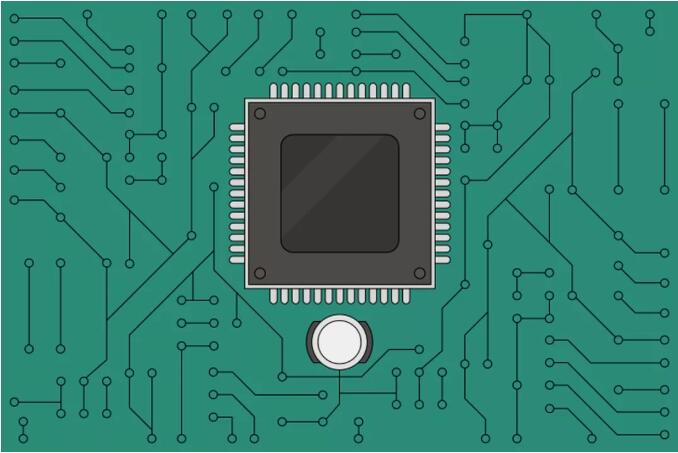
Cartography | Yifei.com (the same below)
(Platform compression and other issues, to view clearer pictures, send the message "local MCU" to obtain)
Some of the application introductions on Baidu Encyclopedia are relatively old. Judging from the manufacturer's promotion information, 64-bit MCUs will be used in fields such as high-resolution human-machine interfaces, embedded vision, embedded artificial intelligence, and real-time control.
Due to product updates and demand changes, 4-bit MCUs have gradually withdrawn from the stage of history. Although some manufacturers still use them with the belief that "cheapness is the biggest advantage", they already account for a small proportion. Since 16-bit MCUs live in the gap between 8-bit and 32-bit, their living space is getting smaller and smaller.
Following last week’s MCU price increase themed article (MCU shortage seems to be unsolvable, 40 local manufacturers are already in place)
Afterwards, I received some comments, and when we talk about the replacement of domestic MCUs, we are actually talking more about the enduring 8-bit, the popular 32-bit, and the future star 64-bit.
They are both 32-bit, what’s the difference?
Source | Network
According to the data of comprehensive market analysis institutions, since 2010, the market share of 32-bit MCUs has begun to occupy the first place, and in 2015 it reached the combined market share of 4 + 8 + 16 bits. With the improvement of performance and reduction of power consumption, the leading position of 32-bit MCU market has become increasingly obvious, and it is also an area of focus for domestic MCU manufacturers.
In recent years, domestic MCUs have made significant progress, and even 32-bit products have been launched in the automotive pre-installation market, which has high thresholds, long cycles, and strong safety.
At the end of 2018, Jiefa Technology launched AC781X, which is the first domestically independently developed automotive-grade 32-bit MCU chip to achieve mass production. In the first half of 2020, Jiefa Technology once again launched the AC7801X series of automotive-grade MCUs, with more subdivided functions, and optimized product functions and cost control. At present, Jiefa Technology's automotive-grade MCU chips have been incorporated into their supply chain systems by many automotive electronic parts manufacturers.
Also making breakthroughs in automotive-grade MCUs is Xinwang Micro. On November 26, 2020, Xinwang's micro-car grade 32-bit MCU KF32A15X won the "5th Lingxuan Award Forward-looking Integrated Circuit Excellence Award". The jury was composed of 22 purchasing leaders from mainstream Chinese automobile companies, including Mercedes-Benz, BMW, Audi, Volkswagen, General Motors, Toyota, Honda, Nissan, FAW, SAIC, Changan, Geely, Great Wall, and Chery. At present, the KF32A15X series MCU has been initially introduced to domestic automobile manufacturers.
So, is there a significant gap between the domestic automotive-grade MCUs that have just started and those from international manufacturers? Let’s look at the pictures and talk:
It can be seen that domestic manufacturers are not bad at using Arm Cortex?-M0+, and the main frequency and Flash configuration are adequate. For Xinwang Micro, its self-developed KF32 core also performs well and has rich IO and peripheral interface resources. So where is the gap in this regard? Judging from NXP's official website, the biggest gap is trust, trust in the long-term stability and reliability of the product. NXP says long-term supply is at least 15 years. Most domestic MCU manufacturers have not reached 15 years old. Xinwang Micro was established in 2012, and Jiefa Technology was established in 2013.
At the same time, we have actually noticed that domestic manufacturers are indeed still in their infancy in terms of automotive-grade MCUs. The use of Arm Cortex?-M4 cores is still in the research and development stage, and there is no product supply available from the official websites of each company.
Under the current international situation, automotive grade MCU is a difficult problem that we must overcome. Of course, there are also good opportunities. According to data from statistical agencies, automotive electronics accounted for 33% of global MCU downstream applications (calculated in terms of sales) in 2019. MCUs also account for about 30% of all semiconductor devices equipped in a car. On average, more than 70 MCU chips are used in each vehicle. In the future, with the upgrade of intelligence and networking, this number will be even more. Today, as domestic automobiles are gradually improving, domestic MCU manufacturers have a window period to take advantage of the momentum and take off.
According to the purpose of MCU, it can generally be divided into commercial grade, industrial grade, automotive grade and military grade. In addition to playing an important role in the automotive field, 32-bit MCUs are also indispensable in the other three fields. According to data from IC Insights, global MCU product shipments reached 36.065 billion units in 2020, and the unit price of MCUs also increased from US$0.72 in 2015 to US$0.78 in 2020. Among them, the automation control required by Industry 4.0 has played a big driving role. Industrial control/medical accounted for 25% of the MCU market in 2019 based on sales statistics.
We also select several domestic MCUs and products from international manufacturers for comparison. This time, let’s take a look at the company’s own introduction:
GigaDevice Innovations 32-bit general-purpose MCU based on Arm? Cortex?-M4 core
Xinwang Micro Industrial Grade Universal KungFu Core 32-bit MCU
Smart micro part is a 32-bit general-purpose MCU based on Arm? Cortex?-M3 core
Microchip Universal 32-bit MCU
Partial product introductions have already explained the problem. Domestic MCU manufacturers are still followers. There are already rich product choices for the use of cores from Arm Cortex The coverage of Arm Cortex-M23 or Arm Cortex-M33 is only seen in the news of GigaDevice and Nuvoton Technology.
Let’s take a comprehensive look at the comparison of several MCUs based on Arm? Cortex?-M3 core:
On NXP's official website, LPC1812JBD144 is one of the highest-performance MCUs based on the Arm® Cortex®-M3 core. It can be seen that although there is a gap in the highest frequency of domestic MCUs, Lingdong Micro's products are very close.
Today, with the rapid development of the Internet of Things, power consumption and chip size are also important criteria for selecting MCUs, which are closely related to the process. Let’s talk about power consumption first. For different applications, the working conditions of MCUs vary greatly. Current consumption, state retention, wake-up time and wake-up source are all factors that affect power consumption. The availability of peripheral devices also affects power consumption. Therefore, in this regard, benevolent people have different opinions. But there is one thing we must face the gap. In the ultra-low-power MCU product camp provided by ST, there are many cores used. Arm? Cortex?-M0, Arm? Cortex?-M0+, Arm? Cortex?-M3, Arm? Cortex?-M0 and Arm? Cortex?-M0+, this is undoubtedly a gap.
Let’s look at the chip size. This is actually related to the start of domestic MCUs. We will find that the chip size is very close to the products of international manufacturers. Of course, this is a development strategy.
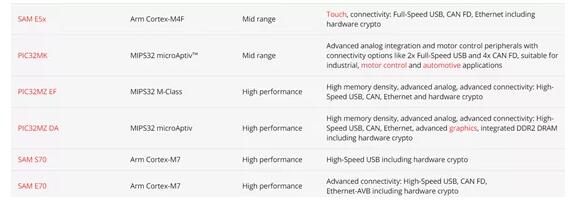
Let’s look at a few more based on Arm? Cortex?-M4 core:
In terms of main frequency alone, Huada Semiconductor's products have indeed competed for domestic MCUs.
In non-automotive-level fields, the computer field accounted for 23% (2019) of marketing revenue, and the consumer electronics field accounted for 11% (2019), which are actually similar to industrial control/medical. In the field of general-purpose MCUs, there will always be a few domestic MCUs that can compete with MCUs from international manufacturers on cores such as Arm? Cortex?-M0/M0/M3/M4/M23/M33, and have achieved certain results in some fields.
but.
Currently, there are dozens of MCU manufacturers in China, and their products are highly homogeneous at the core. Although each company focuses on different technology development directions, subtle differences are easily overlooked when purchasing and selecting material numbers. On the other hand, when looking at the products of international manufacturers, comprehensiveness is essential, including core, products and fields. For example, they are all products based on the Arm® Cortex®-M4 core, but the NXP LPC54000 series comes with an optional Cortex®-M0+ coprocessor, which undoubtedly enriches the product's application scenarios.
As mentioned repeatedly above, in terms of the layout of high-performance MCUs, domestic MCUs have not yet begun, and the market is entirely in the hands of international manufacturers.
After looking at the product, the next step is software and ecology.
At the software level, after briefly browsing the websites of Huada Semiconductor and NXP, you will find that in terms of development tools, the corresponding ones mentioned by NXP can also be found on the Huada Semiconductor website. If you really want to say what is lacking, then it is probably because Huada Semiconductor does not give a straightforward introduction to the development board on the website and the development board is not as rich as NXP.
The ecology is divided into two levels. One is whether the link from design to production testing is complete. Although the manufacturing process may lag behind, domestic MCUs are connected on this link. The other kind of ecology is external. The number of partners, the richness of network resources, industry reputation and traffic support are obviously the shortcomings of domestic MCUs.
Therefore, in summary, the points that domestic MCUs currently need to accumulate and improve mainly include the following aspects. The first is the long-term reputation accumulation of product stability; the second is continued research on high-performance products; the third is the continuous improvement of ecological construction. Considering the law of semiconductor development, there is a fourth point of optimization for domestic MCUs, which is integration, pooling resources, complementing shortcomings, and using limited resources where they are needed more.
8-bit is a good business opportunity, RISC-V is a breakthrough point
The continued development of the Internet of Things has enriched the application scenarios of MCUs, not only for the current mainstream 32-bit MCUs, but also for 8-bit MCUs. Especially in the field of consumer electronics, 8-bit MCUs still control their own territory.
According to information released by CISA, 8-bit MCU and 32-bit MCU chips accounted for 40% and 45% of the Chinese market respectively in 2019. Maybe Microchip’s idea can bring everyone the direction of 8-bit MCU innovation. It believes that the innovation space of 8-bit MCU is very huge. The new generation of 8-bit MCU is developing more in the direction of intelligent simulation and innovative peripherals. Another market worthy of attention is lighting.
With the development of science and technology and the advancement of production technology, it is foreseeable that the market share of 32-bit MCUs will expand and squeeze the market share of other MCU products. However, with the advantages of low cost and low power consumption, 8-bit MCUs will be a stable cash cow for a long time.
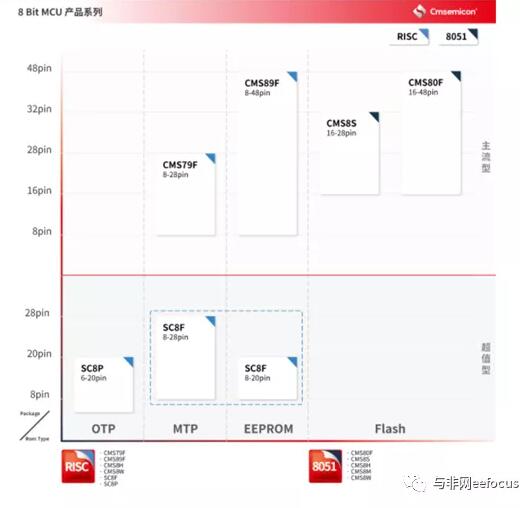
In terms of domestic 8-bit MCUs, China Micro Semiconductor has been persisting for more than 10 years. As can be seen from the figure below, China Micro Semiconductor currently has a wealth of 8-bit MCU products.
Nuvoton Technology has also been deeply involved in the field of 8051 microcontrollers for many years, and its products can be applied to various industrial or consumer product applications. There are also many manufacturers such as Chipsea Technology, Shengsi Microelectronics, Xinwang Microelectronics and Neusoft Carrier Microelectronics, which all supply 8-bit MCU products, providing a wealth of choices for domestic substitution.
but.
Domestic 8-bit MCUs and 32-bit MCUs have been criticized for serious homogeneity. In today's increasingly rich terminal market, differentiated competition or five-finger success is more beneficial to the development of the entire industry and can better leverage the value of this stable market.
In summary, in the traditional MCU field, domestic MCUs have achieved certain results and can achieve product substitution in some fields, but the gap still exists, and they will still play a follower role in this aspect for a long time to come. But when it comes to building MCUs based on RISC-V cores, domestic manufacturers have a greater say.
Although the RISC-V instruction set is not the first open source instruction set, it is suitable for contemporary computing devices, so it is significant. Ni Guangnan, an academician of the Chinese Academy of Engineering, once commented on RISC-V, "RISC-V is based on the loose standard BSD license. It can be freely used to design CPUs, develop and add its own extended instruction sets, and choose whether to publicly release, commercially sell or replace other license agreements, or use it completely closed source."
Currently, domestic manufacturers are leading the way in building MCUs based on RISC-V cores. On August 22, 2019, GigaDevice officially launched the world's first GD32V series 32-bit general-purpose MCU products based on the RISC-V core, and provided complete tool chain support from chips to program code libraries, development kits, and design solutions, and continued to build a RISC-V development ecosystem.
Recently, Hangshun also announced that it will soon mass-produce China's first ARM+RISC-V multi-core heterogeneous AIoT MCU, in which the Arm Cortex-M3 large core is responsible for main computing; the Xinlai N203 RISC-V small core is responsible for simple communication and control. This is also an innovation in product form.
China has a more active and extensive RISC-V developer ecosystem, which can help solve the weaknesses of domestic MCUs and other domestic chips in core IP and instruction set architecture, in order to outpace China's speed on this new track.
write at the end
Set up a good stage and sing a good show
According to IHS statistics, the average annual compound growth rate (CAGR) of China's MCU market in the past five years has been 7.2%, which is four times the growth rate of the global MCU market during the same period. In the context of the epidemic and the Sino-US trade dispute, domestic substitution is no longer a slogan, it is a fact that happens all the time. For users, MCUs can be selected on demand, and there are opportunities if the performance is suitable.
Undoubtedly, domestic MCU has a good growth soil, but in this window period, the development of domestic MCU needs to think clearly and think long-term. In special times, everyone can make quick money, but when such an excellent window period has passed, it is impossible for domestic MCUs to be scattered all over the world. Internal friction and involution are not a good industry form.
A good play requires a good stage, and even more so, people who can sing the play well.
- END -
Disclaimer: This article is reproduced from "eefocus". This article only represents the author's personal views and does not represent the views of Sacco Micro and the industry. It is only for reprinting and sharing and supports the protection of intellectual property rights. Please indicate the original source and author for reprinting. If there is any infringement, please contact us to delete it.

Related Recommendations
Exclusive Interview with Li Gang of Yunfan Ruida: The Precision of Millimeter-Wave Radar Products and the Warmth of Humanity
2026-07-22
2521
RF Passion, Craftsman’s Journey: Over 30 Years of Steadfast Dedication — Interview with Kinghelm Chief Engineer Mr. Qin hongxiang
2026-06-26
2689





 粤公网安备44030002007346号