
























Layanan Hotline
Berita

Berita
Semua orang di Universitas Tsinghua adalah orang terkaya kali ini.
2022-03-16
2269
Artikel ini disalin dari AI Finance and Economics.
In China’s semiconductor field, the 85th grade of the Radio Department of Tsinghua University (later changed to the Department of Electronic Engineering) is a special existence.
Menurut statistik yang belum lengkap, lebih dari sepuluh pendiri atau eksekutif perusahaan semikonduktor yang terdaftar di bursa saham, termasuk Zhao Weiguo, ketua Tsinghua Unigroup, Yu Renrong, pendiri Weill Technology, Shu Qingming, salah satu pendiri GigaDevice, Feng Chenhui, salah satu pendiri Zhuosheng Microelectronics, Zhao Lixin, pendiri Geke Microelectronics, Zhao Lidong, pendiri Suiyuan Technology, serta Ren Zhijun, Gao Feng, Liu Weidong, Lu Huang, Yu Qunhui, dan lain-lain, semuanya berasal dari level ini.
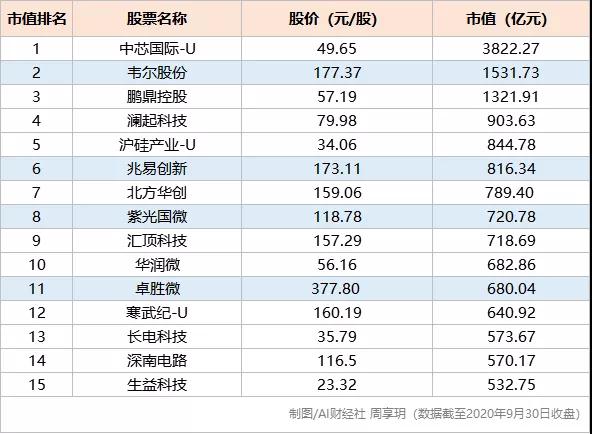
These people call themselves EE85. Among the top 15 listed A-share semiconductor companies in China by total market value, the listed companies they co-founded occupy 4 seats, namely Weill Technology, GigaDevice, Unisoc, and Zhuosheng Micro. Their fields cover chip design, manufacturing, packaging and equipment in the semiconductor industry chain.
As of the close of trading on September 30, the total market value of these four companies reached 374.889 billion yuan, accounting for approximately 13.88% of the total market value of A-share semiconductor listed companies.
01
In 1978, with the reform and opening up, China's semiconductor industry gradually entered a stage of comprehensive recovery. At the end of this year, Tsinghua Radio Department returned to Beijing from Mianyang, Sichuan, thus becoming the mainstay of talent cultivation in China's chip industry.
Pada tahun 1985, sekelompok mahasiswa radio tahun pertama pindah ke Gedung 10 Asrama Mahasiswa Distrik Timur Universitas Tsinghua.
Lu Huang, who was admitted to Tsinghua University from Quanzhou, Fujian, and Liu Weidong from Shanxi became roommates, while Gao Feng, who is from Anhui, his hometown, became a bunk bed with Wang Hongwei from Jiangsu.
Also living in the same building is Zhao Weiguo, who was admitted from Shawan County, Tacheng Prefecture, Xinjiang.
This young man, who has lived with his parents in Xinjiang since childhood and basically spent his childhood feeding pigs and herding sheep, has always had a reluctance to admit defeat. His father once planned a "relatively stable" life route for him - learning a craft to make food. But the strong-minded Zhao Weiguo ignored his father's advice and resolutely chose the college entrance examination.
Faktanya, sebagai orang pertama di kabupatennya yang diterima di Universitas Tsinghua, Zhao Weiguo memang patut berbangga. Namun di Universitas Tsinghua, yang penuh dengan talenta, "modal" ini mungkin akan "berkurang secara signifikan."
"Before going to college, I thought I was a genius, but after entering Tsinghua University, I found that the genius was someone else." After entering college, Zhao Weiguo's academic performance has been "stable". He was ranked 17th in the class when he entered school, and he was still 17th when he graduated.
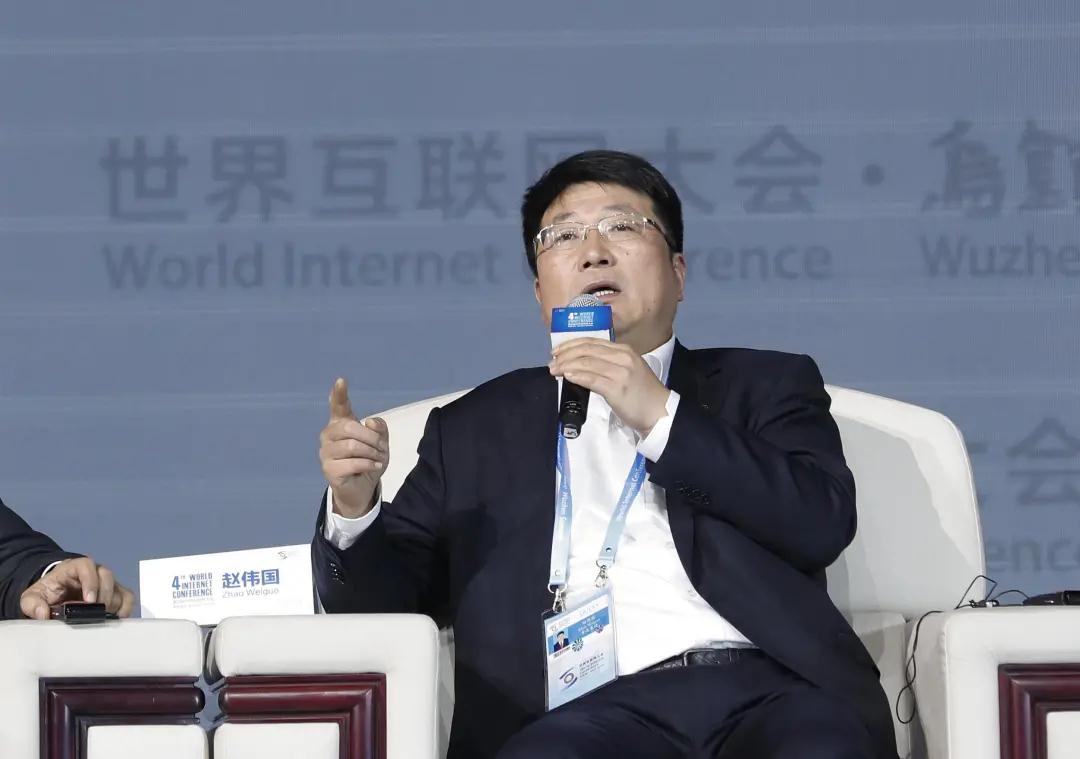
Picture/Visual China (Zhao Weiguo)
Yu Renrong, yang juga tergabung dalam EE85, dapat dianggap sebagai "yang lain" dalam kata-kata Zhao Weiguo. Ketika masih mahasiswa baru, ia berpartisipasi dalam kompetisi matematika tingkat sekolah pada pukul 8 pagi keesokan harinya setelah bermain mahjong sepanjang malam, dan akhirnya memenangkan hadiah pertama. Ia biasanya juga melakukan beberapa "bisnis kecil", seperti membawa koran Haidian ke Baoding untuk dijual, dan berhasil menjadikan dirinya orang yang relatif kaya di antara teman-teman sekelasnya.
Therefore, in the eyes of his classmates, Yu Renrong has always been an "extremely smart person" and extremely sensitive to the market.
It is worth mentioning that this year Yu Renrong and his colleagues coincided with the Tsinghua Radio Department’s pilot teaching model of “freshmen regardless of major, sophomore year” teaching model. Therefore, in the second year of enrollment, the Department of Radio was divided into 7 majors: semiconductor, communications, imaging, radar, microwave, optoelectronics, and electronic physics, with a total of 9 classes.
However, in the early days of reform and opening up, the country invested its efforts in people's livelihood and heavy industry. Semiconductors were obviously not a popular major, and entry into the semiconductor major depended more on "fate." Wang Hongwei chose the semiconductor major because the teacher and class teacher who recruited him into the radio department were both majoring in semiconductors. Liu Weidong and his roommates Lu Huang and Huang Wenyong were assigned to the semiconductor major.
Wang Hongwei’s roommate Gao Feng also entered the semiconductor major, and another roommate Feng Chenhui was assigned to the electronic physics major. In addition, Zhao Weiguo went to study microwave, Yu Renrong and his old classmate Liang Jie studied image processing, Zhao Weiguo's fellow Xinjiang fellow Ren Zhijun and Zhao Lidong from Beijing went to study communications...
At this time, none of this group of young people who were not close to semiconductors obviously knew that they would become the vanguard of China's semiconductor industry in more than 30 years.
02
The big trees outside the dormitory window turned green five times, and the EE85s finally ushered in their graduation season.
In the 1990s, the center of gravity of the global semiconductor industry shifted from the United States to Japan. At that time, Japan accounted for 6 of the top ten semiconductor companies in the world. NEC, Toshiba, and Hitachi ranked among the top three in the world. Intel ranked only fourth, and Samsung has not yet entered the top 10.
Industri semikonduktor Jepang sedang berada di puncaknya, Amerika Serikat enggan melakukannya, dan Korea Selatan juga mengincarnya. Dalam perang global yang sengit ini, industri semikonduktor telah menjadi topik hangat di Amerika Serikat, Jepang, dan Korea Selatan. Namun, suasana "meriah" ini jelas tidak tersampaikan ke negara tersebut, dan kesenjangan antara Tiongkok, Amerika Serikat, Jepang, dan Korea Selatan di bidang semikonduktor telah menjadi tak teratasi. Di negara tersebut, sangat sedikit lapangan pekerjaan yang sesuai dengan profesi semikonduktor.
Setelah lulus kuliah, Liu Weidong, yang mengambil jurusan semikonduktor, membawa koper dan bekerja di bidang komunikasi. Teman sekamarnya, Lu Huang, kembali ke kampung halamannya di Quanzhou dan bekerja di sebuah perusahaan industri tembakau. Gao Feng dan saudara sekamarnya, Wang Hongwei, memilih untuk melanjutkan studi. Gao Feng menempuh studi magister di Pusat Mikroelektronika Akademi Ilmu Pengetahuan Tiongkok, dan Wang Hongwei meraih gelar PhD di Institut Mikroelektronika Universitas Tsinghua.
In addition to the semiconductor major, students from other majors in the radio department have found their destinations one after another.
Yu Renrong, who studied image processing, was lucky. He joined Inspur Group as an engineer the year he graduated. At that time, Inspur had just developed the world's first Chinese pager and was a star company in the IT field at that time with rapid momentum.
However, after only staying at Inspur for two years, Yu Renrong went to a component distributor and served as the sales manager of its Beijing office, where he stayed for 6 years. Until February 1998, he set up his own business and competed with his old club.
Zhao Weiguo went to Zhongguancun, and after working for three years, he returned to Tsinghua University to study for graduate school. After graduating with a master's degree, he was assigned to work at Ziguang Group as the deputy general manager of the Automation Engineering Division of Ziguang Group. Soon afterwards, he was transferred to Tsinghua Tongfang and participated in Tongfang's first capital operation after its listing - the acquisition of Jiangxi Radio Factory.
More people went to the other side of the ocean and began to have a deeper relationship with semiconductors.
Gambar/Visual Tiongkok
In 1992, when Deng Xiaoping inspected Zhuhai's high-tech enterprises for overseas students, he called on all those who studied abroad to come back. "If you want to make a contribution, it is better to return to China." The following year, the policy of "supporting students studying abroad, encouraging return to the country, and freedom of movement" was written into the document of the Third Plenary Session of the 14th Central Committee of the Communist Party of China.
It was during this wave of policies that Zhao Lidong went to the United States to study, and after graduation, he worked at the Austin headquarters of AMD, Intel's old rival, until he resigned and returned to China in 2014. During this period, he also participated in the establishment of the AMD China R&D Center in 2007, establishing a relationship with the Chinese semiconductor industry in advance.
Gao Feng, seorang mahasiswa jurusan semikonduktor, meninggalkan Institut Mikroelektronika Tsinghua pada tahun 1995 dan bekerja di Chartered Semiconductor Singapura. Tahun berikutnya, saudara sekamar Gao Feng, Wang Hongwei, juga bergabung dengan perusahaan tersebut. Perusahaan semikonduktor ini, yang didirikan pada tahun 1987, pernah menjadi perusahaan manufaktur semikonduktor terbesar ketiga di dunia setelah TSMC dan UMC. Manufaktur chip-nya juga merupakan mata rantai di mana chip Huawei saat ini mengalami kendala.
Chartered Semiconductor Singapore was truly the cradle of China’s semiconductor talents during this period. EE85's Zhao Lixin also joined Singapore Chartered Semiconductor after graduating with a master's degree in 1995 and worked as a process engineer for three years. Then he went to the American chip design company ESS Technology to work as a senior engineer for three years and participated in the R&D and testing of video phone image sensors and DVD chips. After that, he entered the R&D centers of ADI and UTStarcom in the United States and continued to engage in chip design work for two years.
It is worth mentioning that the American ADI Company produces high-precision digital-to-analog and analog-to-digital converters, which are also difficulties that are still being overcome in China.
Dalam sepuluh tahun ketika EE85 tumbuh dari usia 20-an hingga berusia 30 tahun, Tiongkok melancarkan serangan skala besar pertamanya terhadap industri sirkuit terpadu dan meluncurkan dua proyek "Inti Tiongkok".
In 1990, the country launched the "908 Project" with the goal of investing 2 billion yuan to advance semiconductor manufacturing to 1 micron during the "Eighth Five-Year Plan" (1991-1995). The main undertaking company is Wuxi Huajing, and the technology is purchased from Lucent of the United States.
However, the implementation results of this plan, which was highly expected to bring China closer to the advanced level of the world, were not satisfactory. The project took seven years from the beginning to the actual production. By the time it was completed and put into production in 1997, Huajing's technical level had lagged far behind the international mainstream technology by 4-5 generations, with a monthly output of only about 800 pieces, and a loss of 240 million yuan in the year it was put into production.
In 1995, with the determination to "boost the semiconductor industry even at the expense of others," the state launched the "909 Project" again and decided to invest 10 billion yuan to establish a chip manufacturing production line starting with 8-inch, 0.5-micron process technology, which was mainly undertaken by the joint venture Shanghai Huahong NEC.
Ini adalah proyek investasi nasional terbesar dalam sejarah industri elektronik Tiongkok. Untungnya, Huahong NEC tidak mengulangi kesalahan Huajing dalam membangun pabrik selama 7 tahun. Konstruksi dimulai pada 31 Juli 1997 dan selesai pada Februari 1999. Pabrik ini meraih keuntungan pada tahun yang sama saat mulai berproduksi. Pada tahun kedua, pabrik ini mencapai penjualan sebesar 3.015 miliar yuan dan keuntungan sebesar 516 juta yuan.
03
Taking 2000 as the dividing point, China's semiconductor industry began to enter a new stage of development.
On February 27, 2001, Professor Wang Yangyuan, academician of the Chinese Academy of Sciences and director of the Institute of Microelectronics of Peking University, gave a high-level report on "Microelectronics Science and Technology and Integrated Circuit Industry".
After the report, the leaders attending the meeting came to a conclusion: integrated circuits are the "heart" of electronic products, and the integrated circuit industry must be vigorously developed.
Pada tahun yang sama, pemerintah mengeluarkan dokumen untuk mendorong pengembangan industri sirkuit terpadu, yang juga dikenal sebagai "Dokumen No. 18" di bidang semikonduktor. Tahun berikutnya, pemerintah mengeluarkan "Dokumen No. 51" dan secara berturut-turut menyetujui tujuh basis industrialisasi desain sirkuit terpadu nasional. Akibatnya, industri dan modal menjadi aktif.
Subsequently, a large number of semiconductor professionals gathered one after another, and semiconductor companies began to mushroom rapidly. EE85 people also migrated one after another during this period, ushering in the climax of their story with China’s semiconductor industry.
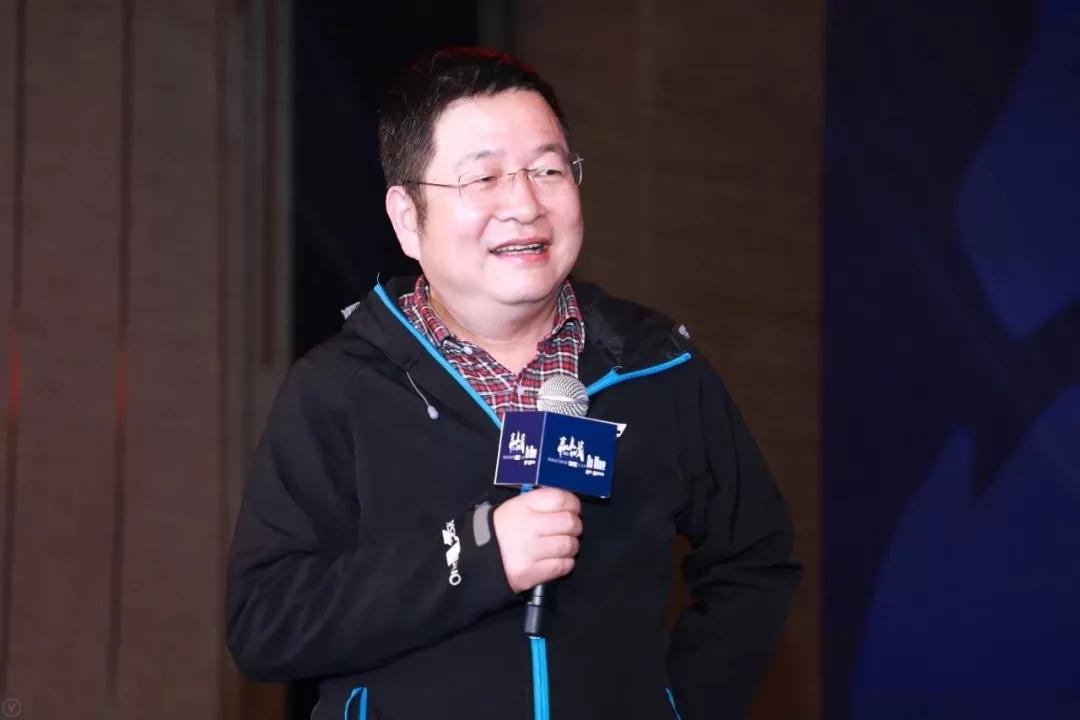
Gambar/Akun publik WeChat resmi Weil Co., Ltd. (Yu Renrong)
In 2003, Yu Renrong, who had transformed into "Boss Yu", accidentally received guidance from an executive of the American chip company ON Semiconductor and began to adjust his business ideas. In addition to continuing its old business of distributing electronic components, it also began to provide design solutions and became a trend pioneer. He also set up offices across the country to cooperate with emerging design companies, including Dexin Wireless, the largest mobile phone design supplier in China today.
With the rise of the mobile phone market, by 2006, Yu Renrong had become famous in the field of electronic components distribution and became the largest distributor in Beijing. In 2007, Yu Renrong took advantage of the situation to upgrade his business and established Vail Co., Ltd. in Shanghai. He later engaged in the design of semiconductor discrete devices and power management chips. In the following years, he adopted a combination of endogenous and merger and acquisition plans. He soon gained recognition in the field of consumer electronics from mobile phone manufacturers such as ZTE, Xiaomi, and Lenovo, and achieved a career leap.
Pada tahun yang sama ketika Yu Renrong menerima "saran dari seorang ahli," Zhao Lixin, yang berada jauh di seberang lautan, mengundurkan diri dari pekerjaannya di UTStarcom dan kembali ke Tiongkok dengan seluruh kekayaannya dan investasi sebesar US$2 juta dari teman-teman sekelasnya di sekolah menengah untuk memulai Gekewei Electronics, yang dimulai dengan sensor kamera.
In 2005, Gekowei's first product came out and successfully won its first customer - Vimicro, which was gaining momentum at the time, to provide sensors for its computer cameras. However, with the entry of more and more large companies, the pressure on Gekewei doubled. Seeing that it was about to lose money in 2007, Zhao Lixin made an important decision - to enter the mobile phone market.
Seperti kata Lei Jun, "ikuti arus." Saat itu, pasar telepon seluler Tiongkok berada dalam kondisi yang sangat baik, dengan penjualan ratusan juta telepon seluler setiap tahun dan tingkat pertumbuhan dua digit. Dengan memproduksi sensor kamera telepon seluler, Gekowei mulai berkembang pesat. Pada tahun 2010, omset perusahaan telah melampaui US$100 juta, dan berhasil terpilih masuk dalam 10 besar desain sirkuit terpadu terbaik di Tiongkok.
Like Zhao Lixin, there is Feng Chenhui who returned to China to start a business. In July 2006, Feng Chenhui and his two friends Xu Zhihan and Tang Zhuang co-founded Zhuosheng Micro in Shanghai. It also focused on making chips for mobile phones. In the early days, it developed mobile TV chips, and later changed its direction to make radio frequency front-end chips. Today, RF front-end chips are hot, and Zhuo Shengwei has become a Huawei mobile phone supplier.
The story of starting a business with an alumnus also happened to Shu Qingming from EE85. In 2004, Zhu Yiming, who graduated from the Department of Physics in 1989, and Shu Qingming, who graduated from the Department of Radio in 1985, were planning to start a business to produce chips. However, they encountered obstacles due to lack of investment.
After hearing the news, Li Jun, an alumnus of the Department of Automation (Level 85), not only helped them get a venture capital investment of US$100,000, but also introduced them to Xue Jun (Level 83) of the Department of Economics. With this investment, Shu Qingming and Zhu Yiming established China's first memory and chip development company - GigaDevice in 2005.
When other alumni of EE85 returned to China to start their own businesses, Zhao Weiguo also left Ziguang in 2004 and went to his hometown of Xinjiang to pan for gold with a capital of 1 million yuan. The following year, Beijing Jiankun Investment Group Co., Ltd. was established, mainly investing in real estate and minerals. Zhao Weiguo was the largest shareholder and chairman, becoming a veritable "real estate developer" and "coal boss".
He later recalled, "Getting into real estate at that time was like grabbing money. I took 1 million yuan to Xinjiang, and when I came back, I had earned 4.5 billion yuan, a profit of 4,500 times!"
Ketika Zhao Weiguo menemukan rezeki pertamanya, Grup Ziguang secara bertahap mengalami kesulitan operasional dan berada di ambang kebangkrutan. Para pemimpin yang melihat kemampuan Zhao Weiguo dalam menghasilkan uang ingin dia "kembali", dan Zhao Weiguo tidak keberatan untuk memperbarui hubungannya dengan Ziguang. Pada tahun 2009, Zhao Weiguo kembali ke Grup Ziguang sebagai presiden.
Jiankun Investment, which is actually controlled by Zhao Weiguo, also obtained 49% of the equity of Ziguang Group, second only to Tsinghua Holdings Co., Ltd.’s 51% equity. Although the old shareholders were dissatisfied due to the issue of stock pre-emptive rights, Zhao Weiguo successfully took over Ziguang, and Ziguang Group has since entered the Zhao Weiguo era.
04
2014 is the first year of China’s 4G network and the year of rapid development of smartphones.
Tahun ini, dua peristiwa besar terjadi di industri semikonduktor Tiongkok. Pertama, pada September 2014, negara mendirikan "dana besar" untuk industri sirkuit terpadu. Untuk pertama kalinya, modal negara mendorong modal swasta untuk berinvestasi besar-besaran di industri semikonduktor dalam negeri.
The other thing is that Ziguang Group, under the helm of Zhao Weiguo, included semiconductors as the company's main direction. After going around and around, Zhao Weiguo returned to his old profession. Tsinghua Unigroup used a "dark horse" approach to acquire mobile phone chip companies Spreadtrum and RDA, which had returned from the privatization and delisting of Nasdaq in the United States. Tsinghua Unigroup has also risen from a layman to become the third company in the world in mobile phone baseband chip shipments. It was preceded by Qualcomm and MediaTek.
Since then, "buy, buy, buy" has become Zhao Weiguo's life standard. Zhao Weiguo In the five years from 2013 to 2018 alone, Ziguang Group invested and acquired 16 companies, spending hundreds of billions of yuan, 11 of which were involved in the chip field. In the eight months of 2015 alone, Ziguang Group’s external investment and acquisition amount reached 50 billion yuan, which earned Zhao Weiguo the title of “Hungry Tiger”.
Also around 2014, Liu Weidong and Liang Jie started their second entrepreneurial ventures. The former founded Jiuhao Electronics, focusing on sensor signal conditioning chips, while the latter aimed at the Internet of Things market and founded Sicun Technology, focusing on Wi-Fi and Bluetooth communication modules.
Patut disebutkan bahwa investasi pertama yang diterima Liu Weidong ketika mendirikan Jiuhao Electronics berasal dari mantan teman sekamarnya di perguruan tinggi, Lu Huang. Selain berinvestasi di Jiuhao Electronics, Lu Huang juga merupakan investor awal di Weill dan GigaDevice. Harus diakui bahwa investasi Lu Huang membuahkan hasil di pasar saham.
Gambar/Visual Tiongkok
Around 2017, domestic semiconductor companies sounded the clarion call for their second listing. The first wave of listings occurred 10 years ago. At that time, Vimicro and Spreadtrum successively listed on Nasdaq. Deng Zhonghan of Vimicro also became the first listed company boss to sign in Chinese on Nasdaq. After 10 years of energy accumulation, EE85 has done its part in the second wave of listings. However, most of them chose the A-share market.
On August 18, 2016, GigaDevice, with Shu Qingming as co-founder, was listed on the Shanghai Stock Exchange; on May 4, 2017, Yu Renrong's Vail shares successfully listed on the Shanghai Stock Exchange, and a year later acquired OmniVision Technology, an image sensor chip company co-founded by Tsinghua alumnus Chen Datong; on June 18, 2019, Zhuosheng Micro, co-founded by Feng Chenhui, also entered the capital market and became a winner in life.
On one side is access to the capital market, and on the other side is a new wave of entrepreneurship.
At the end of 2017, Ren Zhijun resigned from Zhao Weiguo and founded Xinhenghui Electronic Technology Co., Ltd. in Shandong, with the goal of "going public." According to the Tianyancha APP, the company has a registered capital of 167 million yuan and is China's first smart card packaging carrier tape manufacturer. Among them, the largest investment came from old classmate Yu Renrong, with an investment amount of 56.432 million yuan, holding 33.86% of the shares, and Ren Zhijun’s investment amount was 28.216 million yuan, holding 16.93% of the shares.
Pada saat yang sama, Zhao Lidong juga mengundurkan diri dari jabatannya sebagai wakil presiden Ziguang Group dan mendirikan Suiyuan Technology pada Maret 2018, yang berfokus pada bidang chip kecerdasan buatan dan mengikuti perkembangan zaman.
Pada 15 Mei 2019, Departemen Perdagangan AS mengeluarkan larangan terhadap Huawei. Industri semikonduktor Tiongkok memasuki kondisi darurat, dan konsensus yang belum pernah terjadi sebelumnya tercapai mengenai posisi strategis penting industri semikonduktor. Pada bulan Juni, Dewan Inovasi Sains dan Teknologi mengadakan upacara pembukaan untuk mendukung pengembangan perusahaan teknologi inti utama sesuai dengan strategi nasional. Perusahaan chip menjadi prioritas utama. Sejak itu, Huawei telah menyesuaikan strategi pengadaannya, beralih dari memilih pemasok chip terbaik dunia ke mendukung perusahaan domestik. Pada bulan Oktober, fase kedua Dana Sirkuit Terpadu Nasional didaftarkan dan didirikan, yang berfokus pada dukungan peralatan dan material...
The EE85 class is destined to shoulder a greater historical mission.
Bahkan mereka yang baru memulai bisnis pun tidak terkecuali. Pada Desember 2019, Suiyuan Technology milik Zhao Lidong merilis chip pelatihan AI pertamanya, memasuki pasar chip seperti Nvidia. Shandong Xinhenghui milik Ren Zhijun berada di jalur yang tepat. Proyek rangka timah logam terukir presisi tinggi baru yang direncanakan selesai pada Mei 2022 akan mewujudkan substitusi domestik setelah selesai...
Level EE85 tidak diragukan lagi beruntung. Ketika saya memasuki industri ini, semuanya karena takdir, tetapi ketika saya berada di puncak kehidupan, saya mengikuti tren zaman dan menciptakan gelombang baru mitos kekayaan. Dalam "Daftar Orang Kaya Global Hurun 2020" yang diumumkan pada 26 Februari 2020, Yu Renrong berada di peringkat ke-281 dengan kekayaan bersih 50 miliar yuan, menjadi orang terkaya di industri chip Tiongkok yang memang pantas mendapatkannya, sementara Zhao Weiguo berada di peringkat ke-729 dengan kekayaan bersih 25 miliar yuan.
Catatan: Artikel ini direproduksi dari internet dan mendukung perlindungan hak kekayaan intelektual. Harap sebutkan sumber dan penulis asli saat mencetak ulang. Jika ada pelanggaran, silakan hubungi kami untuk menghapusnya.
Nomor telepon perusahaan: +86-0755-83044319
Faks/FAX: +86-0755-83975897
Surel: 1615456225@qq.com
QQ: 3518641314 Manajer Li
QQ: 332496225 Manajer Qiu
Alamat: Ruang 809, Gedung C, Gedung Teknologi Zhantao, No. 1079 Jalan Minzhi, Distrik Baru Longhua, Shenzhen





 粤公网安备44030002007346号