
























Service Hotline
News

News
Everyone in Tsinghua University is the richest man this time
2022-03-16
2269
This article is reproduced from AI Finance and Economics
In China’s semiconductor field, the 85th grade of the Radio Department of Tsinghua University (later changed to the Department of Electronic Engineering) is a special existence.
According to incomplete statistics, more than ten founders or executives of listed semiconductor companies, including Zhao Weiguo, chairman of Tsinghua Unigroup, Yu Renrong, founder of Weill Technology, Shu Qingming, one of the founders of GigaDevice, Feng Chenhui, co-founder of Zhuosheng Microelectronics, Zhao Lixin, founder of Geke Microelectronics, Zhao Lidong, founder of Suiyuan Technology, as well as Ren Zhijun, Gao Feng, Liu Weidong, Lu Huang, Yu Qunhui, etc., all come from this level.
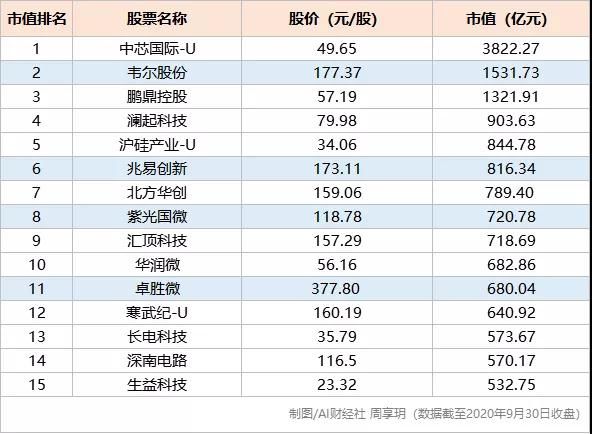
These people call themselves EE85. Among the top 15 listed A-share semiconductor companies in China by total market value, the listed companies they co-founded occupy 4 seats, namely Weill Technology, GigaDevice, Unisoc, and Zhuosheng Micro. Their fields cover chip design, manufacturing, packaging and equipment in the semiconductor industry chain.
As of the close of trading on September 30, the total market value of these four companies reached 374.889 billion yuan, accounting for approximately 13.88% of the total market value of A-share semiconductor listed companies.
01
In 1978, with the reform and opening up, China's semiconductor industry gradually entered a stage of comprehensive recovery. At the end of this year, Tsinghua Radio Department returned to Beijing from Mianyang, Sichuan, thus becoming the mainstay of talent cultivation in China's chip industry.
In 1985, a group of first-year radio students moved into Building 10 of the East District Student Dormitory of Tsinghua University.
Lu Huang, who was admitted to Tsinghua University from Quanzhou, Fujian, and Liu Weidong from Shanxi became roommates, while Gao Feng, who is from Anhui, his hometown, became a bunk bed with Wang Hongwei from Jiangsu.
Also living in the same building is Zhao Weiguo, who was admitted from Shawan County, Tacheng Prefecture, Xinjiang.
This young man, who has lived with his parents in Xinjiang since childhood and basically spent his childhood feeding pigs and herding sheep, has always had a reluctance to admit defeat. His father once planned a "relatively stable" life route for him - learning a craft to make food. But the strong-minded Zhao Weiguo ignored his father's advice and resolutely chose the college entrance examination.
In fact, as the first person in the county to be admitted to Tsinghua University, Zhao Weiguo has something to be proud of. But in Tsinghua University, which is full of talents, this "capital" may be "significantly reduced."
"Before going to college, I thought I was a genius, but after entering Tsinghua University, I found that the genius was someone else." After entering college, Zhao Weiguo's academic performance has been "stable". He was ranked 17th in the class when he entered school, and he was still 17th when he graduated.
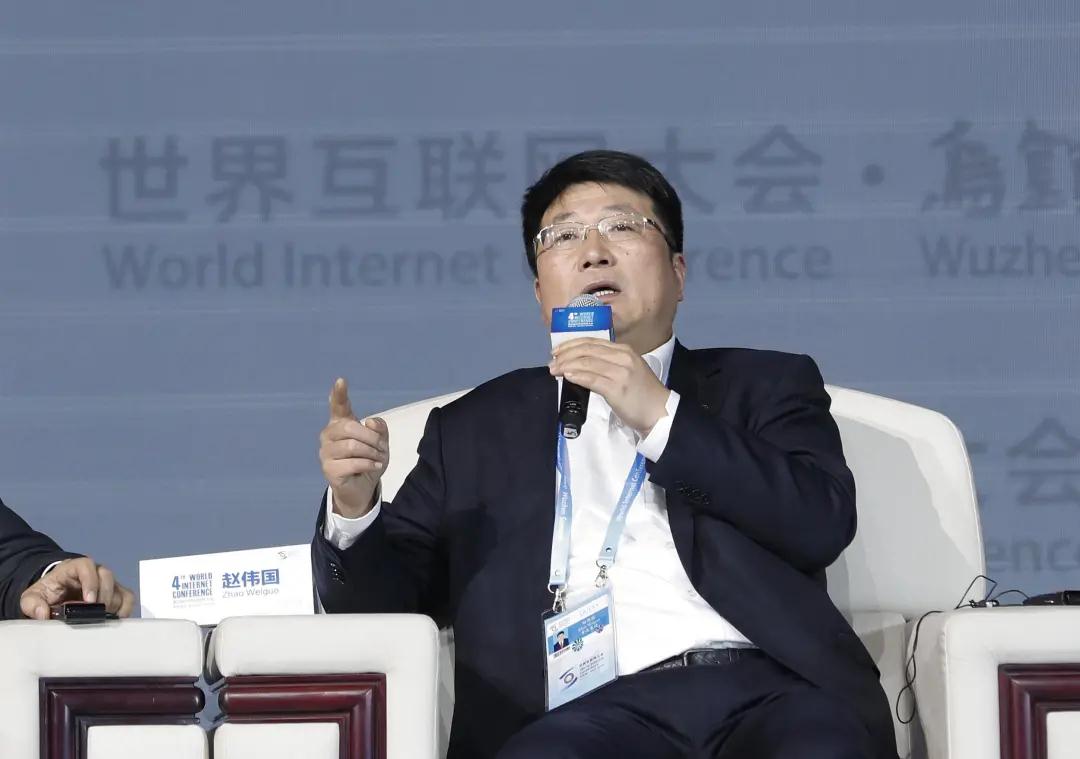
Picture/Visual China (Zhao Weiguo)
Yu Renrong, who also belongs to EE85, can be regarded as the "others" in Zhao Weiguo's words. When he was a freshman, he participated in a school-wide mathematics competition at 8 a.m. the next morning after playing mahjong all night, and finally won the first prize. He usually also does some "small business", such as taking Haidian papers to Baoding to sell them, successfully making himself a relatively wealthy person among his classmates.
Therefore, in the eyes of his classmates, Yu Renrong has always been an "extremely smart person" and extremely sensitive to the market.
It is worth mentioning that this year Yu Renrong and his colleagues coincided with the Tsinghua Radio Department’s pilot teaching model of “freshmen regardless of major, sophomore year” teaching model. Therefore, in the second year of enrollment, the Department of Radio was divided into 7 majors: semiconductor, communications, imaging, radar, microwave, optoelectronics, and electronic physics, with a total of 9 classes.
However, in the early days of reform and opening up, the country invested its efforts in people's livelihood and heavy industry. Semiconductors were obviously not a popular major, and entry into the semiconductor major depended more on "fate." Wang Hongwei chose the semiconductor major because the teacher and class teacher who recruited him into the radio department were both majoring in semiconductors. Liu Weidong and his roommates Lu Huang and Huang Wenyong were assigned to the semiconductor major.
Wang Hongwei’s roommate Gao Feng also entered the semiconductor major, and another roommate Feng Chenhui was assigned to the electronic physics major. In addition, Zhao Weiguo went to study microwave, Yu Renrong and his old classmate Liang Jie studied image processing, Zhao Weiguo's fellow Xinjiang fellow Ren Zhijun and Zhao Lidong from Beijing went to study communications...
At this time, none of this group of young people who were not close to semiconductors obviously knew that they would become the vanguard of China's semiconductor industry in more than 30 years.
02
The big trees outside the dormitory window turned green five times, and the EE85s finally ushered in their graduation season.
In the 1990s, the center of gravity of the global semiconductor industry shifted from the United States to Japan. At that time, Japan accounted for 6 of the top ten semiconductor companies in the world. NEC, Toshiba, and Hitachi ranked among the top three in the world. Intel ranked only fourth, and Samsung has not yet entered the top 10.
Japan's semiconductor industry is at its peak, the United States is unwilling to do so, and South Korea is also eyeing it. In this fierce global war, the semiconductor industry has become a hot topic in the United States, Japan and South Korea. However, this "lively" atmosphere has obviously not been transmitted to the country, and the gap between China, the United States, Japan and South Korea in the semiconductor field has become insurmountable. in the country, there are very few jobs corresponding to the semiconductor profession.
After graduating from college, Liu Weidong, who majored in semiconductors, took a suitcase and went to a communications-related position. His roommate Lu Huang returned to his hometown in Quanzhou and worked in a tobacco industry company. Gao Feng and his bunk brother Wang Hongwei chose to continue their studies. The former studied for a master's degree at the Microelectronics Center of the Chinese Academy of Sciences, and the latter did a PhD at the Institute of Microelectronics at Tsinghua University.
In addition to the semiconductor major, students from other majors in the radio department have found their destinations one after another.
Yu Renrong, who studied image processing, was lucky. He joined Inspur Group as an engineer the year he graduated. At that time, Inspur had just developed the world's first Chinese pager and was a star company in the IT field at that time with rapid momentum.
However, after only staying at Inspur for two years, Yu Renrong went to a component distributor and served as the sales manager of its Beijing office, where he stayed for 6 years. Until February 1998, he set up his own business and competed with his old club.
Zhao Weiguo went to Zhongguancun, and after working for three years, he returned to Tsinghua University to study for graduate school. After graduating with a master's degree, he was assigned to work at Ziguang Group as the deputy general manager of the Automation Engineering Division of Ziguang Group. Soon afterwards, he was transferred to Tsinghua Tongfang and participated in Tongfang's first capital operation after its listing - the acquisition of Jiangxi Radio Factory.
More people went to the other side of the ocean and began to have a deeper relationship with semiconductors.
Picture/Visual China
In 1992, when Deng Xiaoping inspected Zhuhai's high-tech enterprises for overseas students, he called on all those who studied abroad to come back. "If you want to make a contribution, it is better to return to China." The following year, the policy of "supporting students studying abroad, encouraging return to the country, and freedom of movement" was written into the document of the Third Plenary Session of the 14th Central Committee of the Communist Party of China.
It was during this wave of policies that Zhao Lidong went to the United States to study, and after graduation, he worked at the Austin headquarters of AMD, Intel's old rival, until he resigned and returned to China in 2014. During this period, he also participated in the establishment of the AMD China R&D Center in 2007, establishing a relationship with the Chinese semiconductor industry in advance.
Gao Feng, a semiconductor major, left Tsinghua Institute of Microelectronics in 1995 and worked at Singapore Chartered Semiconductor. The following year, Gao Feng's bunkhouse brother Wang Hongwei also joined the company. This semiconductor company, founded in 1987, was once the third largest semiconductor foundry in the world after TSMC and UMC. Its chip manufacturing is also the link where Huawei's chips are currently stuck.
Chartered Semiconductor Singapore was truly the cradle of China’s semiconductor talents during this period. EE85's Zhao Lixin also joined Singapore Chartered Semiconductor after graduating with a master's degree in 1995 and worked as a process engineer for three years. Then he went to the American chip design company ESS Technology to work as a senior engineer for three years and participated in the R&D and testing of video phone image sensors and DVD chips. After that, he entered the R&D centers of ADI and UTStarcom in the United States and continued to engage in chip design work for two years.
It is worth mentioning that the American ADI Company produces high-precision digital-to-analog and analog-to-digital converters, which are also difficulties that are still being overcome in China.
In the ten years when EE85 went from being in their 20s to turning 30, China launched its first large-scale attack on the integrated circuit industry and launched two "Chinese Core" projects.
In 1990, the country launched the "908 Project" with the goal of investing 2 billion yuan to advance semiconductor manufacturing to 1 micron during the "Eighth Five-Year Plan" (1991-1995). The main undertaking company is Wuxi Huajing, and the technology is purchased from Lucent of the United States.
However, the implementation results of this plan, which was highly expected to bring China closer to the advanced level of the world, were not satisfactory. The project took seven years from the beginning to the actual production. By the time it was completed and put into production in 1997, Huajing's technical level had lagged far behind the international mainstream technology by 4-5 generations, with a monthly output of only about 800 pieces, and a loss of 240 million yuan in the year it was put into production.
In 1995, with the determination to "boost the semiconductor industry even at the expense of others," the state launched the "909 Project" again and decided to invest 10 billion yuan to establish a chip manufacturing production line starting with 8-inch, 0.5-micron process technology, which was mainly undertaken by the joint venture Shanghai Huahong NEC.
This is the largest national investment project in the history of China's electronics industry. Fortunately, Huahong NEC did not repeat the mistakes of Huajing in building the factory in 7 years. Construction started on July 31, 1997 and was completed in February 1999. It achieved profit the same year it was put into production. In the second year, it achieved sales of 3.015 billion yuan and a profit of 516 million yuan.
03
Taking 2000 as the dividing point, China's semiconductor industry began to enter a new stage of development.
On February 27, 2001, Professor Wang Yangyuan, academician of the Chinese Academy of Sciences and director of the Institute of Microelectronics of Peking University, gave a high-level report on "Microelectronics Science and Technology and Integrated Circuit Industry".
After the report, the leaders attending the meeting came to a conclusion: integrated circuits are the "heart" of electronic products, and the integrated circuit industry must be vigorously developed.
In the same year, the government issued a document to encourage the development of the integrated circuit industry, which is also known as "Document No. 18" in the semiconductor field. The following year, it issued "Document No. 51" and successively approved seven national integrated circuit design industrialization bases. As a result, industry and capital became active.
Subsequently, a large number of semiconductor professionals gathered one after another, and semiconductor companies began to mushroom rapidly. EE85 people also migrated one after another during this period, ushering in the climax of their story with China’s semiconductor industry.
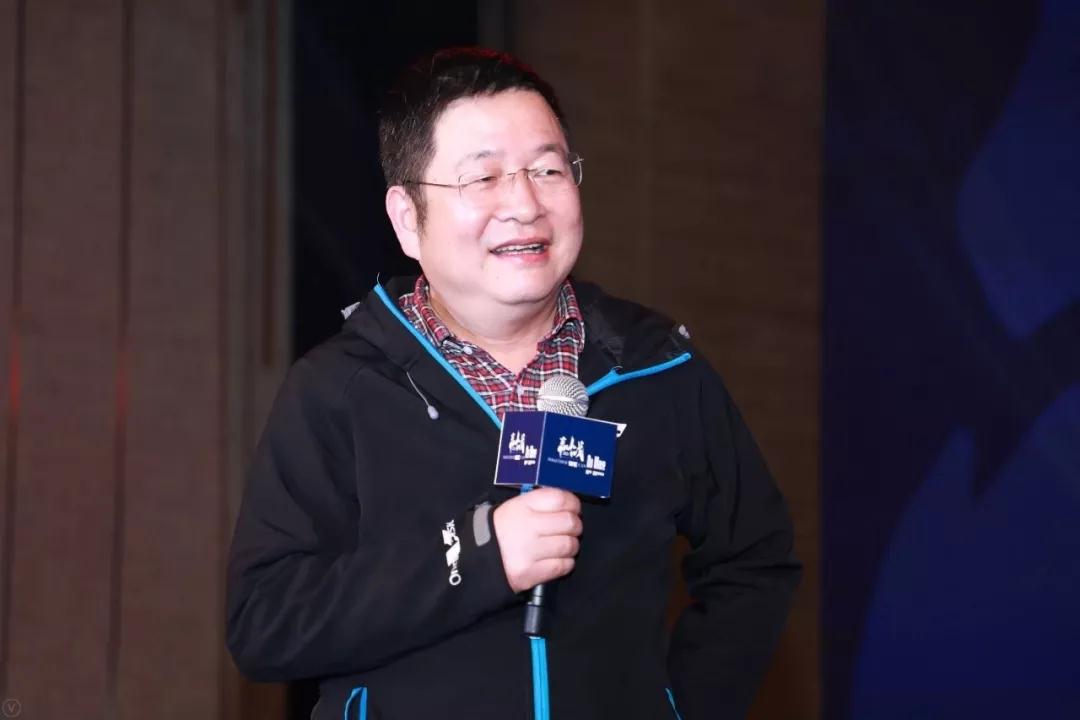
Picture/Weil Co., Ltd. official WeChat public account (Yu Renrong)
In 2003, Yu Renrong, who had transformed into "Boss Yu", accidentally received guidance from an executive of the American chip company ON Semiconductor and began to adjust his business ideas. In addition to continuing its old business of distributing electronic components, it also began to provide design solutions and became a trend pioneer. He also set up offices across the country to cooperate with emerging design companies, including Dexin Wireless, the largest mobile phone design supplier in China today.
With the rise of the mobile phone market, by 2006, Yu Renrong had become famous in the field of electronic components distribution and became the largest distributor in Beijing. In 2007, Yu Renrong took advantage of the situation to upgrade his business and established Vail Co., Ltd. in Shanghai. He later engaged in the design of semiconductor discrete devices and power management chips. In the following years, he adopted a combination of endogenous and merger and acquisition plans. He soon gained recognition in the field of consumer electronics from mobile phone manufacturers such as ZTE, Xiaomi, and Lenovo, and achieved a career leap.
In the same year that Yu Renrong received "advice from an expert," Zhao Lixin, who was far away across the ocean, quit his job at UTStarcom and returned to China with all his wealth and US$2 million invested by his high school classmates to start Gekewei Electronics, starting with camera sensors.
In 2005, Gekowei's first product came out and successfully won its first customer - Vimicro, which was gaining momentum at the time, to provide sensors for its computer cameras. However, with the entry of more and more large companies, the pressure on Gekewei doubled. Seeing that it was about to lose money in 2007, Zhao Lixin made an important decision - to enter the mobile phone market.
As Lei Jun said, "go with the flow." At that time, China's mobile phone market was in great shape, with sales of hundreds of millions of mobile phones every year and a double-digit growth rate. By making mobile phone camera sensors, Gekowei began to grow wildly. By 2010, the company's turnover had exceeded US$100 million, and it was successfully selected into the Top 10 integrated circuit designs in China.
Like Zhao Lixin, there is Feng Chenhui who returned to China to start a business. In July 2006, Feng Chenhui and his two friends Xu Zhihan and Tang Zhuang co-founded Zhuosheng Micro in Shanghai. It also focused on making chips for mobile phones. In the early days, it developed mobile TV chips, and later changed its direction to make radio frequency front-end chips. Today, RF front-end chips are hot, and Zhuo Shengwei has become a Huawei mobile phone supplier.
The story of starting a business with an alumnus also happened to Shu Qingming from EE85. In 2004, Zhu Yiming, who graduated from the Department of Physics in 1989, and Shu Qingming, who graduated from the Department of Radio in 1985, were planning to start a business to produce chips. However, they encountered obstacles due to lack of investment.
After hearing the news, Li Jun, an alumnus of the Department of Automation (Level 85), not only helped them get a venture capital investment of US$100,000, but also introduced them to Xue Jun (Level 83) of the Department of Economics. With this investment, Shu Qingming and Zhu Yiming established China's first memory and chip development company - GigaDevice in 2005.
When other alumni of EE85 returned to China to start their own businesses, Zhao Weiguo also left Ziguang in 2004 and went to his hometown of Xinjiang to pan for gold with a capital of 1 million yuan. The following year, Beijing Jiankun Investment Group Co., Ltd. was established, mainly investing in real estate and minerals. Zhao Weiguo was the largest shareholder and chairman, becoming a veritable "real estate developer" and "coal boss".
He later recalled, "Getting into real estate at that time was like grabbing money. I took 1 million yuan to Xinjiang, and when I came back, I had earned 4.5 billion yuan, a profit of 4,500 times!"
When Zhao Weiguo found his first pot of gold, Ziguang Group gradually encountered operating difficulties and was on the verge of bankruptcy. Leaders who saw Zhao Weiguo's ability to make money wanted him to "return", and Zhao Weiguo was not averse to renewing his relationship with Ziguang. In 2009, Zhao Weiguo returned to Ziguang Group as president.
Jiankun Investment, which is actually controlled by Zhao Weiguo, also obtained 49% of the equity of Ziguang Group, second only to Tsinghua Holdings Co., Ltd.’s 51% equity. Although the old shareholders were dissatisfied due to the issue of stock pre-emptive rights, Zhao Weiguo successfully took over Ziguang, and Ziguang Group has since entered the Zhao Weiguo era.
04
2014 is the first year of China’s 4G network and the year of rapid development of smartphones.
This year, two major events occurred in China’s semiconductor industry. One is that in September 2014, the state established a "big fund" for the integrated circuit industry. For the first time, state capital drove private capital to invest heavily in the domestic semiconductor industry.
The other thing is that Ziguang Group, under the helm of Zhao Weiguo, included semiconductors as the company's main direction. After going around and around, Zhao Weiguo returned to his old profession. Tsinghua Unigroup used a "dark horse" approach to acquire mobile phone chip companies Spreadtrum and RDA, which had returned from the privatization and delisting of Nasdaq in the United States. Tsinghua Unigroup has also risen from a layman to become the third company in the world in mobile phone baseband chip shipments. It was preceded by Qualcomm and MediaTek.
Since then, "buy, buy, buy" has become Zhao Weiguo's life standard. Zhao Weiguo In the five years from 2013 to 2018 alone, Ziguang Group invested and acquired 16 companies, spending hundreds of billions of yuan, 11 of which were involved in the chip field. In the eight months of 2015 alone, Ziguang Group’s external investment and acquisition amount reached 50 billion yuan, which earned Zhao Weiguo the title of “Hungry Tiger”.
Also around 2014, Liu Weidong and Liang Jie started their second entrepreneurial ventures. The former founded Jiuhao Electronics, focusing on sensor signal conditioning chips, while the latter aimed at the Internet of Things market and founded Sicun Technology, focusing on Wi-Fi and Bluetooth communication modules.
It is worth mentioning that the first investment Liu Weidong received when he founded Jiuhao Electronics came from his former college roommate Lu Huang. In addition to investing in Jiuhao Electronics, Lu Huang was also an early investor in Weill and GigaDevice. It has to be said that Lu Huang’s investment won in the internal circulation.

Picture/Visual China
Around 2017, domestic semiconductor companies sounded the clarion call for their second listing. The first wave of listings occurred 10 years ago. At that time, Vimicro and Spreadtrum successively listed on Nasdaq. Deng Zhonghan of Vimicro also became the first listed company boss to sign in Chinese on Nasdaq. After 10 years of energy accumulation, EE85 has done its part in the second wave of listings. However, most of them chose the A-share market.
On August 18, 2016, GigaDevice, with Shu Qingming as co-founder, was listed on the Shanghai Stock Exchange; on May 4, 2017, Yu Renrong's Vail shares successfully listed on the Shanghai Stock Exchange, and a year later acquired OmniVision Technology, an image sensor chip company co-founded by Tsinghua alumnus Chen Datong; on June 18, 2019, Zhuosheng Micro, co-founded by Feng Chenhui, also entered the capital market and became a winner in life.
On one side is access to the capital market, and on the other side is a new wave of entrepreneurship.
At the end of 2017, Ren Zhijun resigned from Zhao Weiguo and founded Xinhenghui Electronic Technology Co., Ltd. in Shandong, with the goal of "going public." According to the Tianyancha APP, the company has a registered capital of 167 million yuan and is China's first smart card packaging carrier tape manufacturer. Among them, the largest investment came from old classmate Yu Renrong, with an investment amount of 56.432 million yuan, holding 33.86% of the shares, and Ren Zhijun’s investment amount was 28.216 million yuan, holding 16.93% of the shares.
At the same time, Zhao Lidong also resigned from his position as vice president of Ziguang Group and established Suiyuan Technology in March 2018, focusing on the field of artificial intelligence chips and stepping into the wave of the times.
On May 15, 2019, the U.S. Department of Commerce issued a ban on Huawei. China's semiconductor industry entered a wartime state, and an unprecedented consensus was reached on the important strategic position of the semiconductor industry. In June, the Science and Technology Innovation Board held an opening ceremony to support the development of key core technology companies in line with the national strategy. Chip companies are the top priority. Since then, Huawei has adjusted its procurement strategy, shifting from selecting the world's top chip suppliers to supporting domestic companies. In October, the second phase of the National Integrated Circuit Fund was registered and established, focusing on supporting equipment and materials...
The EE85 class is destined to shoulder a greater historical mission.
Even those who are the latest to start a business are no exception. In December 2019, Zhao Lidong’s Suiyuan Technology released its first AI training chip, entering the chip market such as Nvidia. Ren Zhijun's Shandong Xinhenghui is on the right track. The new high-precision etched metal lead frame project planned to be completed in May 2022 will realize domestic substitution after completion...
Level EE85 is undoubtedly lucky. When I entered the industry, it was all due to fate, but when I was in the prime of life, I stepped on the trend of the times and created a new wave of wealth myths. In the "2020 Hurun Global Rich List" announced on February 26, 2020, Yu Renrong ranked 281st on the list with a net worth of 50 billion yuan, becoming the well-deserved richest man in China's chips, while Zhao Weiguo ranked 729th on the list with a net worth of 25 billion yuan.
Note: This article is reproduced from the Internet and supports the protection of intellectual property rights. Please indicate the original source and author when reprinting. If there is any infringement, please contact us to delete it.
Company phone number: +86-0755-83044319
Fax/FAX: +86-0755-83975897
Email: 1615456225@qq.com
QQ: 3518641314 Manager Li
QQ: 332496225 Manager Qiu
Address: Room 809, Building C, Zhantao Technology Building, No. 1079 Minzhi Avenue, Longhua New District, Shenzhen
Related Recommendations
Exclusive Interview with Li Gang of Yunfan Ruida: The Precision of Millimeter-Wave Radar Products and the Warmth of Humanity
2026-07-22
3231
RF Passion, Craftsman’s Journey: Over 30 Years of Steadfast Dedication — Interview with Kinghelm Chief Engineer Mr. Qin hongxiang
2026-06-26
3301





 粤公网安备44030002007346号