Ten core technologies that my country has not mastered in the semiconductor field
The semiconductor industry has a typical "pyramid" structure. The higher upstream there are, the fewer companies there are, the greater the output value, and the higher the technical difficulty. Due to the late start, lack of core technologies, and shortage of talents, my country's semiconductor development has been greatly restricted. Due to the failure to master core technologies, it is often blocked by others. So far, the key chip field still relies on imports.
The ZTE incident in 2018 is still fresh in our minds! Not long ago, the United States relied on the core semiconductor technology and equipment it mastered to upgrade its sanctions on Huawei in an attempt to restrict Huawei and my country's development in the high-tech field!
The United States has picked up their "technological" spear and pierced my country's "core shortage" weakness. While sounding the alarm for my country's semiconductor industry, it has also made many people and many companies realize that relying on American technology is unreliable. Only by mastering core technology and getting rid of technology dependence is the right way!
At present, our country has raised the development of the semiconductor industry to a strategic height, listed the semiconductor industry as a national key development industry, invested a lot of money and talents in order to achieve technological breakthroughs, and strive to embark on the road of independent research and development and self-sufficiency as soon as possible. What currently awaits breakthroughs are the core technologies in the following areas.
High-end photolithography machine
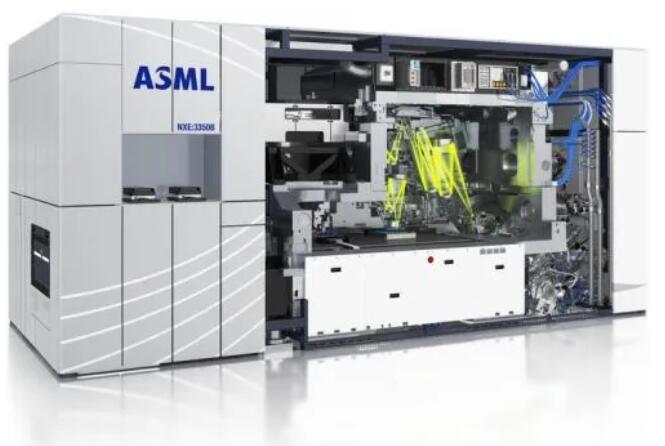
As the core equipment of the integrated circuit industry, lithography machines are called "the most sophisticated and complex machines in mankind." Currently, the only company in the world that can manufacture high-end lithography machines is the Netherlands' ASML, while Japan's Nikon and Canon manufacture mid- to low-end lithography machines. Their market share exceeds 80%.
Photolithography system is the core of chip manufacturing. Photolithography is the most complex and critical process step in the semiconductor chip production process. It is time-consuming and costly. The difficulty and key point of semiconductor chip production is to transfer the circuit diagram from the mask to the silicon wafer. This process is achieved through photolithography. The process level of photolithography directly determines the process level and performance level of the chip.
High-end lithography machines can be called the flower of the modern optical industry. They are very difficult to manufacture. Now ASML's most advanced EUV extreme ultraviolet lithography machine can produce chips with a 5nm process. The price of a single lithography machine has exceeded 100 million US dollars. China's completely independently produced lithography machines can currently only reach the 90nm process, which is a big gap.
What is the difficulty in developing a photolithography machine? Lithography machines involve many advanced technologies such as system integration, precision optics, precision motion, precision material transmission, and high-precision micro-environment control. They are the most technologically advanced equipment among all semiconductor manufacturing equipment. In order for ASML to obtain the world's most advanced technology in different parts of the entire equipment, more than 90% of the parts in ASML's lithography machines are purchased from outside. ASML brings together the world's most cutting-edge technologies in technology research and development, such as German mechanical technology, Germany's top Zeiss lenses, American light sources and measurement equipment, etc. It can be said that ASML's high-end lithography machines are "the product of human wisdom."
Top international manufacturers:ASML (Netherlands)
Chinese manufacturer:SMEE Shanghai Microelectronics
CPU is a very large-scale integrated circuit, which is the computing core and control core of a computer. Its function is mainly to interpret computer instructions and process data in computer software. The central processing unit mainly includes arithmetic units (arithmetic and logical operation units) and cache memories, as well as the data, control and status buses that implement the connections between them. Together with internal memory and input/output devices, it is the three core components of an electronic computer. The CPU relies on instructions from the computing and control system. Each CPU is designed with a series of instruction systems that match its hardware circuits. The strength of instructions is also an important indicator of the CPU. The instruction set is one of the most effective tools to improve the efficiency of microprocessors.
Intel and AMD in the United States occupy almost all of the global PC market. The application fields of domestic CPUs cover not only professional fields such as embedded devices and server equipment, but also the consumer-level civilian market. Due to the huge differences in service targets and application fields, different types of domestic CPUs have different perceptions in the hearts of Chinese people. For example, Feiteng and Shenwei, which are specifically targeted at servers, are not well-known.
CPUs are developing rapidly, and main frequency, computing power and power consumption are important indicators to measure their performance. As a latecomer, China's research and development level is always far behind the world's advanced level. For example, the performance of Loongson seems to always trail Intel. Loongson is a general-purpose CPU independently developed by the Institute of Computing Technology, Chinese Academy of Sciences. It uses the RISC instruction set, which is similar to the MIPS instruction set. However, the successful development of Loongson has helped the Fuxing High-speed Railway achieve 100% domestic production, allowing the fourth-generation J-20 phased radar and Beidou satellites to be equipped with Chinese cores.
In the field of mobile CPUs, Qualcomm's position is still unshakable. Huawei HiSilicon's Kirin CPU is good enough, although it stands on the shoulders of the British giant ARM. Unisoc has also made some achievements in mobile CPU chips. But what is irritating is that the United States has recently escalated its sanctions on Huawei in an attempt to restrict Huawei's development in the field of semiconductor chips. The future of Kirin CPU is still unknown.
Top international manufacturers:Intel Intel (USA), AMD (USA)
Chinese manufacturer:Huawei HiSilicon, Unisoc, Loongson Zhongke (Loongson CPU), Tianjin Feiteng (Feiteng CPU), Shanghai Zhaoxin (Zhaoxin CPU), etc.
There are currently three major integrated circuit EDA software companies in the world, namely Mentor Graphics, Cadence and Synopsys. The market share of these three American companies in the EDA industry has almost formed a monopoly. Currently, the only EDA providers that can cover the entire chip design and production process are Cadence and Synopsys.
Major chip production and design manufacturers such as Intel, Apple and Qualcomm all need to purchase EDA software and related services from these two companies. China's top chip design companies Huawei HiSilicon, Yangtze Memory, and UNISOC all purchase EDA design software from these American companies.
Domestic EDA manufacturers BGI Jiutian, Xinhe Technology, Guangli Microelectronics, etc. can only provide some EDA design tools and cannot provide EDA tools covering the entire industry chain such as IC design, wiring, verification and simulation. Moreover, the combination of domestic EDA software and advanced technology is not good, and there is insufficient support for chips with advanced technology. Therefore, the technical capabilities of domestic EDA companies are far from being able to compete with these top international EDA companies.
Top international manufacturers:Mentor Graphics (USA), Cadence (USA), Synopsys (USA)
Chinese manufacturer:BGI Jiutian, Xinhe Technology, Guangli Micro, etc.
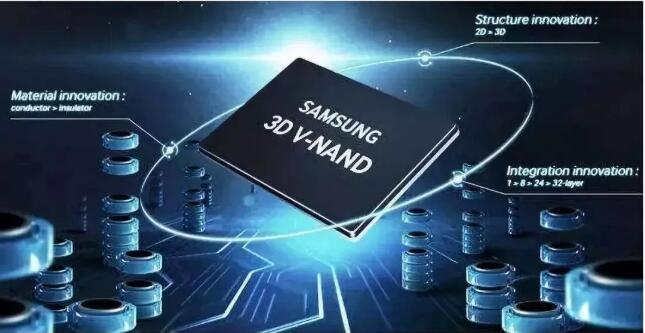
DRAM is dynamic random access memory, the most common system memory. Micron of the United States, Samsung of South Korea and SK Hynix occupy absolute monopoly positions and dominate the DRAM market.
China's three major memory chip companies, Yangtze Memory, Hefei Changxin, and GigaDevice, have begun to lay out and put into production memory chips, which is expected to break the monopoly of memory chips by South Korea, the United States, and Japan.
Yangtze Memory achieved mass production of 64-layer 3D NAND flash memory based on the Xtacking architecture this year. Then they directly skipped the 96 layers common in the industry and successfully developed 128-layer 3D NAND flash memory.
Hefei Changxin achieved mass production of 8G DDR4 memory using the 19nm process in 2019, and will officially commercialize the independently developed Guangweiyi PRO DDR4 memory this year and introduce it to the consumer market.
GigaDevice ranks first in the domestic market share of NOR flash and is also one of the top three suppliers of NOR flash in the world. It is currently gradually expanding into NAND flash and actively deploying DRAM business.
DRAM is the most likely to be mass-produced locally among the core semiconductor technologies that need to be broken through, and it is worth looking forward to.
Top international manufacturers:Micron (USA), Samsung (South Korea), SK Hynix (South Korea), etc.
Chinese manufacturer:Yangtze River Storage, Hefei Changxin, GigaDevice
Ultra high radio frequency chip
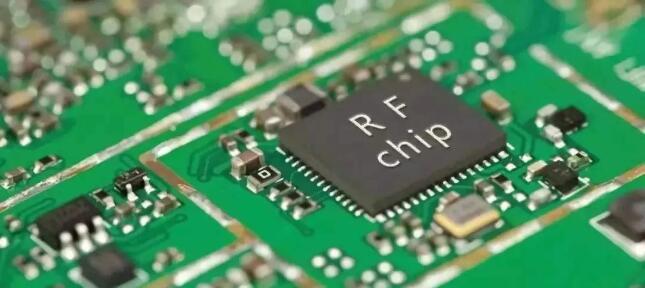
A radio frequency chip refers to an electronic component that converts radio signal communication into a certain radio signal waveform and sends it out through antenna resonance. The radio frequency chip architecture includes two parts: the receiving channel and the transmitting channel. For the existing GSM and TD-SCDMA modes, if the terminal supports an additional frequency band, its radio frequency chip will add a receiving channel accordingly, but whether a new transmitting channel is needed depends on the relationship between the new frequency band and the original frequency band.
China is the world's largest mobile phone producer, but it cannot produce high-end mobile phone radio frequency devices. This requires a solid accumulation of materials, processes and design experience. There are many domestic companies engaged in low-end and mid-range radio frequency chips, and they also occupy a considerable part of the market. However, in the field of high-end radio frequency chips, there is still a lot of room for growth.
Top international manufacturers:Skyworks (USA), Qorvo Verizon (USA), etc.
Chinese manufacturer:Unisoc, Weijie Chuangxin, Zhongpu Micro, etc.
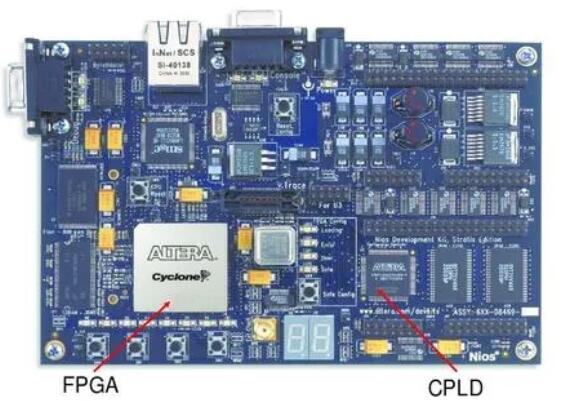
CPLD is a device developed from PAL and GAL devices. It is relatively large in scale and complex in structure, and belongs to the scope of large-scale integrated circuits. It is a digital integrated circuit that allows users to construct logical functions according to their own needs. The basic design method is to use an integrated development software platform to generate corresponding target files using schematic diagrams, hardware description languages and other methods, and then transfer the code to the target chip through a download cable ("in-system" programming) to realize the designed digital system.
FPGA is a field programmable gate array, which is a further development product based on programmable devices such as PAL, GAL, and CPLD. It appears as a semi-custom circuit in the field of application-specific integrated circuits (ASIC), which not only solves the shortcomings of custom circuits, but also overcomes the shortcomings of the limited number of gates in the original programmable devices.
The barriers to entry into the FPGA industry are high. In the past ten years or so, more than 60 companies including Intel, IBM, Motorola, Philips, Toshiba, and Samsung have tried to get involved in this field. Except for Intel, which successfully entered the field with the acquisition of Altera for US$16.7 billion, the other companies have failed. In the current FPGA market, FPGA giants are all in the United States, such as Xilinx, Altera, Lattice, Actel, Atmel, Avago, Cypress, etc., each of which has its own unique secret weapon. Among them, Xilinx is the global leader in FPGAs, the leader in tens of millions of gates and 16 nanometers; Actel is the pioneer of anti-fuses and the pioneer of aerospace-grade products. The products of any other company are indispensable core chips for industrial-grade, military-grade, and aerospace-grade products. They are also the shortcomings and the main source of suffering for countries around the world engaged in cutting-edge technology. Among them, two companies, Xilinx and Altera, account for 90% of the market share. There is a big gap between domestic manufacturers and foreign manufacturers in terms of technical level. Although there are hundreds of domestic FPGA manufacturers contending, they are basically distributed in the mid-to-low-end market. Most of them are FPGAs with a gate level of about 10 million. Although a few FPGAs with a gate level of 20 million are independently developed. China Electronics Technology's 35 million gate-level FPGA and China Electronics' 70 million gate-level FPGA are a major technological breakthrough.
Tongchuang continues to lead the development of China's FPGA industry. After achieving mass production and shipment of China's first 10-million-gate FPGA product, it accelerated the development and successively supplemented and improved all product models of mid- and low-end devices with a scale of less than 30 million gates. Among them, the full range of Logos and Compact devices have been mass-produced. All Logos2 and Titan2 series devices will be launched into mass production this year, which can meet the needs of all domestic mid- and low-end applications. The market share covers about 60%, which can basically meet the stable development needs of China's electronic information industry.
Top foreign manufacturers:Xilinx (USA), Altera (USA), etc.
Chinese manufacturer:Shenzhen Unisoc, Shanghai Fudan Microelectronics, Beijing Microelectronics, etc.
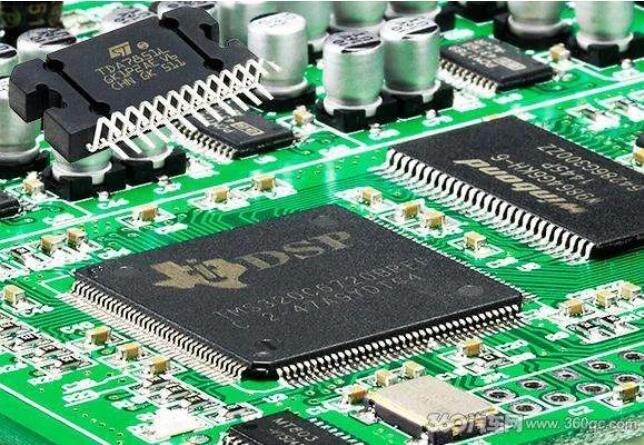
DSP chip refers to a chip that can implement digital signal processing technology. The interior of the DSP chip uses a Harvard structure that separates program and data. It has a dedicated hardware multiplier, widely uses pipeline operations, and provides special DSP instructions that can be used to quickly implement various digital signal processing algorithms.
DSP chips have developed rapidly since their birth. On the one hand, they benefit from the development of integrated circuits, and on the other hand, they also benefit from the huge market. In just two decades, DSP chips have been widely used in signal processing, communications, radar, imaging, military, instrumentation, automation and many other fields.
At present, the global DSP chip market is still monopolized by giants. Texas Instruments, ADI, Freescale, Motorola, etc. are all leaders in this industry. Domestic DSP chips started late. In 2006, the 14th China Electric Power Research Institute and Loongson Corporation cooperated to develop domestic DSP chips. The performance of the "Hua Rui No. 1" they developed in 2012 was better than Freescale's MPC8640D. In 2017, the domestic DSP chip "Hua Rui No. 2" entered the market.
Top foreign manufacturers:TI Texas Instruments (USA), ADI Analog Devices (USA), etc.
Chinese manufacturer:CLP 14, CLP 38, Hunan Jinxin Electronics, Beijing Zhongxing Microelectronics, etc.
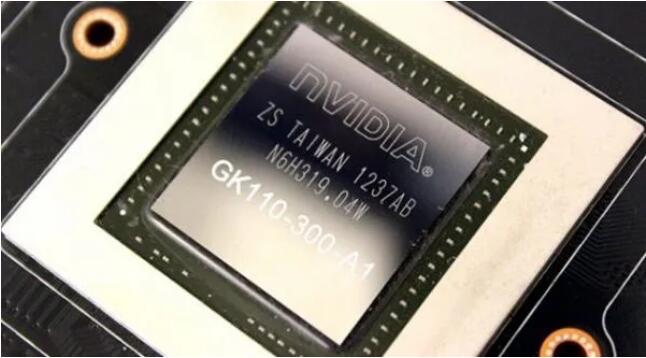
Also known as display core, visual processor, and display chip, it is a microprocessor that specializes in image computing on personal computers, workstations, game consoles, and some mobile devices (such as tablets, smartphones, etc.). The purpose is to convert and drive the display information required by the computer system, provide line scan signals to the display, and control the correct display of the display. It is an important component connecting the display and the personal computer motherboard, and is also one of the important devices for "human-computer dialogue".
When it comes to GPUs, the first thing that comes to mind is NVIDIA, which occupies more than half of the global GPU market, and AMD's GPUs also have a place. China's GPU companies have not yet formed a huge scale, and related technologies are also being actively developed. Currently, domestic companies researching GPUs include Shanghai Zhaoxin, Huawei, Vivante, Tianshu Zhixin, Huaxia Chip, CoreView, China Shipbuilding Industry Corporation 709 Institute, AVIC 631 Institute, etc. According to the editor of OFweek Electronic Engineering Network, the Lingjiu GP101 developed by China Shipbuilding Industry Corporation with completely independent intellectual property rights has refreshed my country's blank in the field of domestic graphics cards. The Lingjiu GP101 is a high-performance and low-power graphics processing chip. Compared with advanced manufacturers such as Europe and the United States, there is still a long way to go. It has a long way to go before it can reach the world's leading level.
Top foreign manufacturers:Imagination (UK), Qualcomm (US), NVIDIA (US), AMD (US), etc.
Chinese manufacturer:Jingjiawei, Shanghai Zhaoxin
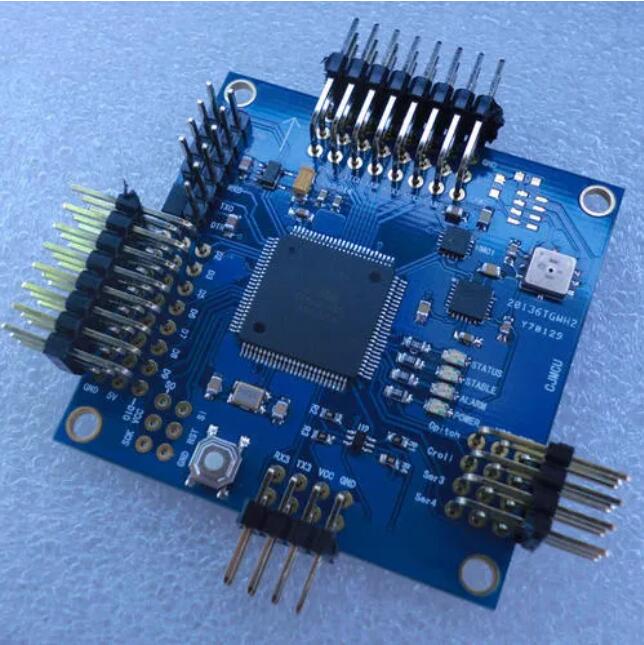
MPU is also called microprocessor or memory protection unit. The MPU is a single chip, while the chipset is composed of a set of chips. In the early days, there were even as many as 7 or 8 chips, but now most of them are combined into two chips, generally called North Bridge chip and South Bridge chip. MPU is the calculation, judgment or control center of the computer. Some people call it the "heart of the computer".
Suppliers such as Intel, Qualcomm, Samsung, Freescale, MediaTek and Spreadtrum are leaders in this market. Domestic MPU market share is very small, almost zero, and companies such as BGI, Huawei, and Unisoc are increasing research and development of related technologies.
Top foreign manufacturers:Intel (UK), Qualcomm (US), Freescale (US), etc.
Chinese manufacturer:Unisoc, MediaTek
Semiconductor raw materials
Semiconductor manufacturing materials mainly include silicon wafers, electron gases, photomasks, photoresist supporting chemicals, polishing materials, photoresists, wet chemicals and sputtering targets.
The global semiconductor materials industry is still absolutely dominated by Japan, the United States, South Korea, Germany and other countries. China's semiconductor materials have made great breakthroughs in the segmented fields of targets, packaging substrates, polishing fluids, photoresists and other products. The technical standards of some products have reached the world's first-class level, but the overall level is still far behind the international first-class level.
Disclaimer: This article is reproduced from "IoT IQ". This article only represents the author's personal views and does not represent the views of Sacco Micro and the industry. It is only for reprinting and sharing and supports the protection of intellectual property rights. Please indicate the original source and author for reprinting. If there is any infringement, please contact us to delete it.






























 粤公网安备44030002007346号