
























Service Hotline
News

News
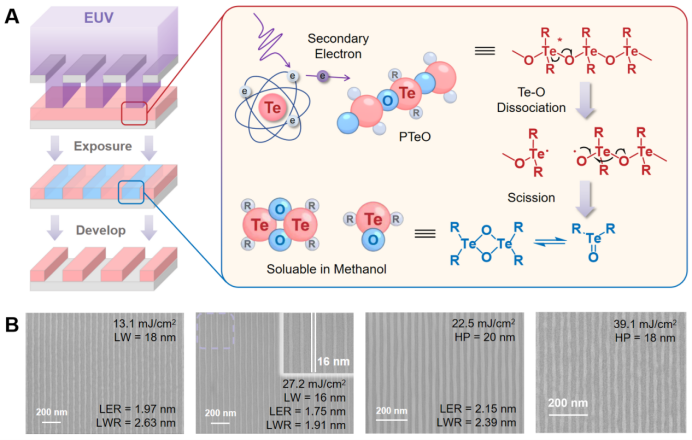
Tsinghua University Develops Ideal EUV Photoresist Material
2025-08-01
4124
?Recently, the research team led by Professor Xu Huaping from the Department of Chemistry at Tsinghua University made significant progress in extreme ultraviolet (EUV) photoresist materials. They developed a novel photoresist based on polytelluoxane (PTeO), offering a new design strategy for key materials in advanced semiconductor manufacturing.
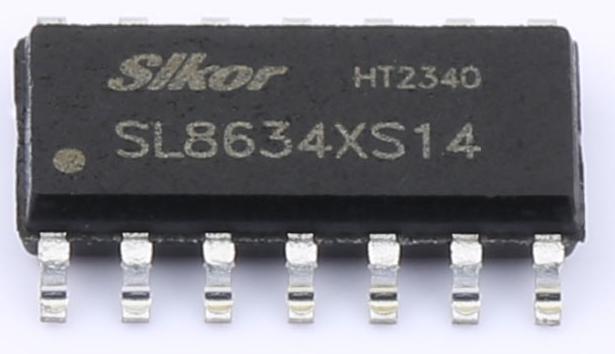
Japan's Rapidus Begins 2nm Test Production, Targets Mass Output by 2027
2025-07-24
3773
Japanese chipmaker Rapidus has announced the official launch of test production for 2nm wafers, with plans to achieve full-scale mass production by 2027.
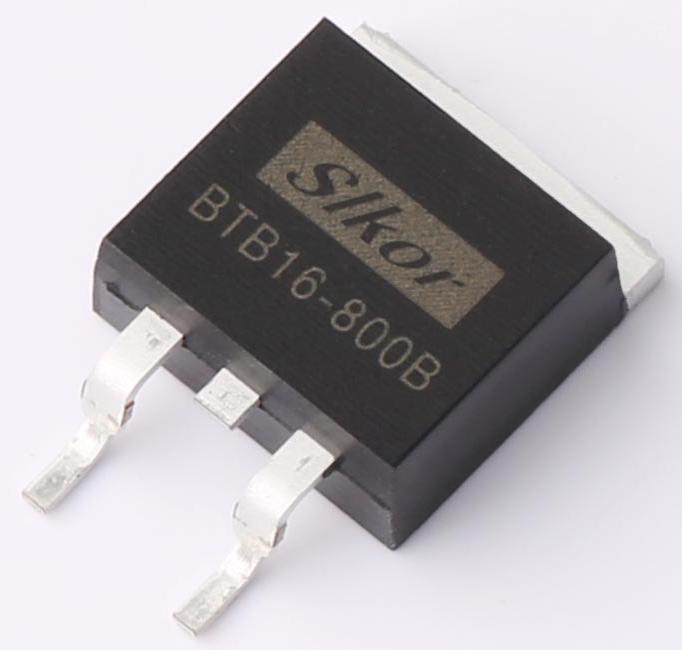
Samsung DRAM Yield Rate Exceeds 50%, Plans Mass Production of HBM4 in Second Half
2025-07-24
4195
Samsung Electronics has made significant progress in its 10-nanometer-class sixth-generation (1c) DRAM process, with the yield rate surpassing 50%. This breakthrough signals Samsung's potential to enhance its competitiveness in the high-performance memory market and plans to commence mass production of the sixth-generation High Bandwidth Memory (HBM4) in the second half of this year.
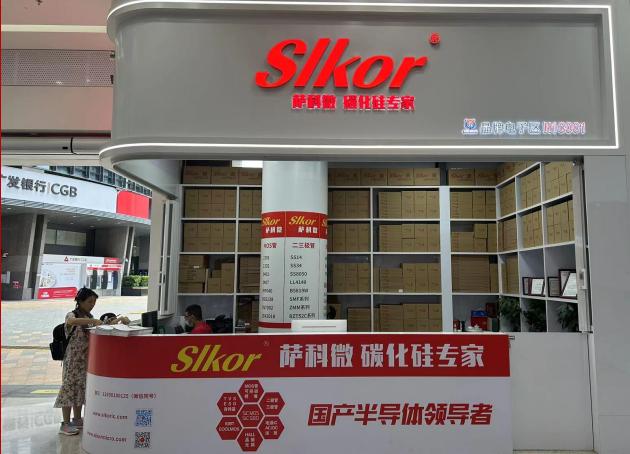
Top 5% of Companies Monopolize Profits in the Global AI Semiconductor Industry
2025-07-24
4353
The economic profit captured by the top 5% of companies exceeded the total economic profit ($147 billion) generated by the entire semiconductor market.
U.S. Lifts EDA Export Restrictions to China: Semiconductor Industry Sees Relief, but Self-Reliance Remains a Long-Term Challenge
2025-07-04
3724
On July 3, 2025, the U.S. government announced the lifting of export restrictions on certain Electronic Design Automation (EDA) software to China, triggering strong reactions across the global semiconductor industry. As the "foundational tools" of chip design, the resumed supply of EDA software will directly impact the R&D progress of Chinese semiconductor companies while reflecting new dynamics in U.S.-China tech competition. This article comprehensively analyzes the background, specifics, reactions, short-term impacts, and long-term challenges of this policy shift, exploring China's semiconductor development path amid complex international conditions.
U.S. Lifts EDA Export Restrictions to China: Semiconductor Industry Sees Relief, but Self-Reliance Remains a Long-Term Challenge
2025-07-04
2066
On July 3, 2025, the U.S. government announced the lifting of export restrictions on certain Electronic Design Automation (EDA) software to China, triggering strong reactions across the global semiconductor industry. As the "foundational tools" of chip design, the resumed supply of EDA software will directly impact the R&D progress of Chinese semiconductor companies while reflecting new dynamics in U.S.-China tech competition. This article comprehensively analyzes the background, specifics, reactions, short-term impacts, and long-term challenges of this policy shift, exploring China's semiconductor development path amid complex international conditions.
Policy Shift: U.S. Removes EDA Export Restrictions
On July 3, 2025, the global semiconductor industry witnessed a major policy reversal—the U.S. Commerce Department’s Bureau of Industry and Security (BIS) formally notified leading EDA vendors that export controls on certain chip design software to China would be lifted. Siemens AG was the first to issue a statement confirming receipt of the U.S. government notice, announcing that its subsidiary Siemens EDA (formerly Mentor Graphics) would resume software supply and technical support to Chinese clients, including critical design verification tools like Calibre. Shortly after, Synopsys announced that based on an official BIS letter received on July 2, the export restrictions imposed on May 29, 2025, were "now revoked, effective immediately." As of July 4, while Cadence—the third EDA giant—had not formally announced, industry sources indicated it had also resumed shipments to China.
The lifting covers EDA tools for advanced process nodes (7nm and below), including core workflow software for chip layout, physical verification, timing analysis, and design rule checking. These tools are indispensable for R&D in high-performance computing, AI, and communication chips. Notably, simultaneous with the EDA relaxation, the U.S. also lifted export restrictions on ethane (a chemical feedstock), allowing companies to export to China without additional approvals. This series of moves is seen as a signal of easing tensions in U.S.-China trade negotiations.
Background: From Supply Cutoff to Policy Reversal
This lifting is not an isolated event but the latest round in U.S.-China tech competition. In late May 2025, the U.S. BIS abruptly ordered the "Big Three" EDA vendors (Synopsys, Cadence, Siemens EDA) to suspend software services and technical support to Chinese clients, citing concerns about China gaining advanced chip design capabilities. The ban left Chinese chip designers unable to update or download certain EDA tools, directly impacting high-end chip R&D for 3nm and below processes.
The supply crisis quickly caused ripple effects. China’s Ministry of Commerce repeatedly condemned the U.S. for "discriminatory restrictions," warning of countermeasures. Meanwhile, domestic EDA firms like Empyrean Technology (Huada Jiutian) and Primarius Technologies (Gailun Electronics) accelerated mergers and integrations to advance self-reliance. Huawei founder Ren Zhengfei acknowledged in a June speech that Chinese chips still lag a generation behind U.S. counterparts but noted the gap could be narrowed through algorithm optimization and group computing, signaling confidence in a self-reliant path.
Analysts widely attribute the policy reversal to multiple factors. From a U.S.-China relations perspective, the timing coincides with the "90-day buffer period negotiations," interpreted as a U.S. gesture of de-escalation. Some view it as a potential trade-off involving "rare earth export controls" and "chip technology restrictions." From an economic interest standpoint, China accounts for 12%-16% of revenue for firms like Siemens and Synopsys. Prolonged restrictions would not only hurt sales but also accelerate China’s domestic alternatives, eroding long-term U.S. competitiveness. As NVIDIA CEO Jensen Huang previously warned: excessive controls would push China to build an independent tech ecosystem, ultimately damaging U.S. industrial advantage.
Industry Impact: Short-Term Relief vs. Long-Term Challenges
For China’s semiconductor design industry, the lifting is a timely reprieve. During the over one-month cutoff, Chinese chip designers faced dilemmas: either use "frozen versions" of EDA tools (perpetual licenses or subscription versions) without access to updates or support, or switch to domestic alternatives—which currently offer better support for mature nodes (28nm and above) while full-flow solutions for advanced nodes (7nm and below) remain under development. Restored access to Siemens and Synopsys tools will help ensure design continuity, accelerate tape-out verification, and improve project execution efficiency.
For the global EDA market, the policy easing stabilizes supply chain expectations. According to China Reporting Hall data, Synopsys, Cadence, and Siemens EDA still held ~82% of China’s EDA market share in 2024. Following the announcement, Synopsys’ stock rose nearly 6%, reflecting market optimism. The global EDA market is projected to grow from $15.71 billion in 2024 to $18.33 billion by 2026, with China’s market showing particularly strong momentum—reaching ¥12.7 billion in 2023 and expected to exceed ¥18.49 billion by 2025.
However, deep-seated challenges remain. The current relaxation covers only select EDA tools, with the scope for certain high-end products from Synopsys and Cadence still unclear. EDA tools remain heavily reliant on U.S. technological foundations, leaving China’s chip industry exposed to "chokepoint" risks. Invisible boundaries or temporary constraints may persist for high-sensitivity projects in defense, AI models, and supercomputing. U.S. semiconductor policy toward China follows a cyclical pattern of "probing-pressure-partial reversal," suggesting this lifting is more tactical than strategic.
Domestic EDA: Accelerated Growth Under Blockade Pressure
Despite resumed international supply, the urgency for domestic substitution is widely recognized. In the month following the May cutoff, Chinese EDA firms saw short-term opportunities: Empyrean emphasized its toolchain was independently developed and unrestricted, reporting 2024 revenue of ¥1.22 billion (+20.98% YoY) and maintaining its lead in domestic market share; Primarius highlighted that its product performance now surpasses international rivals in some areas, with lower barriers for user migration. Chip designers like Jingjia Micro have partially adopted domestic EDA tools, validating basic substitution capabilities.
Mergers and integrations have become a strategic shortcut for Chinese EDA firms. Since 2024, Empyrean has acquired Xinda Tech, Akesi, and Xhe Electronics to build a full-flow platform covering analog, digital, and package design; Primarius consolidated six acquisitions to enhance capabilities in device modeling and board-level design, forming a "design-manufacturing integration" solution. Industry analysis notes that international EDA giants grew through acquisitions—a path Chinese firms are following to shorten the technology catch-up cycle.
Nevertheless, technical gaps persist. Domestic EDA has progressed in analog circuits and memory design but still relies on international tools for high-end digital chip design and system-level verification. Semiconductor experts stress that EDA R&D requires long-term industry collaboration—isolated tool innovation cannot support full-flow demands. For example, in areas critical to sub-7nm processes like nanoscale chip simulation and multi-physics co-optimization, domestic EDA lacks complete solutions.
Future Outlook: Balancing Autonomy and Openness
Facing policy volatility risks, China’s semiconductor industry must pursue a dual-track strategy of "autonomy + openness." Short-term, leverage the window of restored international EDA access to accelerate ongoing chip design projects. Medium-to-long-term, break through in key technologies while utilizing international rules to expand cooperation. Ren Zhengfei’s proposal of an "asymmetric innovation path" (e.g., algorithm optimization, quantum chips) may chart China’s course for technological breakthroughs.
Industry chain collaboration will be decisive. Domestic EDA firms need deep partnerships with chip designers and wafer fabs to refine tools through real-world projects. Empyrean already serves nearly 700 clients across analog circuits and memory design; Primarius collaborates with Samsung and SK Hynix, validating its global service capabilities. Policy-wise, cities like Shenzhen and Shanghai have established EDA industry funds to promote domestic tool adoption. If external restrictions persist, China’s EDA market could grow from ¥12 billion in 2023 to ¥44.56 billion by 2026.
AI technology presents new opportunities. AI algorithms can optimize chip design flows, improving efficiency and precision. Domestic players are rapidly integrating AI—for example, Semitronix’s SemiMind platform incorporates large models to build industry knowledge bases and enable low-code development; EDA software for domestic FPGA design (e.g., Yilingsi) uses AI to enhance code performance. This "intelligent transformation" could enable Chinese EDA to leapfrog competitors.
Table: Evolution of U.S. EDA Export Restrictions and Impacts
Timeline
Policy Content
Industry Impact
Chinese Response
Late May 2025
U.S. BIS orders Big Three to suspend services to China
7nm-below chip design in China stalled; global supply chain shaken
Accelerated domestic substitution; orders surged for Empyrean etc.
July 3, 2025
Partial lifting of EDA restrictions; Siemens/Synopsys resume supply
Design continuity restored; U.S. EDA stocks rose
Dual-track: use int’l tools + boost R&D
Future Trend
Invisible restrictions may persist in high-end sectors; policy volatility expected
Global EDA market grows; China’s share increases
Full-flow toolchain breakthroughs; AI-driven innovation
Conclusion: A New Phase of Opportunities and Challenges
The U.S. lifting of EDA export restrictions marks a new phase in semiconductor competition. While easing short-term pressure on Chinese chip designers and stabilizing global EDA growth, it underscores the enduring importance of core technology self-reliance. History shows that blockades often accelerate innovation—from Huawei breaking EDA constraints to domestic CAD software maturing, each sanction has forced China’s tech industry to address weaknesses.
The next 5-10 years will be critical for China’s EDA development. On one hand, sustained investment in core algorithms and building a local EDA-foundry ecosystem is essential. On the other, openness to global collaboration must continue. Amid industry transformations driven by AI and cloud migration, China has an opportunity to forge a new model: "foundational tool autonomy + global leadership in niche domains." Semiconductor competition is ultimately about ecosystems—only by balancing independent innovation with international cooperation can China secure its place in global tech leadership.
This event reaffirms a truth in our deeply globalized world: technology restrictions are a double-edged sword. For China’s semiconductor industry, neither short-term relief nor external pressure should alter the course—breakthroughs in critical fields paired with deeper international cooperation in areas of strength may be the most rational path forward..

Perovskite-Organic Solar Cell Achieves Record Power Conversion Efficiency
2025-07-04
3659
?A research team from the National University of Singapore has developed a novel perovskite-organic tandem solar cell, certified to achieve a power conversion efficiency (PCE) of 26.4% within a 1 cm2 active area—setting a new world record for such devices. The findings were published in the latest issue of Nature.

Top Ten Market and Application Trends in the Electronics Industry for 2025
2025-06-17
3711
?Looking ahead to the electronics market in 2025, the application of AI technology in consumer electronics and smart vehicles will deepen further, driving the semiconductor market to maintain an annual growth rate of over 10%, with particularly strong demand for AI and automotive chips. Concurrently, consumer electronics are trending towards sustainability, with increased promotion of eco-friendly products. The integrated circuit industry is benefiting significantly from the push of AI, 5G, and electric vehicle markets, leading to notable technological advancements. Additionally, emerging technologies like Generative AI and service robots will become new highlights in the market.
Overview of Chinese EDA Companies
2025-06-04
4022
?Amidst increasing instability in overseas EDA supply, China's domestic EDA industry has flourished under the triple drivers of demand, supply, and policy support. Companies have sprung up like mushrooms after rain, with the number once exceeding 120. Leading and other outstanding enterprises have emerged, represented by Huada Jiutian, Primarius Electronics, Semitronix, X-Epic, and others.
Xiaomi Xuanjie 01, 3nm Flagship Processor, Striving to Join the First-Tier Flagship Experience
2025-05-20
3611
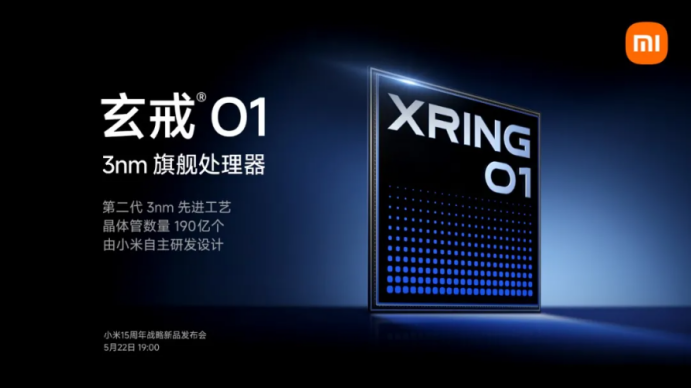
?Lei Jun, Chairman of Xiaomi Group, introduced the company’s new smartphone SoC chip, Xiaomi Xuanjie 01: "Adopting the second-generation 3nm process technology, striving to join the first-tier flagship experience."
Lei Jun stated that as of the end of April this year, after over four years of development, cumulative R&D investment in Xuanjie has exceeded 13.5 billion RMB. Currently, the R&D team has grown to over 2,500 members, and this year’s R&D investment is projected to surpass 6 billion RMB.

Weekly Industry Highlights from SLKOR | Week 20 of 2025 | May 12 - 16
2025-05-16
3170
Stay updated on the latest trends and breakthroughs in the electronics industry with SLKOR Semicon ?
?OptoChat AI - The First Photonic Chip-Specific Large Model Jointly Launched by Nanjing Optoelectronic Intelligence and Nanjing University
2025-05-16
3676
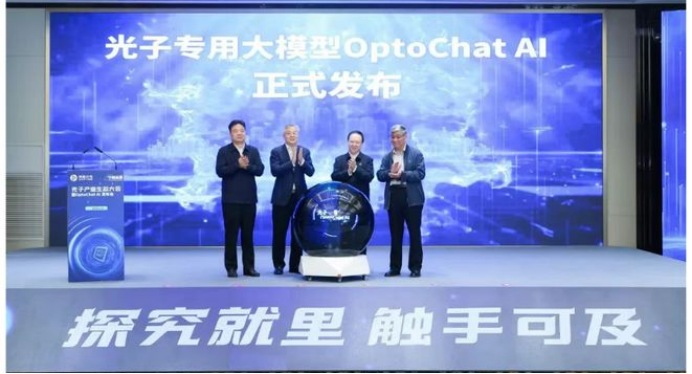
OptoChat AI is China's first photonic-specific large model jointly developed by Nanjing Optoelectronic Intelligence and Nanjing University. The model focuses on the entire industrial chain of photonics, integrating over 300,000 patents, literature, and industry data resources related to photonic chips. It possesses robust data analysis and intelligent algorithm capabilities, significantly enhancing the R&D efficiency and industrial conversion speed of optoelectronic chips. The model compresses traditional weeks-long design verification cycles to minutes, driving the transformation of the photonic chip industry from trial-and-error R&D to intelligent processes and promoting global collaborative innovation and sustainable development in the photonics ecosystem.
 (1).png)
IBM unveiled a new 5nm chip manufacturing process using EUV lithography
2025-04-28
3562
IBM claims that chips based on this new design will deliver 40% higher performance compared to current 10nm chips produced by companies like AMD, ARM, and Intel.

Elon Musk: Chinese Users Are "Most Demanding" of FSD, Tesla Robots Rely on Chinese Components
2025-04-24
3274
?On April 23, Tesla released its first-quarter 2025 financial results. The report showed that Tesla’s revenue for the quarter was 19.335 billion, down 919.335 billion, down 9409 million, a 71% decline; and diluted earnings per share were $0.12, also down 71%. Following the earnings release, Tesla’s stock rose over 5% in after-hours trading.
? China Delivers Key Component for World's Largest "Artificial Sun"
2025-04-14
3221
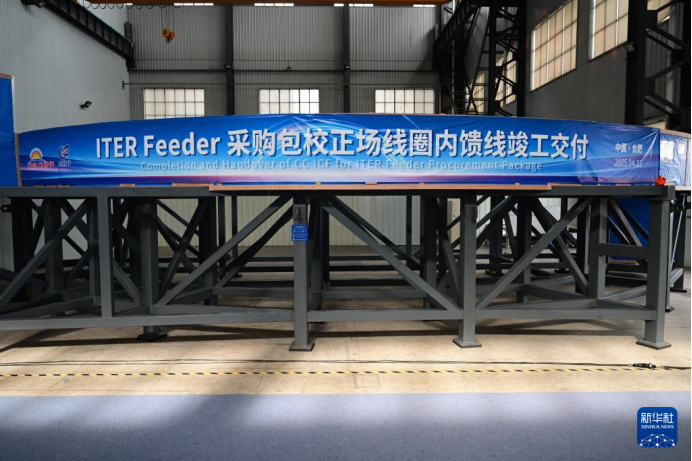
Xinhua News Agency, Hefei, April 11 (Reporter He Xiyue) — On April 11, a critical milestone was achieved in the magnet feeder procurement package of the International Thermonuclear Experimental Reactor (ITER), the world's largest "artificial sun." The final set of inner feeder components for the correction field coils was completed in Hefei and shipped to the ITER site in France, marking the successful completion of all oversized components in the ITER magnet feeder system.

Amazon CEO: Third-Party Sellers Expected to Pass Costs to Consumers Due to Trump's Tariffs
2025-04-12
3555
On April 10, Amazon CEO Andy Jassy dedicated significant space in his annual shareholder letter to promoting the company’s AI initiatives, encouraging businesses to invest heavily in artificial intelligence (AI) to secure substantial financial returns in the future. He also predicted that the unit cost of AI will decline significantly over time.

Samsung's 2nm Yield Rate Reportedly Rises to 40%; First Exynos 2600 Chip Set for Mass Production in November
2025-04-12
3599
April 12, 2024 — According to a report by South Korean media Asiae on April 10, Samsung plans to begin mass production of its first 2nm-process Exynos 2600 chip in November 2025. If the Galaxy S26 series successfully integrates the Exynos 2600, Samsung could showcase its 2nm technology prowess and attract more clients.

What Are People Actually Using AI For? 100 Real-World Cases
2025-04-12
3659
Over the past year, the hype around artificial intelligence (AI), generative AI (GenAI), and large language models (LLMs) has intensified, public interest has doubled, investments have surged, and governments have taken clearer stances. According to some, AI is inextricably linked to humanity’s future.
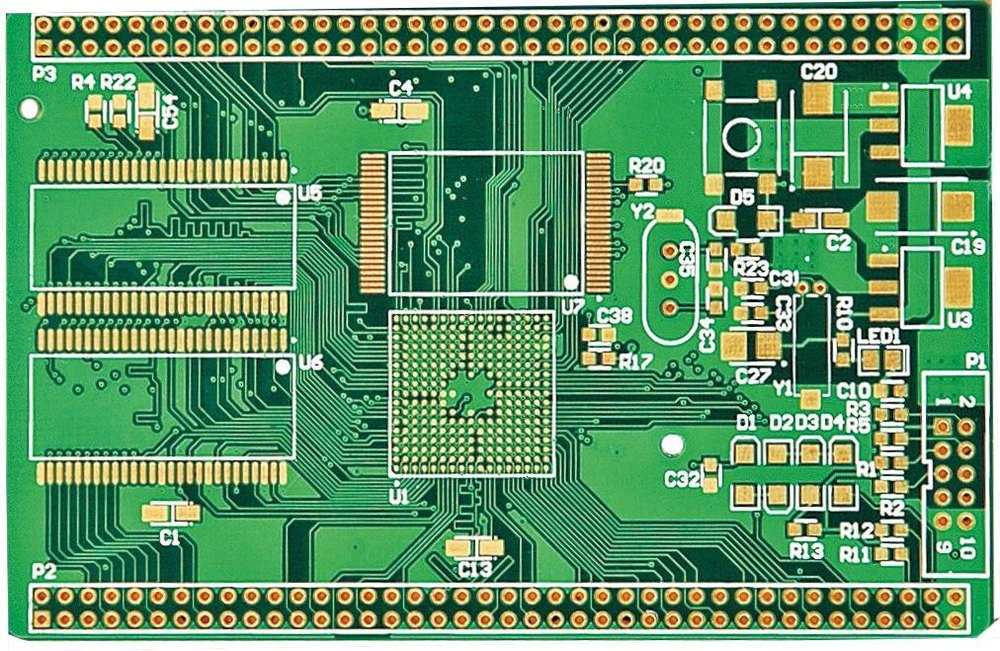
How to Choose PCBs: Key Parameters, Top Manufacturers & Industry Applications for Electronics Teams
2025-04-09
3624
A Printed Circuit Board (PCB) serves as the backbone of modern electronics, enabling seamless connectivity between components. For procurement and engineering teams in consumer electronics, understanding PCB design, manufacturing, and selection is critical. This article delves into the development history of PCB, its core characteristics, key parameters, functional roles, diverse applications, and trusted manufacturers.

The world's first two-dimensional chip: Chinese scientists use "tofu carving" skills to break through the EUV blockade
2025-04-09
3741
While global chip giants are still fiercely competing for nanometer-level precision in EUV lithography machines, Chinese scientists have performed a mind-blowing technological feat in the lab—a team from Fudan University recently transformed two-dimensional materials, just a few atoms thick, into a 32-bit microprocessor with performance rivaling traditional silicon-based chips. This "Wuji" chip, featured on the cover of Nature, not only integrates over 5,900 transistors but also achieves the marvel of "nanoscale power consumption with micron-scale fabrication," opening a brand-new dawn for China's semiconductor industry.





 粤公网安备44030002007346号