
























Service Hotline
News

News
The world is "short of cores" and local substitution is not optimistic. Experts say the industrial chain and supply chain should be developed simultaneously
2022-03-16
948
Read Chuang/Shenzhen Business Daily reporter Chen Shu
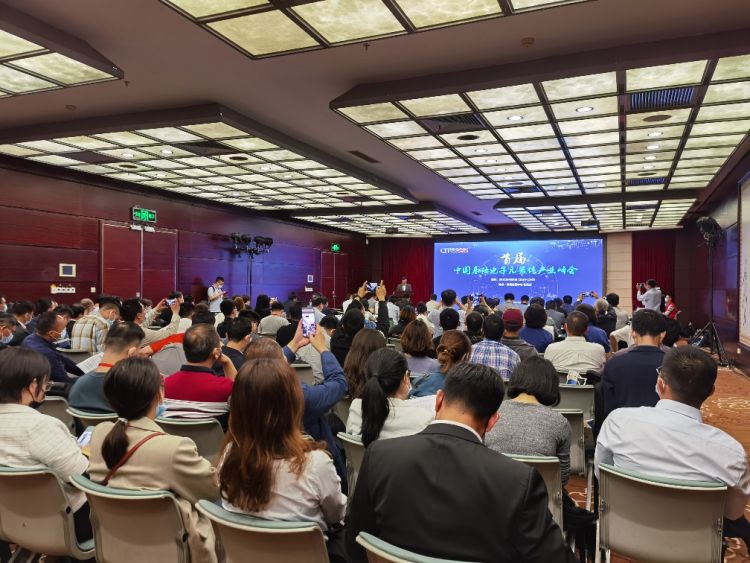
The global chip supply shortage has spread from last year to this year, and no one in the mobile phone, automobile, game console, security and other industries has been spared. On April 9, the "First China Basic Electronic Components Industry Summit" was held at the 9th "Electronic Expo". Industry experts discussed the opportunities of the basic component industry during the "14th Five-Year Plan" period, how to deal with the global "core shortage", and the path for localization substitution. The guests pointed out that the localization of chips requires both the industrial chain and the supply chain, and there is still a long way to go to build a safe and stable supply chain. The summit is hosted by the China Electronics Fair (CEF) Organizing Committee and Shenzhen Electronic Information Industry Federation.
Favorable policies, electronic components welcome development opportunities
Electronic components include resistors, capacitors, inductors, potentiometers, etc. Basic electronic components are widely used in smart terminals, automotive electronics, 5G communications and other fields, playing a key role. my country's local supply chain for electronic components is generally complete and the product categories are relatively complete. However, the problem of a large but not strong industry still exists.
This year, the Ministry of Industry and Information Technology issued the "Basic Electronic Components Industry Development Action Plan (2021-2023)", setting an overall goal for the development of the basic electronics industry. By 2023, the total sales of electronic components will reach 2.1 trillion yuan, further consolidating my country's position as a major global producer of electronic components, and undoubtedly injecting a boost into the industry. Electronic components, as a basic and strategic industry, will usher in development opportunities.
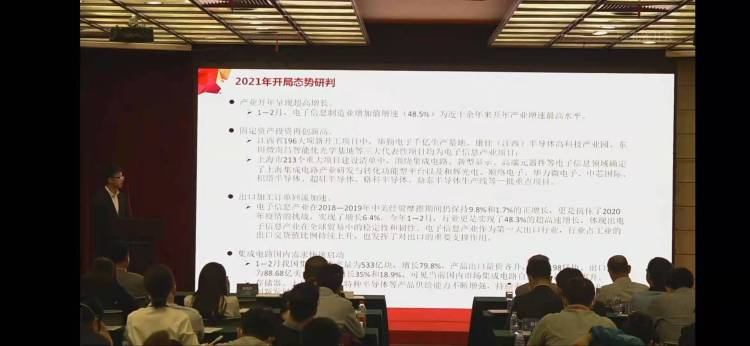
Wen Xiaojun, director of the Electronic Information Research Institute of CCID Think Tank, revealed at the meeting that from January to February this year, my country's integrated circuit output was 53.3 billion units, an increase of 79.8%. The export volume and price of products increased, with exports of 19.8 billion units and export value of 8.868 billion US dollars, an increase of 35% and 18.9% respectively. It can be seen that the self-sufficiency level of integrated circuits in the domestic market has further improved, and the supply capacity of products such as memory, large-size wafers, and special semiconductors has continued to increase.
Huang Weiping, founder and chief scientist of Qingdao Hisense Broadband Multimedia Technology Co., Ltd., took optoelectronic chips as an example and said that this industry has not received attention for a long time. After the "14th Five-Year Plan" was proposed, this issue has been well repositioned, and more people will be aware of its important role in information systems in the future.
Chips are out of stock, supply chain security has a long way to go
Since the beginning of 2020, tight chip supply has been spreading around the world. "I originally thought that according to convention, it would stabilize after a period of time, but not only did it not happen after the 2021 Spring Festival, the situation became increasingly tense," said Zhou Qiang, general manager of the high-end chip division of Xirenma Technology Co., Ltd., from cars to mobile phones, game consoles, security, etc., no one was spared.
Focusing on the issue of chip supply, the Component Application and Supply Chain Branch of the China Information Industry Chamber of Commerce recently conducted a survey called "Safe and Stable Chip Supply Chain Questionnaire" to understand the problems faced by enterprises upstream and downstream of the electronic manufacturing industry chain, including component manufacturers, original manufacturers, agents, traders, and downstream terminal group companies, from the four dimensions of purchase and sales, standards, industry-university-research, and localization.
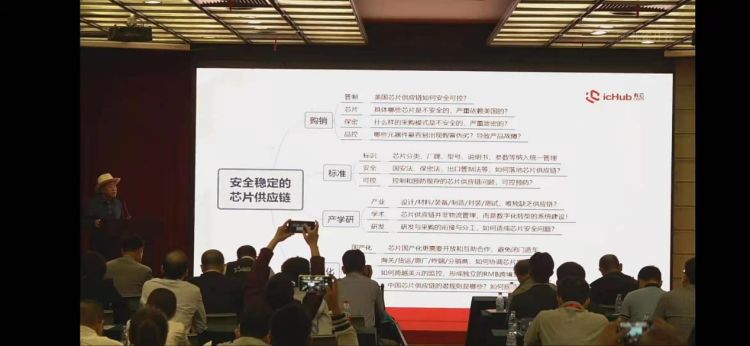
Wu Zhenzhou, vice chairman of the association, said at the meeting that the survey received a total of 1,182 valid responses, including 475 terminal manufacturers, accounting for 40.2%. Judging from survey data, the current average proportion of overseas brands in the domestic component supply chain reaches 52.3%. More than a quarter of companies rely heavily on overseas components, accounting for more than 85%, while only 5.8% do not use overseas components. Among overseas brands, American brands account for more than 35%.
The interviewed companies are not optimistic about the local substitution of components. They believe that the average proportion of domestic substitution of overseas brand components is 35.1%. The main problem of domestic components is performance, followed by poor product consistency and insufficient product lines. Relatively speaking, users are relatively satisfied with the after-sales services of domestic brands. It is worth noting that more than 60% of the companies surveyed said that when considering substitution, the price of domestic brands must be lower than that of overseas brands. In comparison, state-owned enterprises have a more urgent need for domestic substitution.
The survey believes that in the face of the current drastic changes in the market, both original manufacturers and terminal manufacturers will increase stocking and establish safety stocks as their first choice. The localization of chips requires both the industrial chain and the supply chain. The industry must pay more attention to the supply chain. Judging from the current situation, there is still a long way to go to build a safe and stable supply chain.
Be careful not to be impetuous and rush in to cause disorderly competition.
At the meeting, relevant experts pointed out that the globalization trend of the integrated circuit industry chain will not change in the future. So, where is the direction of the domestic industrial chain’s efforts?
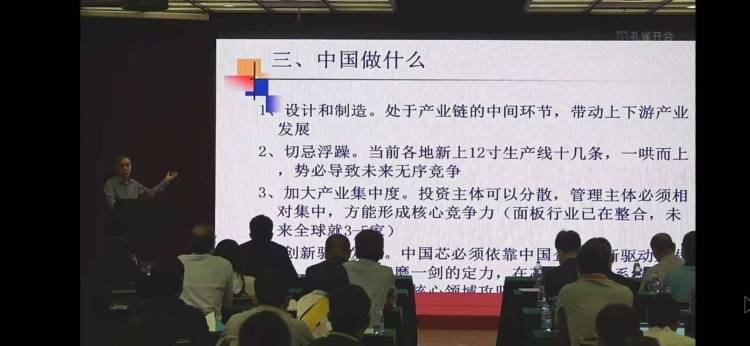
Dong Yunting, director of the Expert Committee of the China Electronic Information Industry Federation and professor and doctoral supervisor, said that "all countries complement each other's advantages and achieve win-win cooperation." In response to the question "What is China going to do?" he said it was design and manufacturing. Wen Xiaojun believes that innovation in key areas of industry lies in basic components rather than downstream terminal applications. my country should establish a diversified industrial system to adapt to the global competitive environment, while enhancing advantages and filling in shortcomings to promote the development of upstream industries from terminal applications.
"Don't be impetuous," Dong Yunting reminded. Currently, there are more than a dozen new 12-inch production lines in various places, and the rush to do so will inevitably lead to disorderly competition in the future. In the process of doing this, industrial concentration must be increased. Investment entities can be dispersed, but management entities must be relatively concentrated in order to form core competition.
Zhou Qiang pointed out that the root of the main problems in China's IC industry is that it emphasizes design and neglects manufacturing, takes shortcuts based on appropriation, and ignores the basic skills of independent research and development. Huang Weiping said that taking optoelectronics as an example, China has made significant progress in complete machines and modules, and the gap in chips continues to narrow. However, there is a large gap in materials, platforms and emerging hybrid integration and packaging technologies. He emphasized that personnel from universities and scientific research organizations should be encouraged and promoted to return to academia, raise and study original scientific and technological issues, focus on valuable and meaningful research and development, and "really solve problems from 0 to 1, not 1 to N."
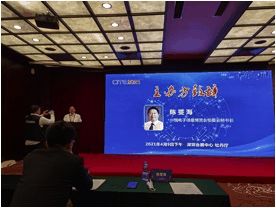
Chen Wenhai, secretary-general of the China Electronic Information Expo Organizing Committee and president of the Shenzhen Electronic Information Industry Federation, said that a strong foundation of components is the foundation for the innovative development of the electronic information industry. He hopes to make the "Basic Components Industry Summit" into a brand summit and continue it. By focusing on the key core technology development directions of basic electronic components, it will promote industry discussions and exchanges and help the industry accelerate innovation.
Disclaimer: This article is reproduced from "Read and Create", which supports the protection of intellectual property rights. Please indicate the original source and author when reprinting. If there is any infringement, please contact us to delete it.
Company phone number: +86-0755-83044319
Fax/FAX: +86-0755-83975897
Email: 1615456225@qq.com
QQ: 3518641314 Manager Li
QQ: 332496225 Manager Qiu
Address: Room 809, Building C, Zhantao Technology Building, No. 1079 Minzhi Avenue, Longhua New District, Shenzhen
Related Recommendations
Exclusive Interview with Li Gang of Yunfan Ruida: The Precision of Millimeter-Wave Radar Products and the Warmth of Humanity
2026-07-22
2518
RF Passion, Craftsman’s Journey: Over 30 Years of Steadfast Dedication — Interview with Kinghelm Chief Engineer Mr. Qin hongxiang
2026-06-26
2688





 粤公网安备44030002007346号