
























Service Hotline
News

News
What is the connection between Huaqiangbei and the electronics industry in Hong Kong, China?
2026-09-18
1340
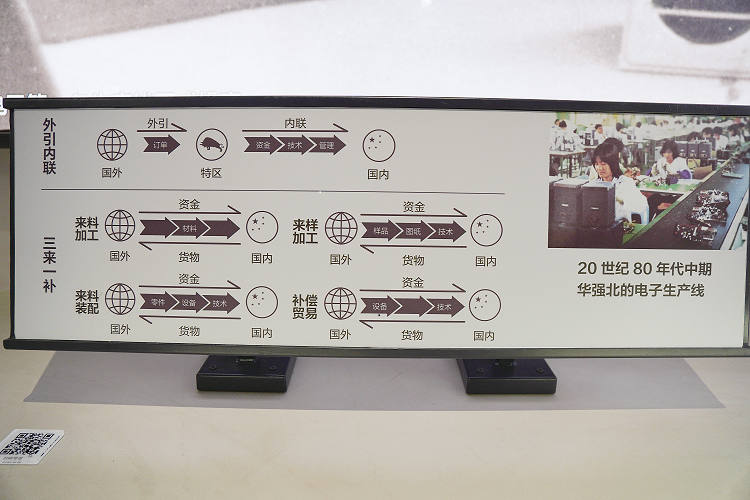
The connection between Huaqiangbei and Hong Kong's electronics industry originated from cost and geographical advantages in the early stages of China's reform and opening-up policy. At that time, Hong Kong's manufacturing sector faced increasing pressure from rising land and labor costs, whereas Shenzhen—separated only by a river—possessed low labor costs and ample land resources; moreover, the "Three-Processing and One-Compensation" policy provided further convenient for Hong Kong businesses to expand northward. Located in the Futian District, Huaqiangbei borders the Luohu Port, making it the natural preferred destination for Hong Kong electronics enterprises to relocate.
Photo: Taken at Huaqiangbei Museum
Hong Kong brought not only industrial relocation to Huaqiangbei but also capital, technology, and international management expertise. In the early stages of China's reform and opening-up policy, Shenzhen lacked access to advanced technology, equipment, and capital; however, leveraging its geographical proximity to Hong Kong, many cutting-edge international technologies and components could be introduced into mainland China via the Luohu Bridge. Hong Kong-based businesses established factories in the Shangbu Industrial Zone through joint ventures and cooperative arrangements, introducing advanced electronic manufacturing technologies and international corporate management practices, thereby laying the industrial foundation for Huaqiangbei.
Leveraging Hong Kong's extensive international trade network, Huaqiangbei has been able to swiftly integrate into the global market. As a free port and a key gateway for international trade, Hong Kong boasts a robust logistics system and a vast network of overseas customers. Components imported from abroad enter Huaqiangbei via Hong Kong, while products manufactured in Huaqiangbei are distributed worldwide through Hong Kong. This two-way flow—combining "bringing in" and "going global" —has transformed Huaqiangbei from a mere industrial zone into a leading electronics trading hub that connects the Chinese mainland with global markets.
With the development of the industrial sector, Huaqiangbei has established a collaborative model known as the "front-store, back-factory" framework. In his book *Song Shiqiang's Perspectives on Huaqiangbei, Shenzhen*, Song Shiqiang, General Manager of SAKO Micro/Jinhangbiao, noted that the area initially utilized the "Three Inputs and One Compensation" bonded processing model – based on imported materials – to accommodate industrial relocation; this model later evolved into the "front-store, back-factory" business approach: Huaqiangbei serves as the "store" responsible for distribution and trading, while surrounding cities act as the "factory" handling production and manufacturing. This division of labor has significantly shortened the time required to transform product concepts into mass production, collectively shaping the distinctive industrial character of Huaqiangbei.
To date, the collaboration between Hong Kong and Huaqiangbei continues to deepen. Evolving from initial processing trade to current supply chain synergy, the electronics industries of both regions have established a complementary relationship. Hong Kong's strengths in international finance, shipping, and trade complement Huaqiangbei's advantages in manufacturing, innovation, and supply chain management, jointly driving the high-quality development of the electronic information industry across the Greater Bay Area.
Note: The data and information in this article are sourced from authoritative reports and materials. Should there be any instances of copyright infringement or inaccuracies, please feel free to contact us.
Into how many main stages can the development of Huaqiangbei be divided?
2026-09-03
1717
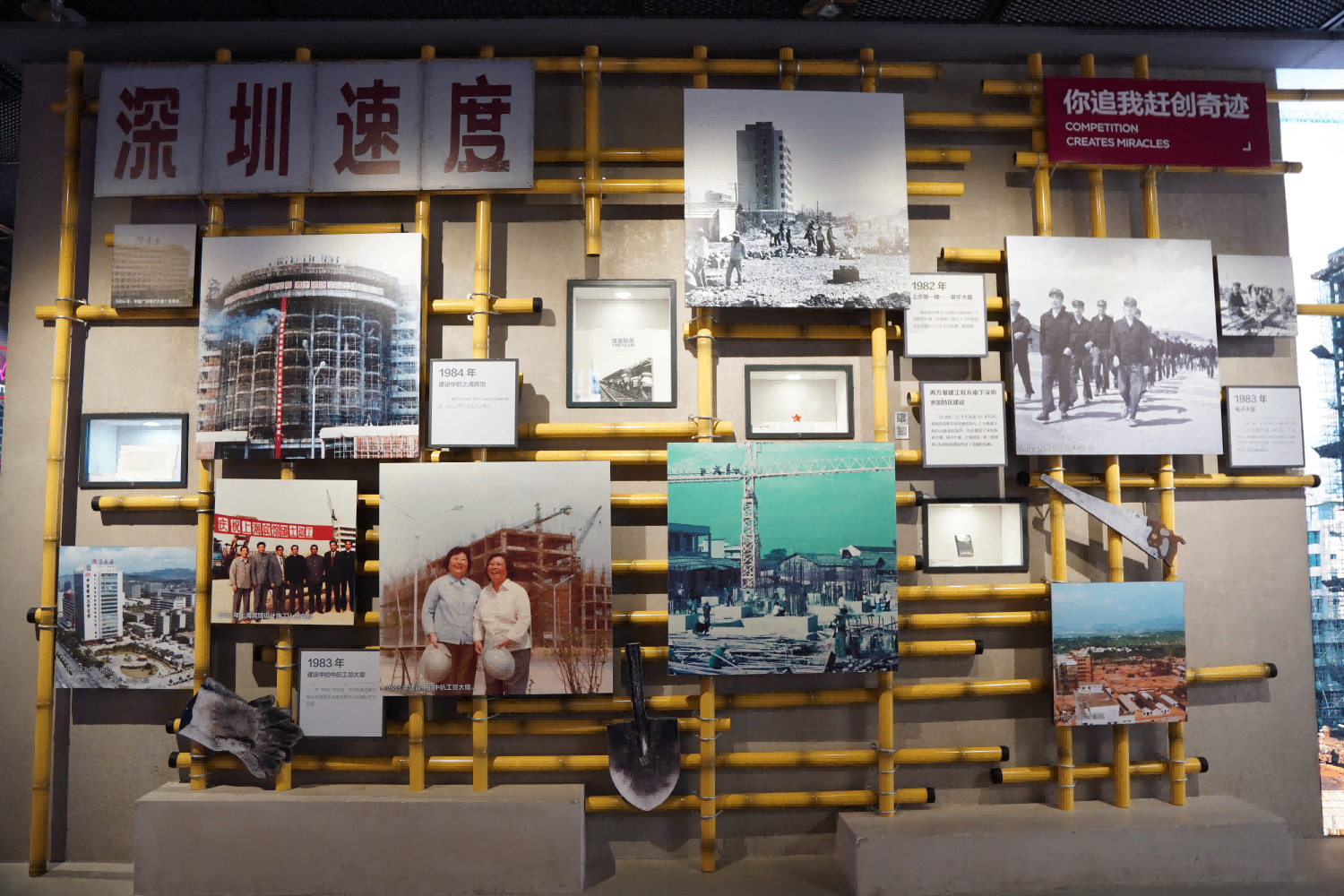
The development trajectory of Huaqiangbei can be broadly divided into the following five stages:Phase I: The Industrial Foundation Period (1979–1988). As Shenzhen's earliest developed industrial zone, the Shangbu Industrial Zone hosted a number of large enterprises, including SEG, Huaqiang, and Laiyinda. In March 1988, the SEG Group utilized its existing industrial facilities to establish the SEG Electronic Supporting Market—a move widely regarded as the birthmark of Huaqiangbei.
Phase II: Market Prosperity Period (1988–2007). The SEG Electronics Market was gradually expanded to cover the entire building, and the Huaqiang Group promptly followed suit by converting its factory premises into the Huaqiang Electronics Market. In 1994, Wanjia Department Store moved in, effectively revitalizing the surrounding commercial environment; subsequently, the "One-Meter Counter" phenomenon emerged, and the "front-store, back-factory" model took shape. After China joined the World Trade Organization in 2001, global demand for electronic components surged significantly. Specialized markets such as the Metropolis Building and New Asia were successively established, and Huaqiangbei's customer base and sales network began to expand internationally.
Photo taken at the Huaqiangbei Museum
Phase III: The Peak Era of Copycat Mobile Phones (2007–2013). In 2007, the mobile phone production licensing system was abolished, leading to a rapid expansion in the scale of mobile phone manufacturing and shipment at Huaqiangbei. According to relevant statistics, the annual shipment volume had reached approximately 150 million units by around 2006. In 2008, Huaqiangbei was honored with the title of "China's No.1 Electronics Street"; its daily visitor traffic once ranged between 500,000 and 800,000 people, and the area gave rise to numerous billionaires.
Phase IV: The Transition Adjustment Period (2013–2020). Between 2013 and 2017, the construction of Metro Line 7 led to the closure of major thoroughfares and constrained transportation conditions; simultaneously, the decentralization of online e-commerce diminished the bustling foot traffic in Huaqiangbei. Coupled with the government's strengthened efforts to protect intellectual property rights and its crackdown on the sale of counterfeit products, this situation resulted in a significant exodus of merchants and the recurrent emergence of vacant storefronts, subjecting the overall commercial ecosystem to substantial adjustment pressures.
Phase V: The Era of New Quality Productivity and the Rise of the Maker Movement (2020–Present). In early 2025, Huaqiangbei was designated as the "Leading Street for the Origin of New Quality Productivity." Building upon its well-established smart hardware supply chain hub, government authorities actively promoted the development of a maker ecosystem, with a focus on emerging sectors such as drones, AI glasses, and robotics. The region's annual transaction volume grew from approximately RMB 400 billion in 2024 to around RMB 480 billion in 2025; the average daily number of foreign buyers and visitors exceeded 7,000, reflecting a steadily increasing level of internationalization.
Note: The data and information in this article are sourced from authoritative reports and materials. If you identify any instances of copyright infringement or inaccuracies, please contact us.
When was the Shangbu Industrial Zone established? What is its relationship with Huaqiangbei?
2026-08-28
1929
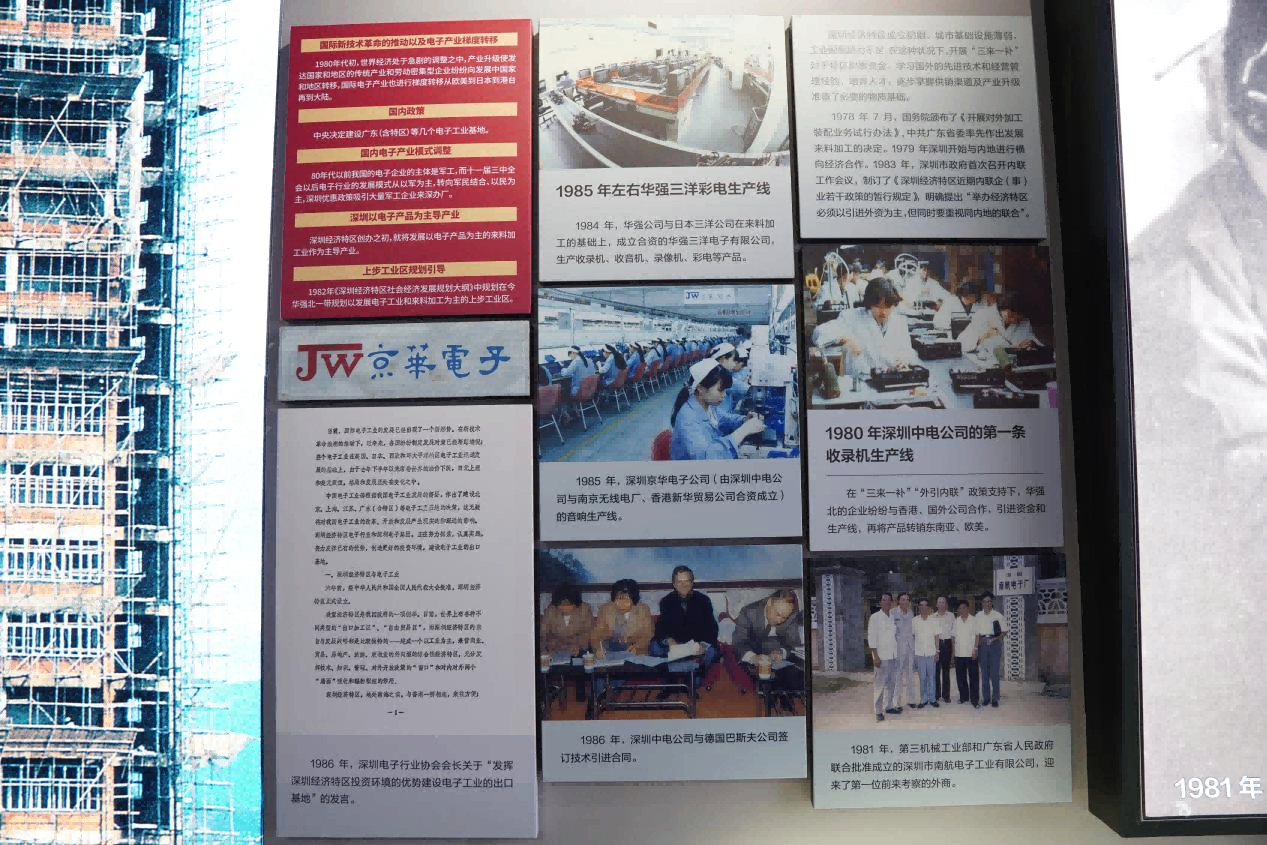
The Shangbu Industrial Zone was the precursor to the Huaqiangbei business district. In the early 1980s, the Shenzhen Municipal Urban Construction Planning Committee decided to develop an industrial zone centered on the electronics industry and contract manufacturing operations in the area now known as Huaqiangbei, naming it the Shangbu Industrial Zone. At that time, the Shenzhen Special Economic Zone had been established only recently; the Shangbu Industrial Zone was considered part of the suburban area and was one of the first industrial zones planned under Shenzhen's "Attracting Domestic Resources and Linking with External Markets" strategy. Large enterprises operating in the machinery, energy, aviation, electronics, and textile industries concentrated their investments or established branch offices here; buildings such as the CGN Building, AVIC Garden, China Electronics, Aihua, Sanga, and Jinghua were successively completed. Among the six major municipal state-owned enterprise groups, the headquarters of five—Sage, Energy, Petrochemicals, Textiles, and Light Industry—were all located here, and over a hundred joint ventures invested in this area, forming a "clustered, segmented" industrial space along the main thoroughfare.
Photo taken at the Huaqiangbei Museum
Huaqiangbei is the core area of the Shangbu Industrial Zone. In March 1988, the SEG Group established the SEG Electronic Supporting Market on Huaqiangbei North Road; initially, it comprised more than 160 manufacturers and 10 Hong Kong-based businesses operating under their own management and sales systems, marking the embryonic form of the Huaqiangbei electronics market. In 1994, the "Wanjia Department Store" – a subsidiary of the Vanke Group – opened its doors in this area, revitalizing the local commercial scene. Subsequently, various commercial projects—including the Manha Shopping Mall, Women's World, New Dahao Garment City, and Golden Lighting – were successively launched, further enhancing the vibrant commercial atmosphere of Huaqiangbei.
With the rise of the electronics manufacturing industry in the Pearl River Delta, the demand for electronic components surged significantly. Driven by leading enterprises such as Huaqiang Electronics Market and SEG Electronics Market, specialized electronics markets—including Xin Asia, Gaoke De (the former site of the Xin Dahao Garment City), and Guoli—emerged successively, while markets for categories such as watches, gifts, 3C digital products, and telecommunications equipment also began to establish themselves in the area. This commercial prosperity led to rising rental costs, prompting factories within the industrial zone to gradually relocate. As a result, the Shangbu Industrial Zone transformed from a traditional factory district into the "Huaqiangbei Business District" and an electronic component trading hub, ultimately evolving into the nationally renowned "China's No.1 Electronics Street."
Note: The data and information in this article are sourced from authoritative reports and materials. If there is any infringement or inaccuracies, please contact us.
The Origin of the Name "Huaqiangbei"
2026-08-21
2230
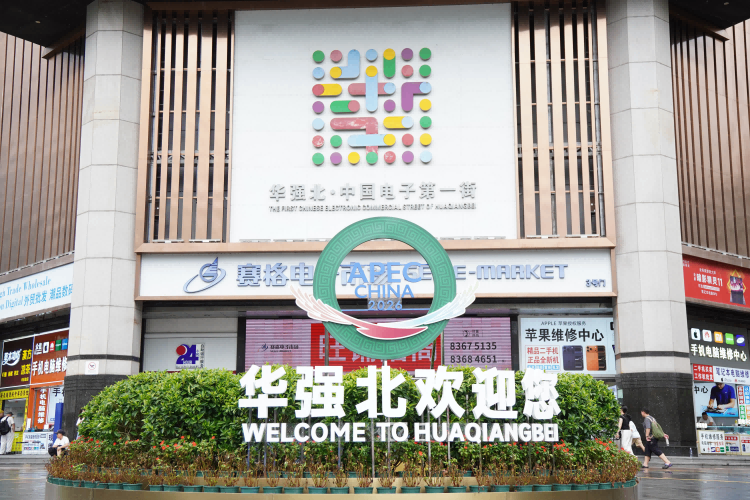
The name "Huaqiangbei" originates from the Huaqiang Group. In 1979, the Guangdong Provincial Bureau of Electronic Industry relocated military factories from northern Guangdong to Shenzhen and established the Shenzhen Huaqiang Electronic Industry Company. The two characters "Huaqiang" symbolize"a strong and prosperous China" . When planning and constructing roads, the Shenzhen municipal government named the road near the company Huaqiang Road. Later, as Shennan Boulevard intersected with Huaqiang Road, the road was divided into northern and southern sections: the part south of Shennan Road became Huaqiang South Road, while the area north of the road was abbreviated as "Huaqiangbei".
In the early days of the Shenzhen Special Economic Zone, this area was nothing but remote paddy fields. As enterprises such as the Huaqiang Group and Laiyinda Group successively set up factories here, along with institutions in machinery, energy, aviation, electronics, and textiles, the area became the Shangbu Industrial Zone of Futian District. It was home to electronics companies including Huaqiang Electronics, China Electronics, SEG Electronics, Jinghua Electronics, Aihua Electronics, and SED Philips, laying the foundation for the development of Huaqiangbei's electronic information industry.
In 1994, Wanjia Department Store, a subsidiary of Vanke Group, moved from Youyi City in Luohu District to Huaqiangbei. Its business boomed, driving the opening of malls such as Women's World, Shunde Home Appliances, Manha Department Store, Golden Lighting, Wanfang Computer City, and International Audio City. Huaqiangbei gradually transformed from an industrial zone into a commercial center. Subsequently, more than 50 specialized markets opened one after another, including the Pacific Security Market, Gift Market, Watch and Clock Market, Baohua Communications Market, Oriental Fashion Plaza, Tongbao Second-hand Market, and Causeway Bay Department Store on nearby Huabei Road. These developments established Huaqiangbei as a famous commercial district in Shenzhen, rivaling the Dongmen commercial district in Luohu District in influence. The booming business of Huaqiangbei Electronics World and the completion of the SEG Plaza drove growth in integrated circuit sales and brought large crowds to Huaqiangbei. In October 2008, the China Electronics Industry Association awarded Huaqiangbei the title of "China's No. 1 Electronics Street."
In July 2009, to better serve and manage the Huaqiangbei commercial district, the Futian District government officially established the Huaqiangbei Subdistrict. Huaqiangbei has since developed into a world-renowned electronics distribution hub, with integrated circuits and 3C digital products sold worldwide. In April 2024, "Huaqiangbei" was selected for Shenzhen's first batch of geographical name protection list, categorized under "reform and opening-up place names," becoming an important witness to Shenzhen's reform and opening-up history. Song Shiqiang, General Manager of Kinghelm and Slkor, believes that Huaqiangbei is a showcase of China's economic achievements from reform and opening-up.
Note: The data and materials in this article are referenced from authoritative reports and sources. If there is any infringement or error, please contact us for removal.





 粤公网安备44030002007346号