
























Service Hotline
News

News
RISC-V on the verge of breaking out...
2022-03-17
927
Recently, the hottest news for the semiconductor industry is thatThe first RISC-V China Summit (RISC-V World Conference China)It will be held at ShanghaiTech University from June 21 to 27, 2021. It is expected that there will be more than 1,000 on-site participants, more than 10,000 online participants, and more than 100 exhibiting manufacturers. It will become the largest RISC-V themed summit in China to date! What we need to know about RISC-V:
one What is RISC-VRISC-V is an open source instruction set architecture based on the "Reduced Instruction Set (RISC)" principle. It is not a processor or chip, but an instruction set specification.
The instruction set is the interface between software and hardware. It is a set of standard specifications. It is published in the form of a document and does not have an entity. We can design processor chips and corresponding software systems based on this set of specifications, and ultimately form products.
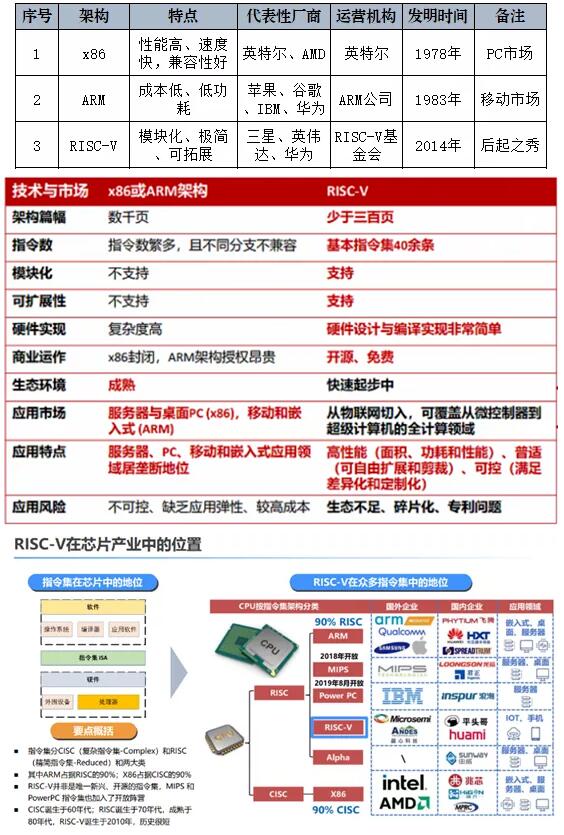
The instruction set can be divided into complex instruction set (CISC: Complex Instruction SetComputing) and reduced instruction set (RISC: Reduced Instruction SetComputing RISC). At present, the mainstream chip architectures on the market mainly include x86, ARM, and RISC-V. Among them, x86 is CISC-based, and ARM and RISC-V are both RISC-based.
Source: network
two The birth of RISC-V
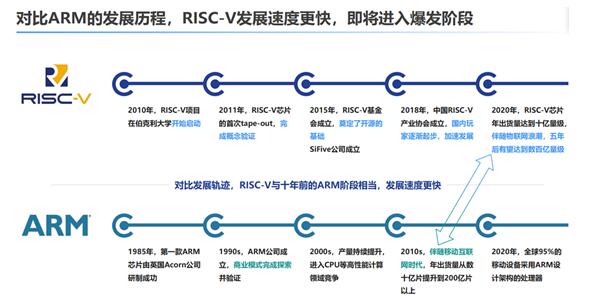
In 2010, a research team from the University of California, Berkeley, needed to design a central processor. However, after comparing the ARM, MIPS, SPARC and x86 instruction set architectures on the market, they found that these instruction sets would not only involve patent issues, but also be expensive. To solve this problem, other methods must be found. Finally, they designed a new instruction set, the famous RISC-V. It's not intended to be an impressive new technology, it just hopes to get the entire industry on the same page to simplify chip manufacturing and push forward. But a funny thing has happened on the way to a global chip standard: Like Berkeley's efforts, RISC-V has begun to produce some technological breakthroughs in chip design.
three Advantages of RISC-V
Source:network
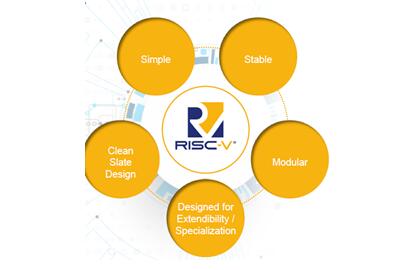
1.Completely open source:This is the main reason for its development. The RISC-V Foundation will not charge licensing fees for the use of the instruction set, and allows companies to add free instruction set extensions;
2.The architecture is simple:RISC-V adheres to the simplicity-oriented design aesthetic. In order to maintain backward compatibility, both ARM and x86 retain many outdated definitions, while RISC-V can be said to stand on the shoulders of giants, taking advantage of mature technology to travel lightly;
3.Easy to port:RISC-V provides privileged instructions and user instructions, which can easily port Linux and Unix to the RISC-V platform;
4. Modular design: Developers can flexibly choose different combinations according to needs to achieve customized needs;
5.With complete toolchain:The RISC-V community provides a complete tool chain, and the RISC-V Foundation will continue to maintain it to avoid the heavy work of tool chain development.
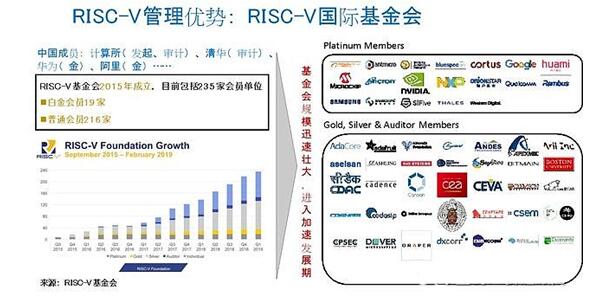
Four RISC-V community ecologycreateAs the RISC-V instruction set matures technically, the University of California, Berkeley established the RISC-V Foundation in 2015 to create a RISC-V ecosystem. The annual growth rate of its membership exceeds 100%: Google, Qualcomm, IBM, NVIDIA, NXP, Western Digital, Microsemi, Institute of Computing Technology of the Chinese Academy of Sciences, MIT, University of Washington, BAE Systems, Huawei, Tesla, Samsung, Hitachi, Seagate, Alibaba, MediaTek... Well-known companies and research institutions have joined it. RISC-V, which brings together semiconductor design companies, system integrators, equipment manufacturers, military enterprises, scientific research institutions and other industrial forces, has naturally received good news in terms of tool chain construction and application expansion. For example, in 2019, Tesla has considered using free RISC-V designs in new chips; Nvidia also plans to use RISC-V for controllers inside GPUs; Samsung also disclosed that it will adopt SiFive's RISC-V cores on a variety of chips for use in 5G flagship mobile phones. The RISC-V ecological chain is growing and improving day by day.
Source: RISC-Vfoundation
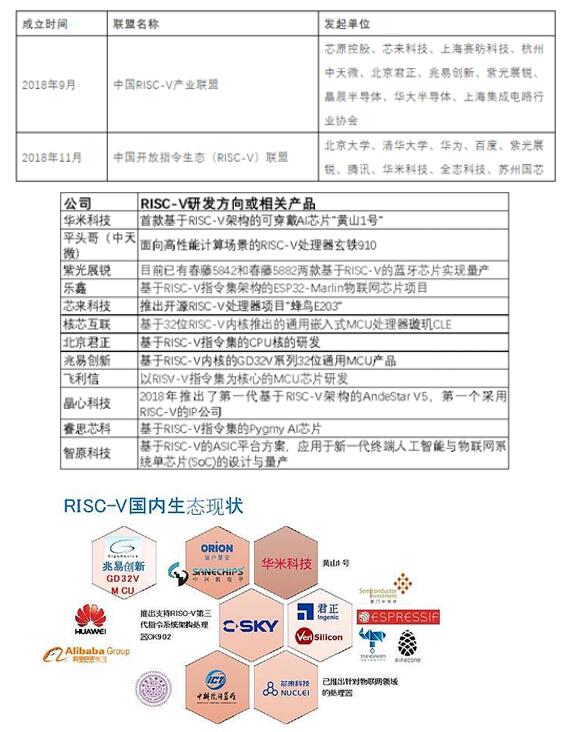
In October 2018, the China RISC-V Industry Alliance (CRVIC) was established in Shanghai. In November of the same year, the China Open Instruction Ecological Alliance (China RISC-V Alliance, referred to as: CRVA) was announced. In the following year, processors developed based on RISC-V such as Huami Huangshan No. 1 and Alibaba Xuantie 910 were released one after another. Chinese technology companies gradually found their own ways in the development of RISC-V.
The biggest feature of RISC-V is "openness", which allows it to be freely used for any purpose and allows anyone to design, manufacture and sell RISC-V-based chips or software. This openness is a complete first in the processor field. At this point, the rise of the Internet of Things (IoT) will provide new growth ground for the upstream industry chain including instruction set architecture.
From a market space perspective, in 2019, the total number of global IoT connections reached 12 billion. It is expected that by 2025, the total number of global IoT connections will reach 24.6 billion, with a compound annual growth rate of approximately 16%. Global IoT revenue is expected to grow from US$343 billion in 2019 to US$1.1 trillion in 2025, with a compound growth rate of approximately 27%. (Data from GSM Association)
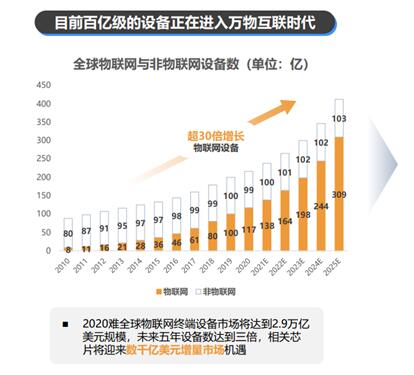
Source: Scale Partners&Lightcone Intelligence Industry Report
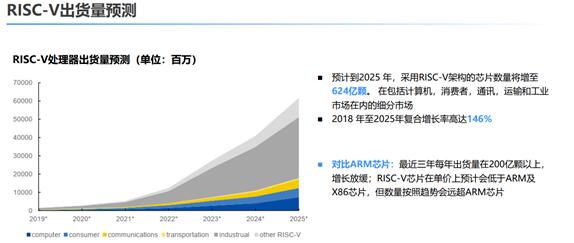
In contrast, ARM chip shipments have exceeded 20 billion units per year in the past three years, but the growth rate has slowed down. The unit price of RISC-V chips is expected to be lower than ARM and x86 chips, while the quantity will far exceed ARM chips.
Source: ScalePartners&Light Cone Intelligence Industry Report
Source: ScalePartners&Light Cone Intelligence Industry Report
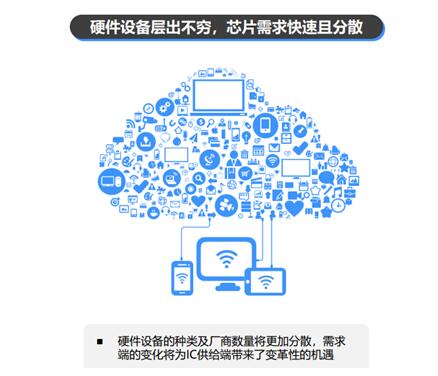
From the perspective of technical characteristics, compared with the universal requirements of the existing architecture, the Internet of Things emphasizes flexibility and diversity, which is highly consistent with the open source, modular, and scalable features of RISC-V. RISC-V can rely on its characteristics to make the Internet of Things industry more flexible and low-power consumption to reduce costs. This has also created favorable conditions for the rapid rise of the Internet of Things. In IoT scenarios, many intelligent analysis tasks are moving to the edge. According to specific needs, using RISC-V architecture to customize IoT chips is more flexible and targeted. The current design of the RISC-V architecture, in addition to the basic instruction set to ensure the compatibility of system software and development environments, itself allows expansion according to new and different development applications, which can ensure the specific needs of IoT applications.
Source: ScalePartners&Light Cone Intelligence Industry Report
Judging from the situation upstream and downstream of the industrial chain, Chinese manufacturers have made arrangements in the chip IP development link, chip design link, and terminal brand and platform links. The layout of major upstream and downstream manufacturers reflects the development ideas of the industry chain to build the RISC-V ecosystem from the bottom to the end. From the perspective of the rise of the Internet of Things, AI and my country's independent demand for chip design, RISC-V has broad development space and the foundation to become one of the world's mainstream architectures.
Recently, according to Bloomberg, RISC-V startup SiFive received a US$2 billion acquisition proposal from Intel, but it is unknown whether it will be ultimately implemented. Intel's motivation for acquiring SiFive was a passive move in response to Nvidia's acquisition of ARM. The NVIDIA-ARM merger has entered the final stage. As long as the Chinese government regulators give the green light, it should be relatively certain that ARM will eventually be owned by NVIDIA. Intel naturally hopes to support RISC-V to compete with ARM and Nvidia through the acquisition of SiFive.
However, the editor feels that this acquisition may not be possible for the following reasons: First, SiFive, a microprocessor core IP developer founded by professors and student research teams at the University of California, Berkeley, and based on the open source instruction set architecture RISC-V, last raised financing in August 2020, with a US$60 million investment led by SK Hynix and Saudi Aramco. SiFive is valued at approximately US$500 million. To date, SiFive has raised a total of US$186 million in financing. Even if the business and personnel expand rapidly, SiFive will not worry about money, because their main expenses are in R&D and cloud service platforms, which do not involve capital-heavy semiconductor equipment and manufacturing; secondly, from a capital and operational perspective, SiFive should not be acquired by large companies prematurely. Intel Capital and Qualcomm Capital are both early strategic investors in SiFive (it received US$50.6 million in Series C financing in 2018, mostly from Intel; it received US$65.4 million in Series D financing in 2019, led by Qualcomm Ventures). The logic behind supporting SiFive should also prevent ARM from becoming dominant, giving these chip giants multiple choices. Even NVIDIA is an active promoter of RISC-V. After acquiring ARM, I don’t know whether it will continue to support RISC-V. Although there is support from the RISC-V Foundation and many research institutions and manufacturers in China, if the open source cake of RISC-V is to grow bigger, SiFive still needs to be the pioneer. If SiFive merges with Intel, it will inevitably weaken the openness and fighting spirit of RISC-V, and many innovations in open source communities and ecological development will be constrained and hindered by commercial interests. However, Intel's high-priced acquisition of SiFive seems to have sent a positive signal, at least indicating that global chip giants attach great importance to RISC-V. Even if it eventually becomes one of the weapons to compete with ARM, the value of RISC-V will be highlighted and increased. Scientific research institutions and organizations such as Xinglai Technology, Andes Technology and many other organizations that actively promote RISC-V should have greater confidence in continuing to uphold the spirit of openness and contribute to the ecological construction of RISC-V!
six RISC-V in China01 Industrial integration
More than 20 domestic enterprises and institutions, including the Institute of Computing Technology of the Chinese Academy of Sciences, Huawei, and Alibaba Group, have joined the RISC-V Foundation. Berkeley and Tsinghua universities have also established RIOS laboratories in Shenzhen to support the RISC-V software ecosystem. In July 2018, the Shanghai Economic and Information Technology Commission issued the first domestic policy to support RISC-V.
Data shows that more than 300 companies in China are paying attention to or developing based on the RISC-V instruction set. So far, many companies have built key open source chip technologies based on RISC-V and launched related products. A large number of domestic chip companies have emerged, and many companies want to make a difference on the new RISC-V track. After all, ARM cores have long been a red ocean, while RISC-V is still in a blue ocean. In this regard, the editor also sorted out the current domestic RISC-V core MCU manufacturers.
02 Trends in international public opinionDuring the trade war, there was considerable controversy over whether RISC-V processors involved U.S. export control regulations, but the RISC-V Foundation decided to move its headquarters to Switzerland. This attitude clearly set a gap with other American technology companies. If there were still people who questioned whether the RISC-V instruction set, which was born at the University of California, Berkeley, in 2010, was subject to U.S. technology control a few years ago, then the RISC-V Foundation’s relocation should better dispel everyone’s concerns. In fact, Chinese manufacturers are also very active in the RISC-V Foundation. Among the 13 companies that are the highest-level members of the foundation, 11 are from China, of which 10 are mainland Chinese companies and 1 is from Taiwan, China. Including Huawei, Pingtou Ge, ICT China Institute of Software, ZTE, Chengdu Capital, Saifang Technology, Unisoc, Him Computing, Jingxin Technology, etc. The other two are Western Digital and SiFive.
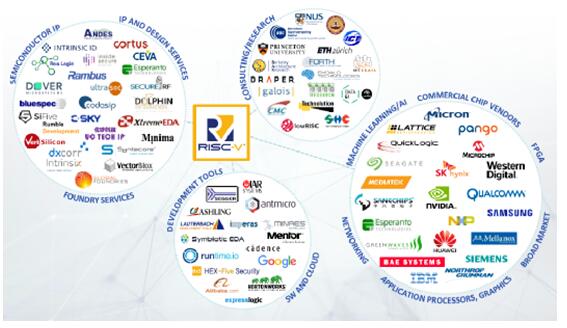
Source: RISC-V Foundation Y2019 Member
03 Current status of chip development in my countryRISC-V is very popular in my country, which is not unrelated to the current situation that my country's chip research and development is controlled by others. At present, the difficulty in localizing chips lies in the process and manufacturing, including the required materials and equipment, which are highly monopolized by foreign companies. Domestic manufacturers have a long way to catch up. Coupled with the fact that no obvious turning point has yet been seen in the industry, this area still requires long-term and step-by-step investment and accumulation.
Based on the open source RISC-V, making chips with independent intellectual property rights and cultivating the corresponding industrial ecology are undoubtedly a spring in the desert for Chinese semiconductors.
In an uncertain political environment, more than 90% of the world's server chip market is based on Intel's x86 architecture, and ARM has been acquired by Japan's SoftBank. Although IP licenses can be purchased, it lacks the core ability to design CPUs. In addition, ARM is in a turbulent situation and has been plagued by acquisition news. Whether the industry based on licensing can be stable in the long term is also an unsolved mystery. The RISC-V instruction set itself is not a commodity, so there is naturally less controversy.
04 Artificial Intelligence ConstructionFor example, smart speakers, smart homes, and other AI hardware that require more support from edge computing capabilities also require higher flexibility in the architecture and need to be continuously adjusted according to changes in the market and technology. RISC-V can meet the demand of constantly adding new instructions, but it is difficult for architectures such as ARM. At the same time, the instruction set of RISC-V is so small and compact. Choosing RISC-V can create smaller chips than any other products and minimize power consumption.
Therefore, we are likely to see more custom hardware using RISC-V in the future. They may appear in your hard drive, graphics card, or car, and one day they may even become the main architecture of home computers. Ni Guangnan, an academician of the Chinese Academy of Engineering, has previously predicted that RISC-V is likely to develop into one of the world's mainstream CPUs in the future, thus forming a three-thirds pattern of x86, ARM, and RISC-V in the CPU field.
seven The epoch-making significance of RISC-V to China’s semiconductor industryIn the long run, the significance of RISC-V to China’s semiconductor industry is mainly reflected in the following:
-
Get rid of foreign monopoly through RISC-V architecture and achieve domestic independence of processor cores. This kind of processor core is not made behind closed doors, but has a mainstream architecture and mainstream ecosystem recognized around the world.
-
Through RISC-V, my country's processor IP voice can be greatly enhanced. The IP industry is at the top of the industry, far away from other industries, and has not received attention from the industry and the country. RISC-V has given China IP industry opportunities. Although my country is still lagging behind in RISC-V, compared with other IP technologies, it is not too far behind.
-
RISC-V can drive innovation and differentiation. Because RISC-V is open, simple, scalable and low-cost, it can bring huge innovation to the terminal application market.
-
RISC-V can significantly reduce chip development costs. The RISC-V industry chain is becoming increasingly complete. From processor cores to hardware design, operating systems, development tools, benchmarks and solutions, the entire industry chain is complete, allowing the industry to share all costs equally.
- The gradual popularity of RISC-V has promoted the development of industry localization to a certain extent, created more industry opportunities, and accumulated a large number of CPU talents for industry and academia.
Since RISC-V is expected to become the world's mainstream, Chinese companies must move forward! How RISC-V and my country's semiconductor industry can better move toward the future is of great significance to the development of China's industry. Therefore, we must seriously consider the following issues:
01 RISC-V ecosystem is not yet completeAt present, RISC-V is mainly used in relatively mid-to-low-end products, but there are no cases with a wide range of applications on high-performance server CPUs and GPUs. The reason for this reality is that the corresponding software and tool chains based on RISC-V chips have yet to be improved. Open source code is not something that can be used immediately. The open source instruction set does not mean that the CPU core is also authorized at the same time. This places great design and R&D requirements on chip companies. 02 The fragmentation problem of RISC-V
The industrial usability of each architecture requires the support of industry chain innovation where a hundred flowers bloom. While RISC-V gives each manufacturer a degree of freedom in designing hardware, it also encounters problems like the Android system with different standards and a broken development ecosystem due to diverse devices and backward compatibility. This is likely to lead to a situation where RISC-V architecture processors from different chip manufacturers cannot adapt to the same software in actual applications. To give a simple example, if company A uses one chip improvement, company B makes another improvement, and neither side's improvement is introduced. Imagine that in this market, everyone's improvements are not introduced, there is no communication, and no consensus is formed, then there may be an ABC version of RISC-V in the future, which is incompatible with each other in the market. This is a fragmented scenario.
A strong leading manufacturer that incubates developers in a vertical ecological manner, uses standardization to standardize most program codes, leaves room for application expansion that does not interfere with the core, and establishes relevant application markets and other basic platforms may be able to drive the industry to form a RISC-V innovation ecosystem faster.
03 Security issues with RISC-VThe security issues of RISC-V core application scenarios IoT must also begin to deliver complete industrial solutions.
As we all know, the security mechanism of the SoC chip is composed of the following aspects to ensure system security:
- Hardware mandatory isolation procedures;
- data and storage to establish a trustworthy execution environment;
- Unique certificates and keys serve as roots of trust;
- Secure boot and a range of tools, etc.
There are no security instructions in RISC-V's system instructions and privileged instructions. It uses software-defined domains MultiZone to ensure stable operation through hardware enhancement. Under this circumstance, if RISC-V wants to thrive with the AIoT and 5G waves and compete with ARM and x86, it must be better in security in order to gain the trust of chip manufacturers and ordinary users.
The RISC-V Foundation has established a RISC-V Security Standing Committee to discuss security improvement plans around IoT devices, embedded systems and machine learning based on the RISC-V instruction set.
Combining my country's special national conditions and the current pattern of the world, in today's wave of domestic substitution and driven by the "ENCO" alliance, the research and development of general-purpose processors and special-purpose processors have been greatly promoted and valued. Domestic representative manufacturers of major instruction sets (ISA) have launched their own "ENCO" products, such as Zhaoxin using x86; Feiteng and HiSilicon using ARM... Only CPU products that can represent the RISC-V instruction set are lacking. Whoever can enter the "Encore" alliance with the first high-performance RISC-V processor will definitely make waves in the Chinese market.
04 Innovation of traditional business modelsThe business model of traditional hardware has always been to sell products. Due to the high cost of chip tape-out, chip companies are facing major capital challenges. Because chips serve as a carrier for the precipitation and solidification of knowledge and technical know-how, code is its core competitiveness.
Since an open and active instruction set ecosystem is a necessary condition for promoting chip R&D and innovation, the open source of RISC-V has set off the development of open source hardware. At present, the business model of the RISC-V instruction set is mainly based on IP core licensing and customized chips. As application fields become increasingly refined, chip customization in vertical fields is considered a future trend. In terms of instruction customization, RISC-V is the leader. But in fact, custom chips are both advantages and challenges for RISC-V.
The key point of customizing the chip is the adaptability of parameters and the cooperation between RISC-V IP, third-party IP and EDA tools. The deeper the understanding of the application, the better the customization will be.
Instruction customization is native to RISC-V. Users only need to set parameters on the RISC-V basic core and then select the appropriate module. ARM requires additional patches to implement it. Instruction customization requires the support of supporting tools such as algorithms, code libraries, and compilers. At the same time, in addition to the instruction set architecture, chip development also needs to pay attention to a series of issues such as the chip's interface peripherals, security, reliability, and cost. This is also an objective challenge for customization.
05 AloT as an entry point for RISC-VIn fact, the RISC-V architecture can be applied to all computing equipment, including 5G communication equipment, servers, supercomputing and other applications, and there are no problems in technology and ecology. Especially in the current smart mobile era, AIoT is a good entry point for RISC-V. The future market will be very huge. Microprocessor cores based on RISC-V and AI computing co-processor IP will find good opportunities in various subdivisions of AIoT.
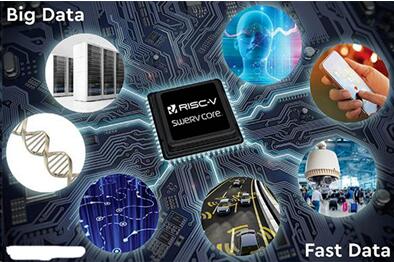
Source: network
Analyst Semico Research pointed out in a report titled "RISC-V Market Analysis: Emerging Markets" that by 2025, the market is expected to consume a total of 62.4 billion RISC-V CPU cores. The average compound annual growth rate of RISC-V CPU cores from 2018 to 2025 will be as high as 146.2%. Among them, 5G mobile phone, communications, industrial and other market segments will bring new opportunities to manufacturers deploying RISC-V.
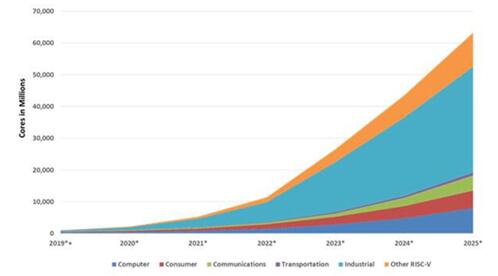
Source: Semico ResearchCorp
The popularity of RISC-V in the Chinese market also proves that Chinese semiconductor companies have developed to a new level and have the confidence and potential to impact higher industry ceilings! However, despite the confidence brought by the economy, technology, and national promotion, we still need to realize that the RISC-V ecosystem is a long-term construction process, which requires the cultivation of Foundry (in the field of integrated circuits, it refers to manufacturers that are responsible for the production and manufacturing of chips), system support, and multiple rounds of mass production in subdivided tracks. This is both a challenge and an opportunity!
At this important time point, with the strong support of the RISC-V International Foundation, the RISC-V China Summit is held to provide opportunities for exchanges and cooperation between Chinese industry and academia; to comprehensively promote the development of RISC-V in China and around the world; to promote innovative technology products in the RISC-V industry; and to promote RISC-V scientific research and teaching. It has important historical significance! With the right time, right place and right people, RISC-V has found fertile ground and opportunities for development in China!
Disclaimer: This article is reproduced from "Creation Core Workshop". This article only represents the author's personal views and does not represent the views of Sacco Micro and the industry. It is only for reprinting and sharing and supports the protection of intellectual property rights. Please indicate the original source and author for reprinting. If there is any infringement, please contact us to delete it.
Company phone number: +86-0755-83044319
Fax/FAX: +86-0755-83975897
Email: 1615456225@qq.com
QQ: 3518641314 Manager Li
QQ: 332496225 Manager Qiu
Address: Room 809, Building C, Zhantao Technology Building, No. 1079 Minzhi Avenue, Longhua New District, Shenzhen
Related Recommendations
Exclusive Interview with Li Gang of Yunfan Ruida: The Precision of Millimeter-Wave Radar Products and the Warmth of Humanity
2026-07-22
2542
RF Passion, Craftsman’s Journey: Over 30 Years of Steadfast Dedication — Interview with Kinghelm Chief Engineer Mr. Qin hongxiang
2026-06-26
2706





 粤公网安备44030002007346号