























Service Hotline
News

News
The 10 most famous people in the history of integrated circuits
2022-03-17
600
1. Shockley, Bardeen, Bratton (three people)
?? inventor of the transistor
??The advent of the transistor was the forerunner of the microelectronics revolution and also sounded the clarion call for the birth of the integrated circuit.
??In December 1947, a research team composed of Shockley, Bardeen and Bratton at Bell Labs in the United States developed a point-contact germanium transistor. After the advent of the transistor, people were able to replace the large, power-consuming electronic tubes with a compact, low-power-consuming electronic device.
??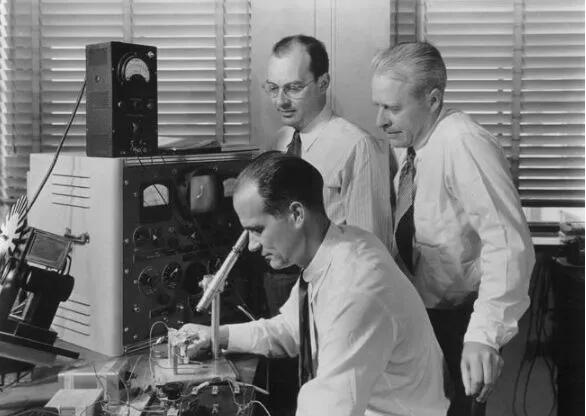
The advent of the transistor
??In 1956, Shockley, Bardeen, and Bratton won the Nobel Prize in Physics for their invention of the transistor. Shockley, known as the "Father of the Transistor," used his fame to recruit a group of outstanding young scientists, including the famous "Eight Rebels," who laid the foundation for the subsequent establishment of a large number of well-known semiconductor companies.
2. Jack Kilby
??The emergence of integrated circuits created a new era in the history of electronic technology and laid the foundation for modern information technology.
On September 12, 1958, Kilby developed the world's first integrated circuit, successfully realized the concept of integrating electronic devices on a piece of semiconductor material, and passed the inspection of Texas Instruments' senior managers. Remember this day, integrated circuits replaced transistors, paved the way for the development of various functions of electronic products, greatly reduced costs, made the emergence of microprocessors possible, and ushered in a new era in the history of electronic technology. Kilby won the Nobel Prize in Physics in 2000 for his invention of the integrated circuit. ??
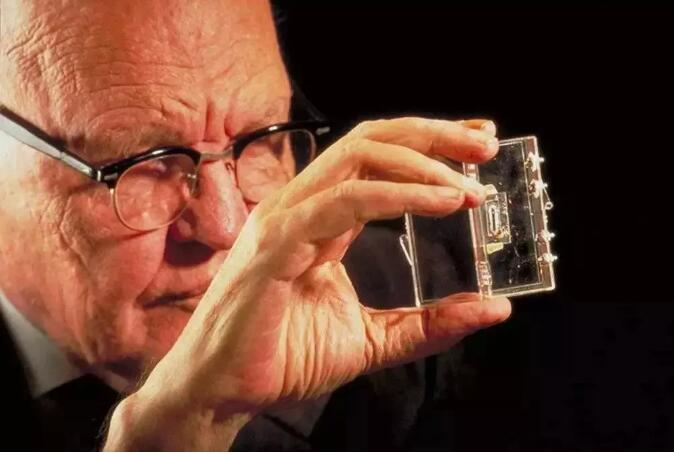 integrated circuit
3、Robert Noyce
? ? ?A giant in science and business??Integrated circuits that can be commercially produced have brought semiconductors into the commercial era.
??Robert Noyce invented the commercially produced integrated circuit based on Kilby, which brought the semiconductor industry from the "invention era" to the "commercial era". In 1971, Intel, where Noyce worked, successfully integrated 2,300 transistors on a 12-square-millimetre chip, creating a programmable computing chip including a calculator and a controller, which we now call a central processing unit (CPU), also known as a microprocessor. This was also the world's first microprocessor, the 4004. Since then, Intel has grown rapidly, from zero revenue in 1968 to more than $35 billion in revenue today. ??
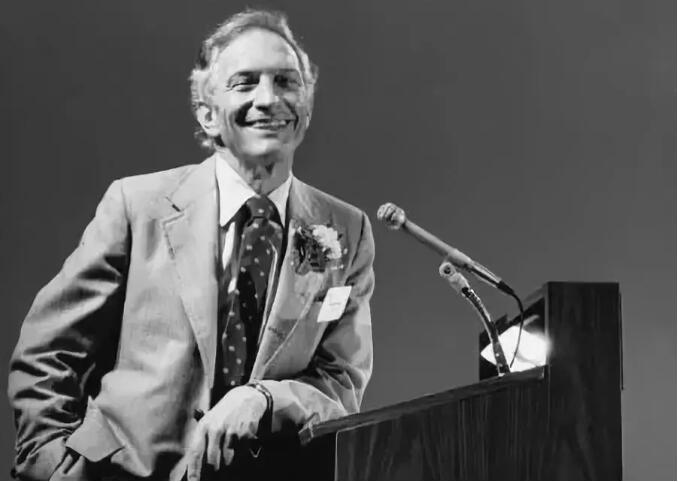
4、Joan Herney
?? ?? Established silicon’s position in the electronics industry?? Semiconductor production has undergone revolutionary changes.
??In 1959, Jean Hoerni invented the planar process, a processing method called optical etching. First, he uses a piece of germanium or silicon, and then he sprays it with a layer of a substance called photoresist. If you shine light on it, the photoresist hardens, and then you can use a special chemical to remove the photoresist that wasn't hit by the light. So Hurney created a photomask, which was like a negative with a cluster of small holes on it to filter out the dirty stuff, and then let it flip in the light. After chemical cleaning, wherever photoresist is left on the metal plate, impurities will not spread underneath. to solve the reliability problem of planar transistors, thereby revolutionizing semiconductor production. It can be called "one of the most significant achievements of the 20th century" and it is said to have established silicon's status as a key material in the electronics industry. ??
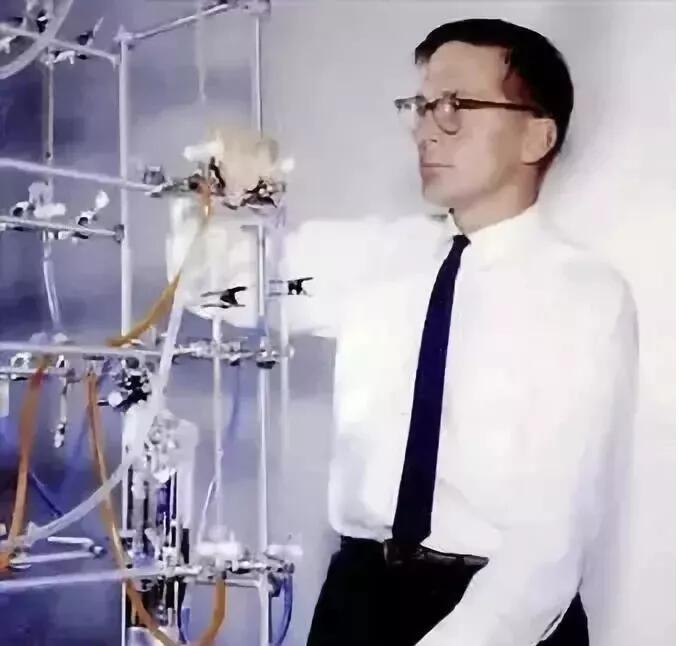
5. Gordon Moore
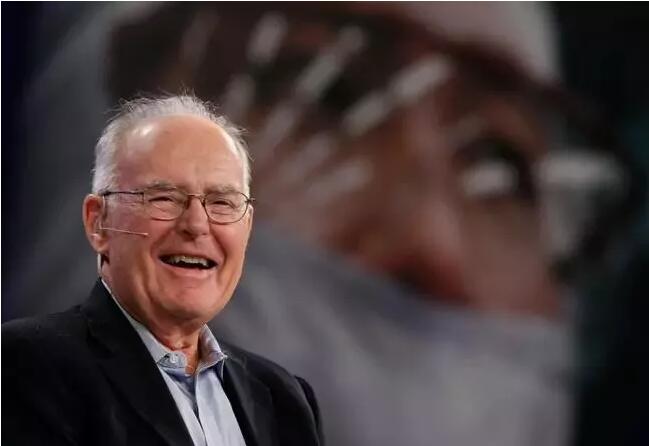
? ??Moore's Law cornerstone of Silicon Valley?? Moore's Law is like an irresistible force of nature, ruling Silicon Valley and even the global computer industry for more than 30 years.
In 1965, one day Moore left the silicon crystal workshop and sat down, took a ruler and a piece of paper, and drew a sketch. The vertical axis represents the continuously developing chip, and the horizontal axis is time. The result is a very regular geometric growth. This discovery was published in the 35th issue of "Electronics" magazine that year. This inadvertent work is also the most significant paper in the history of semiconductors to date.
The great thing about Moore's Law is that engineers in the semiconductor industry follow this law and not only double the number of transistors every 18 months, it also means that chips with the same performance can be reduced in size and cost by half every 18 months. ??
6. Andy Grove
??king of microprocessors
??Processors with the "Intel Inside" brand logo have become the heart of 80% of computers in the world.
Since taking over the baton as CEO of Intel in 1987, Andy Grove has continued to use strategic thinking that breaks traditions and challenges existing logic, making the microprocessor, the heart of the digital revolution, beat strongly and providing a steady stream of power for the digital age. ??
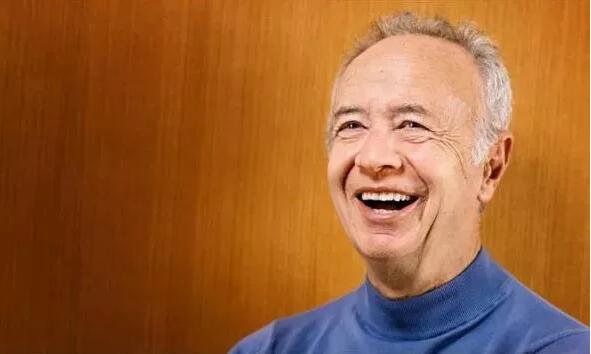
In 1986, Grove proposed a new slogan "Intel, the Microprocessor Company" and resolutely abandoned the storage business and transferred Intel's main business to microprocessors. In the same year, Intel launched the 386 series of processors, followed by the 486 and Pentium series of central processors. The performance of the processors became more and more powerful and faster, and the era of personal computers was coming. "Intel Inside" once became the gold standard in this industry, resounding around the world and changing the world.
7. Hu Zhengming
? ? ?The inventor of many new structural devices such as FinFET?? Made significant contributions to the development of semiconductor devices and future miniaturization.
?? Professor Hu Zhengming led the development of BSIM. This mathematical model was selected as the first and only international standard for designing chips by the Transistor Model Council with participation of 38 major international companies in 1997; he invented a variety of new structural devices such as FinFET, which has attracted much attention internationally; and proposed thermoelectric The physical mechanism of IC failure was developed, and a method for quickly predicting device life using impact ionization current was proposed. The physical mechanism of thin oxide layer failure and a method for quickly predicting thin oxide layer life using high voltage were proposed; the first computer numerical simulation tool for IC reliability based on the physics of device reliability was developed. ??

8、Zhang Zhongmou
?? ?? The founder of the integrated circuit foundry industry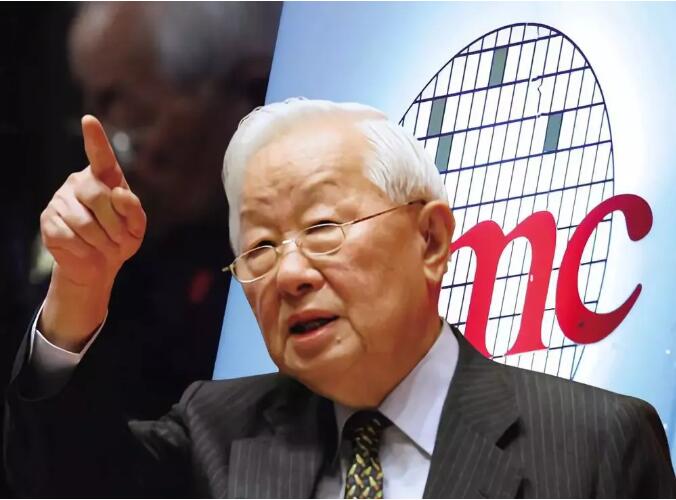 ?? One person defines an industry, and one person makes the entire integrated circuit industry more dynamic.
 ??In 1987, Zhang Zhongmou founded the world's first professional foundry company, Taiwan Semiconductor Manufacturing Co., Ltd., ushering in the era of semiconductor foundry. The TSMC model has created two new industries - wafer foundries and Fabless. Due to the elimination of the expensive wafer manufacturing process, the overall threshold of the integrated circuit industry has been lowered, and a large number of new and dynamic integrated circuit design companies have been born, bringing new vitality and creativity to the entire integrated circuit industry. The era of integrated circuit subdivision has arrived, and a new and more dynamic integrated circuit industry is unfolding before us.

Disclaimer: This article is reproduced from "Today's Semiconductor". This article only represents the author's personal views and does not represent the views of Sacco Micro and the industry. It is only for reprinting and sharing to support the protection of intellectual property rights. Please indicate the original source and author for reprinting. If there is any infringement, please contact us to delete it.
Company phone number: +86-0755-83044319
Fax/FAX: +86-0755-83975897
Email: 1615456225@qq.com
QQ: 3518641314 Manager Li
QQ: 332496225 Manager Qiu
Address: Room 809, Building C, Zhantao Technology Building, No. 1079 Minzhi Avenue, Longhua New District, Shenzhen
Related Recommendations
Exclusive Interview with Li Gang of Yunfan Ruida: The Precision of Millimeter-Wave Radar Products and the Warmth of Humanity
2026-07-22
2563
RF Passion, Craftsman’s Journey: Over 30 Years of Steadfast Dedication — Interview with Kinghelm Chief Engineer Mr. Qin hongxiang
2026-06-26
2726





 粤公网安备44030002007346号