
























Service Hotline
News

News
The yield rate is 90%, and the cost is only 1.5 times that of silicon devices! Will silicon carbide revolutionize IGBT?
2022-03-16
941
Recently, a silicon carbide company revealed in an online event that the price of 6-inch silicon carbide wafers is 20,000-30,000 yuan per piece, which can be made into 350-700 automotive-grade SiC Mosfets. The current price of silicon carbide devices is about 4-5 times that of silicon devices. Some organizations predict that the price of silicon carbide devices is expected to be as low as about 1.5 times that of silicon devices in 2025, but how can it be achieved?
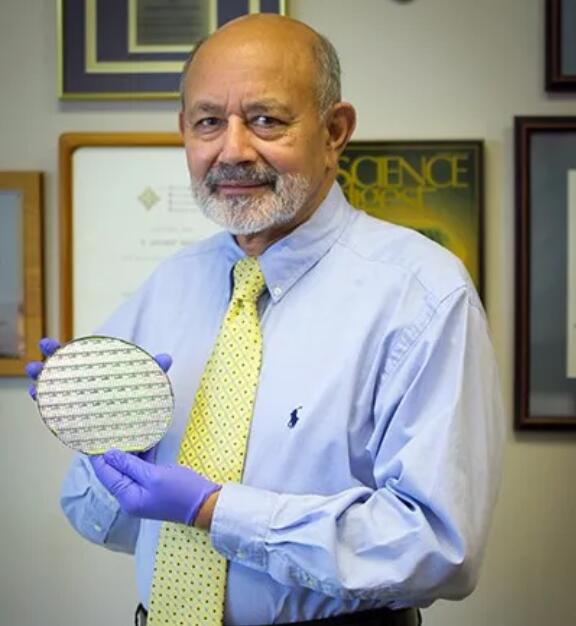
The main inventor of the technology, who is also the inventor of the IGBT, said these technologies, if successful, could one day replace the IGBT.
(To get the full version of the article, please reply to "Sharing Technology" via private message, or add "Three and a Half Generations" assistant Celia.)
Shared processes, larger wafers
Goal: Cost only 1.5 times that of silicon devices
The current cost of SiC devices is about five times that of silicon power devices. NCSU Distinguished Professor Jay Baliga said: "Our goal is to reduce the cost of SiC to 1.5 times that of silicon power devices." He believes that relative to Si IGBT, higher manufacturing costs have become a barrier to large-scale market adoption. One of the important reasons why costs continue to be high is that those companies that have developed SiC power devices all have exclusive access to the manufacturing process, making it difficult for other companies to enter the field. Factory capacity cannot be expanded, and costs cannot be reduced. To this end, NCSU has developed a shared technology, the PRESiCETM process, to reduce barriers for companies to enter the silicon carbide field and promote innovation. Baliga said: "PRESiCETM will push more companies to enter the SiC market because they do not need to develop their own design and manufacturing processes from scratch, which is very expensive and time-consuming. This is good for companies and users. If more companies join the manufacturing of SiC power devices, it will increase the output of foundries, which can significantly reduce costs." According to reports, this technology started in January 2015 and received funding from the U.S. Department of Energy PowerAmerica. In 2016, 18 companies participated in research and development, and it has now developed into the third generation. "Since 2015, many companies have transplanted their previously developed proprietary SiC power device manufacturing processes to the X-Fab foundry in Texas, USA." Another way is to use existing mature silicon device foundries to reduce costs with large-capacity, large-size wafers. Baliga said that most of the process steps (up to 80%) of SiC power MOSFETs can be completed in silicon foundries. All that needs to be done is to upgrade high-temperature equipment such as gate oxidation and ion implantation annealing required for silicon carbide materials. Through non-proprietary foundries like X-Fab, “more companies will produce, and the cost of silicon carbide will be lower.” Since 2015, PRESiCE has been further improved. By using in-house equipment to perform the thermal ion implantation step more uniformly, the third generation of PRESiCE's SiC power devices manufactured in a 6-inch wafer foundry has been successfully launched. The picture below shows high-yield JBS diodes, power MOSFETs and JBSFETs with a rated voltage of 1.2 kV manufactured by PRESiCE technology.
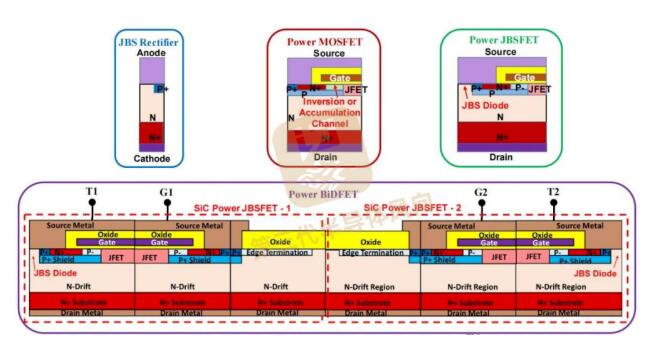
Figure 1. Three types of SiC power devices fabricated using third-generation PRESiCE technology.
According to reports, one of the main features of PRESiCETM technology is the use of 10 mask processes. See the picture below↓↓↓↓
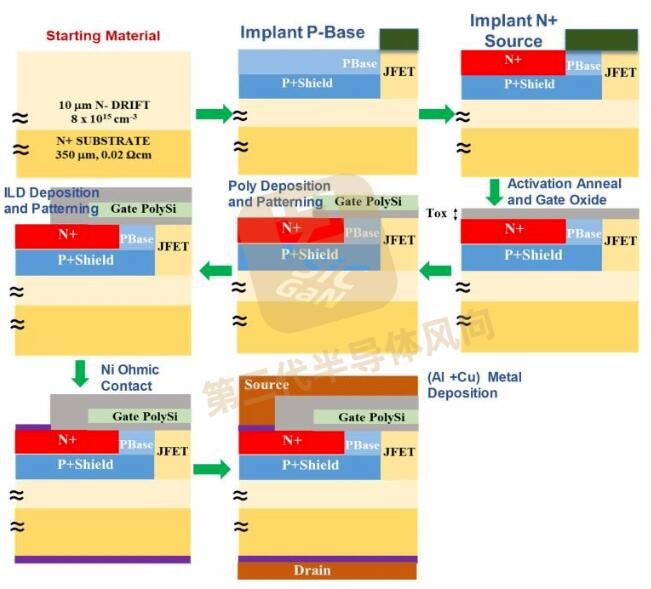 Figure 2. PRESiCE technology process flow for manufacturing SiC power MOSFETs.
Process identification results:
Yield exceeds 90%
In order to identify the achievements of the third-generation PRESiCETM process technology, foundry X-Fab continuously produced three batches of products, all using the same process steps. According to the measured data, it was found that the yield rate of JBS rectifiers manufactured using third-generation PRESiCETM technology exceeds 90%, and the leakage current of JBS diodes is far lower than the industry standard of 100 µA. The on-state voltage drop of JBS diodes is about 2 V. Like silicon-based IGBTs and SiC power MOSFETs, they are suitable for use as anti-parallel diodes. The measurement data of silicon carbide power MOSFETs manufactured by PRESiCETM show that the maximum on-resistance of 90% of the devices is less than 1.3 times the typical value, the yield exceeds 90%, and their threshold voltage is also within +/- 30% of the data sheet requirements.
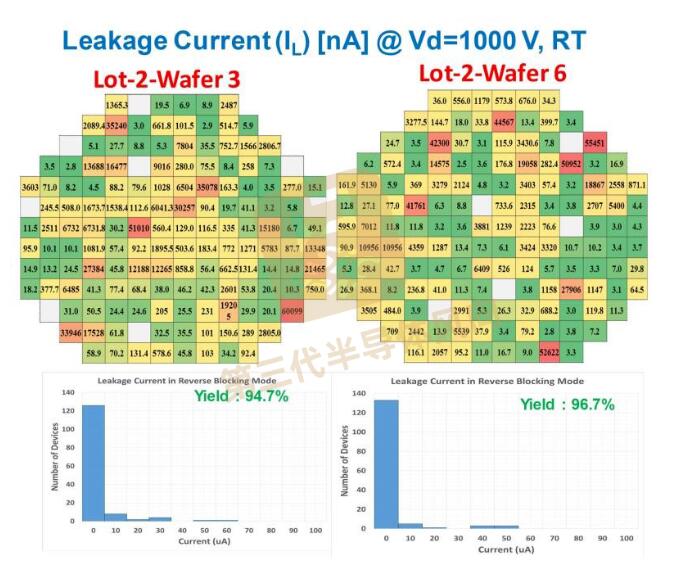
Figure 3. Measured leakage current of SiC JBS rectifier at 1000V reverse bias: within-wafer and within-batch-to-wafer variation.
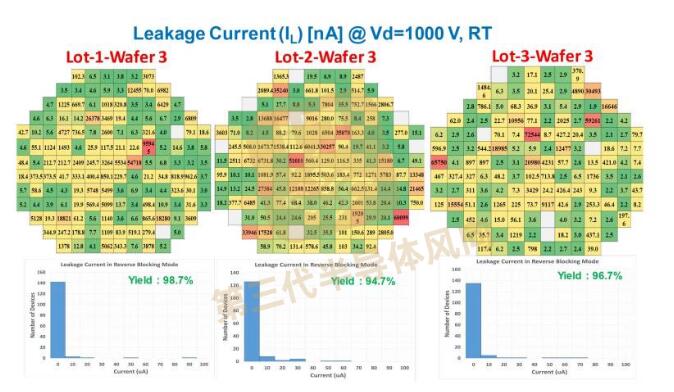
Figure 4. Measured leakage current of SiC JBS rectifier at 1000V reverse bias: batch-to-batch variation in leakage current.
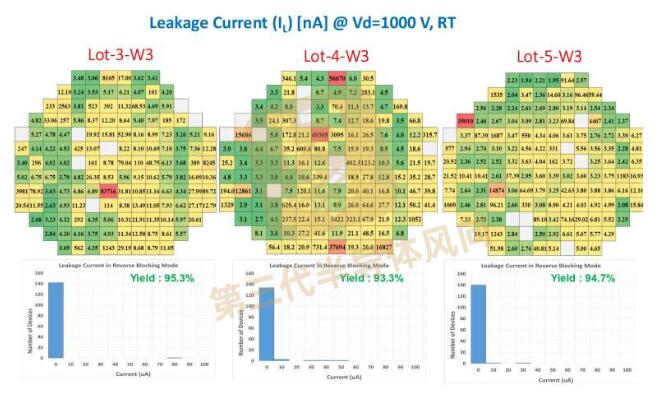
Figure 5. SiC power JBSFET fabricated using Gen-3 PRESiCETM technology: batch-to-batch variation in leakage current.
Disclaimer: This article is reproduced from "Third Generation Semiconductor Trend", which supports the protection of intellectual property rights. Please indicate the original source and author of the reprint. If there is any infringement, please contact us to delete it.
Company phone number: +86-0755-83044319
Fax/FAX: +86-0755-83975897
Email: 1615456225@qq.com
QQ: 3518641314 Manager Li
QQ: 332496225 Manager Qiu
Address: Room 809, Building C, Zhantao Technology Building, No. 1079 Minzhi Avenue, Longhua New District, Shenzhen
Related Recommendations
Exclusive Interview with Li Gang of Yunfan Ruida: The Precision of Millimeter-Wave Radar Products and the Warmth of Humanity
2026-07-22
2517
RF Passion, Craftsman’s Journey: Over 30 Years of Steadfast Dedication — Interview with Kinghelm Chief Engineer Mr. Qin hongxiang
2026-06-26
2687





 粤公网安备44030002007346号