
























Service Hotline
News

News
China’s past photolithography machine research and development and Xu Duanyi
2022-03-16
1192
Nowadays, chips have entered every aspect of modern human society, ranging from airplanes, ships, satellites and rockets to the mobile phones and "Walkmans" in people's hands, all of which are inseparable from chips. As countries led by the United States suppress Huawei, "lithography machine" has become a hot search term on the Internet, and articles talking about lithography machines are overwhelming.
The real situation is: China has not only developed world-class photolithography machines, but also independently developed and manufactured them despite external blockades and embargoes, and has complete intellectual property rights. People don’t even know that the development and manufacturing of China’s lithography machines is closely related to Xu Duanyi, a scientist from Guizhou.
In 1955, Xu Duanyi graduated from Guiyang No. 1 Middle School and was admitted to Tsinghua University with excellent results. After graduating from the Department of Precision Instruments of Tsinghua University in 1961, he stayed at the school to teach. During the "Cultural Revolution", a large number of faculty and staff from Tsinghua University were sent to farms near Poyang Lake in Jiangxi Province. Under the supervision of the "Working Propaganda Team", they "reformed their minds" and learned to grow rice from poor and lower-middle peasants. Xu Duanyi was among them. The following year, when Xu Duanyi, a first-time father, returned to his hometown of Guizhou to visit relatives, he brought his 2-year-old son to a farm in Jiangxi, where he planned to take root and become a farmer for the rest of his life. Late one night, an emergency call came from Beijing, ordering Xu Duanyi to return to Beijing immediately because he had an important mission. After returning to Beijing, Xu Duanyi learned that he was originally responsible for developing key equipment urgently needed by the national semiconductor industry and defense industry - "automatic lithography machine" and "step-and-repeat camera."
Therefore, Xu Duanyi, a young assistant coach from Guizhou, was appointed at the critical moment and took on the important task.
Tsinghua University has equipped Xu Duanyi with a strong research and development team. After the Tsinghua Precision Instrument Department building was completed, a precision optical instrument processing factory (9003 test base) was established on the first floor of the building. Mr. Shen Zhao served as department director and factory director. The school assigned the entire factory's engineering and technical personnel team, including hundreds of highly skilled fitters and masters of other types of precision machining, to Xu Duanyi for unified deployment. It also assigned a group of undergraduates who graduated from Tsinghua University and a group of highly qualified retired military personnel to join the research team. In addition, the school also transferred several teachers and technical workers engaged in computer control from other units. The development team includes hundreds of people from five departments across the school. It is a large-scale group operation.
Because the manufacturing technology of photolithography machines is too complex and difficult, the international "Paris Coordinating Committee" (Batumi) has long listed them as cutting-edge technology products and imposed a blockade and embargo on China. At this time, China was isolated from the outside world and it was impossible to obtain any foreign information. Xu Duanyi led his team to develop new equipment. All drawings were designed by himself, and all parts were processed and manufactured in his own workshop. Everything was started from scratch.
Although Xu Duanyi and his team members had never engaged in the research and development and manufacturing of photolithography machines in the past and lacked knowledge in this area, everyone worked very hard and learned while doing it, making rapid progress. What is commendable is that there was no bonus or overtime pay at that time, so all members of the team took the initiative to work overtime and worked hard day and night.
Xu Duanyi's team started from the development of helium-neon gas lasers that can be frequency-stabilized by the interferometer of the lithography machine. They then designed and manufactured the precision guide rails, screws, balls, stepper motors, computers for digital control, optical systems, large-aperture projection objectives, etc. by themselves.
Under extremely difficult conditions, after more than a year of hard work, Xu Duanyi's team lived up to expectations and finally developed China's first photolithography machine and step-and-repeat camera in 1971, and put them into large-scale production for use by the national semiconductor industry. This achievement won the National Science and Technology Conference Award in 1978.
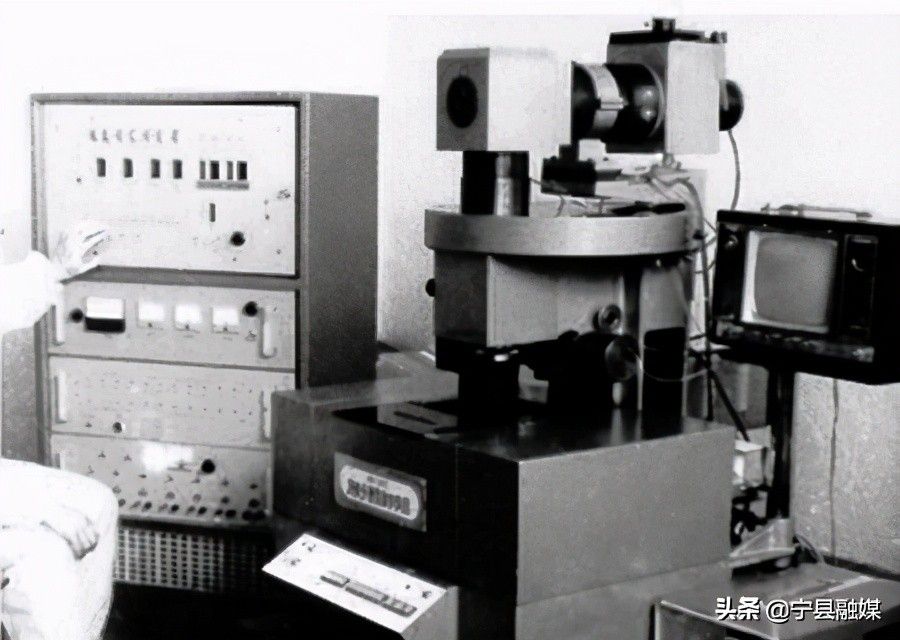
Developed China’s first photolithography machine in 1971
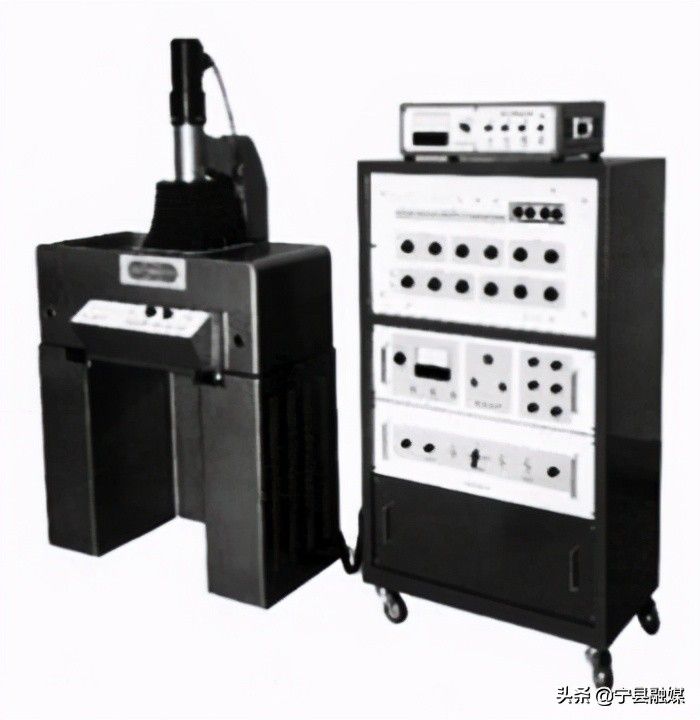
step repeat camera
Starting in 1975, Xu Duanyi invested in the development of an "automatic alignment step-by-step projection lithography machine" by using the method of lithography of integrated circuits directly on semiconductor wafers. In 1980, Xu Duanyi's team completed the development of China's first "automatic alignment step-by-step projection lithography machine", which could process the thinnest line width of 0.8 microns. It filled the domestic technology gap and was put into mass production and delivered for use. This is China’s second-generation lithography machine. This achievement won the first prize of the first Beijing Science and Technology Achievement Award in 1981. To this day, only a few countries in the world, such as the United States and Japan, can manufacture this kind of equipment.
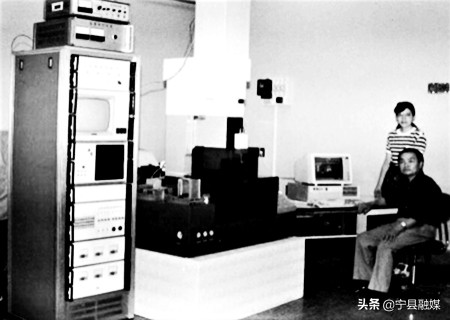
China’s second generation lithography machine
In 1987, the Ministry of Electronics Industry organized the establishment of the "China Electronic Special Equipment Industry Association" (CEPEA), which is a national industrial industry association with corporate legal personality approved by the state and has more than 100 member units across the country. The Institute of Micro Engineering of Tsinghua University led by Xu Duanyi was the only unit specializing in the research of electronic special equipment among colleges and universities across the country at that time.
Xu Duanyi was elected as the vice chairman of the China Electronic Special Equipment Industry Association, and its superior business department is the Ministry of Industry and Information Technology.
After the establishment of the China Electronics Professional Equipment Industry Association, Xu Duanyi was invited to give lectures in many units. He held a short training course on optical micro-machining technology at Tsinghua University and compiled teaching materials such as "Structure Principles and Design of Projection Lithography Machines" and "Photoelectric Automatic Alignment and Focusing Technology" for on-the-job technicians. At the same time, he also serves as an editorial board member of the magazine "Special Equipment for the Electronic Industry".
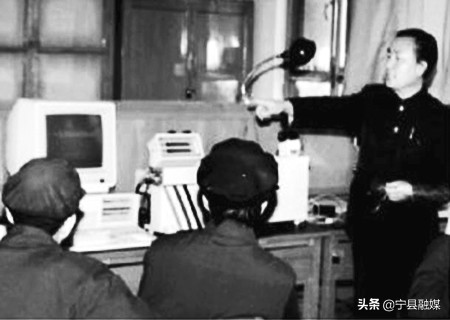
Xu Duanyi Tsinghua University held a short training course on optical micromachining technology
China's electronic industry special equipment industry developed rapidly during this period and has complete supporting facilities, which is rare in other countries.
On the basis of long-term research and development, Xu Duanyi led his team to actively carry out the development of a more advanced "step-by-step projection lithography machine".
The design indicators of this new lithography machine were aimed at the highest international level at that time. For example: the maximum chip area that can be photolithographed is 10×10 square millimeters, the actual effective resolution is 1.25 microns, the worktable travel is 160×160 mm, and 4-6 inch wafers can be processed.
After the photolithography machine was successfully developed, three units were put into production at the same time. Among them, one is kept at Tsinghua Micro Engineering Institute for experimental research; the other two are provided to Factory 109 of the Chinese Academy of Sciences and Beijing Semiconductor Device Factory for trial evaluation.
Mr. Wang Shouwu of the Chinese Academy of Sciences has used this photolithography machine to develop a variety of large-scale integrated circuits. Compared with traditional processes, the yield has increased by an average of 27%.
Mr. Wang Shouwu greatly appreciated the new method of adding a protective film on the photolithography mask invented by Xu Duanyi, and also introduced an American company to cooperate with Xu Duanyi's team in production.
After this result was reported to the Ministry of Electronic Industry, the relevant leaders attached great importance to it and personally visited the test sites of Tsinghua University and the Chinese Academy of Sciences.
In January 1991, the Ministry of Electronics Industry and the National Education Commission convened relevant domestic authoritative experts and organized a large-scale appraisal meeting and technical exchange meeting at Tsinghua University to appraise the third-generation "automatic alignment step-by-step projection lithography machine" developed by Xu Duanyi and others of Tsinghua University. The appraisal meeting was hosted by the leaders of the Ministry of Electronics Industry, and Mr. Wang Shouwu, a leading figure in the Chinese physics community, served as the leader of the appraisal expert group. Xu Duanyi introduced the research and development of Tsinghua lithography machines at the meeting.
This appraisal meeting was very large and grand. In addition to Lu Jinrong, director of the Special Equipment Department of the Ministry of Electronic Industry and other leaders, leaders from the Ministry of Science and Technology and the National Education Commission also attended. Ni Weidou, Tsinghua's executive vice president in charge of scientific research, was in charge of the reception. In addition, a group of representatives from semiconductor processing special equipment manufacturers from all over the country participated.
Mr. Wang Shouwu still maintained his usual unique style. His speech was concise and to the point, and he only said three sentences:
"This lithography machine is not bad. I hope everyone will seriously provide suggestions for modifications. User units should actively participate in equipment development."
It is very rare to get such affirmation from Mr. Wang Shouwu.
Before the appraisal meeting, Mr. Wang gave Xu Duanyi a list of experts and asked Tsinghua University to formally invite these experts to form the appraisal team. In addition, he also designated a group of engineering and technical personnel from equipment design and manufacturing and semiconductor device production units to work with leaders of the Ministry of Electronics Industry to conduct on-site testing of the lithography machine and submit the test data to the expert group of the appraisal committee for review.
Finally, Mr. Wang Shouwu drafted an appraisal opinion based on these data and the opinions of the expert group, and personally read out the appraisal results at the meeting.
Xu Duanyi has been engaged in special equipment for the electronics industry for many years and has participated in various product appraisal meetings, but has never experienced such a strict and serious appraisal process.
This appraisal meeting is of milestone significance.
Tsinghua University has thus become the only unit in China that can independently develop and produce world-class high-end lithography machines.
After passing the national formal appraisal, the third-generation "automatic alignment step-by-step projection lithography machine" developed by Xu Duanyi's team and the lens used by the machine both won the "National Science and Technology Achievement Award".
In March 1991, the Ministry of Electronics Industry decided to exhibit the machine at the "First National Industrial Enterprise Technological Progress Achievements Exhibition" hosted by the State Planning Commission. Therefore, the "automatic alignment step-by-step projection lithography machine" developed by Tsinghua University was placed in the main exhibition hall of the Beijing Exhibition Hall and displayed to Chinese and foreign audiences, domestic and foreign experts and media reporters.
After "People's Daily" (overseas edition), "Beijing Daily", Beijing TV and other media reported the news, it attracted the attention of the scientific community in various countries.
On this day, Xu Duanyi received a call from the Beijing Exhibition Center saying that they were going to receive an important foreign delegation to visit and asked Xu Duanyi to receive it personally.
After Xu Duanyi arrived at the main exhibition hall of the Beijing Exhibition Center on time, Mr. Wang Shouwu accompanied a foreign delegation to the booth of Tsinghua University to visit the automatic projection lithography machine developed by Tsinghua University, accompanied by many Chinese and foreign reporters.
Xu Duanyi didn't know who these people were, so he didn't dare to ask any more questions. He politely received them to visit the lithography machine, and answered whatever they asked.
At this time, the Chinese scientific community did not have the concept of "intellectual property rights" at all, and they did not know how to keep confidentiality. No matter what people asked, they would tell everything.
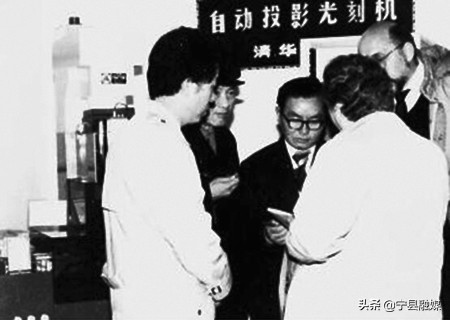
In March 1991, the third-generation "automatic alignment step-by-step projection lithography machine" developed by Tsinghua University participated in the "First National Industrial Enterprise Technological Progress Achievements Exhibition" at the Beijing Exhibition Hall. The picture shows Xu Duanyi (middle) introducing the research and development status of China's lithography machines to the experts attending the meeting
These foreign experts walked around the lithography machine, looked at it very carefully, and asked very professional questions; some experts even crawled on the ground, turned to the back, and carefully looked at the internal structure of the lithography machine.
Only then did Xu Duanyi learn that the members of this delegation were all photolithography machine experts from the United States and Japan.
When experts from the United States and Japan saw with their own eyes that China had independently developed a world-class photolithography machine with complete intellectual property rights despite being blocked and embargoed abroad, they were amazed and even said: "Inconceivable!"
Shortly after the American and Japanese experts left, photolithography experts from other countries also arrived one after another. At that time, almost all well-known foreign companies and manufacturers that produced lithography machines sent people to Beijing to visit and inspect the lithography machines independently developed by Tsinghua University. They all looked very carefully and were very good at asking questions. Xu Duanyi received these foreign experts in a friendly manner and answered various questions raised by them on the spot. These experts were sincerely convinced that China had independently developed lithography machines and warmly invited Xu Duanyi to visit them for exchanges. Unfortunately, among the visitors, there was no representative from the Dutch company ASML (ASML), which later became a giant in the world's lithography machine industry. At this time, this company had not yet been born.
Shortly after the Beijing exhibition ended and these foreign experts left China and returned home, the international "Paris Coordinating Committee" announced that the embargo on the export of projection lithography machines to China would be lifted. The United States and Japan, the two countries that mainly produced "step-by-step projection lithography machines" in the world at the time, simultaneously announced that they would lift the export ban on China and could export such projection lithography machines to China at a more favorable price. At the same time, a very tempting magic weapon was offered - "Any Chinese company that purchases our company's lithography machines is welcome to have its leaders visit our company. The round-trip air tickets, hotel accommodation and all travel expenses will be borne by our company."
At this time, the country had just opened. The outside world was very exciting and very attractive to the leaders of Chinese companies. They all wanted to find an opportunity to go abroad to see, have fun and broaden their horizons.
As a result, many units that were originally planning to purchase the projection lithography machines produced by Tsinghua University changed their minds and called to say they no longer wanted them. Even Factory 109 of the Institute of Semiconductors of the Chinese Academy of Sciences, which had a long-term cooperative relationship with Tsinghua University, and other large units in Beijing, Shanghai, Tianjin, Wuxi and other places, all canceled their orders. The new automatic lithography machine developed and manufactured by Tsinghua University has no market, and it has lost its living space.
As a result, Xu Duanyi's team spent countless efforts to successfully develop the automatic lithography machine, an important and key equipment for the production and processing of chips, but it died. All the hard work and endless efforts over the years were all in vain.
Xu Duanyi, the scientist who presided over the development of China's first lithography machine, can no longer build another lithography machine. One can imagine his inner sorrow. In desperation, he had to say goodbye to the field of lithography machine research and development, and turned his attention to the emerging international optical disc research.
Since then, Xu Duanyi’s team at Tsinghua University has made remarkable achievements in the field of optical disk research. China's optical disc R&D and manufacturing are leading the world, with production, sales and export volume ranking first in the world. China has occupied a place in the world and impressed the world.
Xu Duanyi became one of the main founders of China's optical disc research field. He holds 67 Chinese patents and 2 U.S. patents. He has been invited to serve as chairman of international optical conferences many times, won the "National Invention Award", China's highest science and technology award, and was appointed chief scientist of national key basic research projects.
After Tsinghua University stopped producing lithography machines, the situation took a turn for the worse. Photolithography machines produced abroad have been rushing in and quickly seized the Chinese market.
Now that China has "swung its sword from the palace" and given up on the research and development and manufacturing of lithography machines, foreign lithography machine production companies have no competitors, and the price of lithography machines has been rising all the way. Years later, automatic lithography machines became a rare commodity, and the price soared to hundreds of millions of dollars per unit, which was more expensive than a large airplane.
Not only is it expensive, developed countries also prohibit the sale of photolithography machines to China and only sell chips to China. Some countries have choked China on the supply of chip products, and China's semiconductor companies can only struggle in despair.
As Xu Duanyi predicted: "Future lithography machines may have major technological innovations and developments."
After the development and manufacturing of lithography machines in China came to a halt, the development of lithography machines abroad has continued to develop and reach new heights. Now, the chips produced by high-end lithography machines developed by developed countries have reached the nanometer level.
The situation is very serious. Leaders with strategic vision among senior leaders have also seen the problem and hope that Tsinghua University will resume the research and development and manufacturing of automatic lithography machines...
At this time, Xu Duanyi had retired and the key members of his team were scattered. It is not easy to reorganize a high-level scientific research team that was as capable as it was back then!
Disclaimer: This article is reproduced from "Literature and History World", which supports the protection of intellectual property rights. Please indicate the original source and author when reprinting. If there is any infringement, please contact us to delete it.
Company phone number: +86-0755-83044319
Fax/FAX: +86-0755-83975897
Email: 1615456225@qq.com
QQ: 3518641314 Manager Li
QQ: 332496225 Manager Qiu
Address: Room 809, Building C, Zhantao Technology Building, No. 1079 Minzhi Avenue, Longhua New District, Shenzhen
Related Recommendations
Exclusive Interview with Li Gang of Yunfan Ruida: The Precision of Millimeter-Wave Radar Products and the Warmth of Humanity
2026-07-22
2517
RF Passion, Craftsman’s Journey: Over 30 Years of Steadfast Dedication — Interview with Kinghelm Chief Engineer Mr. Qin hongxiang
2026-06-26
2687





 粤公网安备44030002007346号