
























Service Hotline
News

News
Power semiconductors have nearly 7 times the space in 5 years, IGBT benefits the most
2022-03-16
1185
Automotive power semiconductors have nearly 7 times the space in 5 years, with IGBT benefiting the most
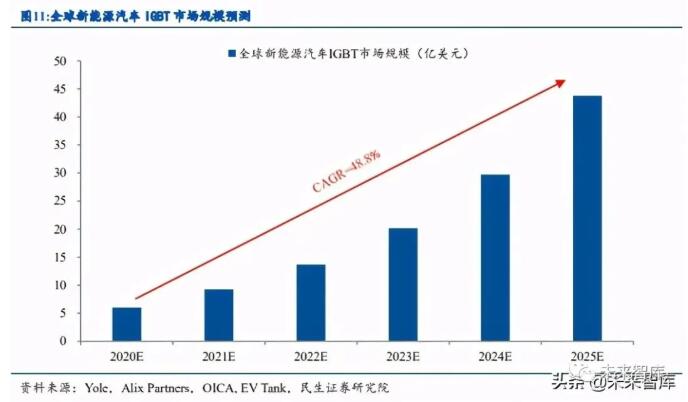
Driven by policy support and energy conservation and emission reduction, the penetration of new energy vehicles is accelerating. It is expected that the penetration rate of domestic new energy vehicles will reach 20% in 2025, and the penetration rate of new energy vehicles in the EU will reach 40% in 2030. The trend of automobile electrification has greatly increased the value of power semiconductors used in automobiles. According to Infineon statistics, the ASP of power semiconductors will significantly increase from US$71 for traditional fuel vehicles to US$330 for full plug-in hybrid/pure electric vehicles, which is 4.6 times that of traditional fuel vehicles. According to our calculations, the global automotive power semiconductor market is expected to reach US$8 billion in 2025. The global new energy vehicle power semiconductor market will reach US$5.3 billion in 2025, 7.3 times that of 2020, with a compound annual growth rate of 48.8%. In the next ten years, the IGBT market for new energy vehicle charging piles in China, the United States and Europe will have an incremental space of US$9.4 billion. Currently, IGBT and MOSFET are mainly used in automotive power semiconductors. IGBT is the core component of the main inverter of the electric drive system in new energy vehicles and can be used in auxiliary inverter circuits, DC/DC chopper circuits, OBC (charging/inverter), etc. The value of a single vehicle reaches US$273, accounting for 83% of the ASP of automotive power semiconductors, which is the absolute majority. We predict that the global new energy vehicle IGBT market will reach US$4.4 billion in 2025, with a compound annual growth rate of approximately 48.8%. It is the most beneficial type of automotive power semiconductor under the electrification trend.
The three major barriers of product, process and first-mover advantage build a strong moat.
1) Product barriers: Automotive-grade IGBTs need to have strict requirements such as long service life, low failure rate, and high earthquake resistance. They must be able to adapt to harsh working conditions such as "extremely hot" and "extremely cold" high and low temperature working conditions, dust, and salt-alkali. They must withstand frequent changes in current caused by frequent starts and stops, and have extremely high product requirements.
2) Process barriers: When designing automotive-grade IGBTs, it is necessary to ensure the balance between turn-on and turn-off, short-circuit resistance and conduction voltage drop, and parameter optimization is particularly complicated. During manufacturing, the thin sheet process is prone to fragmentation, and the limited melting point of the front metal makes it difficult to control the annealing temperature. In addition, the technical requirements for welding and bonding of IGBT module packaging are also high.
3) The certification cycle is long, the replacement cost is high, and it has an experience curve effect. It has obvious first-mover advantages in the industry.
a) Automotive-grade IGBT must meet reliability standards, quality management standards, and functional safety standards to be eligible to enter the supply chain of first-tier automobile manufacturers. The certification period is generally at least 2 years.
b) Since IGBT modules are key components in automobiles, downstream manufacturers are often cautious when replacing them due to safety and reliability considerations. Only after a large number of verification tests and comprehensive assessments are they made, large-volume procurement decisions are made. Replacement costs are high.
c) The IGBT business requires long-term experience accumulation to reach a good know-how level.
d) The IGBT industry is a capital-intensive industry, and production and testing equipment basically need to be imported. In addition, the demand for working capital for IGBT manufacturing companies is also large. New entrants often face large investment and low output in the early stage. They need strong financial backing to continue product research and development, production and sales. Taken together, pioneering companies in the IGBT industry have obvious first-mover advantages.
The competitive landscape has become a "high-quality track" for growth industries, but the current localization rate is still low.
According to Omdia's 2019 statistics, the top ten global IGBT module manufacturers account for 76% of the market share. The market share is concentrated and the competition pattern is good. In terms of automotive-grade IGBTs, due to high industry barriers, China's new energy vehicle IGBT module CR4 share totaled 81% in 2019, showing an oligopoly pattern. Among them, Infineon ranks first with a market share of 58.2%, BYD ranks second with a market share of 18%, Mitsubishi Electric and Semikron rank third and fourth respectively. Automotive IGBT has become a "high-quality track" in the growing industry with its broad growth space and good competition landscape. However, among the top ten IGBT manufacturers of China's new energy vehicles in 2019, only three domestic manufacturers, BYD, Star Semiconductor and CRRC Times Electric, were shortlisted, with a total market share of 20.4%. There is broad room for domestic substitution.
Multiple factors are accelerating the substitution of domestic products, and domestic manufacturers have huge potential for future development.
Multiple factors accelerate domestic substitution: 1) China is already the world's largest automobile consumer market, and automobile consumer demand will continue to increase in the future, providing good development opportunities for domestic IGBT manufacturers. 2) As trade friction intensifies, the need for independent and controllable semiconductors becomes increasingly urgent. 3) Domestic manufacturers are taking the lead in deploying the new energy vehicle industry and seizing the first-mover advantage. As the share of domestic new energy vehicle manufacturers increases, it is expected that more products from domestic semiconductor manufacturers will be used due to supply chain security considerations. 4) Domestic IGBT manufacturers have local service advantages such as high cost performance and fast response speed, which meet the needs of new energy vehicles to reduce costs and increase efficiency, and are expected to increase their share. 5) Policy encouragement and financial support help the domestic IGBT industry develop rapidly. In terms of domestic market space, according to our calculations, China's new energy vehicle power semiconductor market is expected to reach 17.7 billion yuan in 2025, which is 6 times that of 2020, with a compound annual growth rate of up to 44%. It is expected that China's new energy vehicle IGBT market will reach 14.7 billion yuan in 2025, with a compound annual growth rate of approximately 44%. In 2025, China's IGBT market for charging piles will reach 10.9 billion yuan, with a compound growth rate of 35%. Based on the above analysis, we believe that the process of domestic substitution of automotive IGBTs will accelerate. Combined with the current low market share and broad industry growth space, domestic IGBT manufacturers have huge growth potential in the future.
The tight production capacity is difficult to alleviate in the short term, and the power semiconductor boom continues to rise.
The commercial use of 5G and the epidemic stay-at-home economy are accelerating the digital transformation of society. The markets for new energy vehicles, home appliances, digital and other terminal equipment are getting warmer, driving demand for semiconductors. In addition, semiconductor manufacturers need to increase safety inventories due to supply chain security. The resonance of multiple factors has led to tight semiconductor production capacity. Currently, all major wafer foundries are at full production. From a global perspective, ICinsight predicts that the world will add 20.8 million equivalent 8-inch wafer production capacity in 2021. From a domestic perspective, the equivalent 8-inch wafer manufacturing capacity under construction is approximately 27.96 million wafers/year, most of which will be put into production in 2022. However, considering that there will be a production ramp-up period of about 3-5 years after the new production line is put into operation, it is difficult to alleviate the tight production capacity in the short term. Benefiting from the rapid increase in demand for new energy vehicles and charging piles, it is expected that the global demand for 8-inch wafers for automotive-grade IGBT modules alone will reach 1.69 million pieces in 2025, an increase of 5.4 times compared with 2020. There is a huge gap in wafer manufacturing demand. Since the beginning of the year, major chip manufacturers at home and abroad have raised product prices or extended delivery times. It is expected that the prosperity of the semiconductor industry chain will continue to rise.
1 The penetration of new energy vehicles is accelerating, and the space of automotive power semiconductors has doubled in 5 years
1.1. The penetration of new energy vehicles is accelerating, and automotive power semiconductors are experiencing both volume and price increases.
Policy support & energy conservation and emission reduction drive the accelerated penetration of new energy vehicles. my country's "New Energy Vehicle Industry Development Plan (2021-2035)" puts forward a vision for the development of new energy vehicles. It is planned that by 2025, the penetration rate of domestic new energy vehicles will reach 20%.
Internationally, many European countries have adopted two-pronged carbon dioxide emission restriction policies and new energy vehicle subsidy policies to cope with the pressure of global warming, and the electrification route of automobiles has become increasingly obvious. In the EU, the ACEA vehicle greenhouse gas emissions agreement stipulates that vehicle carbon dioxide emissions must be less than 59 grams per kilometer by 2030. According to Infineon's calculations, the penetration rate of new energy vehicles in the EU will reach 40% in 2030.
Electrification has led to a significant increase in the value of power semiconductor bicycles. The ASP of power semiconductors for pure electric vehicles reaches US$330, which is 4.6 times that of traditional fuel vehicles. New energy vehicles that use the electric power system as their power source put forward higher requirements for the power management and power conversion capabilities of electronic components.
In traditional automobiles, power semiconductors are mainly used in vehicle starting, power generation and safety fields, and low-voltage and low-power electronic components can meet their working needs. In new energy vehicles, the high voltage output by the battery requires frequent voltage conversion and current inversion. These circuits have greatly increased the demand for power semiconductors such as IGBTs and MOSFETs. According to Infineon data, the power semiconductor content in traditional fuel vehicles is US$71, and the value of power semiconductors in full plug-in hybrid/pure battery electric vehicles is US$330, which is 4.6 times that of traditional fuel vehicles.
The global automotive power semiconductor market will reach US$8 billion in 2025. According to Yole, the global power semiconductor market will reach US$22.5 billion in 2025. According to Zhiyan Consulting statistics, the automotive sector accounted for 35.4% of the global power semiconductor market in 2019. Assuming that the proportion remains unchanged, the global automotive power semiconductor market is expected to reach US$7.965 billion in 2025.
The global new energy vehicle power semiconductor market is expected to reach US$5.3 billion in 2025, 7.3 times that of 2020, with a CAGR of 48.8%. According to AlixPartners' forecast, global car sales will increase from 70.5 million units in 2020 to 94 million units in 2025. EVTank predicts that global new energy vehicle sales will increase from 2.21 million units in 2019 to 12 million units in 2025. The global new energy vehicle penetration rate will reach 13% in 2025, an increase of 10.36pct compared with 2019.
As mentioned above, in the latest statistics from Infineon in 2020, the value of a new energy vehicle power semiconductor bicycle is US$330. Considering the current tight global semiconductor wafer foundry production capacity, it is expected that the price of new energy vehicle power semiconductors will remain at a high level this year, and the value of a bicycle in the future will gradually increase with the electrification trend and the increase in dual-motor penetration. Based on the above data, we estimate that the global new energy vehicle power semiconductor market will reach US$5.3 billion in 2025, 7.3 times that of 2020, with a compound annual growth rate of 48.8%.
1.2. The global vehicle charging pile IGBT market space is growing rapidly
The number of charging piles in important supporting facilities for new energy vehicles will grow rapidly, driving the demand for IGBT, a key component, to increase rapidly. As the penetration rate of new energy vehicles gradually increases, the number of charging piles, which are important supporting facilities for new energy vehicles, also needs to be increased simultaneously. According to McKinsey statistics, the charging demand for new energy vehicles in China, the United States and Europe will be approximately 18 billion kilowatt hours in 2020. It is expected that by 2030, the charging demand for new energy vehicles will reach 271 billion kilowatt hours, with a compound annual growth rate of 31.2%. The rapid growth in demand for new energy vehicle charging facilities will also drive a significant increase in the use of IGBT, a key component of charging piles.
It is expected that the charging pile IGBT market in China, the United States and Europe will have an incremental space of US$9.4 billion in the ten years from 2020 to 2030. According to McKinsey's estimates, China, the United States, and the European Union need to invest US$19 billion/11 billion/17 billion respectively in the 2020-2030 decade to build 20 million/20 million/25 million new energy vehicle charging piles to fill the gap in new energy vehicle charging demand. In a single charging pile, IGBT accounts for about 20% of the total cost. From this we can deduce that the IGBT market for new energy vehicle charging piles in China, the United States and Europe will have an incremental space of US$9.4 billion in the next ten years.
2 Among automotive power semiconductors, IGBT benefits the most
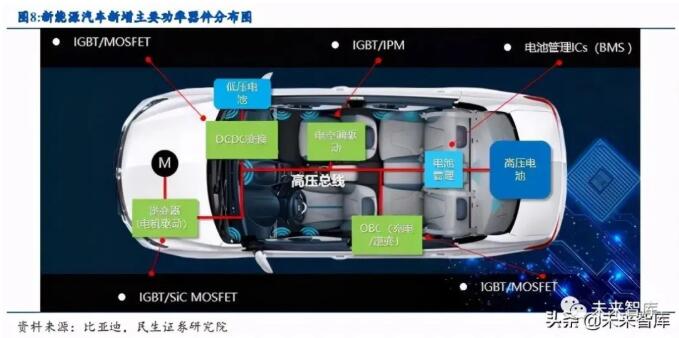
IGBT and MOSFET are the main components of automotive power semiconductors. IGBT has four different applications in cars. The first is the core component of the main inverter. The main inverter inverts the DC output from the battery into AC to drive the car motor; the second is used in the auxiliary inverter circuit to power other automotive electronics; the third is used in the DC/DC chopper circuit to output currents with different voltages; the fourth is used in the OBC (charging/inverter) to invert the external input AC power into DC power to charge the new energy vehicle battery.
In cars with a low degree of electrification, due to the low battery output voltage and the low power range of the power devices, MOSFETs can be used to replace the auxiliary inverter circuit, DC/DC DC chopper circuit, and IGBT in the OBC to control costs. ?
2.1. IGBT is the core device of new energy vehicle motor drive system IGBT
With superior performance, it is the core component of power semiconductors in new energy vehicles. IGBT is the abbreviation of InsulatedGateBipolarTransistor, which is an insulated gate bipolar transistor. It is a composite power semiconductor device composed of BJT and MOSFET. It combines the advantages of MOSFET's fast switching speed, high input impedance, small control power, simple drive circuit, small switching loss and BJT's low conduction voltage, large on-state current and small loss. In new energy vehicles, IGBT modules are mainly used in high-power inverters to invert direct current into alternating current to drive the vehicle motor; they are also used in auxiliary power inverters to power automotive electronic equipment such as vehicle air conditioners.
IGBT can be divided into IGBT single tube, IGBT module and IPM intelligent module according to different application environments. The IGBT monotube is an N-channel enhancement-type insulated-gate bipolar transistor that conducts the entire circuit by providing base current to the PNP-type transistor. Because its applicable current is small, usually below 100A, its applicable power is low. However, the external circuit of an IGBT single tube is complex and difficult to package, which reflects the technology and process level of the IGBT manufacturer.
The IGBT module is a modular semiconductor product composed of an IGBT chip and a FWD (fast recovery diode) packaged through a specific circuit bridge. Multiple chips are integrated and packaged in the module through insulation. Its safety and reliability are effectively improved, and it is more suitable for working in high-voltage and high-current scenarios. The IPM smart module integrates IGBT devices, drive circuits, and protection circuits into one module. Because it has the functions of self-circuit diagnosis and protection, it is more intelligent than ordinary IGBT modules and is often used in frequency conversion home appliances.
At present, Infineon IGBT has developed to the seventh generation of products, and domestic manufacturers are gradually catching up with the world's advanced level. In more than 30 years from 1988 to 2019, Infineon has released a total of 7 generations of IGBT products. The technical level has developed towards reducing chip area, process line width, on-state saturation voltage drop, off-time, power loss and increasing off-state voltage. Although the domestic IGBT market is currently mainly occupied by foreign companies, with the continuous investment in R&D by domestic manufacturers, product technology continues to catch up with the world's advanced level.
For example, the second-generation IGBT chip independently developed by Star Semiconductor is benchmarked against Infineon's sixth-generation IGBT chip (FS-Trench), and has been mass-produced in 2016. A total of 160,000 sets of automotive-grade IGBT modules were assembled in 2019; BYD's IGBT4.0 products have lower switching losses, stronger current output capabilities, and longer temperature cycle life than the mainstream Infineon fourth-generation IGBT on the market.
The global new energy vehicle IGBT market will reach US$4.4 billion in 2025, with a CAGR of 48.8%. According to Yole data, the global new energy vehicle IGBT market size was US$600 million in 2019. EVSalesBlog data announced that global sales of plug-in hybrid vehicles and pure battery electric vehicles in 2019 were approximately 2.2 million. From this, it can be deduced that the average value of IGBT bicycles is US$273 (accounting for 83% of the value of bicycle power semiconductors). Considering the current tight global semiconductor wafer foundry production capacity, it is expected that new energy vehicle power semiconductors will be used this year. Prices will still remain at a high level, and the value of future bicycles will gradually increase with the increase in electrification trends and dual-motor penetration. Multiplied by EVtank's global new energy vehicle sales forecast for the next few years, the global new energy vehicle IGBT market is expected to grow from approximately 600 million in 2020 to 4.4 billion US dollars in 2025, with a compound growth rate of approximately 48.8%.
2.2.SiC has better performance and is expected to become the next generation technology
Power devices based on third-generation semiconductor materials have better performance advantages. Compared with silicon-based semiconductor materials, third-generation semiconductor materials represented by GaN and SiC have wider bandgaps, higher breakdown electric fields, higher thermal conductivity, higher electron saturation rates and higher radiation resistance, and are more suitable for making high-temperature, high-frequency, radiation-resistant and high-power devices.
According to Infineon data, SiC material inverters are 3 times and 4 times smaller in volume and weight than Si-based material inverters respectively; Rohm data shows that in application, the switching frequency of SiCMOSFET can reach more than 50KHz (while the mainstream IGBT switching frequency is up to 20KHz), and the energy loss is 73% lower than that of Si-based IGBT. SiC-based MOSFETs have higher performance and smaller size advantages than IGBTs.
Some high-end models have adopted SiC-based MOSFETs, which is expected to become the future development direction. Tesla Model 3 is the first model to integrate a full SiC power module. It was completed by Tesla's engineering design department in cooperation with STMicroelectronics. Immediately, Infineon also became the supplier of Tesla Model 3 SiC power modules. In addition, BYD Han EV four-wheel drive version has become the first domestic model to be equipped with SiCMOSFET components in batches, and its SiC electronic control overall efficiency is as high as over 97%.
At present, domestic manufacturers are also actively deploying SiC production applications. For example, China Resources Micro has achieved mass production of China's first commercial 6-inch SiC production line in July 2020, with a planned production capacity of 1,000 pieces/month. New Clean Energy also has a number of third-generation semiconductor-related patents and is expected to launch a series of SiC diode products. In the future, it will focus on new energy vehicle applications.
Currently, SiC is subject to cost and yield factors, and it will take time for widespread adoption on a large scale. Currently, the international mainstream SiC substrate sizes are 4 inches and 6 inches. Due to the small wafer area and low chip cutting efficiency, the cost of SiC substrates is high. The low manufacturing and packaging yields in subsequent processes make the cost of SiC devices remain high.
According to data from the Chinese Academy of Sciences, the price of SiCMOSFET is 4 times higher than that of SiIGBT at the same level. Automotive-grade electronic control devices must meet more stringent performance indicators and need to maintain stable operation in extreme temperatures and strong vibration environments. Therefore, before being introduced into end products, SiCMOSFET needs to undergo a long-term reliability certification. Generally, the certification period for automotive-grade IGBT modules is about 2 years.
3 The three major barriers of product, process and first-mover advantage build a strong moat
3.1. The complex working environment places extremely high demands on the safety and reliability of automotive-grade IGBTs.
1) Need to adapt to "extremely hot" and "extremely cold" high and low temperature working conditions: Automotive-grade IGBTs have a wide operating temperature range, and different installation locations have different temperature ranges, such as engine compartment requirements -40℃-155℃, body control requirements -40℃-125℃, while conventional consumer chips and components only need to reach 0℃-70℃.
2) Need to withstand frequent changes in current caused by frequent starts and stops: Vehicles often encounter frequent starts and stops in congested road conditions. At this time, the operating current of the IGBT module of the booster and inverter will rise and fall frequently accordingly, resulting in rapid changes in the junction temperature of the IGBT, which requires high temperature resistance and heat dissipation performance of the IGBT.
3) Need to have high earthquake resistance: Due to the uncertainty of vehicle conditions, such as mountains, mud, gravel roads, etc., automotive IGBTs may be subject to large vibrations and bumps while the vehicle is driving. Each lead terminal of the IGBT module is required to have strong enough mechanical strength to be able to operate normally under strong vibration conditions.
4) Able to adapt to harsh working environments: Considering mold, dust, water, saline-alkali natural environment (seaside, snow, rain, etc.), EMC and harmful gas erosion, extremely high requirements are placed on the safety performance of IGBTs such as waterproof, dustproof and anti-corrosion. Under these interferences, IGBT can neither affect its work uncontrollably nor interfere with other equipment in the vehicle (control bus, MCU, sensors).
5) It needs to have long service life and low failure rate. The design life of a general automobile is about 15 years or 600,000 kilometers. Throughout the life cycle, automakers’ basic requirement for automotive semiconductor failure rates is single-digit PPM (one part per million). Most automakers require it to be on the PPB (part per billion) level, almost achieving zero tolerance for failure.
3.2. The design, manufacturing and packaging process of automotive grade IGBT is difficult
The design of automotive-grade IGBT must ensure the balance between turn-on and turn-off, short-circuit resistance and conduction voltage drop, and parameter optimization is very special and complex. Automotive-grade IGBT chips usually work in high-current, high-voltage, and high-frequency environments. The chip design needs to ensure that switching on and off, short-circuit resistance, and conduction voltage drop (heat control) are in a balanced state. The chip design and parameter adjustment and optimization are very special and complicated.
The main difficulties in the chip design process are:
(1) The terminal design must ensure high reliability while achieving small size and high withstand voltage;
(2) Cell design must achieve high current density while ensuring a wide safe working area, requiring extremely high heat dissipation capabilities;
(3) The cell design must achieve high current density while ensuring sufficient short-circuit capability;
The production process is difficult: the sheets are easily broken, and the melting point of the front metal is limited, making it difficult to control the annealing temperature. When the IGBT is turned on, it can be regarded as a wire, and the current passes vertically through the IGBT from top to bottom until it reaches the drive motor.
1) The thinner the chip, the smaller the thermal resistance, but it is easily broken. Thinning process: The thinner the chip, the shorter the path for current to flow, and the energy lost on the chip will be reduced accordingly, and the battery life of the vehicle will be longer. At the end of 2018, BYD announced that it could thin wafers to 120μm, while Infineon's IGBT chips can be thinned to as low as 40μm. Subsequent processing on wafers and chips with this thickness is very technically difficult and easily broken.
2) The backside process must be carried out at low temperature, otherwise it will easily cause the frontside metal to melt. Backside process: including backside ion implantation, annealing activation, backside metallization and other process steps. Due to the limitation of the melting point of the front metal and the continuous thinning of IGBT chips, these backside processes must be performed at low temperatures (not exceeding 450°C), otherwise it will easily lead to melting of the front metal and extremely difficult annealing activation.
The technical barriers to welding and bonding of IGBT module packaging are high. Automotive IGBTs are mostly used in the form of modules. The module packaging structure is to package discrete semiconductor devices into the module through some integrated method. An IGBT module usually needs to go through a total of nine processes of patching, welding, plasma cleaning, X-ray detection, bonding, glue filling & curing, molding, testing, and marking before it can be put on the market. Among them, welding and bonding are the most difficult aspects of module packaging technology.
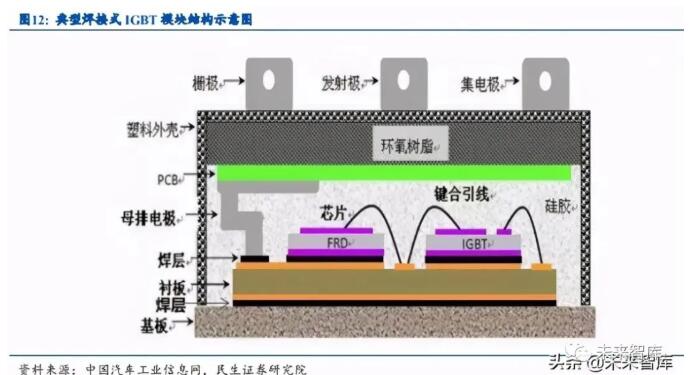
(1) Welding: The latest low-temperature silver sintered patch interconnection process parameters are difficult to master, and the cost of materials and equipment is high, which has become a barrier to entry. At present, the mainstream welding technology is soldering. But this technology produces less consistent and reliable results. To this end, a low-temperature silver sintered patch interconnection process has been developed. The soldering layer of this process has the advantages of high thermal conductivity, high electrical conductivity, and high reliability. However, this technology is very difficult. The setting of process parameters, the high cost of equipment purchase, and the high cost of silver powder used in production have become barriers that restrict manufacturers from using this technology. At present, only advanced companies represented by Infineon and Mitsubishi have used low-temperature silver sintering for welding on some of their high-performance IGBT modules.
(2) Bonding: It has high process difficulty. At present, the commonly used bonding wires for internal chip surface interconnection of IGBT modules are aluminum wires and copper wires. Copper wire has low resistivity, high thermal conductivity and low expansion coefficient, making it more suitable for automotive modules with high power density and efficient heat dissipation. However, the difficulty of the copper wire bonding process is that it requires copper metallization treatment on the chip surface and requires higher ultrasonic energy, which is likely to damage the IGBT chip itself. 1) Copper has strong oxygen affinity and requires strict sealing and rapid operation. Copper wires will oxidize immediately when they come into contact with air. In principle, the packaging can be completed within 48 hours of unpacking. Oxidized copper wire is harder, difficult to bond, and prone to solder joints falling off or having low tensile strength. 2) During the bonding process, the flow of protective inert gas is difficult to control. In order to reduce the degree of copper oxidation, protective gas needs to be added to the chip heating area that is prone to oxidation. Too much flow will affect the heating temperature, and too small a flow will weaken the protective effect. 3) The material requirements for making pressure welding fixtures are strict. The surface of the fixture must be smooth to ensure that the carrier and pins are not loose, otherwise it will directly affect a series of welding wire problems such as poor ball burning, short wires, and warped wires during the product welding process. 4) Bonding equipment parameter settings must comprehensively consider factors such as welding force, standby power, and the possibility of craters, which are difficult to balance and control. Problems with any step will result in bonding failure.
3.3. Obvious first-mover advantage: long certification cycle and high replacement costs
Due to the high reliability requirements of automotive IGBTs, their certification cycle is long and replacement costs are high. Pioneer companies have obvious first-mover advantages.
1) The certification is strict and the time cycle is long. IGBT discrete devices or modules must meet reliability standards AECQ100 (IC)/101 (discrete devices), quality management standard ISO/TS1649, and functional safety standard ISO26262ASILB (D) before they are eligible to enter the supply chain of first-tier automobile manufacturers. The certification cycle is generally at least 2 years.
2) High replacement cost. The IGBT module is a key component in downstream products, responsible for regulating the voltage, current, frequency, phase, etc. in the circuit. Its performance, stability and reliability are crucial to downstream customers. Customers tend to be cautious about new IGBT suppliers. They not only comprehensively evaluate the strength of the supplier in theory, but also make large-volume purchasing decisions after individual product testing, complete machine testing, multiple small-batch trials, etc. The replacement cost is high and the purchasing decision-making cycle is long.
3) The IGBT business requires long-term experience accumulation to achieve a good know-how level. IGBT chips and fast recovery diode chips are key links in IGBT modules. They have many production steps and use a lot of production equipment. The production organization, control, equipment debugging and other work are complicated. For example, the selection and processing of heat dissipation materials, the degree of thinning, the concentration, quantity and speed of the two injections of phosphorus ions, the control of the backside process temperature and the equipment in each link, all require long-term relevant experience to master the chip design and production process.
New energy vehicle applications often require mass production of IGBT modules with high reliability and stability. It requires a long period of experience accumulation to understand the characteristics of equipment and materials and master the production process. Taking the patch process as an example, it involves the determination of the chip position, the thermal expansion coefficients and characteristics of different materials, the setting of the reflow curve of the reflow furnace and other parameters. These production processes require long-term research and development experiments to find the appropriate solution.
4) High financial barriers. The IGBT industry is a capital-intensive industry. The industrial chain covers chip design, chip manufacturing, module manufacturing and testing. Its production and testing equipment basically need to be imported, and the equipment cost is high. At the same time, product research and development and market development take a long time. In addition, the demand for working capital for IGBT manufacturing companies is also large. New entrants often face large investment and low output in the early stage. They need strong financial backing to continue product research and development, production and sales.
Taken together, even if a new company produces IGBT products, it will take a long time to win the recognition of customers and reach a good level of know-how. At the same time, it will also face the difficulties of long-term large capital investment and market development. First-mover companies have obvious first-mover advantages.
4 The competitive landscape of the automotive IGBT industry is excellent, but the localization rate is still low
The competitive landscape is concentrated, with CR4’s total share being 81%; however, the localization rate is low, with only three domestic companies in the TOP10 shortlisted. According to Omdia's 2019 statistics, the top ten global IGBT module suppliers account for 75.6% of the market share. The market structure is concentrated and the competition pattern is good.
According to NE Times data, a total of 1.08 million sets of automotive IGBT modules were assembled in China in 2019, of which Infineon held a 58.2% share with 628,000 sets, leading the market. BYD Microelectronics ranked second, with a total of 194,000 units assembled, accounting for 18%. Mitsubishi Electric and Semikron ranked third and fourth respectively, with shares of 5.2% and 3%. Star Semiconductor ranks fifth, with a share of 1.6%. Another domestic manufacturer, CRRC Times Electric, ranked ninth, with a share of 0.8%. In 2019, the top four manufacturers of new energy vehicle IGBT modules had a combined share of 81.4%, showing an oligopoly pattern. Among domestic manufacturers, only three companies, BYD Microelectronics, Star Semiconductor and CRRC Times Electric, are among the top 10 in terms of market share, accounting for 20.4%, with a low localization rate.
From the perspective of voltage coverage, the IGBT product line coverage of domestic enterprises is becoming increasingly complete. Domestic manufacturer Star Semiconductor currently has one of the most comprehensive IGBT module product lines in the country, covering a wide range of application fields from high voltage (3300V) to medium and low voltage (600V); CRRC Times Electric mainly focuses on high-speed rail, high-speed trains and other subdivisions, and currently has certain competitiveness mainly in the high-voltage field above 4500V.
Infineon's products completely cover the downstream application fields of all voltage levels, while ABB mainly targets high-voltage and highest voltage level products. Overall, the IGBT products of domestically-funded enterprises cover the entire market from low voltage to high voltage, and the layout in the low-voltage field is relatively complete. However, compared with foreign manufacturers, my country's power discrete devices still need to be strengthened in the high-voltage field.
5 Multiple factors accelerate domestic substitution and promote share increase
As trade friction intensifies, the need for autonomous and controllable semiconductors becomes increasingly urgent. In recent years, Sino-US trade friction has shown an intensifying trend.
In March 2016 and April 2018, ZTE was twice included in the U.S. “Entity List.” On May 15, 2019, Huawei was included in the "Entity List" and was prohibited from conducting business cooperation with US companies or purchasing telecommunications equipment from them. Affected by this, Google has stopped providing services to Huawei.
On May 15, 2020, the United States once again issued a new ban against Huawei, requiring chips produced using American technology and equipment to be approved by the United States before they can be sold to Huawei. On August 17, 2020, 38 Huawei subsidiaries were included in the entity list, and the ban was fully implemented on September 15 of the same year.
In December 2020, SMIC was included in the list of Chinese military-related companies by the United States. In the context of the United States' intensified technological blockade against China, China faces the risks of intensifying trade frictions, supply disruptions, and poor international cooperation. It is increasingly urgent to establish an independent and controllable semiconductor supply chain and accelerate domestic substitution.
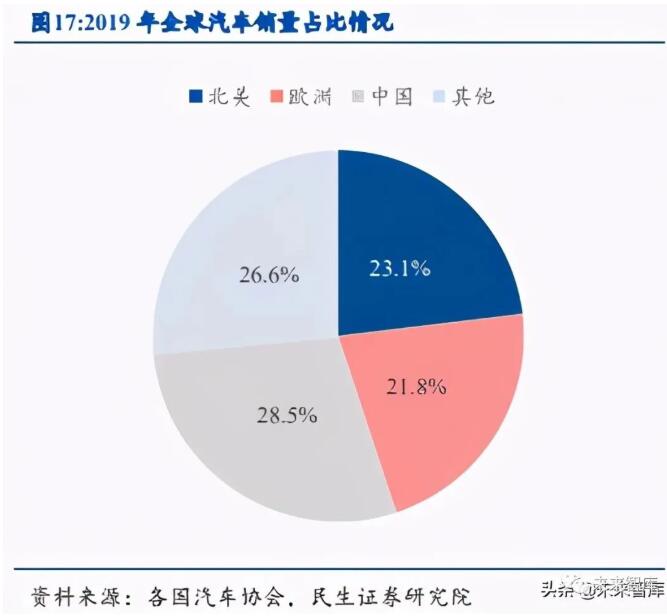
China has become the world's largest automobile consumer market, laying a good development opportunity for automotive IGBTs. In 2019, China's new car sales reached 25.75 million units, accounting for approximately 28.5% of global new car sales, making it the world's largest automobile consumer market. Although my country's current car ownership exceeds 260 million, the per capita car ownership is still far behind that of developed countries.
According to data from the World Bank, my country's per capita car ownership in 2019 was 0.173; in the United States, it was 0.837, 4.8 times that of China; in Japan, it was 0.591, which was 3.4 times that of China. It is expected that China's car sales will continue to increase in the future. The vast automobile consumer market provides broad space for the development of my country's IGBT companies and lays a good foundation for development.
The share of domestic new energy manufacturers has increased, accelerating the substitution of domestically produced IGBTs. In terms of fuel vehicles, due to its late start, my country's competitiveness in the traditional fuel vehicle industry is weak. In the first three quarters of 2020, my country's passenger vehicle sales were 13.38 million units, of which Chinese brand passenger vehicle sales accounted for only about 36%. In the new energy vehicle industry, my country is seizing the layout and has established considerable technological and market advantages.
In the first three quarters of 2020, China's new energy passenger vehicles sold 620,000 units, of which independent brands/new car-making forces/foreign joint ventures accounted for 55%, 15%, and 30% respectively. Domestic manufacturers accounted for a total of 70%, which is significantly higher than traditional fuel vehicles. In the future, as the penetration rate of new energy vehicles gradually increases, it is expected that the market share of domestic automobile manufacturers will also increase, ushering in overtaking in corners. In the context of intensifying trade frictions, domestic new energy manufacturers are expected to use more domestic IGBTs due to supply chain security concerns, driving an increase in the share of domestic IGBTs.
Domestic manufacturers have the advantages of cost-effectiveness and quick response, which are in line with the trend of cost reduction and efficiency improvement of new energy vehicles. Compared with foreign competitors, domestic IGBT manufacturers have low communication costs with automobile manufacturers, fast delivery, strong service capabilities, and the ability to quickly respond to downstream customer needs, giving them the advantage of rapid response. In addition, domestic power semiconductor manufacturers also have high cost performance advantages and low logistics and labor costs, which meet the needs of new energy vehicle manufacturers to reduce costs and increase efficiency as they increase penetration and market share.
Policies and funds support the development of the domestic IGBT industry. IGBT has a huge domestic and international market, and plays an irreplaceable and important role in industrial structure upgrading, energy conservation and emission reduction, new energy and other fields. In recent years, the country has launched a number of policies to support the development of the semiconductor industry, including IGBT, from the aspects of industrial development, research and development, and fiscal and tax investment.
In August 2020, the State Council issued "Several Policies to Promote the High-Quality Development of the Integrated Circuit Industry and Software Industry in the New Era" to comprehensively support the development of the semiconductor industry from finance and taxation, investment and financing, research and development, etc. Comprehensive policy support will be an effective boost to the rapid development of the IGBT industry.
In addition, the state also provides active support at the financial level. The first and second phases of the National Integrated Circuit Industry Fund (referred to as the Big Fund) were also established in 2014 and 2019. The first phase of the Big Fund raised 138.7 billion yuan, and the second phase of the Big Fund had a registered capital of 204.15 billion yuan.
According to statistics from Jiwei.com, the investment areas of the first phase of the large fund include: integrated circuit manufacturing 67%, design 17%, packaging and testing 10%, and equipment materials 6%. Driven by the investment of large funds and the social capital they leverage, the integrated circuit industry, including IGBT, has achieved good development.
In summary, it is expected that domestic substitution of automotive IGBTs will accelerate, helping domestic manufacturers increase their share. First: my country is the world's largest automobile consumer market, and automobile consumer demand will continue to increase in the future, providing a good opportunity for the development of domestic automotive IGBT manufacturers. Second: Trade frictions have intensified, and the need for autonomous and controllable semiconductors has become increasingly urgent. Third: Domestic manufacturers in the new energy vehicle industry take the lead in laying out the first-mover advantage and are expected to achieve overtaking in corners. As the share of domestic new energy vehicle companies increases and due to supply chain security considerations, it is expected that more domestic semiconductor manufacturers will tend to use products, and the share of domestic IGBTs is expected to increase. Fourth: Domestic IGBT manufacturers have local service advantages such as high cost performance and fast response speed, which meet the needs of new energy vehicles to reduce costs and increase efficiency, and are expected to increase market share in future competition. Fifth: National policies and funds support the development of the IGBT industry. Based on the above analysis, we believe that the domestic substitution process of automotive IGBT will accelerate and achieve an increase in share.
In addition to increasing their share, domestic IGBT manufacturers will also fully benefit from the rapid growth of the domestic automotive IGBT market space. According to our calculations, China's new energy vehicle IGBT market is expected to reach 17.7 billion yuan in 2025, with a compound growth rate of 43.45%. China's new energy vehicle charging pile IGBT market space will reach 14.7 billion yuan in 2025, with a compound growth rate of 43.45%.
The IGBT market for new energy vehicles in China is expected to reach 17.7 billion yuan in 2025, which is 6 times that of 2020, with a compound growth rate of 43.45%. According to data from the China Automobile Association, China's automobile sales will be 25.3 million vehicles in 2020. It is expected that China's automobile sales will reach 30 million vehicles by 2025, of which China's new energy vehicle sales will be 1.32 million units in 2020, and the penetration rate of new energy vehicles is 5.22%.
If China's new energy vehicle penetration rate in 2025 can reach the 20% proposed in the "New Energy Vehicle Industry Development Plan (2021-2035)", China's new energy vehicle sales in 2025 will increase from 1.32 million units in 2020 to 6 million units in 2025. According to the bicycle value of new energy vehicle power semiconductors we calculated above, it is expected that China's new energy vehicle power semiconductor market will reach 17.7 billion yuan in 2025, which is 6 times that of 2020, with a compound growth rate of 43.45%.
It is estimated that China's IGBT market for new energy vehicles will reach 14.7 billion yuan in 2025, with a compound growth rate of 43.45%, and IGBT will benefit the most. According to Yole data, the global new energy vehicle IGBT market size was US$600 million in 2019. EVSalesBlog data announced that the global sales of plug-in hybrid electric vehicles and pure battery electric vehicles in 2019 were approximately 2.2 million. From this, it can be calculated that the average value of IGBT bicycles is US$273 (accounting for 83% of the value of bicycle power semiconductors) ), affected by the tight wafer foundry, and taking into account the current tight global semiconductor wafer foundry production capacity, it is expected that the price of new energy vehicle power semiconductors will remain at a high level this year, and the value of bicycles in the future will gradually increase with the electrification trend and the increase in dual-motor penetration. Multiplied by my country's new energy vehicle sales of 6 million units in 2025, China's new energy vehicle IGBT market size is expected to grow from approximately 2.4 billion in 2020 to 14.7 billion in 2025, with a compound growth rate of 43.45%.
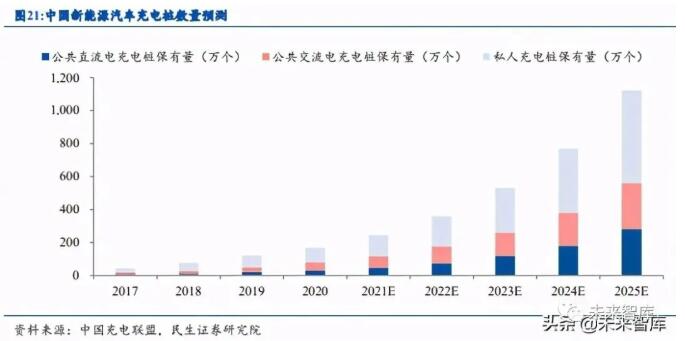
It is expected that China's new energy vehicle charging pile IGBT market space will reach 10.9 billion yuan in 2025, with a compound growth rate of 35%. At present, the scrapping cycle of new energy vehicles is between 8 and 10 years. According to the calculations of new energy vehicle sales in each year mentioned above, it is expected that the number of new energy vehicles will reach 22.46 million in 2025.
With the advancement of new infrastructure, conservatively assuming that the vehicle-to-pile ratio will increase to 2:1 by 2025, it can be calculated that the number of charging piles in 2025 will be approximately 11.23 million. As the new infrastructure policy focuses on the construction of public charging piles, the proportion of public charging piles is expected to increase from 48% in 2020 to 50% in 2025. In addition, due to the increase in demand for fast charging, the proportion of DC charging piles in public charging piles is expected to increase from 38% in 2020 to 50% in 2025.
According to State Grid’s charging vehicle pile project bidding announcement data over the years, we calculated that the average single watt price of the 60Kw public DC charging pile, the main bidding force, dropped from 1.15 yuan/W in 2017 to 0.9 yuan in 2019. /W (the price of a single machine dropped from 69,000 yuan in 2017 to 54,000 yuan in 2019); the average price of a single machine at public AC charging piles dropped from 9,500 yuan in 2017 to 5,400 yuan in 2019.
Based on our research on the private charging pile prices of mainstream new energy vehicle manufacturers in the market, we calculated that the price of private charging piles dropped from 12,700 yuan/unit in 2017 to 7,800 yuan/unit in 2020. Calculating that IGBT accounts for about 20% of the cost of charging piles, it is expected that the domestic IGBT market size for charging piles will reach 10.9 billion yuan in 2025, an increase of 3.4 times from 2.5 billion yuan in 2020, with a compound annual growth rate of 34.5%.
6 The tight production capacity is difficult to alleviate in the short term, and the power semiconductor boom continues to rise.
The 8-inch production capacity is tight and the foundry is at full capacity. In 2020, the commercialization of 5G and the "stay-at-home economy" caused by the epidemic have accelerated the digital transformation of society. The market for terminal equipment such as automobiles, home appliances, and digital devices has continued to recover, significantly boosting the growth of semiconductor demand.
In addition, the epidemic in Europe and the United States has not yet been fully controlled, and factors such as the uncertain outlook for Sino-US trade relations have driven chip manufacturers to increase safety inventories. The resonance of multiple factors has caused the supply of wafer foundry production capacity to exceed demand, and the 8-inch production capacity of major wafer foundry manufacturers is close to full capacity. The world's most advanced companies, Huahong Hongli's capacity utilization rate in 2020Q3 exceeded 100%, and UMC and SMIC's capacity utilization rates were also at a high level of 95%.
The time for global new wafer production capacity to reach full production is mainly concentrated in 2023-2025, and it is difficult to solve the tight production capacity in the short term. From the perspective of global production capacity, according to ICInsights data, it is expected that the world's new (8-inch equivalent) wafer production capacity will be approximately 17.9 million pieces in 2020, and 20.8 million pieces will be added in 2021. However, due to equipment purchase, debugging, customer verification and other reasons, the production capacity ramping period of wafer manufacturing plants is relatively long, usually around 3-5 years. This part of the new production capacity is expected to reach full production in 2023-2025, making it difficult to solve the tight production capacity in the short term.
Domestic semiconductor manufacturing capacity under construction is equivalent to about 27.96 million 8-inch pieces per year, most of which will be put into production in 2022. However, considering that there will still be a long production ramp-up period after the new production line is put into production, it is difficult to alleviate the tight production capacity in the short term. According to our incomplete statistics, the current domestic semiconductor manufacturing capacity is approximately 2.88 million pieces/month (equivalent to 8-inch wafers, including silicon-based wafers and compound semiconductor base wafers), and the total domestic semiconductor manufacturing capacity under construction is approximately 2.33 million pieces/month. (27.96 million pieces/year). Most of the new production lines will be put into production in 2022. However, considering that there is still a production capacity ramping period of 3-5 years after the new production lines are put into production, full production cannot be achieved quickly. It is expected that the production capacity shortage will still be difficult to alleviate in the short term.
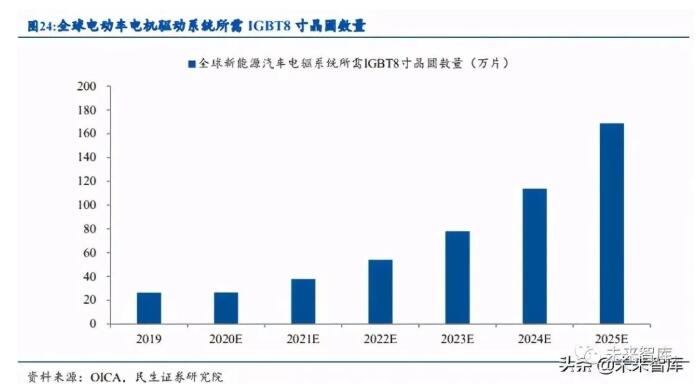
It is estimated that by 2025, the number of 8-inch wafers required for global automotive-grade IGBT modules will be 1.69 million, an increase of 5.4 times compared with 2020. Currently, there are two types of electric vehicles on the market: single-motor and dual-motor. Currently, mainstream new energy vehicles use a single-motor configuration. However, with the improvement of new energy vehicle manufacturing technology in the future, the penetration rate of dual-motor new energy vehicles that can provide vehicles with higher performance will increase.
In new energy vehicles, each motor uses an inverter, and each inverter uses an IGBT module. In view of the excellent performance of dual motors, we assume that its penetration rate will reach 20% in 2025. It can be estimated that in 2025, the world will need to assemble IGBT modules for 12 million electric vehicles and 14.4 million motors. Currently, 10-18 IGBT chips are packaged in a single automotive-grade IGBT module (the number of chips varies due to different voltage levels of IGBT modules). Calculating an average of 15, 216 million IGBT chips are needed. Based on the calculation that each 8-inch wafer can cut out approximately 128 IGBT chips, it is expected that the global demand for 8-inch wafers for automotive-grade IGBT modules alone will reach 1.69 million pieces in 2025, an increase of 5.4 times compared with 2020.
The increase in wafer prices has been transmitted to the downstream of the industrial chain, and the semiconductor boom continues to rise. Terminal demand continues to grow, existing foundry production capacity is already at full capacity, and new production capacity cannot be rapidly increased in the short term. The contradiction between supply and demand has led to an increase in wafer foundry prices.
TSMC has canceled the 3% discount for 12-inch wafer foundry for major customers. UMC has successively raised its 8-inch wafer foundry price and followed up by raising its 12-inch wafer foundry price. The increase in foundry prices was immediately transmitted to manufacturers in the lower reaches of the industry chain, with most manufacturers increasing their prices by more than 10%. Among them, Renesas Electronics announced that the prices of some analog and power products will increase by 15% to 100%. Benefiting from rising product prices, companies such as Infineon have extended product delivery times. It is expected that the prosperity of the semiconductor industry chain will continue to rise.
Disclaimer: This article is reproduced from "Future Think Tank", which supports the protection of intellectual property rights. Please indicate the original source and author when reprinting. If there is any infringement, please contact us to delete it.
Related Recommendations
Exclusive Interview with Li Gang of Yunfan Ruida: The Precision of Millimeter-Wave Radar Products and the Warmth of Humanity
2026-07-22
2517
RF Passion, Craftsman’s Journey: Over 30 Years of Steadfast Dedication — Interview with Kinghelm Chief Engineer Mr. Qin hongxiang
2026-06-26
2687





 粤公网安备44030002007346号