
























Service Hotline
News

News
Gallium Nitride (GaN) RF device market: expected to reach more than US$2.4 billion in 2026
2022-03-17
875
Yole predicts in the report "Gallium Nitride RF Market 2021: Applications, Major Players, Technologies and Substrates" that the gallium nitride (GaN) RF device market is growing at a compound annual growth rate (CAGR) of 18%, from US$891 million in 2020 to more than US$2.4 billion in 2026.
The market will be dominated by defense and 5G telecom infrastructure applications, accounting for 49% and 41% of the total market respectively by 2026. In particular, the GaN-based macro/micro cellular segment will account for more than 95% of the GaN telecom infrastructure market in 2026.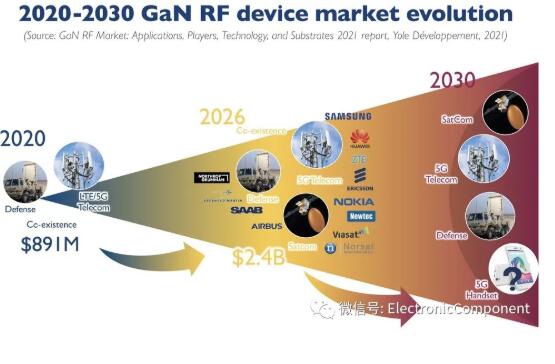 Compared with the first generation (silicon-based) semiconductors, the third generation semiconductors have a large band gap, high electrical conductivity, and high thermal conductivity. They have the characteristics of high critical breakdown electric field, high electron mobility, and good frequency characteristics. Gallium Nitride (Gallium Nitride; GaN) is the most representative third-generation semiconductor material and has become one of the preferred materials for high-temperature, high-frequency, and high-power microwave devices. It is the material system with the highest theoretical electro-optical and photoelectric conversion efficiency so far. Excellent characteristics of gallium nitride:
Gallium nitride has always been known for its high power processing capabilities. It is the amplifier of choice for wireless communication equipment such as base stations, radars and avionics. It has also been used in 4G communication systems for many years. In the 5G mobile communication system, the data transmission rate of base stations and mobile phone terminals is faster than that of 4G, and the spectrum utilization of modulation technology is higher, which puts forward higher requirements for radio frequency front-end components and modules. In addition, gallium nitride is less sensitive to electromagnetic radiation, and gallium nitride components show high stability in radiation environments. Compared to gallium arsenide (GaAs) transistors, gallium nitride transistors can operate at much higher temperatures and voltages, making them ideal microwave frequency power amplification components. As a third-generation semiconductor material, gallium nitride has been researched and applied for more than 20 years, but it is only in recent years that its commercial development prospects have begun to emerge. 5G is undoubtedly one of the main driving forces behind it. The radio frequency front-end of 5G communications has strict requirements for high frequency and high efficiency, which is where gallium nitride comes in. In addition, the demand for fast and efficient charging of automobile electrification and portable electronic products will also drive gallium nitride power components to the mass market, gradually replacing traditional silicon power components.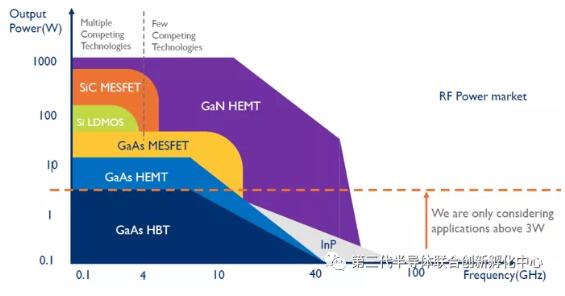 ▲Power-frequency working range of RF devices in different material systems▌Strong radiation resistance and strong environmental adaptability
▲Key properties of main semiconductor materials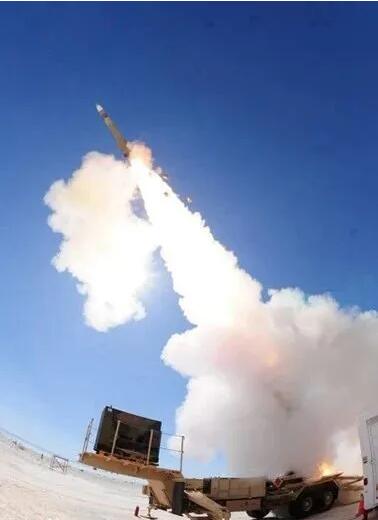 ▲Patriot missile
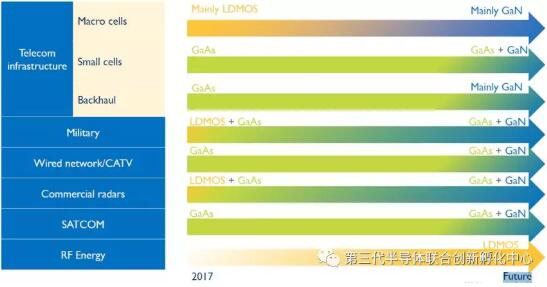 ▲Evolution of mainstream radio frequency device technology routes in different application fields
The market will be dominated by defense and 5G telecom infrastructure applications, accounting for 49% and 41% of the total market respectively by 2026. In particular, the GaN-based macro/micro cellular segment will account for more than 95% of the GaN telecom infrastructure market in 2026.
Compared with the first generation (silicon-based) semiconductors, the third generation semiconductors have a large band gap, high electrical conductivity, and high thermal conductivity. They have the characteristics of high critical breakdown electric field, high electron mobility, and good frequency characteristics. Gallium Nitride (Gallium Nitride; GaN) is the most representative third-generation semiconductor material and has become one of the preferred materials for high-temperature, high-frequency, and high-power microwave devices. It is the material system with the highest theoretical electro-optical and photoelectric conversion efficiency so far. Excellent characteristics of gallium nitride:
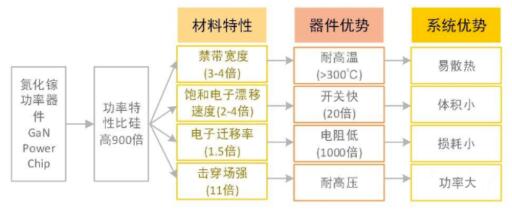
Currently, two-thirds of GaN devices are used in military electronics, such as military communications, electronics, interference, radar and other fields; in the civilian field, gallium nitride is mainly used in communication base stations, power devices and other fields.
In the next five years, electronic devices based on third-generation semiconductor materials will be widely used in 5G base stations, new energy vehicles, UHV, data centers and other scenarios.
RF GaN Technology
It’s a perfect match for 5G
The band gap of gallium nitride is 3.4eV, while the band gap of silicon, the most commonly used semiconductor material today, is 1.12eV. Therefore, gallium nitride has better performance than silicon components in high-power and high-speed components.Gallium nitride has always been known for its high power processing capabilities. It is the amplifier of choice for wireless communication equipment such as base stations, radars and avionics. It has also been used in 4G communication systems for many years. In the 5G mobile communication system, the data transmission rate of base stations and mobile phone terminals is faster than that of 4G, and the spectrum utilization of modulation technology is higher, which puts forward higher requirements for radio frequency front-end components and modules. In addition, gallium nitride is less sensitive to electromagnetic radiation, and gallium nitride components show high stability in radiation environments. Compared to gallium arsenide (GaAs) transistors, gallium nitride transistors can operate at much higher temperatures and voltages, making them ideal microwave frequency power amplification components. As a third-generation semiconductor material, gallium nitride has been researched and applied for more than 20 years, but it is only in recent years that its commercial development prospects have begun to emerge. 5G is undoubtedly one of the main driving forces behind it. The radio frequency front-end of 5G communications has strict requirements for high frequency and high efficiency, which is where gallium nitride comes in. In addition, the demand for fast and efficient charging of automobile electrification and portable electronic products will also drive gallium nitride power components to the mass market, gradually replacing traditional silicon power components.
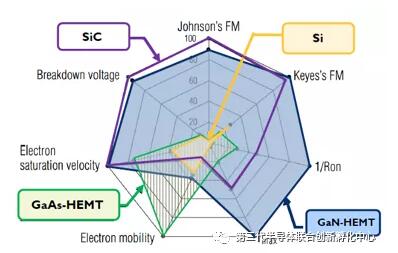
▲Comparison chart of RF power transistors with different material systems
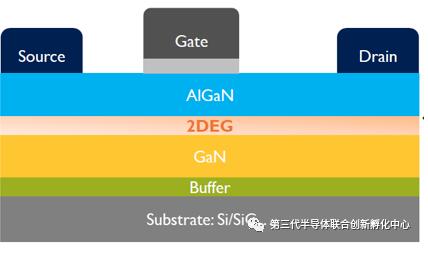
GaN material systems are easy to form heterojunction material systems such as AlGaN/GaN. There are extremely strong spontaneous polarization and piezoelectric polarization effects on the heterojunction interface. The induced two-dimensional electron gas concentration is very high and has an electron mobility of up to 2000cm2/V·s. Therefore, transistors based on GaN heterostructures are also called high electron mobility transistors, namely GaNHEMT (HighElectronMobilityTransistor). At the same time, the breakdown field strength of GaN material is high, several times higher than that of Si and GaAs; the thermal conductivity of the SiC semi-insulating substrate used in GaNHEMT devices is better than that of metallic copper, and its good heat dissipation characteristics are conducive to high-power operation; GaNHEMT also has the characteristics of low parasitic capacitance and high breakdown voltage, which is very suitable for realizing high-efficiency power amplifiers (PA, PowerAmplifier).
▌Long pulse width, high duty cycleGaNHEMT is usually epitaxially grown on a wide bandgap material SiC semi-insulating substrate. Appropriate control of the power density of GaNHEMT can easily achieve long pulse width, high duty cycle, and can be achieved in high-power continuous wave operation.
▌Working frequency bandwidth, high frequencyThe cutoff frequency of GaNHEMT directly determines the operating frequency and instantaneous bandwidth of its application. It increases as the doping concentration of the channel increases, and decreases as the thickness of the channel and gate length increase. Due to the limitation of the forbidden band energy of Si semiconductor material, its cut-off frequency is low, so the operating frequency of Si semiconductor power devices can only operate below the S-band. GaAs devices have much better carrier mobility than other devices and a high cut-off frequency. However, they are limited by breakdown field strength and have low operating voltage, resulting in low device output power. GaNHEMT has the characteristics of wide bandgap energy, high breakdown field strength and high saturation electron drift velocity, which compensates for this deficiency and obtains good high-frequency performance. GaNHEMT can operate at higher frequencies and at the same time have high output power. In addition, the inherent characteristics of GaNHEMT make its input and output impedance higher, and the broadband impedance matching of the circuit is easier to achieve, making GaNHEMT suitable for broadband applications.
▲Power-frequency working range of RF devices in different material systems▌Strong radiation resistance and strong environmental adaptability
GaN is an extremely stable compound with strong atomic bonds, high thermal conductivity, the highest ionization degree among III-V compounds, and good chemical stability, making GaN devices more resistant to radiation than Si and GaAs. At the same time, GaN is a high melting point material with high thermal conductivity. GaN power devices usually use SiC with better thermal conductivity as the substrate, so GaN power devices have a higher junction temperature and can work in high temperature environments.
|
parameter |
Si |
GaAs |
GaN |
|
Bandgap width (eV) |
1.1 |
1.4 |
3.4 |
|
Dielectric constant |
11.8 |
12.8 |
9.0 |
|
Breakdown field strength (106V/cm) |
0.6 |
0.7 |
3.5 |
|
Thermal conductivity (W/cm.K) |
1.3 |
0.5 |
1.3 |
|
Electron mobility (cm2/V.s) |
1450 |
8500 |
900 |
|
Saturation electron velocity (107cm/s) |
1.0 |
2.0 |
2.7 |
GaN RF devices
in various applicationsPerformance advantages
Mobile communication base stations are one of the main applications of GaN radio frequency devices. Compared with 4G, the communication frequency band of 5G has migrated to high-frequency bands. At present, my country's 4G network communication frequency band is mainly 2.6GHz. In 2017, the Ministry of Industry and Information Technology released a frequency usage plan for 5G systems in the 3-5GHz frequency band (mid-frequency band). In the future, high-frequency bands above 6GHz will be gradually added as capacity coverage.
Compared with SiLDMOS and GaAs, GaN RF devices at the base station can more effectively meet the high power, high communication frequency band and high efficiency requirements of 5G. Although SiLDMOS can output high power, in terms of frequency, it is only effective within a spectrum range of no more than 3.5GHz. Although the frequency of GaAs power amplifiers can be increased, it is significantly inferior to GaN devices in terms of output power. Therefore, in terms of 5G communications that meet high power, high frequency, and large bandwidth, GaN power amplifiers are the best choice for base stations.
▌Military Applications – Advantages of Gallium Nitride in Radar and Electronic Warfare SystemsThe largest market for radio frequency gallium nitride devices is now in the military and aerospace fields. About fifteen years ago, with funding from the U.S. Department of Defense, researchers began to invest in radio frequency gallium nitride technology, which gave rise to the current radio frequency gallium nitride device market.
According to statistics from Strategy Analytics, defense and aerospace applications account for 40% of the total market size of RF gallium nitride, and radar and electronic warfare systems are the largest application markets for RF gallium nitride.
In March 2017, Raytheon announced that its Patriot missile defense system adopted the latest antenna system based on gallium nitride technology. Patriot Missile Defense is a land-based missile defense system capable of intercepting ballistic missiles, drones and aircraft.
▲Patriot missileThe radar technology used in the old Patriot system was called a passive electronically scanned array. The new radar system was changed to an active electronically scanned array (AESA). The active electronically scanned array will provide the Patriot system with 360-degree radar capabilities.
"Raytheon believes that upgrading to an active electronically scanned array radar based on gallium nitride technology will allow the Patriot system to maintain its advantage against new offensive weapons." said Tim Glaeser, vice president of business development for Raytheon Air and Missile Integrated Defense.
Active electronically scanned array radar is based on phased array technology. The phased array device contains a group of antennas that can be individually controlled. Using beamforming technology, the group of antennas can be turned in different directions.
It is worth noting that these technologies are moving from military to commercial use. For example, active electronically scanned array and phased array technology have been used in 60GHz millimeter wave Wi-Fi technology, automotive radar systems and wireless base stations. In addition, phased array technology will be widely used in 5G.
At the same time, power amplifiers manufactured with gallium nitride technology have also been used in military handheld radios for point-to-point communications.
▌Commercial Applications - Performance Advantages of Gallium Nitride in Power Management
-
The conduction loss is small and the energy efficiency is high. The on-resistance (Rds,on) of gallium nitride transistors is half that of traditional silicon components, resulting in smaller losses and higher energy efficiency at the same output current. Low loss also means low heat generation, which can effectively simplify the design of heat dissipation components and thermal management systems;
-
There is no body diode in the gallium nitride transistor and there is no reverse recovery loss;
-
The input charge of GaN transistors is very small and there is almost no gate drive loss;
-
Gallium nitride power components can support higher switching frequencies (gallium nitride: 1MHz, silicon: <100KHz), thereby reducing the size of passive components;
-
The power density of gallium nitride components is very high, which can reach more than four times that of silicon-based LDMOS. It can increase the output power while reducing the size.
Chen Qingyuan, senior marketing manager of Infineon's Greater China Power Management and Multi-electronics Division, compared the advantages and disadvantages of gallium nitride and SiC, which are both third-generation semiconductor materials. Both have fast switching performance and help improve efficiency, but gallium nitride has lower losses than silicon.
Further comparison in application scenarios shows that in high-power and higher-voltage application scenarios, SiC shows good maturity and cost-effectiveness; while in low- and medium-voltage applications of 100V to 600V, gallium nitride can achieve higher cost-effectiveness. From a structural point of view, gallium nitride is a lateral structure (such as JFET), and it is difficult to achieve the high voltage capability of SiCMOSFET (vertical structure).
Gallium nitride is more attractive for switches that are inherently normally off and represents the successor technology to all silicon transistors used to date. In addition, from an overall system perspective, the advantage of GaN is that it can make the topology more compact.
The CoolGaN series of products developed by Infineon is a gallium nitride enhancement mode high electron mobility transistor (E-HEMT), which is very suitable for performing higher frequency switching under high voltage. It can achieve a thinner design and further increase the power density, thereby further improving the conversion efficiency and reducing the cost of the entire system.
Yong Ang, strategic marketing director of ON Semiconductor, further explained that gallium nitride components have lower parasitic capacitance than silicon components, so they can reduce switching losses related to gate charge Qg and increase the switching frequency to a range of hundreds of kHz to MHz without reducing energy efficiency.
Unlike silicon power components, gallium nitride does not have a body diode. The two-dimensional electron gas (2DEG) on the aluminum gallium nitride (AlGaN)/gallium nitride boundary surface can reversely conduct current, but there is no reverse recovery charge QRR, making it very suitable for hard switching applications.
Due to gallium nitride's sensitivity to overvoltage and very limited avalanche capability relative to silicon, it is particularly suitable for half-bridge topologies, where the drain-source voltage is clamped to the rail voltage. Gallium nitride has great appeal in zero-voltage switching (ZVS) topologies such as resonant LLC, active-clamp flyback, and hard-switching totem pole PFC.
▲Evolution of mainstream radio frequency device technology routes in different application fieldsGlobal GaN RF Devices
Industry chain competition landscape
At present, the main markets for radio frequency devices are as follows: mobile phone and communication module market, accounting for about 80%; WIFI router market, accounting for about 9%; communication base station market, accounting for about 9%; NB-IoT market, accounting for about 2%.
The launch of GaN microwave RF device products has accelerated significantly. Although the field of microwave radio frequency has attracted much attention at present, due to the high technical level and excessive patent barriers, there are not many companies in this field compared to the power electronics and optoelectronics fields, but most of them have strong scientific research strength and market operation capabilities. The commercial supply of GaN microwave RF devices is growing rapidly.
Qorvo products have the largest operating frequency range, and Skyworks products have a smaller operating frequency. The output power of 73% of the products of Qorvo, CREE, and MACOM is concentrated between 10W and 100W, with the maximum power reaching 1500W (operating frequency is 1.0-1.1GHz, produced by Qorvo). The technology used is mainly the GaN/SiC GaN route.
In addition, some companies provide GaN RF module products. Currently, 4 companies provide sales of GaN RF amplifiers. Among them, Qorvo products have the largest operating frequency range and the maximum operating frequency can reach 31GHz. Skyworks products operate at smaller frequencies, mainly between 0.05-1.218GHz.
Qorvo RF amplifiers are available in the largest product categories. Within the two 5G operating frequency bands (3.3-3.6GHz and 4.8-5GHz) announced by the Ministry of Industry and Information Technology of my country, Qorvo has launched the most RF amplifier product categories, with the highest power reaching 100W and 80W respectively (the highest power of Qorvo’s 4.8-5GHz products in January was 60W), and the highest power of ADI’s 4.8-5GHz products has increased to 50W (the maximum power of previous products was less than 40W), and the power of other products is mostly below 50W.
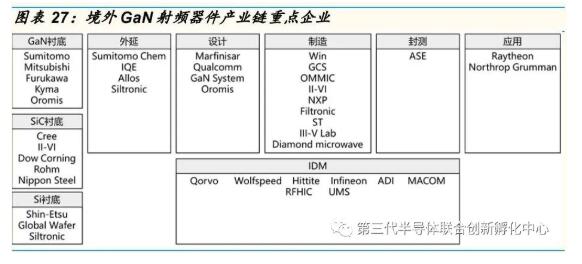
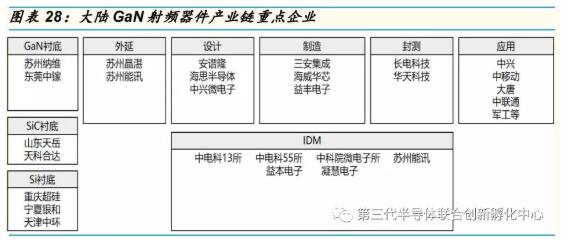
Out of concerns about the speed of my country's technological development and the idea of curbing the development of my country's new material technology, European and American countries have imposed an almost complete technology and material blockade on my country in terms of third-generation semiconductor materials.
Under this circumstance, my country's scientific research institutions and business units are based on independent innovation and have achieved remarkable results in the field of GaN microwave radio frequency. They have made breakthroughs in the military and defense fields and the civilian communications field, creating key enterprises such as CETC 13, CETC 55, ZTE, Datang Mobile, and major customers such as China Mobile and China Unicom.
Suzhou Nengxun has launched RF power transistors with frequencies up to 6GHz, operating voltage 48V, and design power from 10W-320W.
In terms of mobile communications, Suzhou Nengxun can already provide high-efficiency and high-gain RF power amplifier tubes suitable for mobile communications applications such as LTE, 4G, and 5G. The operating frequency covers 1.8-3.8GHz, the operating voltage is 48V, the design power ranges from 130W-390W, and the average power is 16W-55W.
Disclaimer: This article is reprinted from "GaN World". This article only represents the author's personal views and does not represent the views of Sacco Micro and the industry. It is only reprinted and shared to support the protection of intellectual property rights. Please indicate the original source and author when reprinting. If there is any infringement, please contact us to delete it.
Company phone number: +86-0755-83044319
Fax/FAX: +86-0755-83975897
Email: 1615456225@qq.com
QQ: 3518641314 Manager Li
QQ: 332496225 Manager Qiu
Address: Room 809, Building C, Zhantao Technology Building, No. 1079 Minzhi Avenue, Longhua New District, Shenzhen
Related Recommendations
Exclusive Interview with Li Gang of Yunfan Ruida: The Precision of Millimeter-Wave Radar Products and the Warmth of Humanity
2026-07-22
2542
RF Passion, Craftsman’s Journey: Over 30 Years of Steadfast Dedication — Interview with Kinghelm Chief Engineer Mr. Qin hongxiang
2026-06-26
2707





 粤公网安备44030002007346号