
























Service Hotline
News

News
The "independent group" of China's chip industry
2022-03-16
1130
When it comes to semiconductor talents, two schools stand out: one is Tsinghua University and the other is the University of California, Berkeley. These two schools, one local and one foreign, have provided a large number of top engineers, entrepreneurs and investors to China's chip industry, and have incubated batches of chip companies through alumni relationships that have been passed down from generation to generation.
This alumni relationship is most vividly reflected in the entrepreneurial process of Tsinghua student Zhu Yiming:
In 2004, Zhu Yiming from the Department of Physics (Grade 89) and Shu Qingming (Grade 85) from the Semiconductor Major started a chip business and found Li Jun from the Automation Department (Grade 85). Li Jun helped them get a venture capital investment and introduced it to Xue Jun from the Economics Department (Grade 83).
Twelve years later, this company called GigaDevice went public and now has a market value of nearly 100 billion. Before GigaDevice Innovation, Chen Datong, a 77-level semiconductor major, had already founded the chip design company Spreadtrum, which was once a strong rival of MediaTek.
It can be said that Tsinghua is the main force in China's semiconductor circle, and the ace unit among the main force is undoubtedly the "Tsinghua Semiconductor Major", which is now the Tsinghua Institute of Microelectronics. It is like the "independent group" in "Bright Sword", very capable of fighting.
The Institute of Microelectronics was established in 1980, and its predecessor can be traced back to the semiconductor major established by Tsinghua University in 1956. In December this year, on the occasion of the 40th anniversary of the Institute of Microelectronics, our team traveled from Shanghai to Beijing to conduct in-depth exchanges and studies at the Institute of Microelectronics. We listened to old professors’ lectures on learning and being a good person, and generations of Tsinghua Microelectronics people told their stories in the semiconductor field.
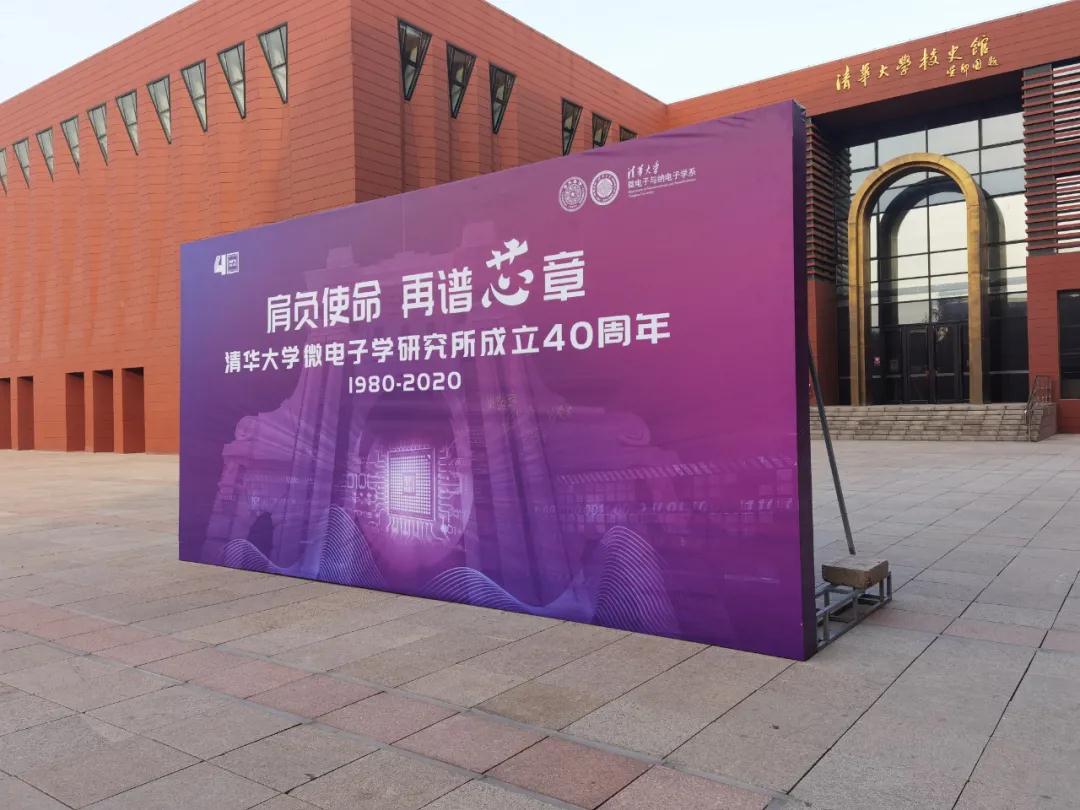
Over the past forty years, the Institute of Microelectronics has sprouted, grown, and now is full of talents, composing a majestic chapter in China's semiconductor field.
01
Germination: Talent Foundation
The initial seed of Tsinghua Microelectronics was "eight generals" plus one academician.
In the summer of 1956, five prestigious schools jointly established my country's first semiconductor specialization at Peking University. Tsinghua sent eight young teachers including Cao Peidong and Zhang Jianren to observe the study. Later, Tsinghua hired Academician Wang Shouwu, who had returned from Purdue University in the United States, to serve as the director of Tsinghua's semiconductor teaching and research group. As a result, Tsinghua's chip team was established under the Department of Radio with a "Chinese and Western" combination.
The office of this teaching and research group, the smallest in the department, is located on the third floor of Lizhai. It consists of several vacant rooms temporarily vacated by student dormitories. Although the facilities are simple, the research field can be said to be "full bloom": some are engaged in germanium devices, some are engaged in semiconductor radios, some are engaged in rectifiers, some are engaged in optoelectronic devices, and some are engaged in silicon materials. After Soviet expert Cherkin came to provide guidance in 1959, the team added research on silicon carbide nonlinear resistors.
While the field is expanding, Tsinghua is also enthusiastic about expanding its team, and even uses some "smart methods." For example, Li Zhijian, who once served as the director of microelectronics, "stuck in the Tsinghua boat".
In 1958, Li Zhijian returned to China after graduating from Leningrad University. As soon as he arrived at the Beijing Railway Station, he met Li Chuanxin, secretary of the Radio Department of Tsinghua University, who personally greeted him at the station and was quickly appointed to the Radio Department. In the era of planned economy, Li Zhijian thought this was the organization's decision, so he went happily.
But after working for a while, Li Zhijian unexpectedly received a notice from the Ministry of Education, telling him that he had three places to choose from: Tsinghua University, Zhejiang University, and Xi'an Jiaotong University. Afterwards, Li Zhijian recalled that he was also surprised at the time, and was quite excited about returning to his hometown in Zhejiang and his alma mater at Zhejiang University. However, considering that he had already arrived at Tsinghua University, it was "hard to let go", so he stayed.
In fact, Tsinghua University has done enough homework to win over Li Zhijian. Tsinghua professor Zhang Li wrote a letter to persuade him; in 1957, three scholars including Tsinghua Nan Deheng, Feng Qingyan and Wang Tianjue also wrote to invite Li Zhijian in the name of the "Semiconductor Professional Preparatory Group of the Department of Radio Electronics".
It is evident that Tsinghua attaches great importance to talents. Li Zhijian also became the actual host of the teaching and research group after Academician Wang Shouwu, laying a solid foundation for Tsinghua Microelectronics.
In 1958, the Tsinghua teaching and research group conquered the mass production of polysilicon technology. In the same year, the first integrated circuit was born, and Tsinghua also proposed to focus on silicon integrated circuits. Seven years later, Moore Gordon proposed Moore's Law, and chip development entered the fast lane. However, the semiconductor profession, which was preparing to welcome the golden age, encountered its first bumpy fate: the beginning of the Cultural Revolution, the profession was divided into two, with most moved to Mianyang, and a small part stayed in Beijing to work in workshops.
The difficult years in Mianyang, Sichuan, can be said to be both a miracle and a regret. Tsinghua people re-established laboratories, started teaching, and also entered into industry-university cooperation with the local 970 Factory in Chengdu. The semiconductor workshop in Beijing also developed many products. However, during the same period, the world had entered the era of very large-scale integrated circuits. Intel successively launched the first commercial memory chip and the first microprocessor. The outside world has been turned upside down.
After the "Cultural Revolution", the Mianyang branch was completely withdrawn to Beijing under the personal care of Comrade Deng Xiaoping. In order to catch up with the international level, the semiconductor major also ushered in a new stage: becoming independent from the Department of Radio and officially becoming an institute.
The Institute of Microelectronics of Tsinghua University, established in September 1980, has only 74 teachers and 61 students, and its funding is still insufficient. Even the construction of teaching buildings needs to be constructed and raised at the same time. But in the next forty years, the Institute of Microelectronics successively achieved breakthroughs and became the recognized Whampoa Military Academy in China's chip industry.
02
Growth: The Journey of Breakthrough
The growth of the Institute of Microelectronics, like every teenager, is characterized by encountering difficulties and achieving breakthroughs.
The first crossroads these young scholars face is: silicon or germanium.
Although silicon has better physical properties than germanium and is more suitable for the semiconductor industry, in the late 1950s, germanium materials and devices were mass-produced and quite mature; while silicon technology was in the ascendant and was still in its early stages of development. Therefore, there are many things to refer to and learn when doing germanium research, which is relatively "safe"; while there are less materials to refer to when doing silicon research, and it is much more difficult.
Due to limited resources, everyone has indeed been arguing about this issue for some time. But in the end, a consensus was reached that we should not stop working on rectifiers, but we should also dare to look forward. Someone must study "silicon". The teaching and research team even led the students from the class of 1960 to invest in the laboratory to participate in technical research.
Teachers and students are of the same mind, and their power can break through metal. In the mid-to-early 1960s, the Institute of Microelectronics had already mastered the development of silicon planar technology and silicon integrated circuits, less than ten years after the start of the process in the United States.
Subsequently, the Institute of Microelectronics went through dispersion and then reunited. Just after the reunification, the Institute of Microelectronics faced a second choice: bipolar or CMOS.
At that time, colleagues in Mianyang, Sichuan were responsible for bipolar circuits, while Beijing was responsible for MOS integrated circuits. Both sides once again faced choices with equal resources. The two parties did not consider their respective existing investments, but focused on technological trends and national interests. Finally, they reached a consensus again to build COMS and conduct research in several sub-directions such as process, device physics, circuit design and CAD technology.
Soon, the first semiconductor ultra-clean process line was established based on the original teaching and research laboratory of the Institute of Microelectronics, and in 1989, my country's first 1-micron silicon CMOS process guidance line was built. With the arrival of brand new equipment, the Institute of Microelectronics has become the envy of semiconductor schools across the country. But behind the glamor, there is silent sacrifice.
At that time, because the ultra-clean equipment could not be shut down, key teachers in the institute took turns working overtime, like eagles, to maintain the 24-hour operation of the production line. There are insufficient environmental monitoring and purification equipment. Teachers and students can only fold "a towel into 8 sides" and wipe tables and floors to keep the production line clean. The even more surprising story is "how to overcome controls."
Under the control of "Batumi" and other regulations, the equipment imported by Tsinghua University was not fully functional. The etching equipment does not have an end-point detection module, which means that the machine does not know where to pause, resulting in etching errors and wafer scrapping. Since the machine is not easy to use, researchers from the Institute of Microelectronics plan to rely on people.
We use "real-time manual observation" to judge whether the end point is reached through color changes, and then continue to accumulate experience to improve process control capabilities. These stories sound interesting but also poignant, reminding us that self-reliance is not just a word, but a difficult but correct decision.
Another challenge Tsinghua Microelectronics has overcome is the introduction of photolithography machines. This is a reflection of Tsinghua’s international vision and is inseparable from the efforts of Teacher Yang Zhilian. When he visited the Netherlands, he facilitated the "marriage" between the Institute of Microelectronics of the University of Delft in the Netherlands and the Institute of Microelectronics of Tsinghua University. The two institutes began cooperation in scholar exchanges and joint training. These factors promoted ASML to donate lithography machines to Tsinghua.
Although the equipment is available, EDA software is still a hurdle. Many graduates of the Institute of Microelectronics often go to the Automation Institute of the First Ministry of Machinery to conduct circuit simulation research on a minicomputer with a plate-making system imported from Japan. They use the SPICE program written by the Computer Department of Tsinghua University. Although the software is crude, it also laid the foundation for the subsequent development of my country's chip design EDA software to a certain extent.
It is precisely relying on the spirit of independence and the vision of international cooperation that in 1990, Microelectronics was the first in China to successfully develop a Chinese character memory chip integrating 1.06 million transistors. This marks that our country has entered the level of very large-scale integrated circuits (VLSI) and broke the blockade of "Batumi". Li Chuanxin, then Secretary of the Tsinghua Party Committee, also expressed sincere emotion: "So few people, spending so little money (15 million), do so many things and produce such high-level results!"
The opportunity to reflect China's independent capabilities was the "Gold Card Project" launched in 1993. At that time, China planned to use contactless IC card technology for the second generation of documents, but the patents for this technology were basically in the hands of overseas companies, especially the Dutch company Philips, which controlled more than 90% of the share.
After the news was released, overseas companies have launched "public relations" in the hope of getting projects. However, legal documents involve a lot of sensitive information and are related to national security. Therefore, the relevant departments have very resolutely proposed that "domestic production must be independent." This important task is naturally shouldered by institutions and companies such as Tsinghua Microelectronics Institute.
Scholars from the Institute of Microelectronics led graduate students to successfully develop RFID technology and samples for simplex and duplex wireless communications from simplicity to complexity. And continuously overcome the standard elements that are higher than overseas technology. Finally, in March 2000, the Institute of Microelectronics successfully developed a second-generation IC card chip sample based on EEPROM, breaking through the patent blockade and protecting national data security.
From the initial technological blockade to independent breakthroughs, Tsinghua Institute of Microelectronics has "passed all the barriers", and its "core" journey from academic to commercial has also begun. Groups of scholars from the Institute of Microelectronics have begun to turn around and enter the commercial stage.
03
Bloom: Business Heritage
Since its establishment, Tsinghua Microelectronics and its sister departments have contributed three groups of entrepreneurs to China’s chip industry.
The first group is the "Overseas Luminous Faction", represented by Chen Datong (Grade 77) and Deng Feng (Grade 81) who went to study in the United States early.
The two were active in the Chinese community in Silicon Valley in the 1990s and founded OmniVision Technology and Screen Company respectively. What is quite interesting is that both of them are old counselors in microelectronics. The long-standing "teaching and mentoring" model within Tsinghua University was also brought to Silicon Valley by two counselors from Beijing. Many direct junior students were directly recruited to the United States by them, thus forming the technical backbone of the two companies.
Both Haowei and Screen are typical startups challenging global giants. Haowei, founded by Chen Datong, used CMOS technology to defeat Japan's traditional CCD sensor. The screen created by Deng Feng pioneered the use of chip hardware for network security and launched an impact on Cisco.
The listing of OmniVision and Screen in just a few years has also proved that Tsinghua Microelectronics as a collective has the ability to produce disruptive and innovative products and launch an impact on the commanding heights of global chips.
The second group is the "returning to China" group, which is the first batch of entrepreneurs from Tsinghua University to return to China. Representatives include Wu Ping ('79), Feng Chenhui ('85), Shu Qingming ('85), and others.
Tsinghua Microelectronics’ wave of returning to China to start a business began with the new integrated circuit policy issued by the country in 2000. Since the 1990s, Tsinghua alumni have formed a tight circle in Silicon Valley. This circle often discusses potential entrepreneurial opportunities and has a strong sense of trust. As time goes by, many Tsinghua alumni with a background in microelectronics have become aware of the opportunities for chip entrepreneurship in China.
This generation of Tsinghua Microelectronics alumni who have returned to China to start businesses have two characteristics.
The first feature is matching between young and old, and across industries. Partner with alumni of different majors and ages to start a business to achieve complementary advantages and resources.
Wu Ping and Chen Datong teamed up to create Spreadtrum, starting with 2G chips; Shu Qingming and Zhu Yiming, a junior in the Department of Physics ('89), teamed up to create GigaDevice, starting from memory IP and turning to NorFlash memory manufacturing; Feng Chenhui and Xu Zhihan, a junior in the Department of Computer Science ('90), teamed up to create Zhuosheng Micro, which started with terrestrial TV chips, then switched to mobile phone RF chips, and became the industry leader.
The second characteristic is that they all emerged in the mobile phone electronic components market segment, which reflects Tsinghua Microelectronics’ entrepreneurial style: choose a big track and do pragmatic things.
When Spreadtrum was founded, it avoided the most difficult 3G chip and focused on 2G first. After gaining business foundation and market experience, it then broke through to 3G. GigaDevice Innovation, on the one hand, avoided building a business behind closed doors and starting from scratch. Instead, it completed the accumulation of memory IP through acquisitions. At the same time, it also started from Flash and then moved into NAND, DRAM and other memories. Zhuo Shengwei, on the other hand, avoided the difficult task of PA and first made switches and low-noise amplifiers.
Subsequent facts also proved that in the field of semiconductors, under the suppression of American technology, entrepreneurship may require rural areas to surround cities, first have a base in the middle and low-end areas, have income and business foundation, and then launch an impact on the high-end product market.
The third group is the "local rising faction", represented by Zhao Weiguo and Yu Renrong who are level 85.
The returnees from Tsinghua University made the company bigger and stronger, leaving precious seeds for China’s chip industry. The local Tsinghua alumni showed a keen sense of smell. They "managed vertically and horizontally" and opened the era of mergers and acquisitions of Chinese chip companies in advance.
Zhao Weiguo presided over large-scale mergers and acquisitions such as Spreadtrum and RDA at Ziguang, while Yu Renrong brought overseas OmniVision Technology under the banner of Weil Holdings. Although there was no friction between China and the United States at that time, they were already speeding up and quickly completed many complex mergers and acquisitions before 2018, winning a valuable time window for the integration of China's chip industry.
The three generations of entrepreneurs each have their own missions and are working hard to move forward: the first generation went to the United States to study in Silicon Valley to start a business, and completed the revolution against the giants with disruptive innovation; the second generation returned to China to try local entrepreneurship, and in the hell-level Chinese market, they found the path to climb the chip industry chain that is most suitable for China's national conditions; the third generation is good at acquisitions, patching the industry to a certain extent, and using capital to accelerate the initial integration of the chip industry.
And if we go back further, the old director of the semiconductor industry is also from the Institute of Microelectronics. Zhu Yiwei, grade 57, served as the deputy director of Dongguang Optoelectronics Factory, China's largest semiconductor factory in the 1970s, and played an important role in the reform of Beijing's integrated circuit industry. After his retirement, he still exerted his residual energy and actively introduced Taiwanese entrepreneurs in my country to participate in Huajing's reform.
In addition to entrepreneurs who have left campus, in fact, the previous directors of the Institute of Microelectronics are also role models in academic or business circles. For example, the former director Wei Shaojun led a team to develop the SIM card chip at the turn of the century, breaking the monopoly of foreign chip companies in our country in one fell swoop. He himself also served as the president of Datang Telecom Technology Co., Ltd.
The current director, Wu Huaqiang, has a double degree in materials science and management. He has served as a senior researcher at AMD and Spansion companies in the United States. In 2020, Wu Huaqiang published a paper in the magazine "Nature", realizing the first multi-array storage and computing integrated system based on memristors in the world.
Over the past 40 years, the Institute of Microelectronics has trained more than 2,000 undergraduate students, more than 1,500 master students, and more than 300 doctoral students. Microelectronics is engaged in academic, management, business and other fields, practicing the tradition of "helping, passing on and leading", and constantly consolidating the foundation of China's chip industry.
04
end
At the end of the exchange, we paid a special visit to the "micro-nano processing platform" in the teaching building. There is a complete set of chip production processes here, including photolithography machines, ion implanters and other equipment, with a total value of nearly 300 million. This laboratory is completely open to undergraduate students, where they can conduct research and practical operations. Let industry enter the campus and supplement theory with practice.
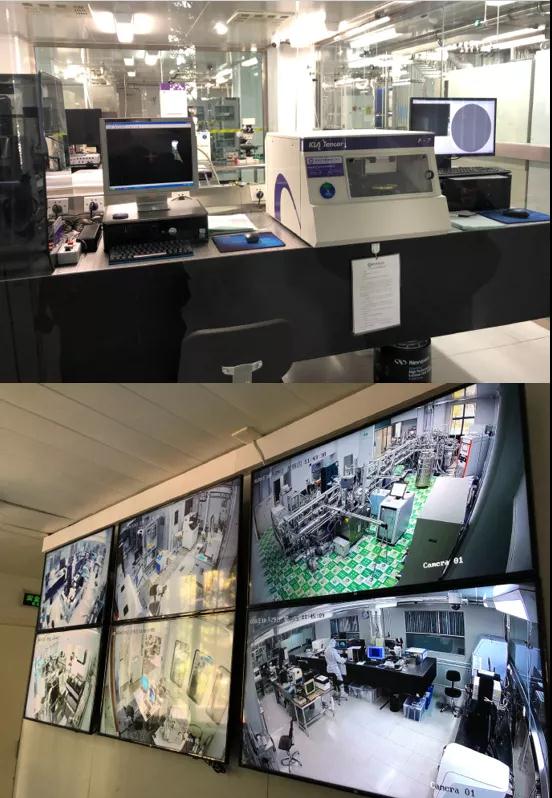
This is very valuable for Chinese semiconductors. When we talk about the semiconductor gap between China and the United States, it always falls on two aspects: time and talent. It takes time to accumulate technology, and it also takes time to patiently cultivate talents. As the saying goes, it takes ten years to cultivate trees and a hundred years to educate people.
This is also a question that every professor in the Institute of Microelectronics is thinking about. The Institute of Microelectronics has done a lot in the past forty years; but it still needs to do more. I believe that with the growth of batches of talents and the inheritance of rigorous academic spirit, my country's independent semiconductor industry will surely move at a faster pace. Stuck necks will no longer be a pain point for us.
And we need to thank not only the Institute of Microelectronics, but also every scholar, researcher, engineer, entrepreneur, and even school student across the country who has silently contributed to China's technological breakthroughs. I hope their efforts will be rewarded. Because our road to independence is still long.
Note: This article is reproduced from the Internet and supports the protection of intellectual property rights. Please indicate the original source and author when reprinting. If there is any infringement, please contact us to delete it.
Company phone number: +86-0755-83044319
Fax/FAX: +86-0755-83975897
Email: 1615456225@qq.com
QQ: 3518641314 Manager Li
QQ: 332496225 Manager Qiu
Address: Room 809, Building C, Zhantao Technology Building, No. 1079 Minzhi Avenue, Longhua New District, Shenzhen
Related Recommendations
Exclusive Interview with Li Gang of Yunfan Ruida: The Precision of Millimeter-Wave Radar Products and the Warmth of Humanity
2026-07-22
2407
RF Passion, Craftsman’s Journey: Over 30 Years of Steadfast Dedication — Interview with Kinghelm Chief Engineer Mr. Qin hongxiang
2026-06-26
2578





 粤公网安备44030002007346号