

























Service Hotline
News

News
An insider's perspective - how to compare the performance of SiC third-generation semiconductor power devices and comment on the technological advancement of major SiC products on the market
2022-03-16
769
Introduction: Gallium Nitride (GaN) and Silicon Carbide (SiC) have excellent material physical properties for third-generation semiconductors, providing greater room for improving the performance of power electronic devices. As the most basic semiconductor component of the power supply system, SiC power devices have greatly improved power and energy efficiency in a wide range of military and civilian application scenarios, such as electric vehicles, high-speed rail, solar and wind energy grid connection, UPS uninterruptible power supply, electromagnetic ejection and other fields, and have become the new favorite of the new energy market.
Chat before the beginning
The importance of third-generation half-power devices is to increase power, enhance efficiency, and reduce size, which cannot be bypassed. The country is gradually paying more attention to the semiconductor field, and the capital market is also beginning to pay attention. Especially in the ongoing trade war, everyone is even more aware of the importance of independent production of power devices. Just like the necessary equipment in the game, in order to synthesize artifacts, the element of power devices is a topic that cannot be avoided no matter what. Nowadays, domestic teams in the third-generation half-power device sector have also emerged and are extremely lively. Among them, Pinejie Company has produced silicon carbide power devices with excellent performance.Let’s formally talk about the aspects of SiC’s excellent performance.
Loss value of power device
The important indicator of the performance of a power device is nothing more than its total loss, which consists of two parts. One isconduction loss(Conduction Loss) One isswitching losses(Switching Loss). In other words, the lower the loss, the higher the efficiency, resulting in smaller size, higher efficiency and lighter weight, which is more suitable for modern application needs. For example, one of the important reasons why Tesla Model 3 was able to reduce the price to around 250,000 is because they used a SiC solution, which improved battery performance and reduced size and weight, thus reducing other costs.
派恩杰参数领先
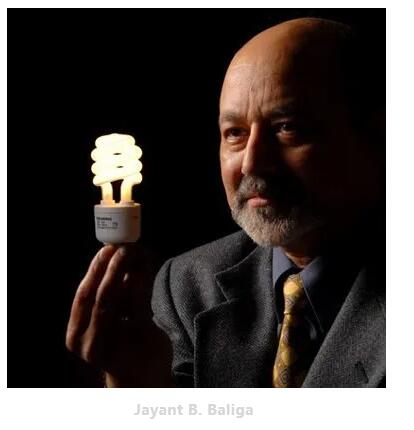
In the older generation of power electronics applications, due to the low switching frequency, conduction loss plays a dominant role. An originator of this industry and an academician of the National Academy of SciencesProfessor Jayant B. Baliga(hereinafter referred to as Bashen) As early as 1989, a quality factor to evaluate the conduction loss of power devices was proposed

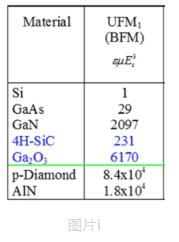
With the development of power electronics technology in the past 20 years, people have found that higher switching frequency of switches can reduce the use of passive components such as capacitors and inductors in the circuit, and reduce the volume and weight of the system. However, as the system frequency increases, the switching losses of power devices become increasingly significant, and the cost and volume of the required cooling system also increase accordingly, resulting in the system being unable to be significantly optimized by further increasing the frequency. Another famous professor,Alex Q. Huang, in 2004, proposed a quality factor that comprehensively evaluates device conduction loss and switching loss.


Using this method, let’s compare the product performance of major SiC MOSFET suppliers on the market:
|
factory |
Infineon |
Italian law |
Corey |
Roma |
Pine Jay |
A domestic brand |
|
Origin |
Europe |
Europe |
USA |
Japan |
China |
China |
|
Technology platform |
first generation trench |
second generation plane |
third generation plane |
third generation trench |
third generation plane |
No.? generation plane |
|
Rds,on (m?) |
90 |
60 |
75 |
80 |
80 |
80 |
|
Qgd (nC) |
5 |
35 |
20 |
25 |
9.3 |
54 |
|
|
21.2 |
45.8 |
38.7 |
44.7 |
27.3 |
65.7 |
|
Normalized HDFM |
1 |
2.16 |
1.83 |
2.11 |
1.29 |
3.10 |
|
*The above data comes from a publicly downloadable datasheet on the Internet. |
||||||
Conclusion
Driven by the electrification of transportation vehicles, new infrastructure and other projects, silicon carbide devices will become the focus of the strategic layout of major power plants. Tesla fully cooperates with STMicroelectronics, and Volkswagen embraces Corey... Power plants that can seize the latest technology and production capacity of SiC power devices will gain incomparable strategic advantages.
Disclaimer: This article is reproduced from "Three and a Half Generations of Alchemists", which supports the protection of intellectual property rights. Please indicate the original source and author of the reprint. If there is any infringement, please contact us to delete it.
Company phone number: +86-0755-83044319
Fax/FAX: +86-0755-83975897
Email: 1615456225@qq.com
QQ: 3518641314 Manager Li
QQ: 332496225 Manager Qiu
Address: Room 809, Building C, Zhantao Technology Building, No. 1079 Minzhi Avenue, Longhua New District, Shenzhen
Related Recommendations
Exclusive Interview with Li Gang of Yunfan Ruida: The Precision of Millimeter-Wave Radar Products and the Warmth of Humanity
2026-07-22
2500
RF Passion, Craftsman’s Journey: Over 30 Years of Steadfast Dedication — Interview with Kinghelm Chief Engineer Mr. Qin hongxiang
2026-06-26
2669





 粤公网安备44030002007346号