
























Service Hotline
News

News
10 domestic MCU original manufacturers talk about "out of stock" and substitution challenges!
2022-03-16
1144
“
The imbalance between MCU supply and demand has continued into the first quarter of 2021. According to the procurement survey results of "International Electronic Business News", more than 80% of the terminal companies surveyed said that the total amount of MCU purchases in Q1 2021 has increased significantly compared with Q4 2020; 97% of the companies surveyed said that there will still be MCU shortages in Q1 2021, and some in-demand models require at least half a year of delivery.
In this wave of "super market", how does the purchasing side respond to MCU shortages and price increases? What challenges or potential risks are faced in actual operations? In this regard, how can the original MCU manufacturer turn "danger" into "opportunity" and stabilize the procurement order? "International Electronic Business News" visited ten representative local MCU companies in China to discuss new growth momentum under the restructuring of the industrial chain.
In the face of price fluctuations, upstream and downstream forces work together to ensure stable supply and demand
MCU price increases are nothing new. Every price increase notice affects the market.
In the face of frequent price increases for MCUs, 36% of the downstream companies surveyed stated that they had already adjusted prices for individual products. The remaining 64% of companies chose to withstand the pressure and not increase prices for the time being, or it would depend on the subsequent situation.
The reason why downstream companies strive not to increase prices is that on the one hand, the proportion of MCU cost in the total machine cost is not high, and internal cost pressures are temporarily absorbed; on the other hand, the ex-factory prices of some local MCU products do not fluctuate significantly. In particular, some brands have made it clear that they will not adjust prices in the first quarter, which has won praise from downstream customers.
According to an interview with "International Electronic Business Information", it was found that China's local MCU original manufacturers have made a lot of efforts to insist on "not adjusting prices for the time being." The main measures are: ① Actively communicate with upstream to ensure stable supply of production capacity. ② Work hard on internal skills, improve supply chain management, and implement scientific inventory allocation. ③Adjust the product structure and guide customers to choose models with sufficient production capacity during the design process. ④ In terms of channels, effective supply and precise services must be achieved. In severe times, customers are advised to place orders in advance.
Taking GigaDevice as an example, “On the one hand, the company looks at the three dimensions of semiconductor production capacity, inventory and demand to ensure that GD32 MCU production capacity can be guaranteed, and new production capacity will continue to be released in the first half of 2021. On the other hand, the company has been working hard to build multi-production line resources and form a diversified supply chain, which will play a positive role in increasing production capacity. In addition, GigaDevice has also increased its support for key industries and strategic markets through more precise services and distribution networks, and worked with downstream users to overcome difficulties," Jin Guangyi, product marketing director of Beijing GigaDevice Co., Ltd., said in an interview.

GigaDevice Product Marketing Director Jin Guangyi
Mou Xinhui, assistant to the general manager of National Technology Co., Ltd., told analysts that the company has arranged a dedicated team to do specific work in ensuring supply, including forming a series of working collaborative relationships with suppliers on short-term production capacity, long-term production capacity supply cooperation, delivery guarantee cooperation, product supply quality cooperation, etc., and strives to jointly grasp market demand through the upstream and downstream of the industrial chain, promote collaboration on long-cycle materials, materials, etc. that affect delivery time and production capacity, and through joint collaboration, control costs within a competitive range in the industry.
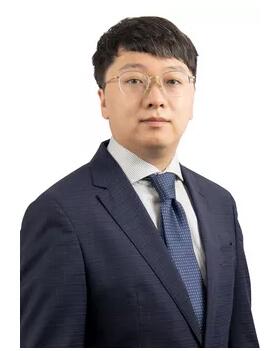
National Technology Assistant General Manager Mou Xinhui
Xia Yu, director of the Application Development Department of China Microelectronics (Shenzhen) Co., Ltd., said that since 2020, the company has proactively carried out scientific inventory allocation, adjusted and optimized the existing product structure, and improved the competitiveness of core products by increasing effective supply and actively expanding technology applications in new fields. It uses scientific and effective inventory control to adapt to market changes with end customers.

Xia Yu, Director of Application Development Department, China Microelectronics
Wang Wei, general MCU marketing director of Shanghai Lingdong Microelectronics Co., Ltd., revealed that in early January this year, the company made it clear that product prices would not be adjusted in the first quarter of 2021. On the one hand, this is due to the company's active and close communication with upstream partners to secure more production capacity and output supply; on the other hand, it is also due to Lingdong's close attention to the supply and demand changes in the MCU market and the deployment of production capacity plans in advance. He said: "Lingdong is also deeply troubled by supply chain problems. We will continue to evaluate the actual market demand and supply chain conditions and formulate a series of response measures."
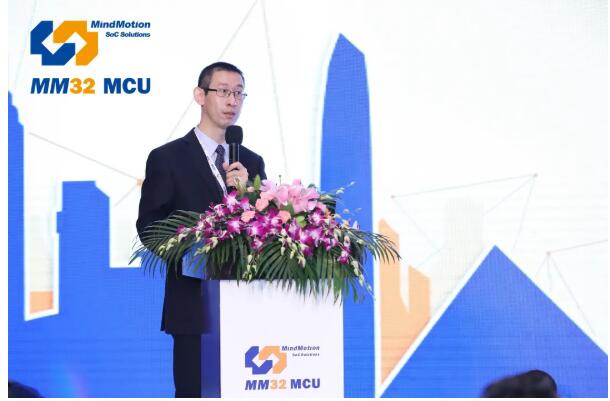
Lingdong Microelectronics General MCU Marketing Director Wang Wei
In terms of distribution channel management, Chen Shuiping, product manager of Shenzhen Hangshun Chip Technology R&D Co., Ltd., shared the company’s experience: “In response to the sudden explosive growth in demand in the first quarter of 2021, Hangshun first requires agents to place orders in advance for 2021 or even the first half of 2022. order, so that the company can arrange production in an orderly manner; secondly, we prevent agents from using funds to stockpile goods and strictly control the actual needs of end customers. In addition, we also try to guide end customers to choose mainstream products, and even make plan changes in advance, and recommend more adequate models for new plans.”

Hangshun Chip Product Manager Chen Shuiping
As for the most demanding automotive MCU field, China's local MCU manufacturers are also showing their talents.
According to Wang Zongzhen, deputy general manager of sales at Anhui Saiteng Microelectronics Co., Ltd., the company quickly launched a variety of automotive-grade MCUs and supporting solutions amid the current price increase caused by shortages to help terminal companies complete local substitution, thereby alleviating the pressure of chip shortages and procurement costs.
AutoChips, another domestic automotive MCU newcomer, “In order to strive for more incremental production capacity and alleviate cost pressures for customers as much as possible, the company actively communicates with wafer fabs and packaging and testing plants to provide accurate and reasonable FCST in a timely manner, and strives to tilt the resources of wafer and packaging and testing plants for automotive semiconductors. On the other hand, in the spirit of customer orientation and long-term cooperation in the future, AutoChips is also trying its best to absorb and digest cost pressures and maintain relatively stable prices.” Tong Qianghua, director of the marketing business department of Hefei Jiefa Technology Co., Ltd. shared.
Take multiple measures to deal with shortages, but also need to be alert to risks
In fact, the most distressing situation for downstream purchasers is "out of stock". Because the shortage of chips will directly lengthen the delivery time of finished products, and MCUs are mostly used in short-term and fast consumer electronic equipment, long delivery times of finished products will weaken consumers' desire to buy, which will in turn have a fatal blow to the performance of terminal companies.
From the survey results of Q1, it is known that in order to cope with the extension of MCU delivery time, downstream procurement parties have tried to take temporary measures such as "domestic brand substitution", "seeking other devices to replace MCU" and "increasing actual inventory". However, the above measures may have difficulties or potential risks, which deserve industry vigilance.
(1) Challenges of domestic substitution:
Liu Tao, marketing director of Zhuhai Jihai Semiconductor Co., Ltd., pointed out that the current situation has brought opportunities for domestic MCU manufacturers to enter the mid-to-high-end supply chain, but there are also many challenges: First, foreign manufacturers have been established for a long time and have advanced technology and complete ecosystems; while domestic manufacturers have inherent disadvantages, insufficient technology accumulation, imperfect development environment construction, and possible compatibility issues in chip introduction. Second, there are a large number of domestic MCU manufacturers, and their products are highly homogeneous and lack differentiation advantages. Domestic substitution can easily lead to price wars. Third, domestic MCUs are mainly concentrated in low-end consumer application markets with small profit margins. They account for insufficient market segments and lack core key technologies. As a result, the mid-to-high-end application market is still occupied by foreign manufacturers.
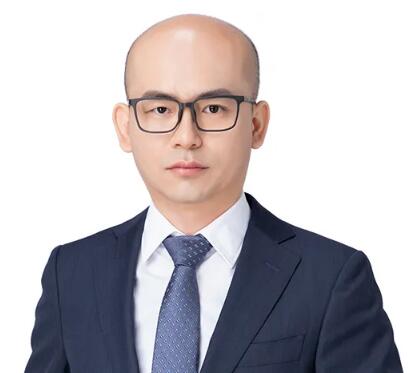
Jihai Semiconductor Marketing Director Liu Tao
Xia Yu from China Micro Semiconductor also agreed: "We must clearly see the particularity behind the dazzling results achieved in 2020. Especially under the current circumstances of strong demand and insufficient supply, domestic chip design companies should see that substitution takes time, products need to be verified, reliability needs to be evaluated, supply and demand need to be improved, and other challenges."
Jin Guangyi believes that domestic substitution should focus on improving its core competitiveness, cultivating customer experience represented by development ecology, and establishing trust and long-term development cooperative relationships. Based on GigaDevice Innovation’s experience, on the one hand, GD32MCU plans products based on the research and development needs of the domestic market, defines products together with customers, and market segment coverage continues to increase; on the other hand, GigaDevice Innovation also continues to integrate the advantages of the industry chain to improve cost performance and supply guarantee. As a result, GD32 MCU has not only won wide recognition from domestic customers, but also gained more project opportunities from overseas and international users.
Domestic MCUs as a whole have more or less shortcomings, so it is extremely important at this stage to choose a strong MCU manufacturer that can provide long-term supply. Mou Xinhui said that National Technology has a clear strategy and focused efforts in MCU. It has now formed a relatively complete product development system and technology development path. Many MCU product models have been used by leading customers such as consumer, industry, Internet of Things, communications, medical, and home.
(2) Seek the feasibility of replacing MCU with other devices:
Du Libo (Hank), director of product and marketing department of Yatli Technology (Chongqing) Co., Ltd., said that the MCU market has always been fragmented. Although the usage is small, the products and demands are diversified, and it plays a pivotal role in the system. Considering that some applications will face the issue of long product certification cycles, coupled with the long-established ecological chain of MCU (such as development tools, mass production fixtures) and certification fees, the threshold for replacing MCUs with other devices is relatively high.

Yatli Product and Marketing Director Du Libo (Hank)
Wang Wei of Smart Microelectronics believes that the actual operations will be different for different markets and different applications. In some scenarios, it is feasible for other devices to replace the MCU. For example, in some simple circuit applications, special devices are used to replace low-end MCUs; and in high-end applications, some ASSPs that integrate MCU functions can also assume the role of MCUs.
However, given the huge capacity of the entire MCU market, it will be difficult to succeed in the short term if we want to promote other components to replace MCUs on a large scale. Because end customers need to reconsider the degree of autonomy and controllability of other devices, whether they are compatible, whether they are stable, whether their costs are lower, etc., replacement cannot be done overnight.
(3) Potential risks of increasing actual inventory:
According to BI CHAO, chief technology officer (CTO) of Fengya Technology (Shenzhen) Co., Ltd., some terminal companies are indeed trying to increase inventory to deal with risks in the MCU supply chain. However, he pointed out that the main problem with MCU products currently comes from the production chain. Increasing inventory will cause the unit price of MCU to rise, which will put pressure on the company's capital flow.

Fengyao Technology CTO BI CHAO
From a market perspective, Wang Zongzhen of Saiteng Microelectronics pointed out that increasing inventory can only deal with the shortage problem in a short period of time. In the current tight market situation, concentrated incremental purchases of terminals will intensify market panic, which will not help in the long run.
To sum up, "International Electronic Business News" believes that although the current supply and demand of MCUs fluctuate greatly, the procurement side cannot blindly follow the response measures. It should comprehensively consider the actual situation of its own supply chain, work with upstream suppliers to identify pain points and prescribe appropriate medicines, so that it can more safely survive the market fluctuation period.
Domestic substitution still has shortcomings, local original manufacturers provide suggestions
According to the voting results of terminal procurement, the shortcomings of domestic MCUs are: ① product models and solutions are not rich enough, ② the quality management system needs to be improved, ③ upstream production capacity is tight, unable to stabilize supply or frequent price increases, ④ brand awareness is not enough, and ⑤ lacks a complete ecological chain.
So how to make up for the above shortcomings? The ten domestic original manufacturers interviewed have their own answers and specific arrangements.
(1) Product models and plans:
The above ten interviewed companies all agreed that domestic MCU brands have a shortcoming of "not enough product models and solutions." The main reason is that domestic MCUs started late and have a short development time, and it takes a long time to develop products. Therefore, increasing R&D investment and enriching product series have become the only way for domestic MCUs to rise. The main directions are:
-
First, enhance the self-sufficiency rate in high-end fields and deploy diversified products;
-
Second, the product itself must be excellent, whether it is technical level, product quality, cost-effectiveness, etc., and impress customers with down-to-earth products;
-
Third, improve the portability and compatibility of products and reduce the research and development time cost of domestic MCU replacement;
-
Fourth, identify the market and enhance the differentiated market advantages of products;
-
Fifth, put customer needs first, stay close to market demand, provide differentiated products, personalized and customized services, and never do things behind closed doors;
-
Sixth, introduce international talents to develop high-end intellectual resources, target both domestic and overseas markets, and form economies of scale and continuous product and technology iteration capabilities.
-
Seventh, you must have the ability to discover the market, coupled with sharp and faster market research capabilities.
(2) Quality management:
It has been observed that each MCU original factory has established a corresponding quality control management system, and the management procedures are becoming more and more strict, and quality problems have been greatly improved. Mou Xinhui pointed out that if they want to further improve, local manufacturers can work hard in the following aspects:
On the one hand, we have established our own control and management system, including quality control in all aspects of product demand definition, production, packaging and testing; on the other hand, we have in-depth cooperation with upstream and downstream supply chains to continuously discover and improve quality control weaknesses, and continuously improve and improve product specifications, reliability, stability, consistency and other aspects of the product delivery process. At the same time, it is also necessary to have in-depth communication and cooperation with the industry and customers on product quality needs. Through collaboration, we can form a better guarantee for the quality control of domestic MCUs.
Wang Zongzhen of Saiteng Microelectronics also agreed: "MCU manufacturers and terminal companies should establish smooth two-way communication. MCU manufacturers need to fully understand the needs of end customers. At the same time, terminal companies need to provide MCU manufacturers with reference suggestions and even opportunities for trial and error, so that MCU manufacturers can gradually enrich product models and gradually improve quality management levels."
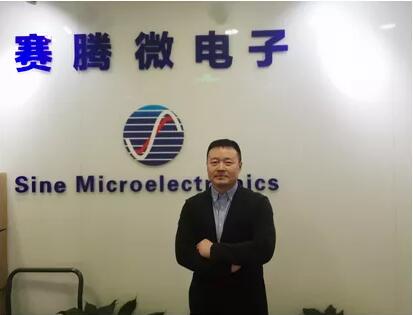
Saiteng Microelectronics Deputy General Manager of Sales Wang Zongzhen
(3) Cooperate with upstream production capacity:
Wang Wei believes that from the perspective of company models, more and more semiconductor companies are Fabless manufacturers, so the pressures they face on production capacity, supply, etc. are similar. Lingdong hopes more that the domestic semiconductor industry will grow rapidly and the entire volume will become larger and larger. By then, local original manufacturers will have more bargaining rights, and they will be able to win more supply shares, and the pressure on production capacity will be easily relieved.
(4)Building visibility:
Fengyao Technology BI CHAO believes that compared with major overseas MCU manufacturers with a long history, it is reasonable for domestic brands to be less well-known. However, the advantage of domestic manufacturers is that they are relatively down-to-earth, can fully understand the needs of domestic customers, and can respond quickly to changes in the domestic market, so they can expect future development.
Respondents from Lingdong Microelectronics and Jiefa Technology also said that brand establishment requires a lot of time and investment. In the final analysis, only by enriching product models and solutions, paying close attention to quality management, and improving product cost-effectiveness can the reputation of users become better and better, and brand building will be a matter of course.

Jiefa Technology Marketing Business Department Director Tong Qianghua
(5) Improve the construction of ecological chain:
The MCU ecological chain is a very big topic, covering a lot of content, including various software and hardware used by end customers, various development tools, open source platforms, etc. At present, the degree of autonomy and control of these software and tools is still very low.
Respondents including China Micro Semiconductor, Lingdong Microelectronics, and Hangshun Chip all said that the construction of domestic MCU ecological environment is crucial. We can learn from the successful experiences of major foreign MCU manufacturers and unite more domestic enterprises, industry alliances, and university research institutes to establish and improve the ecological chain based on the user application level.
The MCU market trend is not yet clear, but local companies should strengthen their confidence and start again!
As for the future MCU procurement market, "International Electronic Business News" invited procurement parties and original manufacturers to make predictions.
At the procurement level, more than 70% of terminal companies believe that this round of shortages and price increases will end in 2021; the remaining 30% of companies believe that it will continue until 2022 and beyond.
From the original factory's perspective, the forecast results are not as optimistic as those from the purchasing side. Chinese local manufacturers generally believe that this wave of market conditions will continue in 2021.
Interviewees from National Technology, Lingdong Microelectronics, Fengya Technology, Jihai Semiconductor, and Hangshun Chip unanimously stated that there are too many main factors causing this wave of market conditions, and the shortage of supply cannot be completely solved in a short time. Therefore, it is temporarily impossible to clearly infer when the shortage market will end.
Representatives of the original manufacturers that are predicted to end within 1 to 2 years include: China Micro Semiconductor, Saiteng Microelectronics, Jiefa Technology, and Yatli. Their speculations are based on:
In terms of production capacity, Tong Qianghua of Jiefa Technology believes that the construction of semiconductor production capacity requires a long cycle of at least half a year; in addition, the new crown epidemic and black swan events such as the blizzard in Texas and the earthquake in Japan have continued to worsen MCU shortages. It is comprehensively expected that this round of shortage will last until the end of 2021, and is expected to ease in Q1~Q2 of 2022.
In terms of impact, China Micro Semiconductor Xia Yu pointed out that MCU shortages and price increases have become a problem for the entire industry chain. Upstream Fabless manufacturers, packaging plants, and chip design manufacturers have all been affected. Price increases, production reductions, and shortages have become a chain reaction. European and American products, Taiwanese manufacturers, and domestic MCU companies have not been spared. According to the current development trend, it is expected that it will be difficult to achieve a balance between supply and demand in 2021, and it is not ruled out that this situation will continue in the next 1 to 2 years.
Considering the epidemic factors, Du Libo of Yatli said that although vaccines can gradually slow down the world epidemic, many overseas private companies are still working from home, which allows this global supply chain to supply rising demand with a relatively low utilization rate (capacity utilization rate). Therefore, under this situation, the shortage issue may need to wait until Q4 of 2021 or even 2022 to ease.
Although MCU original manufacturers are cautious in predicting market fluctuations, they are confident in future development and will unswervingly work hard in promising market segments (see table below). Among them, the applications and markets that have received high attention include: 5G communications, Internet of Things, automobiles, industry, smart home/hardware, etc.
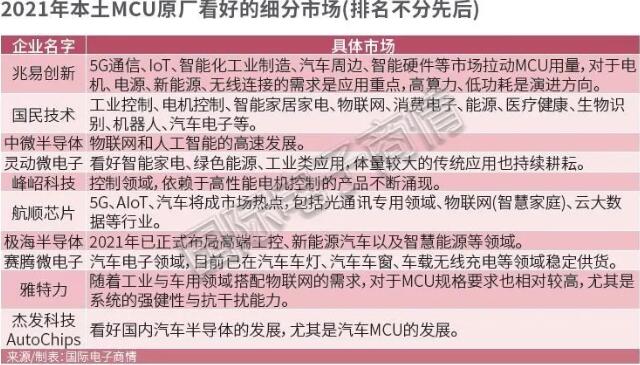
Jin Guangyi said that in addition to launching new GD32 products as planned in 2021 to further expand coverage, GigaDevice has developed low-voltage and high-voltage smart gate drivers and power management units (PMUs) suitable for various types of motors, signal chains and high-performance analog peripherals and other peripheral products, and can be linked with MCUs and sensors to provide customers with application solutions and one-stop services for various industry segments.
Mou Xinhui said that National Technology takes becoming the first domestic brand in the MCU direction as its primary goal, and at the same time enters the international market as its development path. To this end, it has formed a product development route for full series, full products, and full applications. And through the establishment of a solution team, it has made achievements in the fields of Internet of Things, motor control, smart meters, consumer electronics, home appliances, biometrics, BMS, and two-wheeled electric vehicles.
Liu Tao shared that Jihai Semiconductor will soon launch mid-to-high-end MCU products based on ARM Cortex-M4/M7 cores for the high-end industrial control field, as well as industrial-grade MCU+security, MCU+safety certification and other combination products; for consumer electronics, it will focus on high-end IoT chip businesses such as MCU+Bluetooth, MCU+sensors, and MCU+Wi-Fi. In addition, Jihai will also insist on R&D innovation and breakthroughs in chip technology, and layout the high-value, high-threshold automotive MCU market to achieve full industry coverage in the MCU field.
BI CHAO introduced: "Fengya Technology will continue to strengthen its investment in high-performance motor control technology, such as RISC-V and motor control engine dual-core dedicated MCUs. At the same time, it will also actively invest in research on high-end motor control-related technologies, such as servo, automotive chips, smart IPM, etc. We believe that IC products in a wider range of fields will be available in the future."
On the automotive MCU track, local manufacturers will also continue to make efforts. Saiteng Microelectronics has become one of the few companies in China that ships large quantities of automotive front-end equipment. In the future, it will continue to invest in the field of automotive electronics to enrich the company's product line and supporting solutions. Jiefa Technology will also continue to increase investment in research and development and strive to launch more automotive MCU products. The country's first functional safety-level MCU, which is currently being developed and designed, is scheduled to be officially launched in the second half of this year.
Disclaimer: This article is reproduced from "International Electronic Business Information", which supports the protection of intellectual property rights. Please indicate the original source and author of the reprint. If there is any infringement, please contact us to delete it.
Company phone number: +86-0755-83044319
Fax/FAX: +86-0755-83975897
Email: 1615456225@qq.com
QQ: 3518641314 Manager Li
QQ: 332496225 Manager Qiu
Address: Room 809, Building C, Zhantao Technology Building, No. 1079 Minzhi Avenue, Longhua New District, Shenzhen
Related Recommendations
Exclusive Interview with Li Gang of Yunfan Ruida: The Precision of Millimeter-Wave Radar Products and the Warmth of Humanity
2026-07-22
2518
RF Passion, Craftsman’s Journey: Over 30 Years of Steadfast Dedication — Interview with Kinghelm Chief Engineer Mr. Qin hongxiang
2026-06-26
2688





 粤公网安备44030002007346号