
























Service Hotline
News

News
Who is the main force in the ongoing EDA wave?
2022-03-16
746
In the early 1990s, on the ancient fifth floor of the Beijing State-owned 712 Factory, Academician Wang Yangyuan cheered for the hard-working EDA team: This is the best opportunity for our scientific and technical personnel to serve the motherland! Then, the assistant next to Academician Wang took out a package of sea cucumbers and elbows and placed them on the table, and cheers erupted in the room.
EDA, electronic design automation, is a term that has appeared frequently recently. It attracted the attention of China's scientific and technological circles as early as the 1980s. At that time, Huajing, which was supported by the central government's nationwide financial resources, introduced a color TV analog chip production line from Japan, and EDA became the key constraint on chip design.This emerging sub-industry plays three roles for the chip industry: producing design drawings, producing construction drawings and assisting in the construction process.
It can be said that without EDA, we can only draw transistors one after another by hand. The limit of human power is only a few hundred or thousands. Once it exceeds 10,000, it is beyond the reach of human power. Not to mention, a current 5nm TSMC chip contains tens of billions of transistors.
Therefore, EDA is indispensable to Huajing, but the Batumi embargo hinders the import of this type of software. In desperation, the country can only develop it on its own. For the EDA localization project, 117 scholars and technical personnel were transferred from 17 units across the country, and overseas Ph.D.s who had previously specialized in the EDA industry were hired as chief designers. Sun Jian, a young man who had no idea about EDA, learned layout editing from C language and database until he became a chip generalist.

After four years of hard work, China's first self-developed EDA was launched in 1993. In order to commemorate the dark circles under the eyes caused by staying up late for a long time, this domestic EDA system was named "Panda System". Once Panda was born, the gap between China and the world level was only 5 years, and domestic units were actively using it. In a short period of time, Panda EDA was installed in 20 design companies and completed nearly 200 chip varieties.
What proves the great success of the Panda system is that Batumi’s previous ban on Chinese EDA was lifted. Less than a year after the panda was born, foreign EDA companies came to China one after another.
But the paradox of history is that more than 20 years later, when the general public talks about Huawei cutting off supply, the familiar term is still: EDA. Since my country's EDA achieved a breakthrough as early as 1990, why is it still stuck today? In addition to domestic veterans who often show tragic historical faces, are there other forces we can rely on to solve the stuck neck problem?
The development history of China's EDA industry may provide us with refreshing clues.

In 1994, the Great Hall of the People witnessed the arrival of two foreign EDA companies in China. First is Kaideng, who is running forward, followed by new ideas. Kaiden and Xinsi were the most powerful EDA companies at that time and now. In the 1990s, when the EDA industry was booming, the two major EDA companies successfully passed the productization stage, began frequent acquisitions, and recruited a group of revolutionary talents in the chip industry.
Kaideng's CEO is Chen Liwu, a Chinese venture capitalist from Southeast Asia. When he took over, Kaideng's performance was declining. Chen Liwu has held hundreds of meetings with customers. He always asks everyone he meets, how would he rate Kaideng's products? A few demanding customers put it bluntly, D or F. Chen Liwu was deeply moved and changed Kaideng's sales-driven strategy. He held regular joint meetings with customers and deeply bonded with partners.
Chen Zhikuan, the vice president of Synaptics, is another enterprising Chinese-American in the EDA industry. He studied under Yu Youcheng, the highest-ranking Chinese executive in Intel's CPU business line. After arriving at Xinsi, Chen Zhikuan was deeply trusted by the founder and was promoted to vice president in just a few years.
Whether it is Chen Liwu or Chen Zhikuan, the two semiconductor elites in Silicon Valley realize that the Chinese market represents the future. At that time, Xinsi, who was still second to Kaideng, showed a stronger desire for this emerging market and launched a series of combination punches.
At the donation ceremony held in the Great Hall of the People, Chen Zhikuan sent 20 sets of Design Compiler to Professor Zhou Zucheng of Tsinghua University. A set of this EDA tool is worth US$250,000. Professor Zhou was shocked to learn the price from a Tsinghua student who had just started working at Philips. The fate between Tsinghua University and Xinsi was thus forged, and the two parties subsequently established a joint EDA center in 1995.
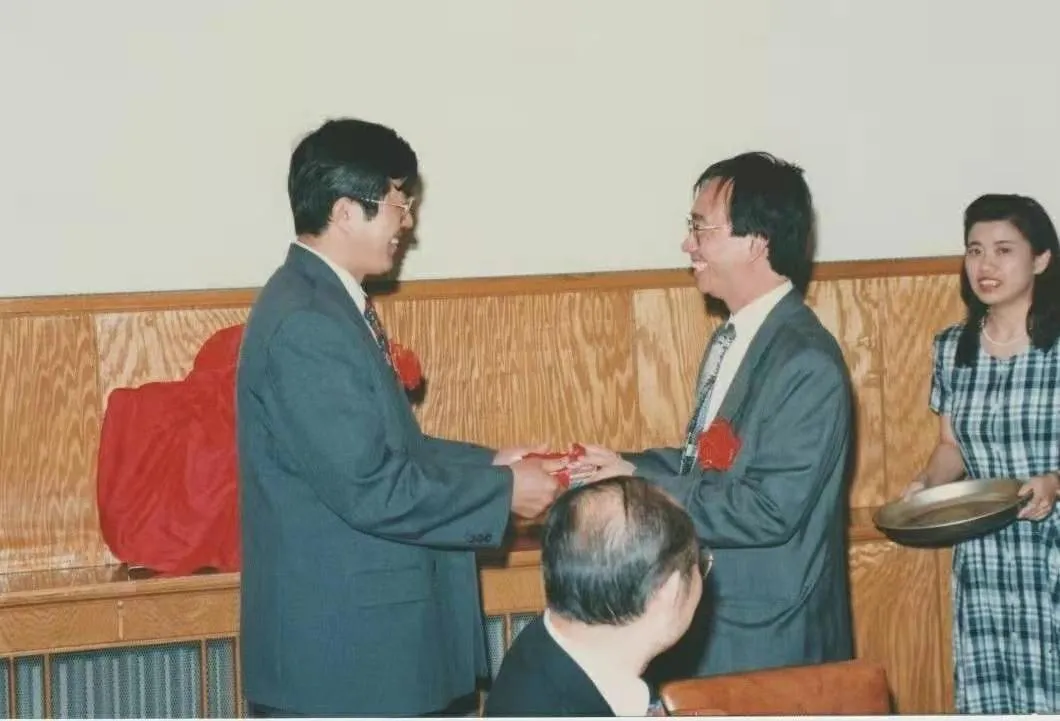
On the surface, the cooperation between Synopsys and Tsinghua University is just a collaboration between an American private company and a Chinese university. However, this cooperation has a profound impact on the future direction of China's chip industry. This move by Synaptics kills three birds with one stone:
The first is to seize the right to set standards.Tsinghua received the task of writing a textbook on chip design automation, and of course the help of the tools provided by Synaptics was indispensable. Later, Synopsis became more extensively involved in the compilation of local EDA textbooks in China and introduced more than 130 undergraduate and graduate courses.
The second is convenient industrial diffusion.After receiving donations from Synopsis, Tsinghua became the best EDA laboratory in Beijing and even in the country. Various batches of personnel from the Ministry of Electronic Industry were sent to Tsinghua for training. With the help of the EDA in the training center, Tsinghua University began to develop communication-specific chips, allowing local industry players to begin to see the power of EDA. Because the reputation of Tsinghua EDA Center is so great, both Haier and Huawei referred to Tsinghua's experience when setting up design centers.
Of course, the last and most important thing is the popularity of EDA in the higher education system.Synoptics' Taiwanese engineers went to give lectures to Tsinghua teachers and students. The vivid images benefited the Tsinghua teachers who were observing and began to consciously use the design language to practice it themselves. After they became proficient, they could teach students in the microelectronics department in time. China's best chip talents accepted the practice of EDA in school, and it became increasingly difficult to get rid of it after that.
This move by Xinxi is fully enjoying the super talent dividend contained in the Chinese market.
From writing code to finally handing over the layout to the foundry for production, EDA spans physics, mathematics, semiconductor devices and other disciplines, and requires extremely diverse types of talents. China's university education system is sound, and some of the science and engineering talents trained will be engaged in the chip industry in the future. They determine the local development direction and actively promote it to universities, which means cultivating their usage habits in advance. On the one hand, they lay the foundation for usage. On the other hand, these users are naturally the reserve army of EDA industry talents.
By seizing the power to set standards, accelerating the diffusion of technology within the industry, and establishing a talent reserve army for higher education, Synaptics has quickly opened up in China with the help of three axes. After entering the new century, Synaptics has simultaneously improved its pace of mergers and acquisitions. In 2008, Synaptics surpassed Calden and became the world's largest EDA manufacturer.
When the two major EDA giants established their bases in China, Panda EDA could no longer stay in the country and went to the United States.
After Panda EDA was invented, it no longer had a father to love its mother, and was abandoned to the state-owned BGI Group. In order to promote China's EDA in the United States, Panda's R&D backbone Sun Jian was sent to the United States to be responsible for overseas sales. Before every call, Sun Jian would write down what he was going to say and then recite it, so as not to affect the expansion of customers with his bad words. With long-term persistence, at the beginning of the century, domestic EDA had sold many customers abroad.
However, why does a locally born EDA abandon the domestic market and go to the United States? The answer is that the domestic market environment at that time could not tolerate a genuine domestic EDA.
The domestic chip design industry was completely in the reverse engineering stage at the beginning. Generally speaking, it was copying other people's chips, which did not require EDA tools for forward design; at the same time, pirated EDA could already meet most low-end needs; finally, those remaining mid-to-high-end paying users, of course, should use good foreign EDA.
As a result, there is actually no domestic genuine EDA in the domestic market.
The root cause of this embarrassing situation lies in the disconnect between local wafer manufacturing and EDA. Panda EDA was born to support Huajing, but Huajing suffered a major setback in the 908 project. The subsequent 909 project and SMIC were chasing after each other in the process, so they naturally had to use the most advanced EDA. In this way, local EDA has not yet been sold on a large scale and does not know its performance. It will face fierce competition brought about by the next technological advancement. Over time, it will fall into a vicious cycle.
In other words, China's chip industry has always been a loosely coupled situation: from wafer foundry, chip design to packaging and testing, everything is the same. This loose system of upstream and downstream integration has resulted in each link maximizing its own goals. Domestic EDA, as the one lagging behind in the overall situation, is naturally unpopular. However, it is easy for the two EDA giants born in the developed industrial environment to meet user needs.
Therefore, the domestic EDA industry is naturally in a dilemma:
The ecology was weak and the track occupied was very small. Panda EDA matched Huajing at that time and was limited to analog chips. There were too few categories to complement and weak premium capabilities; there were almost no value-added services. IP is a natural extension of the EDA industry, which will deepen design customers' dependence on EDA companies. However, local EDA manufacturers are extremely lacking because they are loosely coupled with wafer foundries. Because of the weak ecology, there are almost no value-added services, and local EDA cannot win the favor of customers. Without the accumulation of positive cycles, catching up is still weak.
Against the background of frequent supply cuts in the United States, EDA is already related to industrial security. The problem in this industry lies in know-how, and this thing does not fall from the sky. So, what to do?
From 2020 to now, a wave of EDA boom has suddenly emerged in China.
In September 2020, Silxin completed a new round of financing of several hundred million yuan to build a full-process digital EDA tool platform. The company was founded in 2003 and was acquired by Guowei in 2018. It is worth mentioning that the company’s founder, Toshio Hayashi, is a Japanese who has been in the industry for more than 30 years and worked in an American company before starting his business.
In November, Xinhua Zhang completed nearly 100 million yuan in Pre-A+ round of financing.
In December, Jiutongfang received investment from Hubble, a subsidiary of Huawei. The company focuses on the field of radio frequency EDA and its core team is composed of doctors studying in the United States.
In January 2021, the domestic EDA company Guilun Electronics began to provide guidance for the Science and Technology Innovation Board.
In February, BGI Jiutian, the main company of Panda EDA, announced news about GEM guidance.
After Panda, domestic EDA has reached a deadlock. Why have so many new players sprung up in such a short period of time?
The answer is that most of these new players who frequently raise large sums of money are founded by high-level managers trained by American EDA companies such as Kaiden and Synopsis.Both major EDA companies have chosen a strategy of focusing on localized R&D and sales, which has cultivated a group of leading talents in the country. The founding team of domestic EDA stars has been cultivated and nurtured in a global environment. Emerging companies now active in the domestic EDA industry all have the shadow of two major EDAs:
Liu Zhihong, the president of Banlun Electronics, was the vice president of Kaideng. Wang Libin, the founder of Xinhuazhang, is the backbone of two major EDA talents. He has worked as an engineer, salesperson and executive, and has accumulated 20 years of work experience. He has also accumulated industry connections with major domestic chip customers such as HiSilicon and Zhanrui.
Why are these talents able to stand up at critical moments?
This is not unrelated to the natural flow of talents in the EDA industry. An interesting phenomenon in China's EDA industry is that both Synaptics and Kaideng are quite "Buddhist" companies. The flow of middle- and high-level talents between the two companies is already very frequent. These talents go out to start their own businesses, and the relationship between their old employers and them remains peaceful. This is in sharp contrast to the fierce competition in other segments of the chip industry.
This normal flow of talent spills valuable industry knowledge and experience to the entire industry. As a result, the entire EDA industry has experienced large-scale "cell fission" only in China. The thirty-year growth history of the original EDA giant was actually a process of continuously merging, absorbing, and digesting dozens of small and medium-sized technology entities. It rarely set up its own business or faced new challenges again. The great changes in the Chinese market have injected fresh blood into the ancient EDA industry.
While foreign EDA companies are starting to start their own businesses, BGI Jiutian, which was upgraded from local EDA Panda, has also made a breakthrough. BGI Jiutian has adopted three strategies:
Breakthroughs from point to point are no longer limited to tools that solve individual problems, but cover the entire process, increasing customized services and improving stickiness; expanding from chips to panels, the first full-process EDA solution for panels, successfully accounting for 90% of the domestic flat panel display market; continuing global expansion in Japan and other countries, becoming an indispensable technology supplier for some giants.
Foreign-funded EDA cultivates many local talents and establishes a sect at a new time point; domestic EDA expands industry applications and services locally, and at the same time makes rapid progress and goes overseas. The two major EDAs and BGI Jiutian seem to be opposing competitors, but in fact they have jointly made complementary contributions to China's chip industry.

Just entering 2021, Huawei once again invested in a new EDA company after investing in Jiutongfang. This Chinese company, which is stuck at the top of the global technology tree and is stuck by the United States, is sparing no effort to catch up in order to solve the gap in chip technology.
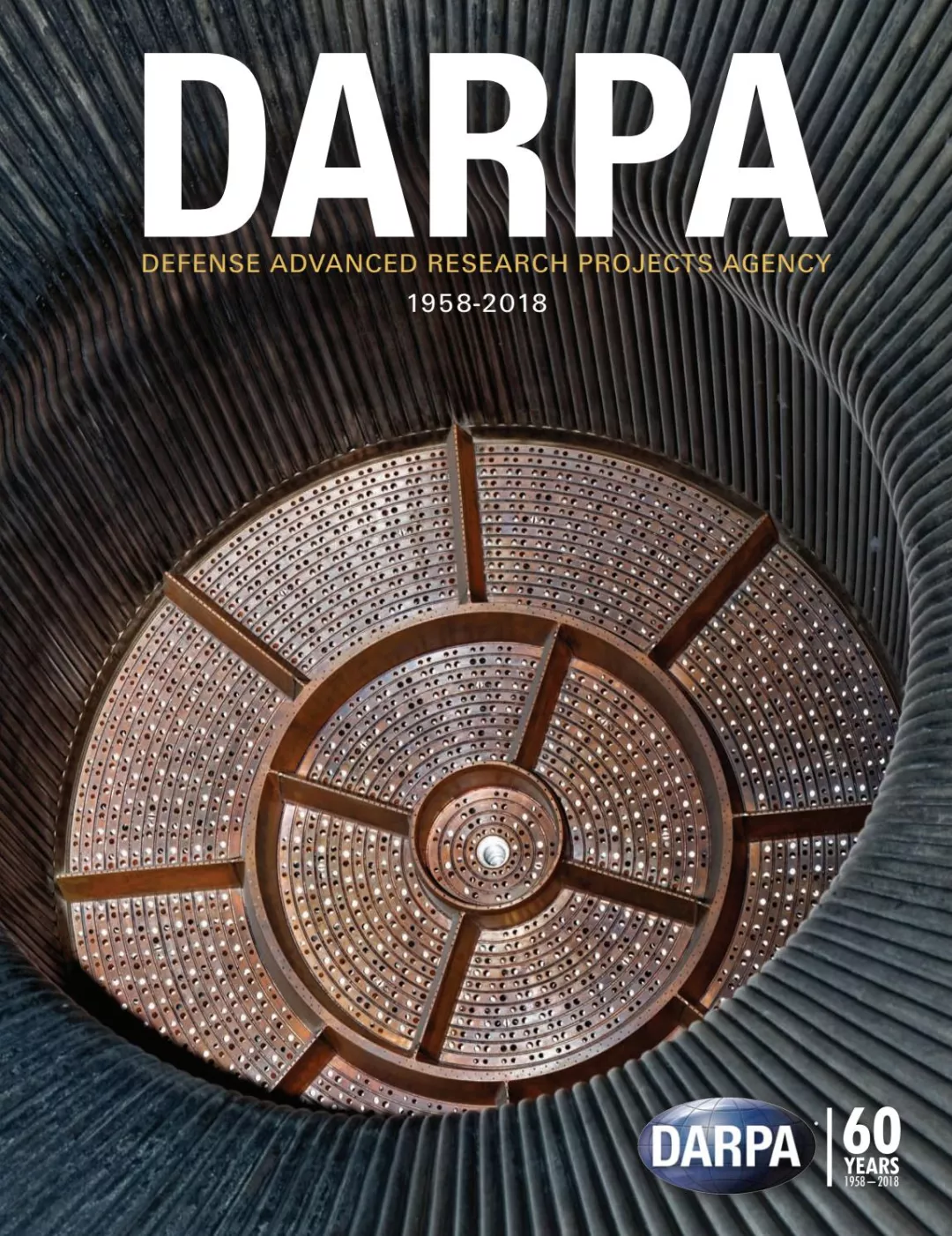
While Huawei is searching for EDA targets across the country, the Advanced Research Projects Agency (DARPA) under the U.S. Department of Defense is also focusing on advanced EDA projects. DARPA hopes to popularize EDA open source and reduce chip design costs. In the decades after World War II, government-run organizations like DARPA invested in long-term scientific research tasks that few private citizens were willing to get involved in, or "common key technologies," and then transferred them to private companies when they matured. This has been the case from the Internet revolution to today's aerospace revolution.
It can be said that there is a talent gap of several orders of magnitude between Huawei and DARPA.
Liu Shaoshan, an entrepreneur in the field of autonomous driving, studied U.S. technology policy at the Harvard Kennedy School of Government. In his view, the reason why DARPA has been able to thrive for so long is that Americans have broken down the “institutional wall.” The flow of scientific and technological talents between government and private institutions is smooth. At different stages of life, these elites will choose to serve the country or have financial freedom, without having to worry too much when making a choice.
Because China's "institutional wall" still exists firmly, in fact, the two tracks in the field of cutting-edge science and technology are not parallel, that is, the gap between the public and private economies is too large, constraining the long-term development of fields such as EDA.
Because of this, it is difficult to place the most important task on veteran comrades in tackling cutting-edge technologies. The transformation of the scientific research system is a long process, full of struggles and disillusionment. But Moore's Law will not wait for anyone. While relying on self-reliance, China has another way to build a cutting-edge technology industry chain: in the vast local market, make good use of the capital market, protect intellectual property rights, and allow managers who have grown up in foreign-funded enterprises to spontaneously participate in market competition.
Note: This article is reprinted from "Yuanchuan Technology Review", which supports the protection of intellectual property rights. Please indicate the original source and author when reprinting. If there is any infringement, please contact us to delete it.
Company phone number: +86-0755-83044319
Fax/FAX: +86-0755-83975897
Email: 1615456225@qq.com
QQ: 3518641314 Manager Li
QQ: 332496225 Manager Qiu
Address: Room 809, Building C, Zhantao Technology Building, No. 1079 Minzhi Avenue, Longhua New District, Shenzhen
Related Recommendations
Exclusive Interview with Li Gang of Yunfan Ruida: The Precision of Millimeter-Wave Radar Products and the Warmth of Humanity
2026-07-22
2487
RF Passion, Craftsman’s Journey: Over 30 Years of Steadfast Dedication — Interview with Kinghelm Chief Engineer Mr. Qin hongxiang
2026-06-26
2661





 粤公网安备44030002007346号