
























Service Hotline
News

News
EDA/IP, how to achieve leapfrog development in China’s semiconductor industry?
2022-03-16
1197
ICCAD is the annual gathering of China's semiconductor industry.
At the 2020 ICCAD held in the mountainous city of Chongqing, Professor Wei Shaojun, chairman of the IC Design Branch of the China Semiconductor Industry Association, gave a heavyweight report that presented the current situation of China's IC design industry under the new normal: China's local IC design companies reached 2,218 in 2020, an increase of 438 from 2019 sales increased by 23.9%, an increase of 4.1% from 2019; the layout is also changing. In addition to traditional integrated circuit design company gathering places such as Beijing, Shanghai, and Shenzhen, the number of design companies in cities such as Wuxi, Hangzhou, Xi'an, Chengdu, Nanjing, Wuhan, Suzhou, Hefei, and Xiamen has exceeded 100. At the same time, China began to enter the high-end chip field represented by CPU. Although the gap is still there, the shift of domestic CPUs from the dedicated field to the open market field is an important step of milestone significance.
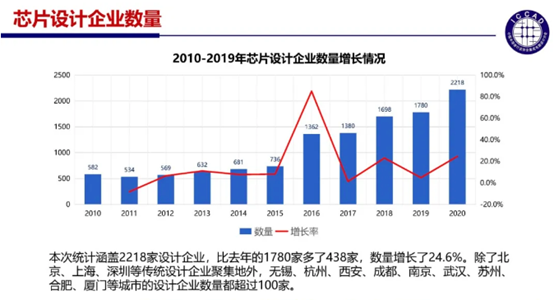
China's local IC design companies have had a profound impact on the global semiconductor industry chain, and have greatly promoted the linkage effect of EDA/IP, foundry and packaging and testing.
The Sino-US trade friction that has lasted for more than two years has made Chinese semiconductor people more aware of the importance of EDA/IP.
Currently, the three giants Synopsys, Cadence and Mentor (soon to be renamed Siemens EDA) occupy 95% of the market share in the EDA field; in the IP field, ARM (Softbank), Synopsys and Cadence rank firmly among the top three in the world.
According to Professor Wei Shaojun's report at the ICCAD conference, China's domestic EDA full-process design tools following simulation have begun to enter the market to participate in competition, and a series of remarkable single-point tools have also been formed in the digital circuit process. "I believe that after a few more years of hard work, China can also have its own full-process digital circuit design tools." He said.
During the 2020 ICCAD conference, EDN and EETimes interviewed multiple EDA/IP enterprise managers. In the field of EDA, including Mentor, A Siemens Business Global Vice President and China General Manager Ling Lin, X-EPIC Chairman and CEO Wang Libin, Guowei Sierxin (S2C), a subsidiary of Guowei Group CEO Lin Junxiong, Hongxin Micron CTO Wang Yucheng; in the IP field, they include Dr. Dai Weimin, chairman and president of VeriSilicon, Xu Tao, CEO of StarFive Technology, Zou Zhengxian, chairman/CEO of Sichuan Hexin Microelectronics (IPGoal), Liu Shu, executive vice president of product research and development of ArmChina, and Shen Li, CEO of Chengdu Ruicheng Microelectronics (ACTT).
EDA articles
Mentor: Siemens brings professional resources beyond EDA
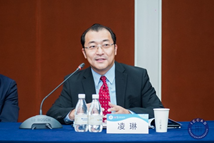
Mentor, A Siemens Business Global Vice President and General Manager of China Ling Lin
Mentor, A Siemens Business will be renamed Siemens EDA in January 2021.
More and more EDA manufacturers are beginning to talk about the concept of open source. Ling Lin believes that open source practices are mainly concentrated in some start-up companies with good technology. They open source some basic functions for designers to try out. If they need more functions, they need to purchase them.
It is true that new EDA tools can be used to make different products, or achieve different effects. However, judging from the cost structure of several major EDA manufacturers, although the net profit is very high, they are also the type of enterprises that invest the highest R&D costs. High investment brings high concentration, including the purchase of technology assets and R&D investment. If a new start-up company cannot guarantee revenue while open source, there is a high probability that it will be acquired by a large company in the future. Ling Lin believes that it is unlikely that EDA will be completely open source or free from a business model perspective, at least the best parts will not be open source.
The only type of R&D where open source and collaboration are possible is research-based collaborative development with universities. For example, in the United States, some universities will cooperate with EDA companies to develop projects, develop tool engines or algorithms, and conduct cross-authorization between universities, professors and companies.
After Siemens acquired Mentor in 2016, the industry is also looking forward to what kind of sparks the combination of industrial giants and EDA giants will create. Can it do things that the other two pure EDA companies cannot do? "In fact, Siemens has expressed a vision from the beginning of its acquisition of Mentor, which is to create a more complete closed-loop design platform. Mentor's focus on EDA, IC and system design are all part of this platform," Ling Lin said. "EDA is an industry that always needs innovation. Although affected by the epidemic in the past year, Mentor acquired some EDA companies with the support of Siemens and expanded its capabilities. It has a product line and is managed by Mentor. "For users, the most intuitive experience is that its chip can not only show performance in one system, but this subsystem will also play a role in another super system. "This goes beyond the professional resources of Mentor IC design, including mechanical design, system thermal and other data analysis and services, which can be completed through this platform. This is the mission of Siemens digital industrial software."
At present, the combination of EDA and industrial software is still in the exploratory stage, but it has been connected in series in certain specific areas, such as in printed circuit board (PCB) factories and professional manufacturing process software in cutting-edge process wafer manufacturing. The "digital twin" concept proposed by Siemens in the past few years is actually not a standard term in the EDA industry, but comes from Siemens PLM, which refers to the complete mapping of the design model to the physical world model, including the management of all data. However, this concept has something in common with EDA. "EDA used to be a design check, but later it evolved into the necessity of modeling, which requires operations on materials, physical phenomena, etc. It is equivalent to combining the phenomena of the physical world with the digital design model for unified management." Ling Lin explained that no matter how the semiconductor materials and processes change, the simulated and simulated parameters can be characterized and reproduced.
Xinhua Chapter: Based on cloud and AI, entering the EDA 2.0 era
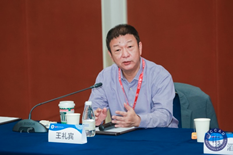
Wang Libin, Chairman and CEO of X-EPIC
Xinhuazhang, a local EDA company just established in March 2020, released its first EDA product "EpicElf" in November this year, as well as a new simulation technology that was the first in China to support domestic computer architecture. It has been verified on domestic Feiteng servers and is compatible with the current industrial ecosystem and will help support the next generation of computer architecture in the future. It is one of the milestones in China's construction of an independent research and development integrated circuit industry ecosystem.
Many Xinhuazhang executives, including its founder Wang Libin, have held important positions in Synopsys, Cadence and other companies. Faced with the long-term advantages accumulated by overseas EDA giants in technology, talent and customer resources, how can local manufacturers use more cutting-edge ideas to break through?
Wang Libin proposed the concept of “EDA2.0”.
He believes that the industry has generally used EDA1.0 for the past 30 years. The technology of 30 years ago now seems to be very backward. No matter the algorithm or architectural foundation has been developed for so many years, it cannot be shaken off because the customer base is too large and can only be continuously accumulated during updates. "Especially for emulators, almost all chip manufacturers need to do front-end simulation. Now with the latest UVM, the previous VM can only be kept in it even though it is useless." Wang Libin analyzed. The emergence of cloud and artificial intelligence technology will promote the evolution of EDA tools, but it is difficult to completely transform the tools of the EDA 1.0 era.
According to reports, a new executive added by Xinhua Zhang has 30 years of R&D experience in the EDA industry. He is committed to researching artificial intelligence and machine learning and is familiar with the loading of AI functions by EDA tools. Wang Libin said that the hallmark of EDA2.0 is the use of AI technology to change the entire tool from the underlying architecture, including making full use of the computing power of cloud servers to support simulation, design and verification. This is what Xin Huazhang is currently engaged in.
Wang Libin believes that future EDA technology must be intelligent, but now it is just automated. The EDA that Xinhuazhang is currently working on that integrates AI and cloud technology can be said to be 1.X. It adds some intelligence on the basis of automation to solve some inherent problems in 1.0. "Complete intelligence is the ultimate goal. The future EDA2.0 needs to be integrated on the basis of 1. Technology 30 years ago? We never talk about catching up with the world's advanced level, because our tracks, ideas and technical starting points are completely different, but the purpose is the same. "Currently, Xinhuazhang recruits not only EDA, but also experts in the Internet, artificial intelligence, and cloud. By integrating their architecture, ideas, algorithms and existing EDA, we use non-traditional technologies to create innovative tools to make chip design simpler and more inclusive.
When it comes to accelerating innovation, Xin Huazhang believes that open source is a major trend not only in EDA, but also in the entire technology industry. They have made a lot of progress in the open source of EDA tools, and their purpose is very clear: there are more than a thousand people studying EDA in China, and Xinhuazhang hopes to mobilize everyone and let more people participate. "Before doing open source, I was very confused about which part to open source. Because commercial companies always need to make profits, the open source and commercial parts are currently separated." Wang Libin said that Xinhuazhang released the open source simulator EpicSim in a short time and used some advanced methods to double its speed within a month, allowing the industry to see the difference in new EDA technology.
Regarding the balance between open source and business, Wang Libin said, "We may be the first EDA company in China to make open source EDA tools, but we are not an open source company. Open source is not our profit model." Open source is another model for Xinhuazhang, which can be understood as an ecological construction that lowers the threshold for EDA use and innovation.
From March 2020 to now, Xinhuazhang has received three rounds of financing. Regarding the use of these financings, Wang Libin believes that EDA is a high-investment, long-term industry, so doing EDA requires people with perseverance, patience, and pursuit in order to do it for a long time. Because there are too few talents in this industry and even fewer people can become EDA experts, Xinhuazhang’s largest investment so far is in manpower, accounting for more than 70% of the total investment. "EDA has never been an asset-heavy company; the most important thing is people."
Another use of financing is to build a hardware verification cloud. It is reported that this is a hardware cloud composed of a group of hardware emulators. Its main purpose is to help small and medium-sized customers cope with the demand during the peak period of simulation.
Guowei Group: Create localized digital full-process EDA
Founded in 1993, Guowei Group is a semiconductor holding group. Its business mainly covers security chip design and application, EDA system R&D and application, FPGA rapid prototype verification and simulation system R&D and application, and third-generation semiconductor product R&D and production. In 2018, Guowei Group acquired Shanghai Guowei Silxin Technology Co., Ltd. (Guowei Silxin), one of the earliest EDA companies established in China. It has been established for 17 years and focuses on digital circuit chip prototype verification. In 2018, Shenzhen Hongxin Microna, an EDA back-end design software R&D company invested and managed by Guowei Group, mainly develops layout and routing tools. It has currently completed the technical deployment of key nodes of the digital integrated circuit EDA platform and achieved a technological breakthrough in this key link of the state-owned semiconductor industry chain.
Guowei Silxin CEO Lin Junxiong said that since the company was acquired by Guowei Group in 2018, it has begun to develop diversified EDA products in the field of digital circuit verification and is committed to building a digital full-process EDA platform to fill the shortcomings of the current domestic EDA industry. The digital full-process EDA is mainly divided into two parts: design and verification. "As brother units, Guowei Silxin and Hongxin Micro-Nano are complementary and are two mutually reinforcing processes." Hongxin Micro-Nano is mainly a design tool, and every step of the design requires complete verification. The whole process also includes logic synthesis and timing analysis functions. Guowei Silxin also needs Hongxin Micron's large-scale synthesis capabilities.
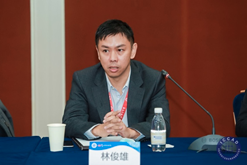
Junxiong Lin, CEO of S2C
Hongxin Micronano CTO Wang Yucheng said that the company is currently focusing on supporting logic synthesis and layout and routing, and the tools can already support the processes of many domestic and foreign semiconductor manufacturers, including the advanced 7nm process. "Currently, the company is working closely with some leading companies in China and is committed to the development of localization and customization. In terms of the performance and functions of the tools, it has fully reached the ability to compete with foreign corresponding products." In terms of EDA localization, Wang Yucheng believes that it is something that has to be done, because "this is not decided by ourselves. In semiconductors Today, when the physical industry is booming, if EDA tools are stuck without a solution, the entire industry chain will be completely broken. "In terms of full-process tools for layout and routing and digital solutions, foreign countries have only developed so many tools through more than 20 years of technology accumulation and iteration, so the EDA design threshold is very high and the complexity is also very high.
Dating back more than 30 years ago, China launched the "Panda Plan" in order to localize EDA tools. However, the external environment for integrated circuit design in China was not mature enough at first, and it was mostly used for research and did not form products. Nowadays, the demand for EDA tools in the domestic market is becoming increasingly mature, and the technical research and development capabilities of domestic EDA companies are also becoming increasingly mature. "From the perspective of Hongxin Micro-Nano, the first step is to solve the problem of yes or no, and the answer is yes; the second step is whether it can continue to develop after having it, including the continuous iteration of the talent team and technology. After more than three years of practice, it has been proven that we already have such internal capabilities." Wang Yucheng said.
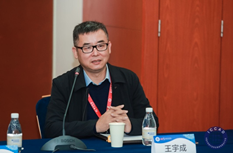
Wang Yucheng, CTO of Hongxin Micronano
However, the localization of EDA is not the end. The ultimate goal is to play an important role in the world's supply chain or global division of labor. "Working behind closed doors or internal circulation is not what we want. From the perspective of R&D personnel, we hope to compete with the world's most advanced technologies instead of being separated from them." Wang Yucheng said that from the perspective of tool users, the design level of many domestic companies has reached the international leading level, or is leading in certain specific fields. They have many self-developed algorithms and technologies, but commercial secrets cannot be shared. Hongxin Microna's goal is to jointly develop with customers to achieve customized results. This is a localization and customization advantage that foreign manufacturers cannot provide.
Regarding the development model of the three foreign EDA giants through mergers and acquisitions, do domestic manufacturers need to follow suit and start planning? Wang Yucheng believes that acquisitions must be strategic. In the early days, American EDA companies acquired the tools of many small companies to piece together the process. In the past, this was possible because the manufacturing process level at that time was still 65 nanometers or earlier, but now the design process under the FinFET process is highly complex, making it difficult to simply piece together. In addition, by simply acquiring tools, it takes a lot of time and energy to re-build the process, which cannot best meet customer needs. "And domestic manufacturers do not have the time to spend another 20 years building a tool. Therefore, market demand can be met through acquisition, but it must be based on an advanced architecture. As long as it is not a point tool that plays a decisive role in the entire process architecture, it can be completed through acquisition."
Lin Junxiong said that some companies under Guowei began to cooperate with each other when they started, and many things require a "right time." Because the entire EDA ecology and investment environment are very hot this year, including investment in personnel and capital, some vicious competition has resulted in increased costs in all aspects, especially talent costs. He believes that now is not a very good time to do mergers and acquisitions, but when the ecological environment develops to a certain stage, it will naturally fall into place. "Now everyone should focus on some important processes, such as design, verification or digital links, first use their own advantages and wait for a suitable opportunity before joining forces."
Since China's chip design industry has grown rapidly in recent years and demand is strong, how to formulate customer strategies? Lin Junxiong said that Guowei Silxin mainly customizes strategies based on the maturity of each product. For example, its main prototype verification solution product has a history of 17 years and can be supported by both small and medium-sized customers and large customers at home and abroad. However, for some new EDA tools, it will first find some customers who are willing to cooperate, work with them to formulate basic specifications, use customized services to complete the customer's project, and then start to promote it to more customer groups.
IP chapter
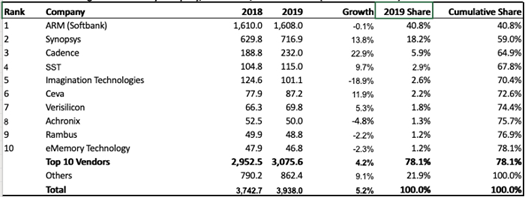
According to the 2019 revenue ranking of global semiconductor IP vendors released by market analysis company IPnest, the current major global IP vendors include Arm, Synopsys, Cadence, SST, Imagination Technologies, CEVA, VeriSilicon, Achronix, Rambus and eMemory.
VeriSilicon: All Things Network and Chiplet
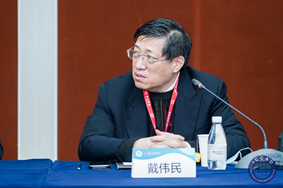
Dr. Dai Weimin, Chairman and President of VeriSilicon
Dr. Dai Weimin, Chairman and President of VeriSilicon, believes that there are two things that require the attention of the entire semiconductor industry: one is the Internet of Everything, and the other is Chiplet.
On August 18, 2020, VeriSilicon, with the halo of being “China’s No. 1 Chip IP Share”, was listed on the Science and Technology Innovation Board. VeriSilicon currently has five major digital IPs, including GPU IP, NPU IP, VPU IP, DSP IP and ISP IP; a total of more than 1,400 digital-analog hybrid IP and radio frequency IP. It has 128 valid invention patents and 74 trademarks worldwide; it has registered 132 integrated circuit layout design exclusive rights, 12 software copyrights and a rich reserve of technical secrets in China.
From the Internet of Everything to the Intelligent Connection of Everything, and then to the Information Network of Everything, it corresponds to the transition from cloud computing to fog computing, and then to edge computing. Originally, everyone thought that AI training must be on the cloud. In fact, this is not the case. At the 2020 Songshan Lake IC Innovation Summit Forum, Dai Weimin talked about the issue of edge computing. The principle is to use open source hardware modules for secure and distributed computing to utilize the computing power of a large number of edge AI devices. The edge computing here involves a lot of private information, so it must be safe and reliable, which is what "Xinchuang" is focusing on now.
He believes that it is important to produce training data on the edge, and private data should not be transmitted to the cloud. It is reported that Google has been researching in this field, and CorePrinciple is the domestic promoter. "To make everyone believe it, it must be open source and allow everyone to supervise it," Dai Weimin said. "A large amount of data is collected in real time, and there must be products with software and hardware collaboration. CorePrinciple is a platform, not a product, so we provide open source modules and hope someone will do it." As for the best domestic candidate, Xiaomi, which is more open and willing to try new things, is the first choice.
Why make chiplets? You can refer to the successful pursuit of Intel by AMD, the leader in this technology. AMD has launched a large number of highly integrated chips and has also accepted Chiplets, which is a good proof of the development prospects of Chiplets. According to Omdia’s latest report, the global market size of Chiplet processor chips is growing exponentially and is expected to reach US$5.8 billion by 2024 and exceed US$57 billion in 2035.
Overall, although VeriSilicon's IP sales volume is not the largest, it has a very rich variety, which perfectly fits the heterogeneous integrated IP reuse model of Chiplet. Dai Weimin believes that not every chip requires a cutting-edge process such as 5nm, because not every company can afford the cost of the 5nm process, so chiplets, a new form of mixed packaging of dies of different process nodes, have become one of the important trends in future chips.
Based on VeriSilicon's technological advantages and the development characteristics of the local semiconductor industry, Dai Weimin proposed the "IPas a Chiplet (IaaC)" concept, which aims to use chiplets to realize special functional IP, solve the balance between performance and cost in advanced processes of 7nm and below, and reduce the design time and risk of larger-scale chips through "plug-and-play, modular assembly". It is reported that VeriSilicon’s 5nm-related projects are progressing steadily.
For the RISC-VIP core, it "will bring better opportunities and make up for the weakest CPU link." Dai Weimin introduced that in the fragmented environment of the Internet of Things, the RISC-V architecture of the open source instruction set has broad development prospects. It is reported that as early as 2018, VeriSilicon took the lead in establishing the China RISC-V Industry Alliance (CRVIC). As the first chairman unit, the company has invested in China's first professional RISC-VIP company, VeriSilicon.
Saifang Technology: RISC-V products and platforms are increasingly mature
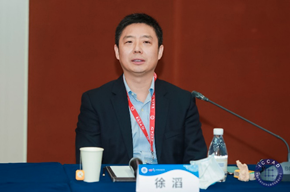
Xu Tao, CEO of StarFive
When it comes to RISC-V, you have to mention Sai Fang Technology. The company’s CEO Xu Tao said that Sai Fang, as an independent local company, is independent in its decision-making and operations. This company, established in August 2018, has been committed to promoting China's RISC-V ecosystem and developing localized RISC-V products for two years. It has made great progress. In addition to its rich RISC-VIP core product line, Sai Fang also has software, development boards and RISC-V-based chip platforms.
According to Xu Tao's introduction, Sai Fang launched three main products and platforms in 2020, including: first, the MCU-level Gypsophila Project was launched in March early this year, allowing the entire industry to use RISC-V cores at very low costs; second, in September this year Launched chip platform: Jinghong 7100, the world's first high-performance RISC-V artificial intelligence visual processing platform; third, the Tianshu series processors released in December this year overturned the industry's perception that RISC-V is limited to IoT applications. "The Gypsophila Project is a low-end ecosystem, Jinghong 7100 is a multimedia-oriented audio and video application, which can be said to be mid-to-high-end, and Tianshu is a completely high-end application. Our products and platforms are layered and promote the development of the entire RISC-V ecosystem from different fields," he said.
At present, what RISC-V lacks the most is ecology, and ecology requires development boards and communities. A good development board plays a great role in empowering the entire open source community. SiFive's development board sold for nearly a thousand dollars two years ago and is still in short supply. "All the work is done by participants in the open source community, not by any specific company, which shows the power of the open source community." Xu Tao said that Jinghong 7100 also adheres to this idea. It has resources, development boards, and people to organize, and jointly creates the RISC-V ecosystem in AIoT through the open source community.
Regarding the revenue model, as an open source, how does RISC-V make money? Xu Tao explained that RISC-V open source is different from EDA open source. EDA may be open source with tens of thousands of lines of code, while RISC-V is essentially just a standard open source, and the instruction set is full of two pages. Precisely because the standards are unified and it is easy to make the chips you want, everyone is looking for possible profit points. "As a commercial company, open source is just a means for Saifang, but providing valuable solutions to customers in chip platforms and vertical fields will be a profit point for us in the future."
For example, how to leverage the advantages of RISC-V in the communications field? Making a communication processor does not require all RISC-V instruction-level extensions, but they will be expanded year by year. If users lack any extensions, they can turn that part of the standard into a communication extension standard through the RISC-V Foundation. If this instruction can be done well, it will be a sub-level of RISC-V, making it truly a standard in the communications field. "This brings great value, because standard open source is the highest level of innovation." Xu Tao said.
Arm China: Combining self-developed IP and improving ecology

Liu Shu, executive vice president of R&D at Arm China
Arm China has attracted much attention since its establishment. In the past few years, in addition to promoting Arm technology and ecological cultivation in China, they have also completed more research and development in China, such as the previously launched Zhouyi AIPU, Shanhai IoT solution and Xingchen CPU, as well as the recently released self-designed Linglong ISP processor. Liu Shu said that he hopes that through this method and model, he will continue to support the construction of the Arm ecosystem in China and better support the development of the local semiconductor industry and independent innovation.
In Liu Shu's view, the development of the semiconductor industry is based on market application to promote innovation. If you regard yourself as a scientific research company, no matter how good the product you make is, but there is no user use or market verification, updates and iterations will be greatly hindered. Especially when developing IP products, special attention must be paid to listening to the voices of the market and customers. Working behind closed doors will lead to deviations between the product and the final application. "Under the influence of the external environment, some chip markets previously occupied by overseas manufacturers have been released. This is an opportunity for China's domestic semiconductor manufacturers to achieve rapid iteration and feedback. The cycle of upgrades and experience accumulation will be shortened by 1/2 compared with the past."
In the past three years, ARM China's self-developed products have completed the first step from the PPT stage to the actual mass production stage. As for whether there will be more self-developed IP in the future? "The future of the entire computing platform must be a world of heterogeneous computing. How to make these platforms more suitable for different markets and scenarios is what Arm China can do. In the past, ArmIP focused on traditional consumer electronics and mobile phone fields, and its recent application on servers has proved that high-performance computing Arm IP The core is also fully capable and can be used in other intelligent computing such as autonomous driving in the future. We hope that the previous IP can also be applied to various scenarios and applications, but it cannot be translated and needs to be refined and customized to be closer to the market and customers," Liu Shu said.
Currently, the state has given the semiconductor industry a lot of policy support. As an IP company, what kind of policy support do you hope to receive? Liu Shu said that doing IP in the chip industry is hard work and requires a long time investment. From an investor's perspective, investing in other products will produce results in one or two years and then go public. ARM China was established in 2018, and it is only now that its products are in mass production. "It takes at least three years from the development of any IP to the mass production of chips, which is relatively less attractive for investment. But I think this is not a bad thing, because doing IP is the research of basic technology. Although it is not fashionable, there are fewer people participating, and there is relatively less competition. Just like there are not many people who can persevere to the end of a marathon. Of course it is better to have more investment and talent support, but you also need to have the endurance to persist."
Hexinwei: Use mature IP to serve small and medium-sized enterprises
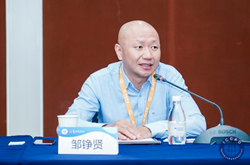
Zou Zhengxian, Chairman/CEO of IPGoal
Sichuan Hexin Microelectronics Co., Ltd. was founded in 2004. It focuses on the research and development, promotion and licensing of high-speed and high-precision digital-analog mixed-signal integrated circuit IP. It is the first enterprise in mainland China to master the core technologies of USB 2.0 and audio codec and achieve mass production. In 2010, it launched USB3.0 IP products and became the first domestic company to own this technology.
For more than ten years, Hexin Micro has positioned itself as an IP customization company with experience in SoC design, focusing on serving small and medium-sized enterprises in China. "Some people compare us with other companies. In fact, many listed companies now use our IP, mostly in the early stages. He Xin Micro is a boost to their success." said Zou Zhengxian, chairman/CEO of the company. , "There are a lot of small and medium-sized enterprises in China. Strategically, we choose to use relatively mature technologies to serve them, rather than focusing on some of the most cutting-edge technologies. This is different from major international companies." This model requires cultivating a service team of sufficient size, because there are too many domestic enterprises with such service needs, and there is no competition among peers. The core of providing IP customized services is quality control, while serving more small and medium-sized enterprises. "If one day they leave our service scope, we also wish them more success."
In the past two years, the domestic semiconductor industry has undergone great changes, and the salary of the entire industry has been rising, which has brought some pressure to local IP companies like Hexin Micro. Zou Zhengxian said that IP is mostly a project-based business, so the gross profit is actually not high. Such a low gross profit cannot support the salary system of the entire industry. Many companies rely on investors' money to support themselves and cannot afford to lose money. "But Hexinwei has been profitable since its establishment. From the perspective of the company's shareholders, there is no expectation to make money, so the entire team can go all out to do things for themselves. In a sense, they are working for themselves." On the other hand, Zou Zhengxian emphasized that customers cannot be killed to obtain eggs, because small and medium-sized enterprises have limited funds.
Regarding the current phenomenon of many start-up analog companies and the listing of some well-established domestic analog chip companies, Zou Zhengxian believes that there is an essential difference between making analog IP and making analog chips, that is, IP is not the core competitiveness. If IP becomes the core competitiveness of a product, then everyone wants to develop it themselves as the core IP. Even if the IP is made universally available around the world, it is not the core competitiveness of the chip. "Huawei, Samsung, Qualcomm, Apple, etc. all use Arm, but is Arm itself its core competitiveness? I don't think so." At present, the vast majority of Hexin Microservices companies are digital chip or SoC companies that make universal IP so that users can interoperate.
When it comes to domestic substitution, Zou Zhengxian believes that IP substitution is more difficult than product substitution, because the R&D investment in high-end IP is very large, especially to break through the barriers of intellectual property rights. Therefore, domestic substitution is more about device-level substitution, because there are many levels in various types of devices, and substitution must start from the low-end and then to the mid-level and high-end. "Of course, there are also domestic peers who are working on some particularly high-end IP, such as 5 nanometers and 7 nanometers. Competing with world-class companies is a huge challenge."
Ruixin Chengwei: Deeply cultivate analog IP and continue to improve

Shen Li, CEO of Chengdu Ruicheng Chip Micro (ACTT)
Ruicheng Xinwei is an IP company headquartered in Chengdu. It has been established for 9 years. It mainly focuses on simulation, radio frequency, storage and interface IP related to low power consumption and IoT applications. It can provide a full set of NB-IoT/ultra-low power IoT analog IP solutions. The company’s CEO Shen Li said that the company focuses on IP that is more physical and more analog. The current main application directions are the Internet of Things, cellular networks or smart homes, and the wearable market. In the future, it may expand in smart cars, medical electronics, etc.
The semiconductor industry is characterized by a very long industrial chain, with EDA and IP at the forefront of the design chain. In the past few decades, most of the support for China's semiconductor development has come from international EDA/IP companies. Nowadays, China's demand for semiconductor products is becoming increasingly strong, and some leading international manufacturers of differentiated product lines do not pay special attention. With the dramatic changes in the international situation, how will local IP companies fare in the context of domestic substitution?
Shen Li believes that some smaller domestic IP suppliers must survive first and then seek development. Ruichengxinwei was the first to develop low-power analog IP. In the past two years, the Internet of Things has exploded, and it has been able to maintain development from the perspective of product and market differentiation. In the future, we will also look for opportunities in emerging markets, such as cloud, 5G high-end communication equipment, or high-end automobile intelligence and electrification. "There are many opportunities happening in China, and this is where we can gain a foothold." Shen Li said.
Analog IP is a process of continuous accumulation, careful craftsmanship and continuous improvement, which requires long-term ingenuity investment and research spirit. According to reports, Ruicheng Core Micro has now accumulated more than 200 patent applications, and about 98 patents have been approved. "Chinese R&D personnel have good research-oriented qualities, and their quality is very high in delving into some very small innovation points." Shen Li said that doing IP also requires an overall view. It is not just about where the market trends and applications are going, but where the IP design is going. Some innovations and breakthroughs are needed. "Different combinations can provide different inspirations, so that as an IP company, we can accumulate more and more proprietary technologies. In addition to self-research, we must also seize the opportunity to cooperate with some domestic and foreign companies with relatively mature technologies, such as completing commercialization through capital operations or cooperation, or integrating them into the original product line as differentiation to complement the integrity of the entire platform and ensure sustainable development."
In recent years, the number of domestic Fabless manufacturers has continued to increase, most of which are small, medium and micro enterprises. As an analog IP supplier, Ruichengxinwei faces the fragmented market of the Internet of Things, which is exactly suitable for the flexible combat methods of these small and medium-sized enterprises. Its IP products are also actively cooperating and serving these manufacturers. The increase in the number of small, medium and micro Fabless companies is directly reflected in the increase in chip projects. IP companies are the most sensitive. What projects are they working on?
Shen Li revealed that first of all, the Internet of Things has developed rapidly in the past two years. Cellular NB-IoT water and electricity meters have become quite mature and have begun to increase in volume. In the future, other IoT models that rely on cellular networks will be extended; secondly, wearable devices such as Bluetooth headsets, smart watches, and bracelets are also increasing in volume. There is a large demand for chips, including touch, voice, and many other small chips that are suitable for small and medium-sized companies. Although some large chip companies are also getting involved, the improvement of the overall external environment has made investment and financing channels smoother, and foreign technical personnel or returnees have more obvious entrepreneurial aspirations, which often leads to the rapid growth of small companies with a few people teaming up and clear market goals.
At the customer strategy level, Shen Li believes that different companies' product positioning and different market stages actually target different customers. Taking analog IP as an example, it is more targeted at small, medium and micro enterprises, because large companies may make these IPs themselves. Ten years ago, most domestic companies relied heavily on both analog IP and interface IP, but now some companies will develop key IP themselves and outsource conventional general-purpose IP. "It also depends on the different development stages. For example, when the product window period is very short, even if you can do it yourself, you may still use outsourcing."
Company phone number: +86-0755-83044319
Fax/FAX: +86-0755-83975897
Email: 1615456225@qq.com
QQ: 3518641314 Manager Li
QQ: 332496225 Manager Qiu
Address: Room 809, Building C, Zhantao Technology Building, No. 1079 Minzhi Avenue, Longhua New District, Shenzhen
Related Recommendations
Exclusive Interview with Li Gang of Yunfan Ruida: The Precision of Millimeter-Wave Radar Products and the Warmth of Humanity
2026-07-22
2410
RF Passion, Craftsman’s Journey: Over 30 Years of Steadfast Dedication — Interview with Kinghelm Chief Engineer Mr. Qin hongxiang
2026-06-26
2580





 粤公网安备44030002007346号