
























Service Hotline
News

News
MEMS industry chain (2)
2022-03-17
1155
3. The development of domestic MEMS sensor companies faces certain technical challenges.
China’s MEMS industry started not much later than abroad. From the perspective of design, manufacturing and packaging, the existing technical conditions have initially formed a one-stop system for MEMS design, processing, packaging and testing, providing a better platform to ensure the further development of my country’s MEMS technology. However, due to fragmentation and dispersion of forces caused by historical reasons, coupled with a serious lack of investment, although there have been many achievements, there is still a big gap with foreign countries in terms of quality, performance-price ratio, and commercialization. MEMS technology research and development requires a relatively long period of investment. The research and development of a sensor generally takes 6-8 years. In addition, the time for testing and introduction into the industry chain generally takes close to twenty years. In addition, the price of the product is not directly proportional to the importance or development difficulty of the product, resulting in Chinese MEMS companies being unable to profit from the price war. Therefore, Chinese companies need to improve their industrial chain supporting capabilities and strengthen upstream and downstream cooperation. At the same time, they need to actively explore breakthroughs in new materials and integrated technologies in MEMS devices and explore new market opportunities.
Upstream R&D design is concentrated in universities, scientific research institutes and R&D pilot platforms. MEMS technology involves many fields such as microelectronics, machinery, materials, chemistry, and physics. It is highly interdisciplinary, difficult to research, and has a long design cycle. It often takes several years to achieve mass production. At present, the company has certain innovation capabilities, but its business overlap is high, its products are positioned at the mid- to low-end, and the overall revenue of the industry is small. MEMS design is a high-value-added link in the industrial chain. Domestic enterprise products are mainly mechanical sensors, which are at the mid- to low-end level in the market.
In midstream manufacturing, the basic material properties of MEMS, such as structural mechanical properties and material chemical properties, are the fundamental factors that determine product performance. Therefore, MEMS devices rely on various processes and variables. A MEMS product often corresponds to a process assembly line, and the R&D team generally requires years of improvement and testing before it can be commercialized. MEMS foundry can be divided into three types: pilot line, IC foundry and MEMS professional foundry. Most of the pilot lines are based on universities and scientific research institutes. They serve as a research and development platform for common industrial technologies. They are not for profit and have limited production capacity. The MEMS business of IC foundries is in its infancy and its capabilities are relatively weak. Domestic design companies with a certain scale basically choose foreign foundries. Professional OEMs are gradually moving from acquisitions to self-construction. For example, at the end of 2015, domestic manufacturer Nevi Technology acquired Swedish MEMS foundry Silex Microsystems, thus mastering the world's leading MEMS foundry technology in one fell swoop; in 2019, a number of companies such as Hanking Microelectronics and Xi'an Reed Microsystems successively launched MEMS production lines and entered the field of professional MEMS foundry.
Packaging technology mostly comes from integrated circuit packaging technology, but MEMS products are more abundant, so the technology is more complex and difficult, causing packaging technology to become an area where major outsourced semiconductor packaging and testing factories strive to take the lead. In the packaging and manufacturing process, due to China's late start, there is still a certain gap between the manufacturing capabilities and accuracy of manufacturing powers such as the United States, Japan, and Germany. The MEMS sensors produced have poor lifespan and accuracy and uneven quality levels, resulting in low product competitiveness. Although domestic MEMS foundry lags behind major international manufacturers, packaging and testing technology started earlier, has achieved good results, and has become internationally competitive. Among them, Goertek and AAC Technologies, whose main products are MEMS microphones, have a certain premium space because their business model is to purchase MEMS product IP from foreign design manufacturers, entrust OEM manufacturing and then complete the packaging, testing and sales of the products themselves. Therefore, they are now among the top 30 MEMS companies in the world.
Among the downstream application industries, consumer electronics is the largest market, mainly due to the rapid growth of smartphones, wearable devices and other markets in recent years, and the rapid development of domestic smart device manufacturers such as Huawei, Xiaomi, and vivo. Next is automotive electronics. Automotive intelligence requires high-precision sensing equipment. Downstream domestic automakers such as BYD, NIO, and Xiaopeng are also developing rapidly. In addition, there are also fast-growing downstream application industries such as medical equipment, Industry 4.0, and the Internet of Things. Downstream demand companies in the domestic industrial chain are developing rapidly and have good momentum. However, core technologies still require foreign support and independent research and development capabilities are relatively poor. Enterprises have realized the importance of independent innovation capabilities and continue to make efforts.
4. Capital flows to the MEMS industry have increased significantly
Since the MEMS industry is the foundation for the development of science and technology in the new era and has strong policy support, investment and financing cases in China's MEMS industry have increased year by year, both in terms of quantity and amount. Judging from the amount, the investment amount in 2019 was about twice that of 2018. Although the overall investment in the primary market has been cold, the investment enthusiasm in the MEMS industry has continued unabated.
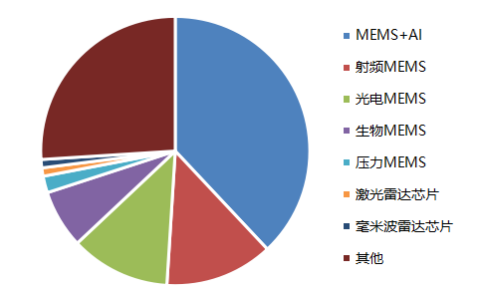
From the perspective of subdivided fields, the four fields of MEMS+AI, radio frequency MEMS, optoelectronic MEMS, and biological MEMS have the largest number and amount of investment cases. The substantial increase in the number and amount of investments indicates that the capital market is paying increasing attention to the MEMS industry. In terms of geographical distribution, Beijing, Guangdong, Shanghai, Zhejiang and Jiangsu rank first in terms of the number of investment cases.
Figure 16 China’s MEMS industry investment and financing situation from 2017 to 2019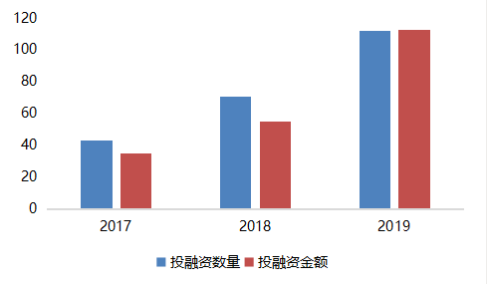 Source: CCID Consulting, Guotai Junan Securities Research Figure 17 Investment and financing amounts in China’s MEMS industry segments in 2019
  Source: CCID Consulting, Guotai Junan Securities Research
Upstream chip design companies focus on the design of MEMS chips and their product structures. After completing the design, they hand it over to third-party wafer factories to produce MEMS chips. After packaging and testing, they can be shipped to customers in consumer electronics, automobiles, medical and industrial control and other application fields. At present, the MEMS manufacturing processes of domestic companies are mainly in the 0.25-1 micron range. The manufacturing process is not a constraint on the industrial chain. Function and structure are relatively more important.
Figure 18 MEMS industry chain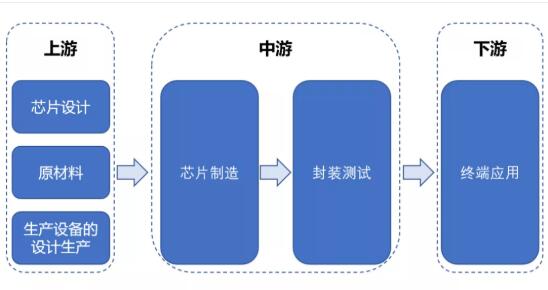 Source: Guotai Junan Securities Research
There are two main modes of midstream production: Fabless and IDM. The Fabless model is currently the mainstream production model and is a design-oriented vertical division of labor model. The company is mainly responsible for the design and sales of MEMS products, and outsources production, testing, packaging and other links. Typical companies include Knowles, HP, Canon, etc.;
Figure 19: Downstream development of the MEMS industry chain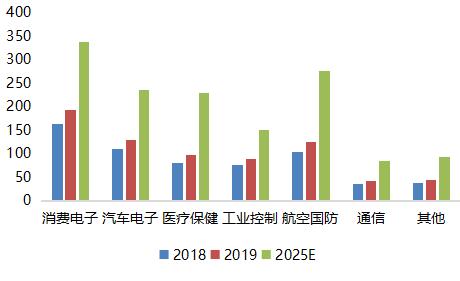 Source: Yole Development, Guotai Junan Securities Research
Downstream manufacturers can be mainly classified into two categories: one is the manufacturer that provides solutions, provides products with flexible customized support according to downstream needs, and then sells them to terminal manufacturers for use through simple software debugging; the other is the manufacturer that provides terminal products, which generally focus on specific fields, but have higher R&D costs and longer R&D cycles. The first type of manufacturers is more suitable for products in the mass consumer market, while the second type of manufacturers is more suitable for products in specialized fields.
Figure 20 China’s MEMS market application structure in 2019 (%)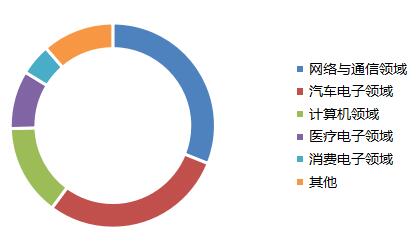 Source: CCID Consulting, Guotai Junan Securities Research
MEMS upstream suppliers mainly provide raw materials, mainly silicon-based materials. The materials used in MEMS are basically the same as those of traditional semiconductors. The supply market has matured and competition is fierce, forming a buyer's market. When MEMS sensor suppliers face large foundry customers and foundry customer groups, these foundry manufacturers rely on their strong market influence and require suppliers to provide lower-priced raw materials. However, in the past two years, due to the price increase of raw materials and the limitation of wafer production capacity, the wafer link of MEMS has been restricted. Conventional 6-inch and 8-inch products are generally out of stock, and the bargaining power of suppliers has increased. It can be seen that the bargaining power of suppliers is greatly affected by market supply.
2. Buyers have high bargaining power
MEMS companies have increased their scientific research efforts and improved their core competitiveness, resulting in rapid technological development, accelerated product upgrading, and accelerated price reductions. The rapid development of the Internet of Things and the accelerated upgrading of the consumer electronics market have caused many companies to join the market and competition has become increasingly fierce. This has gradually reduced prices in the terminal consumer market, and manufacturers and developers have to lower selling prices. At the same time, the expansion of the terminal consumer market has increased the size of terminal sellers and improved the bargaining power of buyers. In addition, since most domestic companies specialize in mid- to low-end products, they are also faced with a large number of competitors and need to maintain market share through price wars. It can be seen that the bargaining power of buyers is relatively high.
3. It is difficult for new entrants to compete in existing fields
The MEMS sensor industry has high barriers. The first is the financial barrier. Due to the non-standardized nature of products, MEMS companies cannot support a certain product through a single process. In addition to using silicon materials, there are no common basic components, which means that each MEMS product requires a different process. An enterprise often needs to carry out design and development, trial processing and manufacturing, quality testing and other steps for multiple products at the same time, requiring large-scale capital investment. Secondly, there are technical barriers. The design of MEMS requires the intersection of multiple disciplines, making the design difficult. During the processing, each type of product requires different processing techniques, and each process requires process development and optimization steps. At the same time, due to the lack of experience of new entrants, it is difficult to meet the accuracy and quality of processing, making processing difficult. Finally, there is the talent barrier. Due to their low reputation and weak ability to attract talents, new companies have difficulty in surpassing existing companies in terms of innovation capabilities and core competitiveness. However, with the continuous development of new technologies, the opening up of market segments and applications, the starting gap between all enterprises in these fields is not large, giving some new entrants development opportunities.
4. Competition among existing competitors is fierce
At present, American companies occupy half of the domestic MEMS market share. Together with European and Japanese companies, foreign companies such as Broadcom, Bosch, STMicroelectronics, and Texas Instruments occupy the vast majority of the domestic market. Judging from the major listed companies, there are only two domestic sensor companies with annual revenue exceeding 10 billion. This is closely related to the late development and competition of domestic sensor companies. my country's domestic supply capacity is insufficient, especially high-end products are almost entirely supplied by imports, and 80% of chips rely on foreign countries; the remaining shares are concentrated in the hands of only a few listed companies, such as Goertek Acoustics, Crystal Optoelectronics, Hanwei Electronics, Silan Micro and Jinlong Electromechanical. Five companies occupy more than 40% of the domestic MEMS market; 70% of domestic MEMS companies are small and medium-sized enterprises, and their products are mainly concentrated in the middle and low-end. Generally speaking, the current situation of Chinese enterprises is that competition for mid- to low-end products is fierce, but they are not competitive in the competition for high-end products.
5.There is basically no threat of substitutes at present
MEMS sensors are alternatives to traditional sensors. Compared with traditional sensors, they have the following advantages: miniaturization, light weight, and low energy consumption. MEMS devices are small in size, and generally the size of a single MEMS sensor is measured in millimeters or even microns. At the same time, miniaturized mechanical components have the advantages of small inertia, high resonant frequency, and short response time.
In addition, MEMS sensors are more suitable for mass production, which can greatly reduce the production cost of a single MEMS. Processing integration, a single MEMS often not only packages the mechanical sensor, but also integrates other chips to facilitate the control of the MEMS chip. Intelligent sensors have information processing functions, and various errors can be corrected through software, which greatly improves the accuracy of the sensor, improves the reliability of the sensor, and improves the anti-interference performance of the entire system. Under the same accuracy requirements, multi-functional intelligent sensors are significantly more cost-effective than ordinary sensors with a single function, and multi-functional intelligent sensors can achieve multi-sensor measurement of multiple comprehensive parameters. Based on the above advantages, the threat of substitutes for MEMS sensors is very small.
The MEMS industry was once dominated by the United States, the European Union, and Japan, and each had its own merits. The United States uses its military to promote civilians, leverages the synergy between military, government, industry, academia and research, and has a leading advantage in the comprehensive strength of MEMS technology; Japan has outstanding capabilities in MEMS for automotive electronics and MEMS for robots. Among the top 10 MEMS giants in the world, the number of Japan is consistent with that of the United States, but the scale of companies is slightly lower than that of the United States. The European Union occupies an important market share in MEMS for automotive electronics and MEMS for consumer electronics, and has more than 100 MEMS chip R&D and production institutions.
China's MEMS market has long been dominated by foreign manufacturers, which are relatively mature in all aspects of MEMS technology and have obvious advantages in service life and product accuracy. In 2019, the top ten manufacturers in China's MEMS market were Broadcom, Bosch, STMicroelectronics, Texas Instruments, QORVO, HP, Knowles, NXP, Goertek and TDK, of which US companies accounted for 54%. The Chinese company Goertek has squeezed into the top ten, and its MEMS revenue increased by 36% year-on-year in 2019, far exceeding other leading companies in the industry; AAC Technology ranked 22nd, with revenue increasing by 11% year-on-year, which is also higher than the overall industry level.
Figure 21 Manufacturer structure of China’s MEMS market in 2019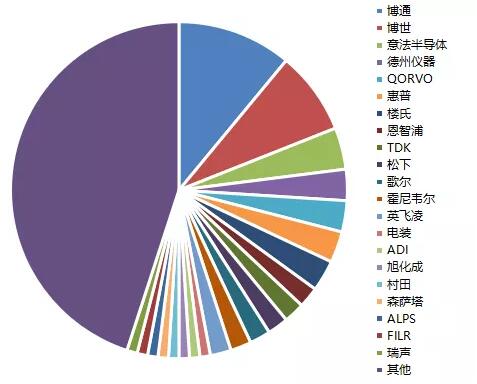 Source: CCID Consulting, Guotai Junan Securities Research
At present, the overall scale of domestic MEMS sensor manufacturers is not large. Except for Goertek and AAC, which have annual revenue of more than 100 million U.S. dollars, local MEMS sensor manufacturers such as MEMSIC Semiconductor, Mattel Technology, and Core Microelectronics all have annual revenue of less than 60 million U.S. dollars, and the overall scale is relatively small. In addition, domestic manufacturers operate relatively single product categories, with most product lines having only one product line. Most of them are component suppliers, and their solution supply capabilities are poor. Foreign manufacturers such as international giants Invensense and Infineon have 2 to 3 product lines, while Bosch, Denso, STMicroelectronics and other MEMS product lines have more than 4 and have the ability to provide integrated solutions. In contrast, it is difficult for small suppliers to achieve mass production and manufacturing in a short period of time. Therefore, the market share of the top large suppliers is relatively stable and the market concentration is high.
2. KSF analysis of domestic enterprises
First, the company’s R&D capabilities are the core of domestic substitution breakthroughs. At present, domestic MEMS R&D is mostly conducted in research institutes and universities, and the R&D capabilities of enterprises are relatively poor. As the MEMS industry is the basis of new technology, breakthrough new products or huge improvements are important ways for it to gain a foothold in the market. Therefore, innovative companies with their own core competitiveness are worthy of attention. For example, Goertek is a leading company in the field of micromicrophones; the accelerometer sensor of Suzhou Gutech subsidiary ranks first in domestic sales; the gas sensor of Weisheng Technology, a subsidiary of Hanwei Electronics, has achieved phased results and can be applied to gas detection products, smart wearable devices, etc.
Secondly, the ability of enterprises to cooperate stably with downstream manufacturers is the key to continuous product iteration. Domestic demand is huge. Excellent domestic manufacturers have inherent advantages in cooperating with large domestic enterprises. However, domestic manufacturers are basically in the Fabless format. Compared with IDM companies, the supply chain and sales chain are not perfect, and the lack of stable upstream and downstream manufacturers is a major problem. Therefore, companies with complete industrial chains and stable cooperation with large downstream companies, as well as companies with a long existence and complete systems, are also worthy of attention. In addition, chip design and supply capabilities are the foundation for MEMS sensors to cope with technological iterations and innovations. Therefore, domestic semiconductor manufacturers focusing on R&D and design in the MEMS field have broad market opportunities for import substitution and innovation.
Finally, a company’s strong capital endorsement is also one of the driving forces for rapid development. Since MEMS companies invest heavily in the initial development, it is difficult to make profits, and they require more funds, talents and other resources for development. Companies with the support of large companies or strong investment background may develop more rapidly.
Main conclusion two:The driving conditions for the development of the MEMS sensor industry are good, including policy support, demand growth, abundant supply, capital attention, and technology iteration. However, there is still room for improvement in the process level of the industry chain. Considering that although international leaders have higher gross profit margins than domestic manufacturers, their products are priced higher, giving domestic companies a certain amount of room for growth. At the same time, due to the customized nature of MEMS, some domestic companies are expected to achieve technological breakthroughs in new subdivisions.
China’s MEMS industry started not much later than abroad. From the perspective of design, manufacturing and packaging, the existing technical conditions have initially formed a one-stop system for MEMS design, processing, packaging and testing, providing a better platform to ensure the further development of my country’s MEMS technology. However, due to fragmentation and dispersion of forces caused by historical reasons, coupled with a serious lack of investment, although there have been many achievements, there is still a big gap with foreign countries in terms of quality, performance-price ratio, and commercialization. MEMS technology research and development requires a relatively long period of investment. The research and development of a sensor generally takes 6-8 years. In addition, the time for testing and introduction into the industry chain generally takes close to twenty years. In addition, the price of the product is not directly proportional to the importance or development difficulty of the product, resulting in Chinese MEMS companies being unable to profit from the price war. Therefore, Chinese companies need to improve their industrial chain supporting capabilities and strengthen upstream and downstream cooperation. At the same time, they need to actively explore breakthroughs in new materials and integrated technologies in MEMS devices and explore new market opportunities.
Upstream R&D design is concentrated in universities, scientific research institutes and R&D pilot platforms. MEMS technology involves many fields such as microelectronics, machinery, materials, chemistry, and physics. It is highly interdisciplinary, difficult to research, and has a long design cycle. It often takes several years to achieve mass production. At present, the company has certain innovation capabilities, but its business overlap is high, its products are positioned at the mid- to low-end, and the overall revenue of the industry is small. MEMS design is a high-value-added link in the industrial chain. Domestic enterprise products are mainly mechanical sensors, which are at the mid- to low-end level in the market.
In midstream manufacturing, the basic material properties of MEMS, such as structural mechanical properties and material chemical properties, are the fundamental factors that determine product performance. Therefore, MEMS devices rely on various processes and variables. A MEMS product often corresponds to a process assembly line, and the R&D team generally requires years of improvement and testing before it can be commercialized. MEMS foundry can be divided into three types: pilot line, IC foundry and MEMS professional foundry. Most of the pilot lines are based on universities and scientific research institutes. They serve as a research and development platform for common industrial technologies. They are not for profit and have limited production capacity. The MEMS business of IC foundries is in its infancy and its capabilities are relatively weak. Domestic design companies with a certain scale basically choose foreign foundries. Professional OEMs are gradually moving from acquisitions to self-construction. For example, at the end of 2015, domestic manufacturer Nevi Technology acquired Swedish MEMS foundry Silex Microsystems, thus mastering the world's leading MEMS foundry technology in one fell swoop; in 2019, a number of companies such as Hanking Microelectronics and Xi'an Reed Microsystems successively launched MEMS production lines and entered the field of professional MEMS foundry.
Packaging technology mostly comes from integrated circuit packaging technology, but MEMS products are more abundant, so the technology is more complex and difficult, causing packaging technology to become an area where major outsourced semiconductor packaging and testing factories strive to take the lead. In the packaging and manufacturing process, due to China's late start, there is still a certain gap between the manufacturing capabilities and accuracy of manufacturing powers such as the United States, Japan, and Germany. The MEMS sensors produced have poor lifespan and accuracy and uneven quality levels, resulting in low product competitiveness. Although domestic MEMS foundry lags behind major international manufacturers, packaging and testing technology started earlier, has achieved good results, and has become internationally competitive. Among them, Goertek and AAC Technologies, whose main products are MEMS microphones, have a certain premium space because their business model is to purchase MEMS product IP from foreign design manufacturers, entrust OEM manufacturing and then complete the packaging, testing and sales of the products themselves. Therefore, they are now among the top 30 MEMS companies in the world.
Among the downstream application industries, consumer electronics is the largest market, mainly due to the rapid growth of smartphones, wearable devices and other markets in recent years, and the rapid development of domestic smart device manufacturers such as Huawei, Xiaomi, and vivo. Next is automotive electronics. Automotive intelligence requires high-precision sensing equipment. Downstream domestic automakers such as BYD, NIO, and Xiaopeng are also developing rapidly. In addition, there are also fast-growing downstream application industries such as medical equipment, Industry 4.0, and the Internet of Things. Downstream demand companies in the domestic industrial chain are developing rapidly and have good momentum. However, core technologies still require foreign support and independent research and development capabilities are relatively poor. Enterprises have realized the importance of independent innovation capabilities and continue to make efforts.
4. Capital flows to the MEMS industry have increased significantly
Since the MEMS industry is the foundation for the development of science and technology in the new era and has strong policy support, investment and financing cases in China's MEMS industry have increased year by year, both in terms of quantity and amount. Judging from the amount, the investment amount in 2019 was about twice that of 2018. Although the overall investment in the primary market has been cold, the investment enthusiasm in the MEMS industry has continued unabated.
From the perspective of subdivided fields, the four fields of MEMS+AI, radio frequency MEMS, optoelectronic MEMS, and biological MEMS have the largest number and amount of investment cases. The substantial increase in the number and amount of investments indicates that the capital market is paying increasing attention to the MEMS industry. In terms of geographical distribution, Beijing, Guangdong, Shanghai, Zhejiang and Jiangsu rank first in terms of the number of investment cases.
Figure 16 China’s MEMS industry investment and financing situation from 2017 to 2019
Source: CCID Consulting, Guotai Junan Securities Research Figure 17 Investment and financing amounts in China’s MEMS industry segments in 2019 Source: CCID Consulting, Guotai Junan Securities Research China's design and foundry need to be strengthened, and packaging and testing are competitive
Upstream chip design companies focus on the design of MEMS chips and their product structures. After completing the design, they hand it over to third-party wafer factories to produce MEMS chips. After packaging and testing, they can be shipped to customers in consumer electronics, automobiles, medical and industrial control and other application fields. At present, the MEMS manufacturing processes of domestic companies are mainly in the 0.25-1 micron range. The manufacturing process is not a constraint on the industrial chain. Function and structure are relatively more important.
Figure 18 MEMS industry chain
Source: Guotai Junan Securities Research There are two main modes of midstream production: Fabless and IDM. The Fabless model is currently the mainstream production model and is a design-oriented vertical division of labor model. The company is mainly responsible for the design and sales of MEMS products, and outsources production, testing, packaging and other links. Typical companies include Knowles, HP, Canon, etc.;
Figure 19: Downstream development of the MEMS industry chain
Source: Yole Development, Guotai Junan Securities Research Downstream manufacturers can be mainly classified into two categories: one is the manufacturer that provides solutions, provides products with flexible customized support according to downstream needs, and then sells them to terminal manufacturers for use through simple software debugging; the other is the manufacturer that provides terminal products, which generally focus on specific fields, but have higher R&D costs and longer R&D cycles. The first type of manufacturers is more suitable for products in the mass consumer market, while the second type of manufacturers is more suitable for products in specialized fields.
Figure 20 China’s MEMS market application structure in 2019 (%)
Source: CCID Consulting, Guotai Junan Securities Research Development opportunities and challenges for domestic MEMS sensor companies coexist
MEMS upstream suppliers mainly provide raw materials, mainly silicon-based materials. The materials used in MEMS are basically the same as those of traditional semiconductors. The supply market has matured and competition is fierce, forming a buyer's market. When MEMS sensor suppliers face large foundry customers and foundry customer groups, these foundry manufacturers rely on their strong market influence and require suppliers to provide lower-priced raw materials. However, in the past two years, due to the price increase of raw materials and the limitation of wafer production capacity, the wafer link of MEMS has been restricted. Conventional 6-inch and 8-inch products are generally out of stock, and the bargaining power of suppliers has increased. It can be seen that the bargaining power of suppliers is greatly affected by market supply.
2. Buyers have high bargaining power
MEMS companies have increased their scientific research efforts and improved their core competitiveness, resulting in rapid technological development, accelerated product upgrading, and accelerated price reductions. The rapid development of the Internet of Things and the accelerated upgrading of the consumer electronics market have caused many companies to join the market and competition has become increasingly fierce. This has gradually reduced prices in the terminal consumer market, and manufacturers and developers have to lower selling prices. At the same time, the expansion of the terminal consumer market has increased the size of terminal sellers and improved the bargaining power of buyers. In addition, since most domestic companies specialize in mid- to low-end products, they are also faced with a large number of competitors and need to maintain market share through price wars. It can be seen that the bargaining power of buyers is relatively high.
3. It is difficult for new entrants to compete in existing fields
The MEMS sensor industry has high barriers. The first is the financial barrier. Due to the non-standardized nature of products, MEMS companies cannot support a certain product through a single process. In addition to using silicon materials, there are no common basic components, which means that each MEMS product requires a different process. An enterprise often needs to carry out design and development, trial processing and manufacturing, quality testing and other steps for multiple products at the same time, requiring large-scale capital investment. Secondly, there are technical barriers. The design of MEMS requires the intersection of multiple disciplines, making the design difficult. During the processing, each type of product requires different processing techniques, and each process requires process development and optimization steps. At the same time, due to the lack of experience of new entrants, it is difficult to meet the accuracy and quality of processing, making processing difficult. Finally, there is the talent barrier. Due to their low reputation and weak ability to attract talents, new companies have difficulty in surpassing existing companies in terms of innovation capabilities and core competitiveness. However, with the continuous development of new technologies, the opening up of market segments and applications, the starting gap between all enterprises in these fields is not large, giving some new entrants development opportunities.
4. Competition among existing competitors is fierce
At present, American companies occupy half of the domestic MEMS market share. Together with European and Japanese companies, foreign companies such as Broadcom, Bosch, STMicroelectronics, and Texas Instruments occupy the vast majority of the domestic market. Judging from the major listed companies, there are only two domestic sensor companies with annual revenue exceeding 10 billion. This is closely related to the late development and competition of domestic sensor companies. my country's domestic supply capacity is insufficient, especially high-end products are almost entirely supplied by imports, and 80% of chips rely on foreign countries; the remaining shares are concentrated in the hands of only a few listed companies, such as Goertek Acoustics, Crystal Optoelectronics, Hanwei Electronics, Silan Micro and Jinlong Electromechanical. Five companies occupy more than 40% of the domestic MEMS market; 70% of domestic MEMS companies are small and medium-sized enterprises, and their products are mainly concentrated in the middle and low-end. Generally speaking, the current situation of Chinese enterprises is that competition for mid- to low-end products is fierce, but they are not competitive in the competition for high-end products.
5.There is basically no threat of substitutes at present
MEMS sensors are alternatives to traditional sensors. Compared with traditional sensors, they have the following advantages: miniaturization, light weight, and low energy consumption. MEMS devices are small in size, and generally the size of a single MEMS sensor is measured in millimeters or even microns. At the same time, miniaturized mechanical components have the advantages of small inertia, high resonant frequency, and short response time.
In addition, MEMS sensors are more suitable for mass production, which can greatly reduce the production cost of a single MEMS. Processing integration, a single MEMS often not only packages the mechanical sensor, but also integrates other chips to facilitate the control of the MEMS chip. Intelligent sensors have information processing functions, and various errors can be corrected through software, which greatly improves the accuracy of the sensor, improves the reliability of the sensor, and improves the anti-interference performance of the entire system. Under the same accuracy requirements, multi-functional intelligent sensors are significantly more cost-effective than ordinary sensors with a single function, and multi-functional intelligent sensors can achieve multi-sensor measurement of multiple comprehensive parameters. Based on the above advantages, the threat of substitutes for MEMS sensors is very small.
Competitive Landscape and KSF Analysis
The MEMS industry was once dominated by the United States, the European Union, and Japan, and each had its own merits. The United States uses its military to promote civilians, leverages the synergy between military, government, industry, academia and research, and has a leading advantage in the comprehensive strength of MEMS technology; Japan has outstanding capabilities in MEMS for automotive electronics and MEMS for robots. Among the top 10 MEMS giants in the world, the number of Japan is consistent with that of the United States, but the scale of companies is slightly lower than that of the United States. The European Union occupies an important market share in MEMS for automotive electronics and MEMS for consumer electronics, and has more than 100 MEMS chip R&D and production institutions.
China's MEMS market has long been dominated by foreign manufacturers, which are relatively mature in all aspects of MEMS technology and have obvious advantages in service life and product accuracy. In 2019, the top ten manufacturers in China's MEMS market were Broadcom, Bosch, STMicroelectronics, Texas Instruments, QORVO, HP, Knowles, NXP, Goertek and TDK, of which US companies accounted for 54%. The Chinese company Goertek has squeezed into the top ten, and its MEMS revenue increased by 36% year-on-year in 2019, far exceeding other leading companies in the industry; AAC Technology ranked 22nd, with revenue increasing by 11% year-on-year, which is also higher than the overall industry level.
Figure 21 Manufacturer structure of China’s MEMS market in 2019
Source: CCID Consulting, Guotai Junan Securities Research At present, the overall scale of domestic MEMS sensor manufacturers is not large. Except for Goertek and AAC, which have annual revenue of more than 100 million U.S. dollars, local MEMS sensor manufacturers such as MEMSIC Semiconductor, Mattel Technology, and Core Microelectronics all have annual revenue of less than 60 million U.S. dollars, and the overall scale is relatively small. In addition, domestic manufacturers operate relatively single product categories, with most product lines having only one product line. Most of them are component suppliers, and their solution supply capabilities are poor. Foreign manufacturers such as international giants Invensense and Infineon have 2 to 3 product lines, while Bosch, Denso, STMicroelectronics and other MEMS product lines have more than 4 and have the ability to provide integrated solutions. In contrast, it is difficult for small suppliers to achieve mass production and manufacturing in a short period of time. Therefore, the market share of the top large suppliers is relatively stable and the market concentration is high.
2. KSF analysis of domestic enterprises
First, the company’s R&D capabilities are the core of domestic substitution breakthroughs. At present, domestic MEMS R&D is mostly conducted in research institutes and universities, and the R&D capabilities of enterprises are relatively poor. As the MEMS industry is the basis of new technology, breakthrough new products or huge improvements are important ways for it to gain a foothold in the market. Therefore, innovative companies with their own core competitiveness are worthy of attention. For example, Goertek is a leading company in the field of micromicrophones; the accelerometer sensor of Suzhou Gutech subsidiary ranks first in domestic sales; the gas sensor of Weisheng Technology, a subsidiary of Hanwei Electronics, has achieved phased results and can be applied to gas detection products, smart wearable devices, etc.
Secondly, the ability of enterprises to cooperate stably with downstream manufacturers is the key to continuous product iteration. Domestic demand is huge. Excellent domestic manufacturers have inherent advantages in cooperating with large domestic enterprises. However, domestic manufacturers are basically in the Fabless format. Compared with IDM companies, the supply chain and sales chain are not perfect, and the lack of stable upstream and downstream manufacturers is a major problem. Therefore, companies with complete industrial chains and stable cooperation with large downstream companies, as well as companies with a long existence and complete systems, are also worthy of attention. In addition, chip design and supply capabilities are the foundation for MEMS sensors to cope with technological iterations and innovations. Therefore, domestic semiconductor manufacturers focusing on R&D and design in the MEMS field have broad market opportunities for import substitution and innovation.
Finally, a company’s strong capital endorsement is also one of the driving forces for rapid development. Since MEMS companies invest heavily in the initial development, it is difficult to make profits, and they require more funds, talents and other resources for development. Companies with the support of large companies or strong investment background may develop more rapidly.
Table 2 MEMS unlisted companies
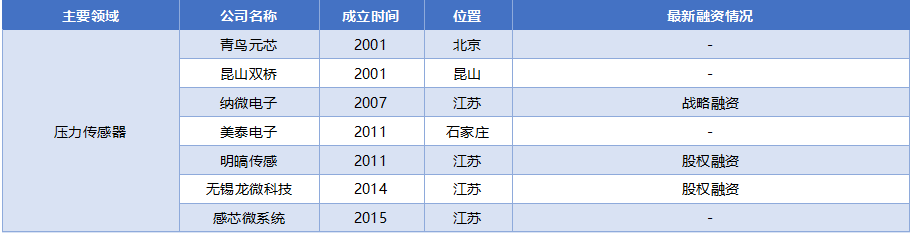
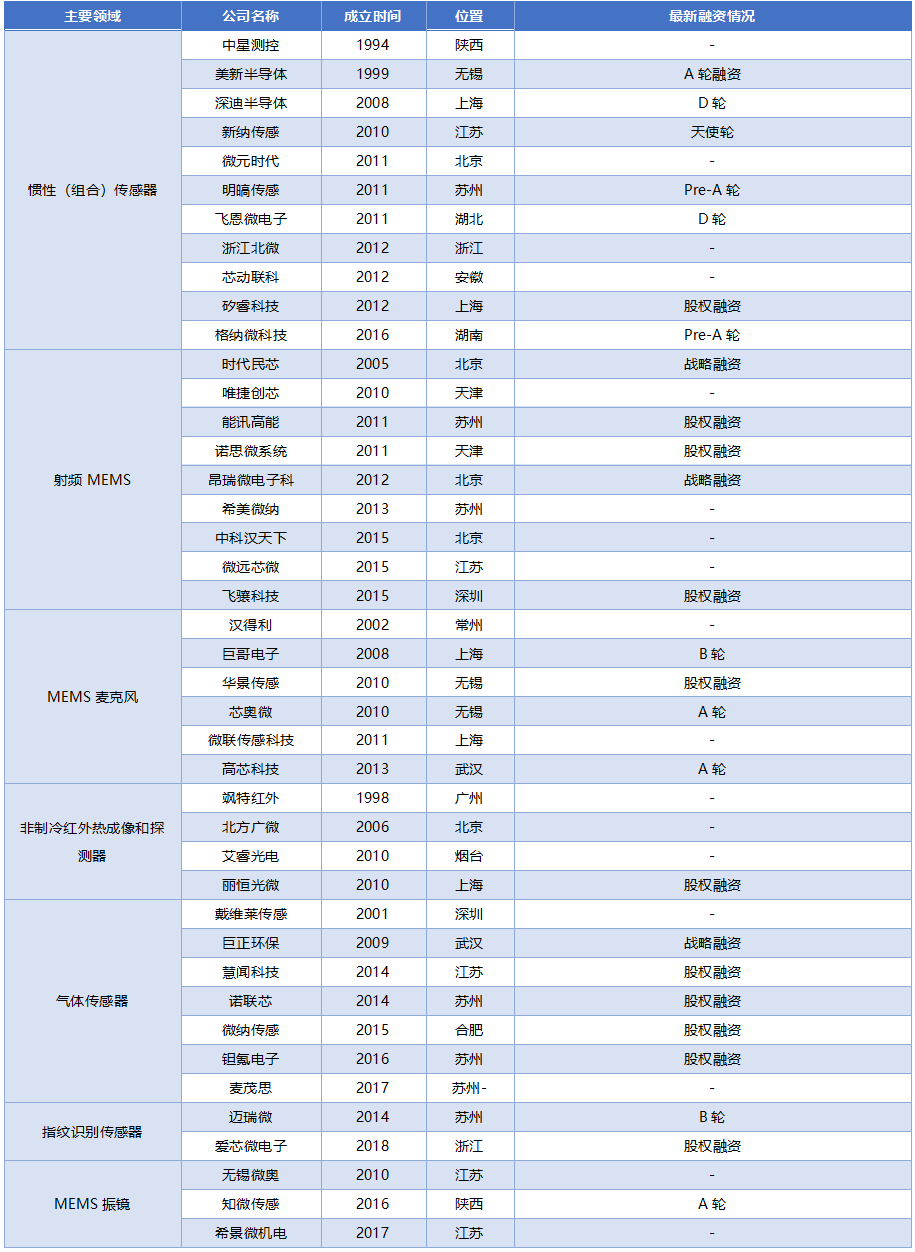
Main conclusions
Main conclusion two:The driving conditions for the development of the MEMS sensor industry are good, including policy support, demand growth, abundant supply, capital attention, and technology iteration. However, there is still room for improvement in the process level of the industry chain. Considering that although international leaders have higher gross profit margins than domestic manufacturers, their products are priced higher, giving domestic companies a certain amount of room for growth. At the same time, due to the customized nature of MEMS, some domestic companies are expected to achieve technological breakthroughs in new subdivisions.
Main conclusion three:Compared with companies in developed countries, domestic manufacturers have developed later and have a low market share. Most of the market is occupied by American, Japanese and German manufacturers. Local advantages mainly lie in downstream applications, model innovation and grasp of diversified market demands. In recent years, with the implementation of fingerprint, image, and sound sensor applications, companies with product innovation and long-term existence are expected to gain greater room for growth, and high-quality companies are expected to emerge in various subdivisions. It is recommended to pay attention to the primary market investment opportunities of companies such as Mattel Electronics, Shendi Semiconductor, Kunshan Shuangqiao, Minghao Sensing, Nengxun High Energy, Juge Electronics, Wuxi Haoda, Mindray, and Zhiwei Sensing.
Disclaimer: This article is reprinted from "Semiconductor Circle". This article only represents the author's personal views and does not represent the views of Sacco Micro and the industry. It is only for reprinting and sharing to support the protection of intellectual property rights. Please indicate the original source and author for reprinting. If there is any infringement, please contact us to delete it.
Company phone number: +86-0755-83044319
Fax/FAX: +86-0755-83975897
Email: 1615456225@qq.com
QQ: 3518641314 Manager Li
QQ: 332496225 Manager Qiu
Address: Room 809, Building C, Zhantao Technology Building, No. 1079 Minzhi Avenue, Longhua New District, Shenzhen
Related Recommendations
Exclusive Interview with Li Gang of Yunfan Ruida: The Precision of Millimeter-Wave Radar Products and the Warmth of Humanity
2026-07-22
2563
RF Passion, Craftsman’s Journey: Over 30 Years of Steadfast Dedication — Interview with Kinghelm Chief Engineer Mr. Qin hongxiang
2026-06-26
2725





 粤公网安备44030002007346号