
























Service Hotline
News

News
IGBT long article...
2022-03-17
1143
What are the IGBT strengths of China Resources Micro, New Clean Energy, Yangjie, and Jiejie?
Power semiconductor industry situation It is predicted that the domestic power semiconductor market will be 50 billion in 2025, and the current localization penetration rate is very low. Predict the three major areas of power in the future: automobiles, photovoltaics, and industrial control. There are also some white electricity, high-voltage power grids, and rail transit.
(1) Industrial control market: Domestic power semiconductors were mainly concentrated in the industrial control field before 2018, with a domestic scale of 10 billion; (2) Vehicle-mounted new energy vehicle market: The domestic market for electric vehicles is predicted to reach more than 10-15 billion in 2025; sales of new energy vehicles did not increase much from 2019 to 2020, but began to grow again in October 2020. The value of a vehicle's power semiconductor is 3,000 yuan. It is predicted that there will be 2 million domestic units in 2021 (market space of 6 billion), and the domestic target will reach 5 million units (market space of 15 billion) in 2025. (3) Photovoltaic inverter market: increased from 130GW to 180GW last year. Photovoltaic inverters are also developing rapidly. 1GW has an applied power semiconductor industry value of 40 million yuan. Therefore, the photovoltaic sector of 180GW in 2020 also has a power semiconductor industry value of more than 7 billion yuan. Domestic photovoltaic inverter manufacturers account for 60% of the global market share (Goodwe, Sungrow, Ginlang, Huawei, etc.).
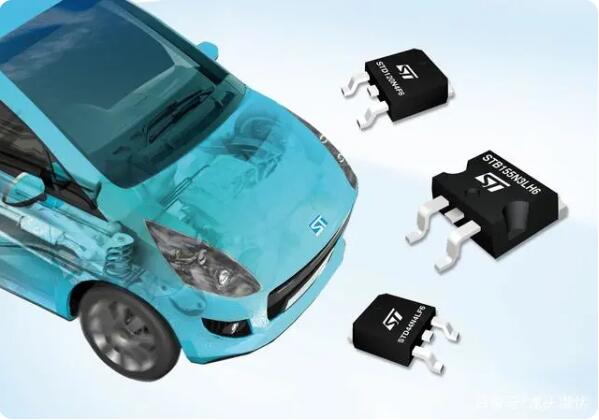 Q: Power semiconductor boom situation A: This year's IGBT power semiconductor price increase comes from: (1) the rapid growth of demand for IGBTs in the new energy vehicle and photovoltaic markets; (2) Affected by the epidemic, most IGBTs currently rely on imports, and many packaging and testing are in Southeast Asia (Malaysia, etc.). They are currently in a shutdown stage, exacerbating the shortage. (3) The current delivery time for Infineon’s industrial control IGBTs is half a year, and the delivery time for automotive IGBTs is one year. After 2022-2023, when the epidemic eases and factories resume work, Infineon's delivery schedule may be eased; however, for IGBT modules, the automotive and photovoltaic markets are growing rapidly, and shortages may continue. It will not be possible to alleviate the situation until Infineon 12-inch and several domestic 12-inch (Silan Micro, Huahong, Jita, China Resources Micro, etc.) production lines are put into operation.
Q: What are the advantages and disadvantages of the new energy vehicle IGBT market and major domestic companies? A: The first BYD, the first to start manufacturing in China; (1) In 2008, it acquired Ningbo Zhongwei’s IDM wafer factory and started to manufacture it on its own. From 2010 to 2011, it organized a team to start developing vehicle-mounted IGBTs; in 2012, it imported its own BYD cars, and in 2015, the self-developed IGBTs began to increase in volume. (2) Before 2015, BYD purchased 80% of its chips from Infineon, and then packaged them for use in its own cars, such as Tang, Song, etc.; (3) After 2015, self-produced IGBT 2.5-generation chips came out, and 80% of the chips were used by themselves and 20% were purchased from outsourcing; (4) After the IGBT 4.0-generation chips came out in 2017-2018, they basically used their own chips. He now has the largest installed capacity of IGBTs, with a total of 1 million units using his own chips. In 2017, he began to promote his own chips and modules. However, BYD IGBT 4.0 can only benchmark Infineon IGBTs. 2.5 is a planar + FS structure, which is worse than the trench-type chips of domestic companies (it is one generation behind the 4th generation of Star, Acer, and Silan Micro; resulting in a saturation voltage drop difference of 2V, and the trench type is thin and has a voltage drop difference of 1.4V, so the loss of the planar structure is large, ultimately affecting the output power efficiency). Therefore, the current external customer that uses BYD IGBT for mass production is Shenzhen's Lanhai Huateng, which makes commercial logistics vehicles; other manufacturers of passenger cars have no use. One is that the performance is relatively backward, and the other is that BYD's self-developed modules are customized packaging, which is different from the current standardized packaging of A71, A72 and other modules; (5) BYD's latest IGBT at the end of 2020 After the launch of 5.0, it will be able to benchmark against the trench-type chips of its domestic counterparts (comparable to Infineon's 4.0-generation IGBT, as well as the trench-type products of Star and Silan Micro). It depends on whether it can make progress in promoting new products this year.
Second Star Semiconductor: (1) It started making IGBTs in 2008. It originally purchased chips and made its own packaging; (2) Infineon acquired IR (international rectifier) in 2015 and disbanded IR's original chip team. Star took over this team and iteratively developed it based on IR's 7th generation chip (compared to Infineon's 4th generation); (3) In 2016, we began to promote the chips we developed ourselves, with customers such as Inovance and INVT promoting them. This chip was developed on the basis of others and took shortcuts, so it was a success and was quickly promoted in domestic OEMs; (4) It began to be used in electronic control and vehicle manufacturers in 2017; (5) Star's self-developed chips in the factory now account for 70%, but in terms of vehicle specifications, there are many applications such as A00 class, buses, and logistics vehicles. However, his 750V A-class car module has not yet reached vehicle regulations, with a lifespan of only 4-5 years (required to be more than 10 years), and the failure rate does not meet the standard (annual failure rate is 50ppm); A-class car OEMs prefer IDM for the introduction of vehicle-mounted IGBT modules, because the requirements for chip life, reliability, and failure rate are high. IDM controls the process and parameters at the Fab factory. Star's chip is Fabless, and there is no way to prove that its chip material is automotive grade; (Although the final module shipped from the factory is automotive grade, the chip material cannot be guaranteed) The limitations of Fabless for making automotive grade products: Star places an order with Huahong. After the wafers come out, the chips go through multiple rounds of screening, testing and quality screening, and then are packaged. After packaging, they undergo burn-in tests, dynamic load tests, etc., and are finally shipped to complete machine customers. However, the IDM model can achieve a lot of quality control at the Fab factory. By making the parameters consistent, the chip can reach automotive grade, and it does not need to go through many rounds of screening after it is released;
Third CRRC Electric: (1) Acquired Danix in the UK in 2012 and began IGBT development. (2) A Fab factory was established in 2015 and initially developed IGBT high-voltage modules 6500V/7500V for rail transit. In 2017, because of the verification process, the production capacity was relatively idle, so we started to produce automotive-grade IGBT module 650V/750V/1200V products; (3) In 2018, domestic manufacturers began to have the opportunity to import buses, logistics vehicles, and A00-level modules (at that time, China was mainly imported by CRRC, BYD, and Star, and CRRC’s quotation was the lowest among them; but it was limited by the fact that CRRC did not originally make industrial control products, so it did not understand the application amplifiers of car-standard IGBTs and acceleration amplifiers. Deep; for example: IGBT must be used in parallel with FRD. Star and BYD use 1:1 IGBT chip and FRD chip area. CRRC didn’t know much about it at the time, but they used 1:0.5. Under special working conditions, the diode current will be very large, and failure will cause a crash. Therefore, the promotion of CRRC’s first version of the module was not very smooth at that time. From 2019 to 2021, CRRC will carry out chip revisions and work closely with Tier-1 customers. At present, Inovance, Xpeng, and Ideal have all conducted quality verification on CRRC for two years. This year, the company's IGBTs will have the opportunity to be used in passenger cars. We think CRRC will increase its volume. The current product quality meets the requirements of vehicle regulations, which is better than that of Bistar and BYD. CRRC's Fab factory and packaging plant have also reached the vehicle specification level. After CRRC's vehicle production this year, it will depend on its failure rate. If this year's data is OK, CRRC will have the opportunity to occupy a larger share.
Fourth Silan Micro: (1) Mainly engaged in white goods products before 2018; (2) Established industrial and automotive IGBT after 2018. Among the four companies, Silan Micro is the latest to start manufacturing; (3) So far, some samples of Silan Micro's automotive IGBTs have been released, and some A00-level customers have already begun to use them. Leapmotor and Lingden have adopted Silan Micro modules. The route Silanwei wants to take is the route of CRRC and Star. First enter from logistics, bus, and A00 level. Although Silan Micro started slowly, its advantage lies in its IDM. Iteration of its own 6, 8, and 12-inch production lines is very easy (it only takes 3 months to iterate a version of the product, compared with 6 months for Fabless). In the industrial field, Silan Future is Star's biggest competitor. The automotive aspect mainly depends on its transition from A00-class cars to A-class cars.
Q: What are the differences in car-grade chip parameters among several domestic manufacturers? A: The 4.0 planar saturation voltage drop of BYD IGBT is above 2V, but the trench type process of Star, Silan Micro, and CRRC can achieve 1.4V-1.6V, and the planar loss is large, which ultimately affects the output power difference; If we take the 750V module for A-class cars as an example, Silan Micro is currently the best in the country and can compete with Infineon's output of 160KW-180KW. Then there is CRRC, which can also achieve 160KW but not 180KW. Star Semiconductor products came out relatively early and achieved 140-150kW power. BYD uses planar technology to achieve the highest intelligence of 140kW, so it will eventually be reflected in the output power; The reason why BYD's chip technology is lagging behind: The factory that acquired Ningbo Zhongwei is a second-hand factory of TSMC. This line can only do 6-inch planar technology and cannot do trench technology. Therefore, BYD's new generation of 5.0 trench technology chips are manufactured in Huahong (including 6.0 chips that benchmark Infineon's 7th generation chips are probably also looking for drivers).
Q: What are the differences in the packaging processes of several domestic manufacturers? A: There are four generations of products in automotive-grade packaging: (1) The first generation is single-sided indirect water cooling: the module uses a copper base plate, and a layer of thermally conductive silicone grease is applied under the module and applied to the radiator base plate. Water flows under the radiator, so the module is not in direct contact with water. This kind of module is mainly used in economical solutions, such as A00, logistics vehicles, etc. This packaging module can be mass-produced by domestic manufacturers BYD, Star, Acer, etc., and there is no technical difficulty in converting it from industrial-grade packaging. (2) The second generation is single-sided direct water cooling: there will be heat dissipation teeth (Pin Fin structure) on the bottom plate, a slot will be opened on the radiator, the module will be inserted, the water will flow directly below, and it will be in direct contact with the water, and the surrounding will be sealed. The heat dissipation efficiency and power density will be increased by more than 30% compared with the previous generation; this kind of module is mainly used in A00 and A-class cars, and this solution is mainly used in passenger cars. Everyone in China can mass-produce them. The subtle difference is that Star and CRRC use copper base plates, and BYD uses aluminum-silicon-titanium base plates. BYD's base plate is more reliable, but the heat dissipation is not as good as copper. He pays attention to reliability and sacrifices some performance. (3) The third generation is double-sided heat dissipation: the module changes from the glue filling process to the plastic sealing process, and both sides are indirectly water-cooled. The heat dissipation is like a drawer and the module is inserted in; this kind of module was first made by the Japanese Denso (for Toyota Prius). Domestic cars made by Huawei Thalys also use this double-sided water cooling solution. Overseas, ON Semiconductor, Infineon, and Electric Pile all use this solution. In China, BYD (started in 2016) and Star are doing it, but the process requirements are relatively high (the radiator module packaging process is relatively complex, and the chip requires special requirements. It requires that both sides of the chip can be welded, so the upper surface of the chip also needs electroplating). Domestic BYD and Star are still some way away from mass production (about a year); (4) The fourth generation is double-sided direct water cooling: two-sided copper bottoms plus long pinfin double-sided heat dissipation. Currently, only Hitachi of Japan can mass-produce it and supplies it to high-end models such as Audi etron and Lexus. There is no mass production in China and it is still in the technology development stage.
Q: Do domestic companies still purchase chips from Infineon? What is the generation gap between these four domestic companies and Infineon? A: At present, Star, Acer, and BYD still use Infineon chips for some of their products. Star's external chips are mainly for industrial-grade IGBT products. For example, in the elevator, crane, and industrial metallurgical industries, customers will specify that the modules can be made in China, but the chips inside must be imported (for example, Inovance's customer ThyssenKrupp, a German elevator company); there are also some special industrial smelting, the frequency of these chips is very high, and it cannot be done domestically, so the chips need to be purchased from outside; If Infineon is used for automotive external parts and is packaged by itself, the price cannot beat Infineon; (Infineon's seventh-generation chips are not sold to domestic device manufacturers, only the fourth generation); domestically, Star, Silan Micro, CRRC, etc., no matter which generation they promote, are actually benchmarks Infineon’s fourth generation (trench + FS structure), currently Infineon’s latest seventh generation, Infineon’s fifth generation (high-power version of the fourth generation), sixth generation (high-frequency version of the fourth generation), the fifth and sixth generations are toothpaste-squeezing upgrade iterations based on the fourth generation, there is no quality leap; Compared with the fourth generation, the seventh generation has reduced wire diameter (from 5 microns to 3 microns, reducing the area by 20%), chip thinning (from 120 microns to 80 microns, the conduction voltage drop will be better), and better performance (the conduction voltage drop of 1200V products has dropped from 1.7V to 1.4V). Moreover, Infineon's seventh-generation IGBT is made in 12 inches, with a smaller area and a cost that may be half that of the fourth generation. However, according to Infineon's domestic sales strategy, the price of the seventh generation is similar to that of the fourth generation, and the annual price reduction for large customers is maintained at 5% (but the performance of the seventh generation has an advantage over the fourth generation); domestic Silan Micro, CRRC, and Star can mass-produce Infineon's fourth generation, BYD 4.0 benchmarks against Infineon 2.5 generation, and 5.0 benchmarks against Infineon 4th generation; At the end of 2018, after Infineon launched the 7th generation, due to its good performance, domestic Silan Micro, Star, and Acer were developing seventh-generation products. Currently, Silan Micro and Star have seventh-generation samples, but they are still far away from mass production. The key equipment of the seventh-generation IGBT is the ion implanter, etc. This equipment is subject to import restrictions. Currently, domestic Huahong, Silan Micro and Jita Semiconductor have it. In addition to the seventh generation of Infineon, Silan Micro also takes another path. Follow Japan's Fuji, which uses RC IGBT (integrating IGBT and diode into one IC for use in cars), which has not yet been mass-produced.
Q: What is the relationship and progress between Star IGBT and Huahong? A: Star and Hua Hong have always been quarrelsome and cooperative. When Infineon was out of stock in 2018, it was a very good opportunity for domestic substitution for Star. Star adopted a strategy of cutting off small customers and supplying large customers exclusively, and started production in Huichuan (urgent materials arrived quickly). Last year, the price of Infineon was 200 million, and this year it may be 300 million; the price increase due to shortages is very important. Localization is a good opportunity, but Huahong did something bad to Star at that time. It raised the price three times that year, from 2800 to 3500 per wafer. Therefore, in 2019 Star looked for foundries at home and abroad, including SMIC Shaoxing, Japan's Fab, etc. So Star and Hua Hong are both in love and killing each other. Star's own planned IDM products are 1700V high-voltage IGBT and SiC chips. This business is a new product that has not been mass-produced by Huahong, and Huahong's business volume will not be affected (12-inch is for Star's IGBTs below 1200V). However, from the perspective of the entire power semiconductor model, everyone wants to move to IDM. The first is to achieve cost control, increase gross profit margins, and expand share. The second is product process capabilities. Star's promotion of A-class cars is unfavorable, mainly because it is limited by the Fabless model and pursues quality and reliability. In the future, it will still adopt the IDM model.
Q: Are there any differences in the downstream applications of 12-inch IGBTs from Silan Micro and Star Semiconductor? A: At present, domestic 12-inch products are mainly for manufacturers to reduce costs, but the products are actually the same. The 12-inch wafer process is more difficult to control. The wafer warps more and is more likely to crack. Especially the ion implantation after thinning makes the process more difficult to control. Silan Micro and Star make 12-inch IGBTs, mainly against Infineon's fourth-generation products, with a thickness of 120 microns. If it is to benchmark Infineon's seventh generation, it needs to be thinned to 80 microns, which will make it easier to warp and crack. Silan Micro and Star 12-inch IGBT products are mainly used in industrial scenarios. Infineon's 12-inch IGBT products came out in 2016 and 2017. They first entered the industrial production line and then slowly entered the vehicle regulations. Because the vehicle regulations change, all vehicle regulations in the production line need to be re-certified.
Q: What is the value of IGBT in electric vehicles? A: Electronic control is the most valuable part of IGBT in electric vehicles; (1) Logistics vehicles: using the first generation packaging technology, generally using 1200V 450A modules, which are half-bridge modules. The price of a single module is 300 yuan (CRRC’s quotation is 280). A vehicle’s electronic control system requires three, and the value of a single vehicle is 1,000 yuan; (2) Buses: currently use the same packaging solution as logistics vehicles (first generation); however, the power of different grades of buses is different. 8-meter buses use 1200V 600A; buses are generally four-wheel drive, with an electronic control at the front and rear. Each electronic control uses 3 modules, a total of 6 modules are used. The individual price is 450-500, and the single vehicle value is about 3,000 yuan; the 10-meter bus with higher power level uses 1200V. 800A, a module costs 600 yuan, and if you use 6 of them, the value of the bicycle is about 3,600 yuan. (3) A00 level (small car): Use less than 80KW, use second-generation packaging (HP1 module), the module Infineon costs about 900 (Star quotes 600). (4) A-class cars and above: about 150,000 models use a single electronic control solution and use the second-generation direct water-cooled HP Drive module, Infineon’s price ranges from 2,000-1,300 yuan (Star 1,000 yuan); 200,000-300,000 yuan is generally four-wheel drive, with a motor at the front and rear, imported 2,600 yuan (domestic 2,000 yuan); high-end Model: Weilai ES8 (silicon-based electronic control unit 160-180KW, rear drive requires 240KW), one front drive, and two rear drive modules in parallel; so a total of three modules are needed, totaling 3,000-3,900 yuan. (5) On-board OBC: 6.6kW slow charging IGBT single tube, more than 20 discrete devices, the total cost is less than 300 yuan; (6) Vehicle air conditioner: about 4kW in IPM first type package, value within 100 yuan; (7) Electronic power steering, power between 15-20kW, mainly 75A module, value within 200 yuan; (8) Charging pile: half-bridge industrial IGBT is used for slow charging within 20kW, within 200 yuan. In the future, super fast charging of more than 100KW will be achieved. For higher power, SiC solutions will be used, and the cost will increase exponentially, possibly to more than 1,000 yuan;
Q: What are the advantages and disadvantages of major domestic SiC companies? A: The domestic SiC industry chain is incomplete. In the field of wafer making, silicon carbide diodes can be mass-produced in China. SiC diodes have been mass-produced by Sanan Optoelectronics, Ruineng, and Tyco Tianrun. The current progress of Silan and China Resources is not yet in mass production (they are still building production lines); the IDM model of SiC MOS will have to wait longer, and the relatively faster companies are Fabless companies, such as Zhanxin and Hanxin, looking for Taiwan's Hanlei OEM. Some silicon carbide MOS have begun to be mass-produced in OBC and power supplies. This is mainly because domestic Fab manufacturers are immature (gate oxide layer and chip thinning are not yet mature). Compared with overseas manufacturers, the process is better, and domestic manufacturers are more than three years behind. Overseas, Rohm is already making the third generation of trench-type SiC MOS, and ST's SiC is mass-produced in Tesla cars; In terms of SiC applications, the entire global market is 600-700 million U.S. dollars. The cost is too high, so the application industry is mainly divided into two categories: The first is for high-frequency and high-efficiency scenarios, such as photovoltaics and high-end communication power supplies. Using SiC diodes instead of SiC MOSFETs can reduce costs; replacing silicon-based diodes in parallel with IGBTs with SiC diodes can improve efficiency and take into account costs; The second one is the vehicle. (1) OBC emphasizes high-end models with charging efficiency (more than 12KW and 22KW), and has begun to use SiC MOSFET in batches, because silicon carbide has relatively high charging efficiency, fast charging and residual power; (2) Vehicle-mounted main drive inverters are mainly used in high-end models, such as Porsche Taycan and NIO ET7. The relatively high efficiency can improve the battery life and the power density is relatively high; mid-range models between 200,000 and 300,000 are mainly Tesla model 3 and BYD Han are using SiC MOS modules. Because Tesla and BYD are vertically integrated car manufacturers (making electronic controls, making batteries, and making complete vehicles), they can clearly know the extent of performance improvement; Relatively speaking, other car companies have a division of labor, and module manufacturers cannot tell the specific benefits of using SiC (such as saving battery costs), and the price of IGBT modules is also reducing costs. Although SiC can improve battery life, the advantage of SiC in saving temperature has not been fully realized. Saving temperature can make the heat dissipation system smaller, and the advantages will be improved. The current cost of Tesla SiC modules is 5,000 yuan, which is 5-8 times the 1,300-1,500 yuan of domestic silicon-based IGBTs, so domestic car companies are still waiting and watching; however, it is expected that by 2023, the cost of SiC is expected to be reduced to 3 times the gap of silicon-based IGBTs. OEMs will push to use SiC after seeing more benefits.
Q: Who does BYD purchase SiC from? A: BYD purchases Cree modules; Infineon mainly promotes IGBT7 and does not actively promote SiC; because promoting SiC will destroy the life of its silicon-based products. Currently, ROHM and Creat are actively promoting silicon carbide (accounting for 80%-90% of global substrates);
Q: In the fields of industrial control and photovoltaics, the progress of domestic IGBT manufacturers A: Taking Inovance as an example, it will require at least two suppliers, one for industrial control is Star, and the other is Acer (Innovation is a shareholder of Acer); currently the one with the largest volume is Star; (1) Star's IGBT was 200 million last year, and the adoption scale this year may reach more than 300 million (the entire IGBT procurement is about 1.5 billion); (2) Acer Micro's IGBT chips and packages had major accidents in the factory, and the quality problems were relatively large, resulting in the volume being unable to increase, which was 30-40 million last year; the servo was out of stock last year, and low-power IPM introduced Silan Micro. (3) Silan Micro will increase the volume of small batches, and the subsequent industrial control modules will also have the opportunity to conduct quality verification on Silan Micro; Photovoltaic IGBT is different from industrial control, but no one in domestic companies pays attention to it, because photovoltaic chips need to be high-frequency, reaching a frequency of 50-100K (industrial control only requires 10K). Infineon has special development for high frequency (there is no special development in China). In addition, photovoltaics have high efficiency requirements (98% efficiency), and there are not many overseas manufacturers that can do it. The customization requirements are high, and the circuit topology is more complex (unlike traditional ones, in order to improve efficiency, power semiconductors must be continuously piled up to create more complex circuit topologies). The customization requirements are very high. There are also many power modules required (both 1200V and 650V IGBTs, as well as SiC diodes;); overseas manufacturers can mainly supply Infineon and ON Semiconductor, and there are no more than 5-6 overseas manufacturers. Domestic production is a blue ocean, and it is basically impossible to supply. Only Star and Acer provide some single-tube products, and modules cannot be supplied in large quantities;
Q: How about Inovance’s use of Silan Micro? A: It is still possible. Last year, Silan Micro's IPM module was used for the mask machine production. In the past, ST's IPM module was used. Currently, Silan Micro's failure rate remains within 3/1000, and we will consider increasing the volume of Silan Micro module products later (because our module procurement volume has been increasing, and only two domestic companies cannot supply it). Inovance has an internal target for the localization rate of parts and components. Industrial products have set a localization rate of 60% in 2022, and INVT has set a localization rate of 80% in 2022. Therefore, domestic power companies still have a lot of room to do it.
Q: How much volume will Inovance give to Silan Micro A: If we benchmark the localization rate target and purchase 1.5 billion this year, a 60% localization rate would mean the localization of 900 million products, and the shares will be divided among 2-3 companies. (Maybe up to 400 million; Macro and Silan Micro are 200-300 million each;) It depends on their level of performance.
Q: What is the adoption status of SiC diodes in photovoltaics? A: There are also IGBT modules in photovoltaics. IGBTs are connected in parallel with diodes. Nowadays, SiC diodes are used to replace the silicon-based FRDs in IGBTs. SiC can significantly reduce switching losses and improve the efficiency of photovoltaic inverters. Therefore, switching to SiC diodes can increase the cost by a small amount in exchange for a large amount of benefits; domestic SiC diodes are mainly used in communication sites and large UPSs; currently, IGBT modules in photovoltaics are still an overseas monopoly, so the SiC diodes inside are still mainly overseas. In the future, if Star and Acer develop silicon carbide modules, they will also consider localization.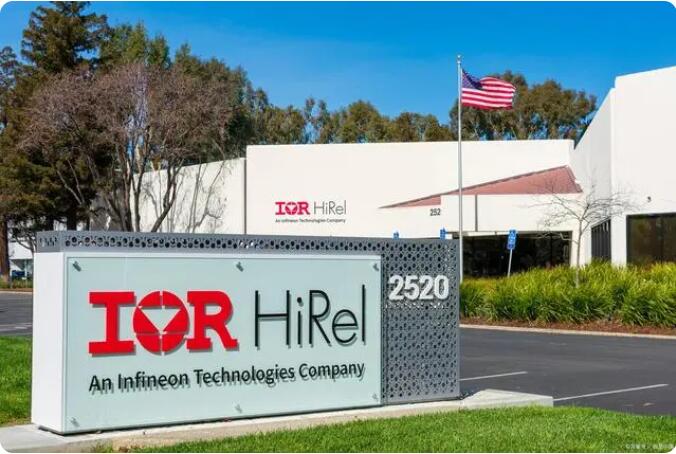 Q: What are the IGBT strengths of China Resources Micro, New Clean Energy, Yangjie, and Jiejie? A: The leader here is China Resources Micro; (1) China Resources Micro started to make IGBTs around 2018. This year, it has about 100 to 200 million in revenue, mainly from single-tube products, which should not have modules; (2) Xinjie Energy is pure Fabless and does not have its own Fab and module factory. It is difficult to achieve industrial and automotive specifications (Inovance will not consider importing it), and it may be for consumer-grade or white goods applications. (3) There are some SiC diode samples from Jiejie and Yangjie, but the actual sales volume is not much. IGBT products are still not seen in the market. They are mainly used in relatively low-end industrial control, such as welding machines, and cannot be seen in high-end industrial applications. In fact, BYD is also the same. The industry is also mainly in welding machines and induction cookers. Moving to high-end industries still requires an accumulation process.
Q: What are the strengths of BYD Semiconductor’s other products? A: In the past, there was a gap in chip generation, so the volume could not be increased, and the gross profit margin was relatively low. For example, export sales in the industrial field were only 50 million (not comparable to any domestic IGBT companies), which were used in variable welding machines, etc. So the key is to see if BYD can promote trench-type chips this year to high-end industrial fields such as inverter factories and breakthroughs for external customers in vehicles. If the export sales this year are still only 40-50 million, it means that his chips have not been upgraded.
Q: People from Geely said that Silan Micro's products are iterating very quickly and are the closest to Infineon in China. How do you evaluate it? A: This is indeed the case. If you have a fab factory, you can iterate a version in three months, but if you don’t have a fab factory, it will take six months. Silan Micro's 750V chip can compete with Infineon and achieve a power of 160-180kW. Its saturation voltage drop is indeed the lowest in the country. At present, its biggest disadvantage is that it is relatively late to make vehicle specifications and basically has zero data. In the context of the explosion of the vehicle market in the past two years, it is necessary to obtain quality data at the A00 level (used by Leap Motors, but it is a small batch, the power is within 80KW, and the life requirements are lower;) and shipped on logistics vehicles to obtain quality data. Domestic car manufacturers may later use his products. (Learning from the path CRRC has taken, in addition to performance, there is also quality accumulation).
Q: What is the minimum quantity of Silan Micro IPM? A: The domestic market is mainly for frequency conversion modules for white goods. There are 600-700 million units per year in China. The unit price is calculated at 12-13 yuan per unit. The domestic scale is 7-8 billion. The price and gross profit margin are relatively low. In China, Silan Micro and Jilin Huawei are mainly doing it. Star has also started to design but the volume is not large. It’s only tens of millions a year, so Silan Micro is currently the largest. It currently imports Gree and Midea, and the volume is very large. It may reach more than 800 million this year. It is a process of localization, replacing ON Semiconductor (once imported, there is a great opportunity to increase the volume); however, the gross profit margin of this IPM will not be too high. If you want to increase gross profit margin, you still need to do industrial and automotive grade (Star's gross profit margin is over 40% because it only does industrial control and automotive grade, wind power, and silicon carbide, which have gross profit margins above 50%)
Q: What’s the situation with Silan Micro 12 inches?
Power semiconductor industry situation It is predicted that the domestic power semiconductor market will be 50 billion in 2025, and the current localization penetration rate is very low. Predict the three major areas of power in the future: automobiles, photovoltaics, and industrial control. There are also some white electricity, high-voltage power grids, and rail transit.
(1) Industrial control market: Domestic power semiconductors were mainly concentrated in the industrial control field before 2018, with a domestic scale of 10 billion; (2) Vehicle-mounted new energy vehicle market: The domestic market for electric vehicles is predicted to reach more than 10-15 billion in 2025; sales of new energy vehicles did not increase much from 2019 to 2020, but began to grow again in October 2020. The value of a vehicle's power semiconductor is 3,000 yuan. It is predicted that there will be 2 million domestic units in 2021 (market space of 6 billion), and the domestic target will reach 5 million units (market space of 15 billion) in 2025. (3) Photovoltaic inverter market: increased from 130GW to 180GW last year. Photovoltaic inverters are also developing rapidly. 1GW has an applied power semiconductor industry value of 40 million yuan. Therefore, the photovoltaic sector of 180GW in 2020 also has a power semiconductor industry value of more than 7 billion yuan. Domestic photovoltaic inverter manufacturers account for 60% of the global market share (Goodwe, Sungrow, Ginlang, Huawei, etc.).
Q: Power semiconductor boom situation A: This year's IGBT power semiconductor price increase comes from: (1) the rapid growth of demand for IGBTs in the new energy vehicle and photovoltaic markets; (2) Affected by the epidemic, most IGBTs currently rely on imports, and many packaging and testing are in Southeast Asia (Malaysia, etc.). They are currently in a shutdown stage, exacerbating the shortage. (3) The current delivery time for Infineon’s industrial control IGBTs is half a year, and the delivery time for automotive IGBTs is one year. After 2022-2023, when the epidemic eases and factories resume work, Infineon's delivery schedule may be eased; however, for IGBT modules, the automotive and photovoltaic markets are growing rapidly, and shortages may continue. It will not be possible to alleviate the situation until Infineon 12-inch and several domestic 12-inch (Silan Micro, Huahong, Jita, China Resources Micro, etc.) production lines are put into operation. Q: What are the advantages and disadvantages of the new energy vehicle IGBT market and major domestic companies? A: The first BYD, the first to start manufacturing in China; (1) In 2008, it acquired Ningbo Zhongwei’s IDM wafer factory and started to manufacture it on its own. From 2010 to 2011, it organized a team to start developing vehicle-mounted IGBTs; in 2012, it imported its own BYD cars, and in 2015, the self-developed IGBTs began to increase in volume. (2) Before 2015, BYD purchased 80% of its chips from Infineon, and then packaged them for use in its own cars, such as Tang, Song, etc.; (3) After 2015, self-produced IGBT 2.5-generation chips came out, and 80% of the chips were used by themselves and 20% were purchased from outsourcing; (4) After the IGBT 4.0-generation chips came out in 2017-2018, they basically used their own chips. He now has the largest installed capacity of IGBTs, with a total of 1 million units using his own chips. In 2017, he began to promote his own chips and modules. However, BYD IGBT 4.0 can only benchmark Infineon IGBTs. 2.5 is a planar + FS structure, which is worse than the trench-type chips of domestic companies (it is one generation behind the 4th generation of Star, Acer, and Silan Micro; resulting in a saturation voltage drop difference of 2V, and the trench type is thin and has a voltage drop difference of 1.4V, so the loss of the planar structure is large, ultimately affecting the output power efficiency). Therefore, the current external customer that uses BYD IGBT for mass production is Shenzhen's Lanhai Huateng, which makes commercial logistics vehicles; other manufacturers of passenger cars have no use. One is that the performance is relatively backward, and the other is that BYD's self-developed modules are customized packaging, which is different from the current standardized packaging of A71, A72 and other modules; (5) BYD's latest IGBT at the end of 2020 After the launch of 5.0, it will be able to benchmark against the trench-type chips of its domestic counterparts (comparable to Infineon's 4.0-generation IGBT, as well as the trench-type products of Star and Silan Micro). It depends on whether it can make progress in promoting new products this year.
Second Star Semiconductor: (1) It started making IGBTs in 2008. It originally purchased chips and made its own packaging; (2) Infineon acquired IR (international rectifier) in 2015 and disbanded IR's original chip team. Star took over this team and iteratively developed it based on IR's 7th generation chip (compared to Infineon's 4th generation); (3) In 2016, we began to promote the chips we developed ourselves, with customers such as Inovance and INVT promoting them. This chip was developed on the basis of others and took shortcuts, so it was a success and was quickly promoted in domestic OEMs; (4) It began to be used in electronic control and vehicle manufacturers in 2017; (5) Star's self-developed chips in the factory now account for 70%, but in terms of vehicle specifications, there are many applications such as A00 class, buses, and logistics vehicles. However, his 750V A-class car module has not yet reached vehicle regulations, with a lifespan of only 4-5 years (required to be more than 10 years), and the failure rate does not meet the standard (annual failure rate is 50ppm); A-class car OEMs prefer IDM for the introduction of vehicle-mounted IGBT modules, because the requirements for chip life, reliability, and failure rate are high. IDM controls the process and parameters at the Fab factory. Star's chip is Fabless, and there is no way to prove that its chip material is automotive grade; (Although the final module shipped from the factory is automotive grade, the chip material cannot be guaranteed) The limitations of Fabless for making automotive grade products: Star places an order with Huahong. After the wafers come out, the chips go through multiple rounds of screening, testing and quality screening, and then are packaged. After packaging, they undergo burn-in tests, dynamic load tests, etc., and are finally shipped to complete machine customers. However, the IDM model can achieve a lot of quality control at the Fab factory. By making the parameters consistent, the chip can reach automotive grade, and it does not need to go through many rounds of screening after it is released;
Third CRRC Electric: (1) Acquired Danix in the UK in 2012 and began IGBT development. (2) A Fab factory was established in 2015 and initially developed IGBT high-voltage modules 6500V/7500V for rail transit. In 2017, because of the verification process, the production capacity was relatively idle, so we started to produce automotive-grade IGBT module 650V/750V/1200V products; (3) In 2018, domestic manufacturers began to have the opportunity to import buses, logistics vehicles, and A00-level modules (at that time, China was mainly imported by CRRC, BYD, and Star, and CRRC’s quotation was the lowest among them; but it was limited by the fact that CRRC did not originally make industrial control products, so it did not understand the application amplifiers of car-standard IGBTs and acceleration amplifiers. Deep; for example: IGBT must be used in parallel with FRD. Star and BYD use 1:1 IGBT chip and FRD chip area. CRRC didn’t know much about it at the time, but they used 1:0.5. Under special working conditions, the diode current will be very large, and failure will cause a crash. Therefore, the promotion of CRRC’s first version of the module was not very smooth at that time. From 2019 to 2021, CRRC will carry out chip revisions and work closely with Tier-1 customers. At present, Inovance, Xpeng, and Ideal have all conducted quality verification on CRRC for two years. This year, the company's IGBTs will have the opportunity to be used in passenger cars. We think CRRC will increase its volume. The current product quality meets the requirements of vehicle regulations, which is better than that of Bistar and BYD. CRRC's Fab factory and packaging plant have also reached the vehicle specification level. After CRRC's vehicle production this year, it will depend on its failure rate. If this year's data is OK, CRRC will have the opportunity to occupy a larger share.
Fourth Silan Micro: (1) Mainly engaged in white goods products before 2018; (2) Established industrial and automotive IGBT after 2018. Among the four companies, Silan Micro is the latest to start manufacturing; (3) So far, some samples of Silan Micro's automotive IGBTs have been released, and some A00-level customers have already begun to use them. Leapmotor and Lingden have adopted Silan Micro modules. The route Silanwei wants to take is the route of CRRC and Star. First enter from logistics, bus, and A00 level. Although Silan Micro started slowly, its advantage lies in its IDM. Iteration of its own 6, 8, and 12-inch production lines is very easy (it only takes 3 months to iterate a version of the product, compared with 6 months for Fabless). In the industrial field, Silan Future is Star's biggest competitor. The automotive aspect mainly depends on its transition from A00-class cars to A-class cars.
Q: What are the differences in car-grade chip parameters among several domestic manufacturers? A: The 4.0 planar saturation voltage drop of BYD IGBT is above 2V, but the trench type process of Star, Silan Micro, and CRRC can achieve 1.4V-1.6V, and the planar loss is large, which ultimately affects the output power difference; If we take the 750V module for A-class cars as an example, Silan Micro is currently the best in the country and can compete with Infineon's output of 160KW-180KW. Then there is CRRC, which can also achieve 160KW but not 180KW. Star Semiconductor products came out relatively early and achieved 140-150kW power. BYD uses planar technology to achieve the highest intelligence of 140kW, so it will eventually be reflected in the output power; The reason why BYD's chip technology is lagging behind: The factory that acquired Ningbo Zhongwei is a second-hand factory of TSMC. This line can only do 6-inch planar technology and cannot do trench technology. Therefore, BYD's new generation of 5.0 trench technology chips are manufactured in Huahong (including 6.0 chips that benchmark Infineon's 7th generation chips are probably also looking for drivers).
Q: What are the differences in the packaging processes of several domestic manufacturers? A: There are four generations of products in automotive-grade packaging: (1) The first generation is single-sided indirect water cooling: the module uses a copper base plate, and a layer of thermally conductive silicone grease is applied under the module and applied to the radiator base plate. Water flows under the radiator, so the module is not in direct contact with water. This kind of module is mainly used in economical solutions, such as A00, logistics vehicles, etc. This packaging module can be mass-produced by domestic manufacturers BYD, Star, Acer, etc., and there is no technical difficulty in converting it from industrial-grade packaging. (2) The second generation is single-sided direct water cooling: there will be heat dissipation teeth (Pin Fin structure) on the bottom plate, a slot will be opened on the radiator, the module will be inserted, the water will flow directly below, and it will be in direct contact with the water, and the surrounding will be sealed. The heat dissipation efficiency and power density will be increased by more than 30% compared with the previous generation; this kind of module is mainly used in A00 and A-class cars, and this solution is mainly used in passenger cars. Everyone in China can mass-produce them. The subtle difference is that Star and CRRC use copper base plates, and BYD uses aluminum-silicon-titanium base plates. BYD's base plate is more reliable, but the heat dissipation is not as good as copper. He pays attention to reliability and sacrifices some performance. (3) The third generation is double-sided heat dissipation: the module changes from the glue filling process to the plastic sealing process, and both sides are indirectly water-cooled. The heat dissipation is like a drawer and the module is inserted in; this kind of module was first made by the Japanese Denso (for Toyota Prius). Domestic cars made by Huawei Thalys also use this double-sided water cooling solution. Overseas, ON Semiconductor, Infineon, and Electric Pile all use this solution. In China, BYD (started in 2016) and Star are doing it, but the process requirements are relatively high (the radiator module packaging process is relatively complex, and the chip requires special requirements. It requires that both sides of the chip can be welded, so the upper surface of the chip also needs electroplating). Domestic BYD and Star are still some way away from mass production (about a year); (4) The fourth generation is double-sided direct water cooling: two-sided copper bottoms plus long pinfin double-sided heat dissipation. Currently, only Hitachi of Japan can mass-produce it and supplies it to high-end models such as Audi etron and Lexus. There is no mass production in China and it is still in the technology development stage.
Q: Do domestic companies still purchase chips from Infineon? What is the generation gap between these four domestic companies and Infineon? A: At present, Star, Acer, and BYD still use Infineon chips for some of their products. Star's external chips are mainly for industrial-grade IGBT products. For example, in the elevator, crane, and industrial metallurgical industries, customers will specify that the modules can be made in China, but the chips inside must be imported (for example, Inovance's customer ThyssenKrupp, a German elevator company); there are also some special industrial smelting, the frequency of these chips is very high, and it cannot be done domestically, so the chips need to be purchased from outside; If Infineon is used for automotive external parts and is packaged by itself, the price cannot beat Infineon; (Infineon's seventh-generation chips are not sold to domestic device manufacturers, only the fourth generation); domestically, Star, Silan Micro, CRRC, etc., no matter which generation they promote, are actually benchmarks Infineon’s fourth generation (trench + FS structure), currently Infineon’s latest seventh generation, Infineon’s fifth generation (high-power version of the fourth generation), sixth generation (high-frequency version of the fourth generation), the fifth and sixth generations are toothpaste-squeezing upgrade iterations based on the fourth generation, there is no quality leap; Compared with the fourth generation, the seventh generation has reduced wire diameter (from 5 microns to 3 microns, reducing the area by 20%), chip thinning (from 120 microns to 80 microns, the conduction voltage drop will be better), and better performance (the conduction voltage drop of 1200V products has dropped from 1.7V to 1.4V). Moreover, Infineon's seventh-generation IGBT is made in 12 inches, with a smaller area and a cost that may be half that of the fourth generation. However, according to Infineon's domestic sales strategy, the price of the seventh generation is similar to that of the fourth generation, and the annual price reduction for large customers is maintained at 5% (but the performance of the seventh generation has an advantage over the fourth generation); domestic Silan Micro, CRRC, and Star can mass-produce Infineon's fourth generation, BYD 4.0 benchmarks against Infineon 2.5 generation, and 5.0 benchmarks against Infineon 4th generation; At the end of 2018, after Infineon launched the 7th generation, due to its good performance, domestic Silan Micro, Star, and Acer were developing seventh-generation products. Currently, Silan Micro and Star have seventh-generation samples, but they are still far away from mass production. The key equipment of the seventh-generation IGBT is the ion implanter, etc. This equipment is subject to import restrictions. Currently, domestic Huahong, Silan Micro and Jita Semiconductor have it. In addition to the seventh generation of Infineon, Silan Micro also takes another path. Follow Japan's Fuji, which uses RC IGBT (integrating IGBT and diode into one IC for use in cars), which has not yet been mass-produced.
Q: What is the relationship and progress between Star IGBT and Huahong? A: Star and Hua Hong have always been quarrelsome and cooperative. When Infineon was out of stock in 2018, it was a very good opportunity for domestic substitution for Star. Star adopted a strategy of cutting off small customers and supplying large customers exclusively, and started production in Huichuan (urgent materials arrived quickly). Last year, the price of Infineon was 200 million, and this year it may be 300 million; the price increase due to shortages is very important. Localization is a good opportunity, but Huahong did something bad to Star at that time. It raised the price three times that year, from 2800 to 3500 per wafer. Therefore, in 2019 Star looked for foundries at home and abroad, including SMIC Shaoxing, Japan's Fab, etc. So Star and Hua Hong are both in love and killing each other. Star's own planned IDM products are 1700V high-voltage IGBT and SiC chips. This business is a new product that has not been mass-produced by Huahong, and Huahong's business volume will not be affected (12-inch is for Star's IGBTs below 1200V). However, from the perspective of the entire power semiconductor model, everyone wants to move to IDM. The first is to achieve cost control, increase gross profit margins, and expand share. The second is product process capabilities. Star's promotion of A-class cars is unfavorable, mainly because it is limited by the Fabless model and pursues quality and reliability. In the future, it will still adopt the IDM model.
Q: Are there any differences in the downstream applications of 12-inch IGBTs from Silan Micro and Star Semiconductor? A: At present, domestic 12-inch products are mainly for manufacturers to reduce costs, but the products are actually the same. The 12-inch wafer process is more difficult to control. The wafer warps more and is more likely to crack. Especially the ion implantation after thinning makes the process more difficult to control. Silan Micro and Star make 12-inch IGBTs, mainly against Infineon's fourth-generation products, with a thickness of 120 microns. If it is to benchmark Infineon's seventh generation, it needs to be thinned to 80 microns, which will make it easier to warp and crack. Silan Micro and Star 12-inch IGBT products are mainly used in industrial scenarios. Infineon's 12-inch IGBT products came out in 2016 and 2017. They first entered the industrial production line and then slowly entered the vehicle regulations. Because the vehicle regulations change, all vehicle regulations in the production line need to be re-certified.
Q: What is the value of IGBT in electric vehicles? A: Electronic control is the most valuable part of IGBT in electric vehicles; (1) Logistics vehicles: using the first generation packaging technology, generally using 1200V 450A modules, which are half-bridge modules. The price of a single module is 300 yuan (CRRC’s quotation is 280). A vehicle’s electronic control system requires three, and the value of a single vehicle is 1,000 yuan; (2) Buses: currently use the same packaging solution as logistics vehicles (first generation); however, the power of different grades of buses is different. 8-meter buses use 1200V 600A; buses are generally four-wheel drive, with an electronic control at the front and rear. Each electronic control uses 3 modules, a total of 6 modules are used. The individual price is 450-500, and the single vehicle value is about 3,000 yuan; the 10-meter bus with higher power level uses 1200V. 800A, a module costs 600 yuan, and if you use 6 of them, the value of the bicycle is about 3,600 yuan. (3) A00 level (small car): Use less than 80KW, use second-generation packaging (HP1 module), the module Infineon costs about 900 (Star quotes 600). (4) A-class cars and above: about 150,000 models use a single electronic control solution and use the second-generation direct water-cooled HP Drive module, Infineon’s price ranges from 2,000-1,300 yuan (Star 1,000 yuan); 200,000-300,000 yuan is generally four-wheel drive, with a motor at the front and rear, imported 2,600 yuan (domestic 2,000 yuan); high-end Model: Weilai ES8 (silicon-based electronic control unit 160-180KW, rear drive requires 240KW), one front drive, and two rear drive modules in parallel; so a total of three modules are needed, totaling 3,000-3,900 yuan. (5) On-board OBC: 6.6kW slow charging IGBT single tube, more than 20 discrete devices, the total cost is less than 300 yuan; (6) Vehicle air conditioner: about 4kW in IPM first type package, value within 100 yuan; (7) Electronic power steering, power between 15-20kW, mainly 75A module, value within 200 yuan; (8) Charging pile: half-bridge industrial IGBT is used for slow charging within 20kW, within 200 yuan. In the future, super fast charging of more than 100KW will be achieved. For higher power, SiC solutions will be used, and the cost will increase exponentially, possibly to more than 1,000 yuan;
Q: What are the advantages and disadvantages of major domestic SiC companies? A: The domestic SiC industry chain is incomplete. In the field of wafer making, silicon carbide diodes can be mass-produced in China. SiC diodes have been mass-produced by Sanan Optoelectronics, Ruineng, and Tyco Tianrun. The current progress of Silan and China Resources is not yet in mass production (they are still building production lines); the IDM model of SiC MOS will have to wait longer, and the relatively faster companies are Fabless companies, such as Zhanxin and Hanxin, looking for Taiwan's Hanlei OEM. Some silicon carbide MOS have begun to be mass-produced in OBC and power supplies. This is mainly because domestic Fab manufacturers are immature (gate oxide layer and chip thinning are not yet mature). Compared with overseas manufacturers, the process is better, and domestic manufacturers are more than three years behind. Overseas, Rohm is already making the third generation of trench-type SiC MOS, and ST's SiC is mass-produced in Tesla cars;
In terms of SiC applications, the entire global market is 600-700 million U.S. dollars. The cost is too high, so the application industry is mainly divided into two categories: The first is for high-frequency and high-efficiency scenarios, such as photovoltaics and high-end communication power supplies. Using SiC diodes instead of SiC MOSFETs can reduce costs; replacing silicon-based diodes in parallel with IGBTs with SiC diodes can improve efficiency and take into account costs; The second one is the vehicle. (1) OBC emphasizes high-end models with charging efficiency (more than 12KW and 22KW), and has begun to use SiC MOSFET in batches, because silicon carbide has relatively high charging efficiency, fast charging and residual power; (2) Vehicle-mounted main drive inverters are mainly used in high-end models, such as Porsche Taycan and NIO ET7. The relatively high efficiency can improve the battery life and the power density is relatively high; mid-range models between 200,000 and 300,000 are mainly Tesla model 3 and BYD Han are using SiC MOS modules. Because Tesla and BYD are vertically integrated car manufacturers (making electronic controls, making batteries, and making complete vehicles), they can clearly know the extent of performance improvement; Relatively speaking, other car companies have a division of labor, and module manufacturers cannot tell the specific benefits of using SiC (such as saving battery costs), and the price of IGBT modules is also reducing costs. Although SiC can improve battery life, the advantage of SiC in saving temperature has not been fully realized. Saving temperature can make the heat dissipation system smaller, and the advantages will be improved. The current cost of Tesla SiC modules is 5,000 yuan, which is 5-8 times the 1,300-1,500 yuan of domestic silicon-based IGBTs, so domestic car companies are still waiting and watching; however, it is expected that by 2023, the cost of SiC is expected to be reduced to 3 times the gap of silicon-based IGBTs. OEMs will push to use SiC after seeing more benefits. Q: Who does BYD purchase SiC from? A: BYD purchases Cree modules; Infineon mainly promotes IGBT7 and does not actively promote SiC; because promoting SiC will destroy the life of its silicon-based products. Currently, ROHM and Creat are actively promoting silicon carbide (accounting for 80%-90% of global substrates);
Q: In the fields of industrial control and photovoltaics, the progress of domestic IGBT manufacturers A: Taking Inovance as an example, it will require at least two suppliers, one for industrial control is Star, and the other is Acer (Innovation is a shareholder of Acer); currently the one with the largest volume is Star; (1) Star's IGBT was 200 million last year, and the adoption scale this year may reach more than 300 million (the entire IGBT procurement is about 1.5 billion); (2) Acer Micro's IGBT chips and packages had major accidents in the factory, and the quality problems were relatively large, resulting in the volume being unable to increase, which was 30-40 million last year; the servo was out of stock last year, and low-power IPM introduced Silan Micro. (3) Silan Micro will increase the volume of small batches, and the subsequent industrial control modules will also have the opportunity to conduct quality verification on Silan Micro; Photovoltaic IGBT is different from industrial control, but no one in domestic companies pays attention to it, because photovoltaic chips need to be high-frequency, reaching a frequency of 50-100K (industrial control only requires 10K). Infineon has special development for high frequency (there is no special development in China). In addition, photovoltaics have high efficiency requirements (98% efficiency), and there are not many overseas manufacturers that can do it. The customization requirements are high, and the circuit topology is more complex (unlike traditional ones, in order to improve efficiency, power semiconductors must be continuously piled up to create more complex circuit topologies). The customization requirements are very high. There are also many power modules required (both 1200V and 650V IGBTs, as well as SiC diodes;); overseas manufacturers can mainly supply Infineon and ON Semiconductor, and there are no more than 5-6 overseas manufacturers. Domestic production is a blue ocean, and it is basically impossible to supply. Only Star and Acer provide some single-tube products, and modules cannot be supplied in large quantities;
Q: How about Inovance’s use of Silan Micro? A: It is still possible. Last year, Silan Micro's IPM module was used for the mask machine production. In the past, ST's IPM module was used. Currently, Silan Micro's failure rate remains within 3/1000, and we will consider increasing the volume of Silan Micro module products later (because our module procurement volume has been increasing, and only two domestic companies cannot supply it). Inovance has an internal target for the localization rate of parts and components. Industrial products have set a localization rate of 60% in 2022, and INVT has set a localization rate of 80% in 2022. Therefore, domestic power companies still have a lot of room to do it.
Q: How much volume will Inovance give to Silan Micro A: If we benchmark the localization rate target and purchase 1.5 billion this year, a 60% localization rate would mean the localization of 900 million products, and the shares will be divided among 2-3 companies. (Maybe up to 400 million; Macro and Silan Micro are 200-300 million each;) It depends on their level of performance.
Q: What is the adoption status of SiC diodes in photovoltaics? A: There are also IGBT modules in photovoltaics. IGBTs are connected in parallel with diodes. Nowadays, SiC diodes are used to replace the silicon-based FRDs in IGBTs. SiC can significantly reduce switching losses and improve the efficiency of photovoltaic inverters. Therefore, switching to SiC diodes can increase the cost by a small amount in exchange for a large amount of benefits; domestic SiC diodes are mainly used in communication sites and large UPSs; currently, IGBT modules in photovoltaics are still an overseas monopoly, so the SiC diodes inside are still mainly overseas. In the future, if Star and Acer develop silicon carbide modules, they will also consider localization.
Q: What are the IGBT strengths of China Resources Micro, New Clean Energy, Yangjie, and Jiejie? A: The leader here is China Resources Micro; (1) China Resources Micro started to make IGBTs around 2018. This year, it has about 100 to 200 million in revenue, mainly from single-tube products, which should not have modules; (2) Xinjie Energy is pure Fabless and does not have its own Fab and module factory. It is difficult to achieve industrial and automotive specifications (Inovance will not consider importing it), and it may be for consumer-grade or white goods applications. (3) There are some SiC diode samples from Jiejie and Yangjie, but the actual sales volume is not much. IGBT products are still not seen in the market. They are mainly used in relatively low-end industrial control, such as welding machines, and cannot be seen in high-end industrial applications. In fact, BYD is also the same. The industry is also mainly in welding machines and induction cookers. Moving to high-end industries still requires an accumulation process. Q: What are the strengths of BYD Semiconductor’s other products? A: In the past, there was a gap in chip generation, so the volume could not be increased, and the gross profit margin was relatively low. For example, export sales in the industrial field were only 50 million (not comparable to any domestic IGBT companies), which were used in variable welding machines, etc. So the key is to see if BYD can promote trench-type chips this year to high-end industrial fields such as inverter factories and breakthroughs for external customers in vehicles. If the export sales this year are still only 40-50 million, it means that his chips have not been upgraded.
Q: People from Geely said that Silan Micro's products are iterating very quickly and are the closest to Infineon in China. How do you evaluate it? A: This is indeed the case. If you have a fab factory, you can iterate a version in three months, but if you don’t have a fab factory, it will take six months. Silan Micro's 750V chip can compete with Infineon and achieve a power of 160-180kW. Its saturation voltage drop is indeed the lowest in the country. At present, its biggest disadvantage is that it is relatively late to make vehicle specifications and basically has zero data. In the context of the explosion of the vehicle market in the past two years, it is necessary to obtain quality data at the A00 level (used by Leap Motors, but it is a small batch, the power is within 80KW, and the life requirements are lower;) and shipped on logistics vehicles to obtain quality data. Domestic car manufacturers may later use his products. (Learning from the path CRRC has taken, in addition to performance, there is also quality accumulation).
Q: What is the minimum quantity of Silan Micro IPM? A: The domestic market is mainly for frequency conversion modules for white goods. There are 600-700 million units per year in China. The unit price is calculated at 12-13 yuan per unit. The domestic scale is 7-8 billion. The price and gross profit margin are relatively low. In China, Silan Micro and Jilin Huawei are mainly doing it. Star has also started to design but the volume is not large. It’s only tens of millions a year, so Silan Micro is currently the largest. It currently imports Gree and Midea, and the volume is very large. It may reach more than 800 million this year. It is a process of localization, replacing ON Semiconductor (once imported, there is a great opportunity to increase the volume); however, the gross profit margin of this IPM will not be too high. If you want to increase gross profit margin, you still need to do industrial and automotive grade (Star's gross profit margin is over 40% because it only does industrial control and automotive grade, wind power, and silicon carbide, which have gross profit margins above 50%)
Q: What’s the situation with Silan Micro 12 inches?
A: Mass production started at the end of last year. Silan Micro's 12-inch MOS products are in the early stage. The company made 100 million industrial 1200V IGBTs last year, and this year it can make 200-300 million. At present, MOS can achieve revenue of 1 billion.
Disclaimer: This article is reproduced from the "Semiconductor Industry Alliance". This article only represents the author's personal views and does not represent the views of Sacco Micro and the industry. It is only for reprinting and sharing to support the protection of intellectual property rights. Please indicate the original source and author for reprinting. If there is any infringement, please contact us to delete it.
Company phone number: +86-0755-83044319
Fax/FAX: +86-0755-83975897
Email: 1615456225@qq.com
QQ: 3518641314 Manager Li
QQ: 332496225 Manager Qiu
Address: Room 809, Building C, Zhantao Technology Building, No. 1079 Minzhi Avenue, Longhua New District, Shenzhen
Related Recommendations
Exclusive Interview with Li Gang of Yunfan Ruida: The Precision of Millimeter-Wave Radar Products and the Warmth of Humanity
2026-07-22
2563
RF Passion, Craftsman’s Journey: Over 30 Years of Steadfast Dedication — Interview with Kinghelm Chief Engineer Mr. Qin hongxiang
2026-06-26
2725





 粤公网安备44030002007346号