
























Service Hotline
News

News
Domestic power device development status and opportunities
2022-03-16
1265
1.1 The domestic power device market is huge, and accelerating import substitution is the theme of industry development
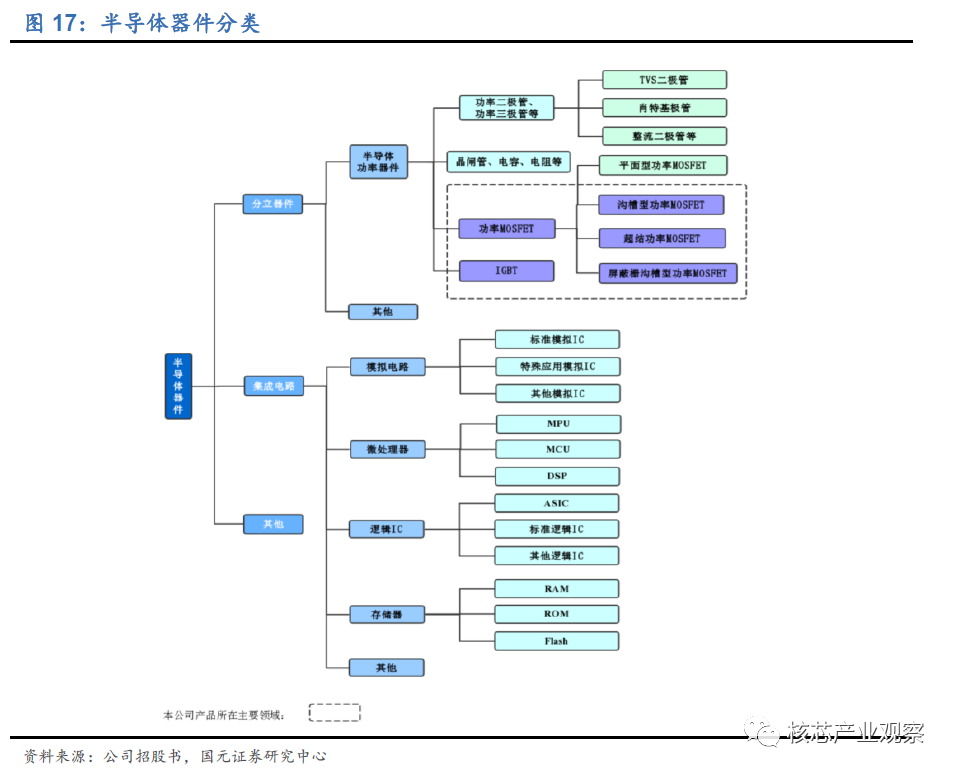
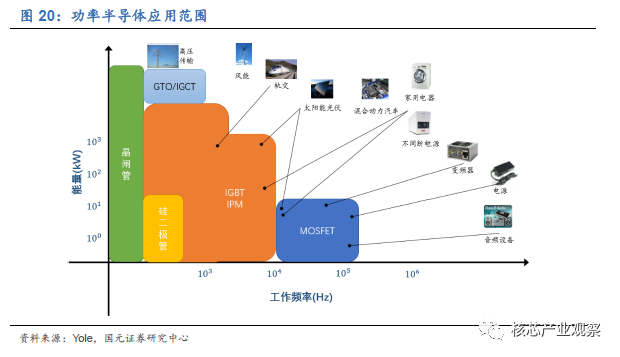
Semiconductor products can be divided into integrated circuits, discrete devices and other categories, among which semiconductor power devices are an important part of discrete devices. Integrated circuits integrate a variety of basic circuit components on a small chip and then package them to form a multi-functional unit, which mainly realizes the processing, storage and conversion of information; discrete devices refer to basic circuit components with a single function, which mainly realize the processing and conversion of electrical energy. Discrete devices mainly include power diodes, power transistors, thyristors, MOSFETs, IGBTs and other products. The MOSFET series products and IGBT series products produced by the company are semiconductor discrete device products with leading domestic technology level.
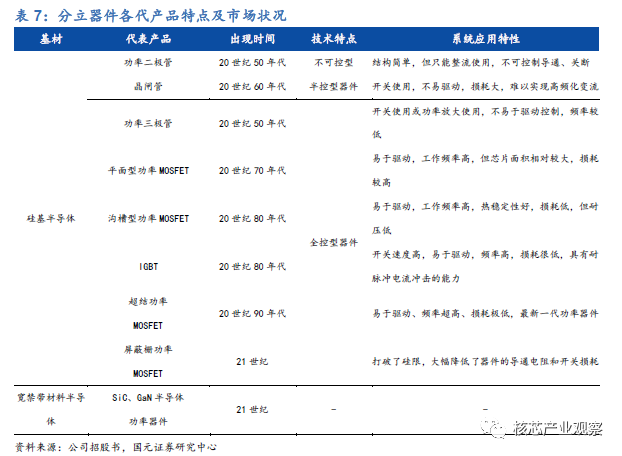
The development of discrete device technology is driven by downstream needs, with improvements and iterations in performance, structure, materials, etc. to cope with a wider range of application scenarios. Early diodes and transistors were mainly used in industrial and power systems; thyristors improved controllability; devices such as power MOSFETs and IGBTs achieved significant improvements in high-frequency and low-loss performance; superjunction MOSFETs broke the traditional "silicon limit" to meet the needs of high-power and high-frequency applications; silicon-based devices were gradually developed to their limits, and third-generation semiconductor materials SiC and GaN began to be used to replace silicon.
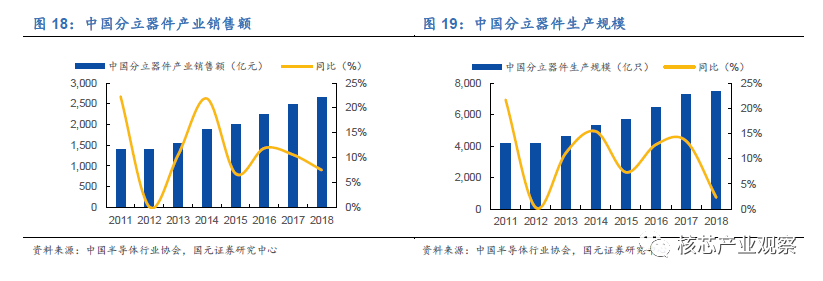
Semiconductor discrete devices are one of the basic and core components of power electronic products. my country's discrete device market size reaches 270 billion yuan. According to data from the National Bureau of Statistics, the proportion of the discrete device industry in the total semiconductor industry has remained between 22% and 25% in recent years. my country is the world's most important semiconductor discrete device manufacturing base and largest market. According to data from the China Semiconductor Industry Association, my country's annual discrete device sales reached 266 billion yuan in 2018, a year-on-year increase of 7.50% from 2017. During the same period, the domestic discrete device production scale reached 747.1 billion units.
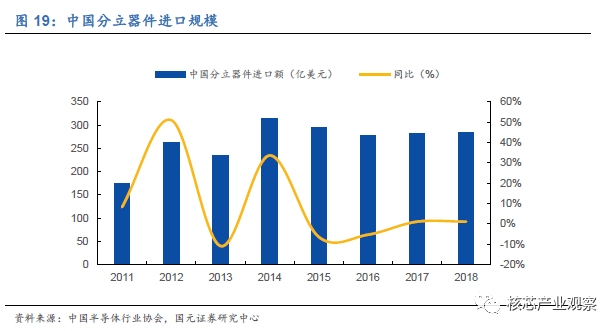
In recent years, the trend of import substitution in my country's discrete device industry has been obvious, and the growth rate of import scale has dropped significantly. According to statistics from the China Semiconductor Industry Association, my country's discrete device imports in 2018 were US$28.5 billion, basically the same as in 2017. From the perspective of technological development level, the current overall technical level of the domestic industry still lags behind the international leading level. The product structure is mostly low-value mid- to low-end products, and imports in the mid-to-high-end field account for more than 70%.
1.2 billion power semiconductor market, domestic devices are moving from mid- to low-end to high-end applications
Power devices are an important component of semiconductor discrete devices and are the main driving force for the accelerated growth of China's semiconductor discrete device market. Power devices mainly include power diodes, power transistors, thyristors, MOSFETs, IGBTs, etc., which are used in almost all electronic manufacturing industries, including computers, network communications, consumer electronics, automotive electronics, industrial electronics and other electronic industries. In addition, emerging application fields such as new energy vehicles/charging piles, smart equipment manufacturing, the Internet of Things, and photovoltaic new energy have gradually become important application markets for semiconductor power devices, thus driving their demand growth.
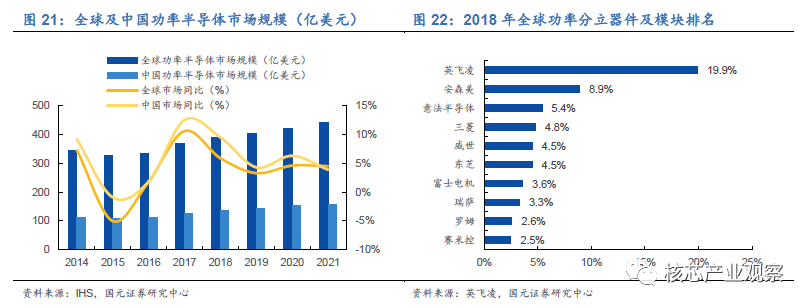
The domestic power semiconductor market is worth 100 billion yuan, and the top ten companies in the world are monopolized by overseas giants. According to current statistics from IHSMarkit, the global power device market size was approximately US$39.1 billion in 2018 and is expected to grow to US$44.1 billion by 2021. At present, the domestic power semiconductor industry chain is increasingly improving. As the world's largest consumer of power semiconductors, China's market demand reached US$13.8 billion in 2018, accounting for 35% of global demand. The market size is expected to reach US$15.9 billion in 2021.
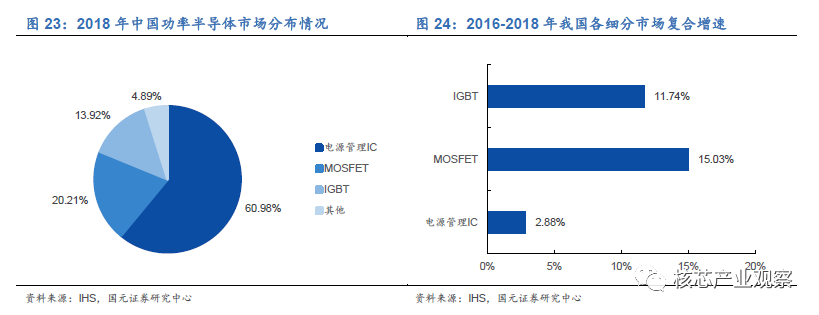
The top three products in China's power semiconductor market are power management ICs, MOSFETs and IGBTs, accounting for 60.98%, 20.21% and 13.92% of China's total power semiconductor market in 2018 respectively. The power MOSFET and IGBT markets are growing rapidly, with compound growth rates of 15% and 12% respectively from 2016 to 2018.
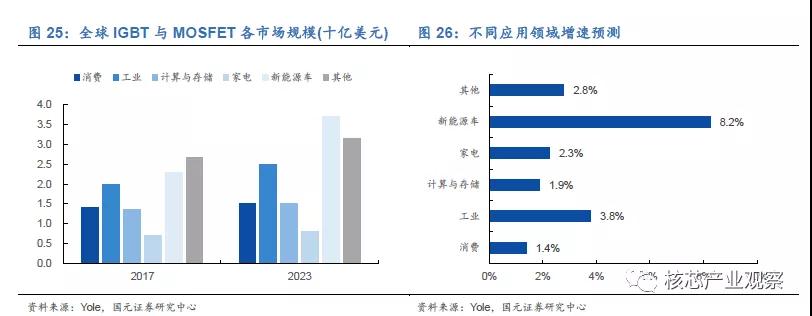
The power MOSFET and IGBT markets are growing rapidly, and new energy vehicles are the main driving force in downstream applications. According to data from Yole, the two most important fields for IGBT and MOSFET applications are new energy vehicles and industry. In 2023, the market space in the new energy vehicle field is expected to reach US$3.7 billion and the industrial field will reach US$2.5 billion. Thanks to the booming development of servo motor inverters, renewable energy photovoltaic inverters and wind power converters in industrial automation, as well as inverters for electric vehicle motors and charging pile-related facilities, the automotive and industrial markets will become the two fastest growing fields in the power semiconductor industry, with annual compound growth rates reaching 8.2% and 3.8%.
1.3 New applications help the development of the industry, and wide bandgap materials enrich the direction of technological extension
1.3.1 New energy vehicles are expected to bring an incremental market worth tens of billions
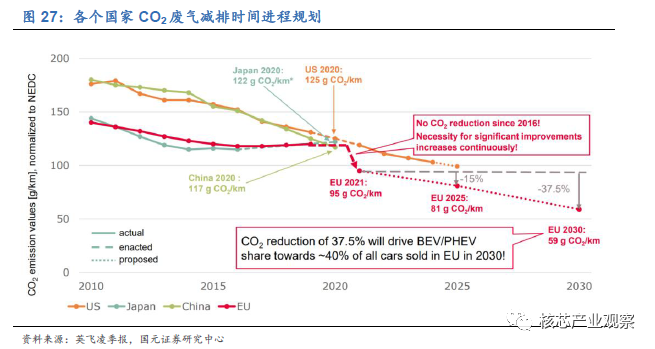
The transformation of traditional automobiles into new energy sources has empowered the development of the power semiconductor industry. The new energy vehicle market is driven by policies in the early stage and by market prices in the later stage. Major advanced countries have established emission reduction time plans for automobile CO2 exhaust emissions to accelerate the development of electric vehicles. The European Union expects CO2 emissions to decrease by 37.5% by 2030, and major automobile countries have drafted plans to stop selling internal combustion engine vehicles. In the next 10 years, various regions will gradually replace part of the traditional automobile market share driven by policy enforcement + market relay.
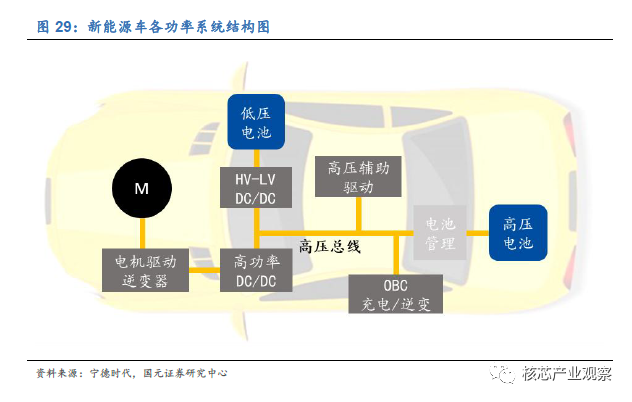
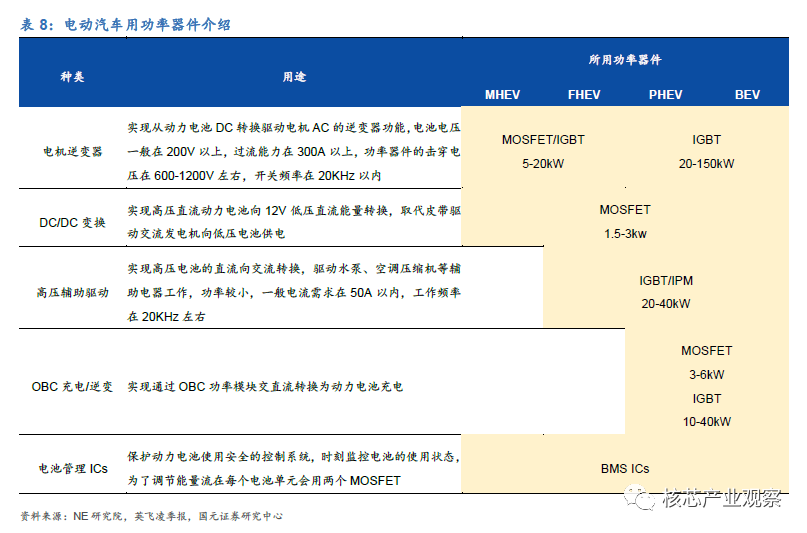
The trend of vehicle electrification + the increase in market penetration of electric vehicles drive the rapid growth of market demand for automotive power semiconductors. As the degree of electrification of automobiles gradually increases, from micro-hybrid models only used for start-stop functions to full electric vehicles requiring energy recovery and on-board charging, the demand for power devices increases. Power semiconductor devices for electric vehicles mainly include motor inverters, DC/DC conversion, auxiliary drives, OBC charging inverters and vehicle battery management ICs.
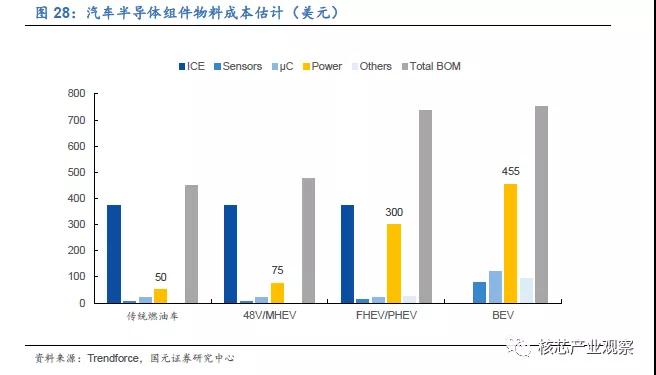
Classifying vehicles into fuel vehicles, plug-in hybrid vehicles and pure electric vehicles, and comparing the proportion of material costs, it is found that due to the introduction of electric systems as power sources in plug-in and pure electric vehicles, the cost proportion of electronic control systems has increased significantly. The power component consumption of traditional fuel vehicles is about US$50/vehicle, while the power component consumption of electric vehicles increases from US$75/vehicle for 48V mild hybrid vehicles to US$455/vehicle for pure electric vehicles.
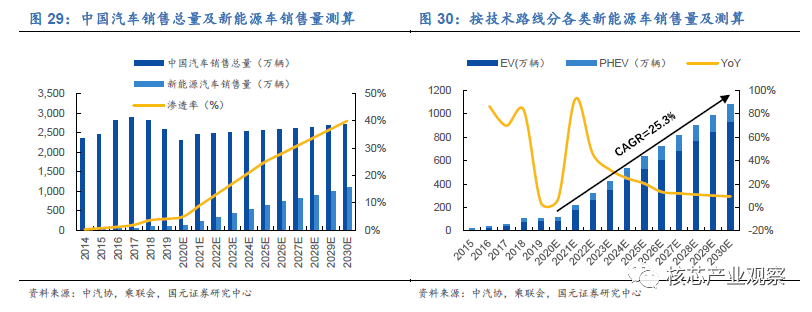
According to the energy vehicle industry plan of the Ministry of Industry and Information Technology, new energy vehicle sales will account for 25% of the total in 2025 and 40% in 2030. The total sales growth rate of the automobile market is slow, with an annual growth rate of only 1-2%. However, the penetration rate is expected to accelerate driven by policies. It is estimated that China's new energy vehicle sales will be 6.4 million units in 2025 and 11 million units in 2030. New energy vehicles can be divided into plug-in hybrid PHEV and pure electric EV according to technical routes. EVs currently account for about 80%, and the proportion is expected to further increase to 85% in the future. In the short term, the market is under pressure due to the epidemic. In the medium and long term, domestic new energy vehicles are expected to enter a period of rapid growth. The compound growth rate in the next 10 years is estimated to be 25.3%.
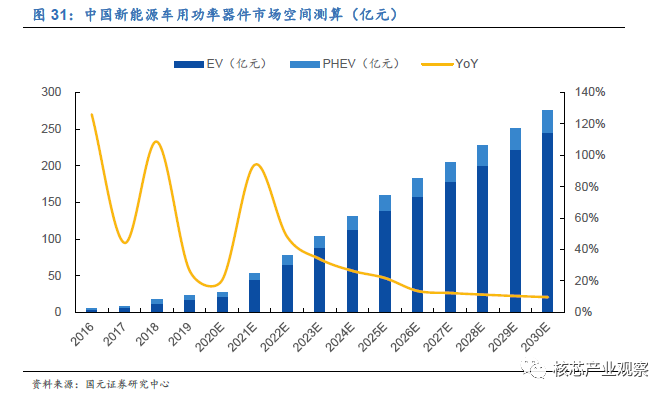
Since each vehicle model is quite different, it is assumed that the amount of power devices used in a pure electric vehicle EV will increase from A00 to Category C vehicles. It is assumed that the value of the corresponding power devices is 800, 1000, 3000-3500 yuan/vehicle. Since the plug-in hybrid PHEV is an electric system plugged into the fuel power system, it is assumed that the power device consumption is 2,100 yuan/vehicle. Calculation results: China’s new energy vehicle power device incremental market space is forecast to reach 16 billion yuan in 2025 and 27.5 billion yuan in 2030.
1.3.2 New energy vehicle supporting infrastructure charging piles
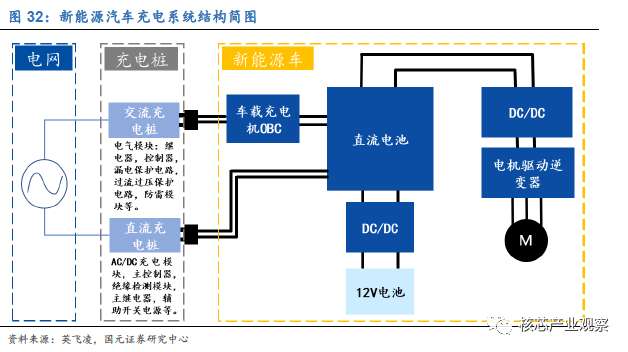
"Charging piles + new energy vehicles" are analogous to "traditional fuel vehicles + gas stations". The construction progress of charging piles must be coordinated with new energy vehicles, otherwise the vehicle-to-pile ratio will be unbalanced. Charging piles can be divided into two categories according to interface type: AC slow charging and DC fast charging. Since the output power of DC charging piles is high and the consumption of power semiconductor devices is higher than that of AC charging piles, DC charging piles are the main direction of future industry development, which means that they are expected to drive the coordinated development of the power semiconductor market.
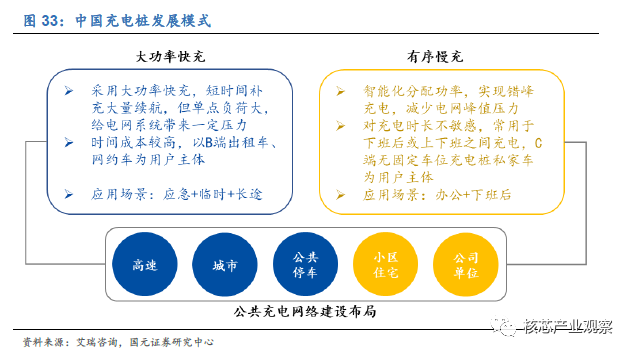
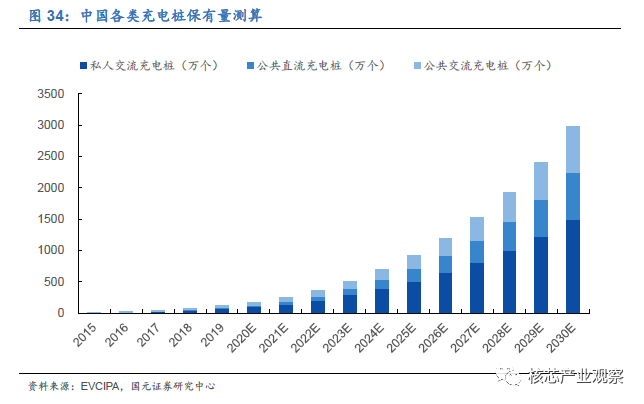
The current status and future trend assumptions of my country's charging pile market: 1) The current ratio of the number of charging vehicles to the number of charging piles is about 3:1, and it is expected to further drop to 2:1 in the future. 2) Most private piles adopt the AC charging mode. Due to some car owners having no fixed parking spaces and difficulty in property management, it is expected that public charging piles will be the mainstream in the future, and private charging piles will be limited to private car owners with fixed parking spaces. 3) Public piles are divided into DC and AC according to charging type. Currently, the AC/DC ratio of public piles is about 6:4. Assuming that the cost of high-power DC charging gradually decreases, the AC/DC ratio is expected to trend towards 1:1 in the future.
Public charging piles are developing rapidly and can be divided into DC and AC charging types. Among them, DC piles are expected to be the fastest growing part in the future. The current ratio of public DC to AC piles is 4:6, and is expected to reach 1:1 in 2030. According to calculations, the number of public DC charging piles will reach 2.1 million in 2025 and 7.5 million in 2030.
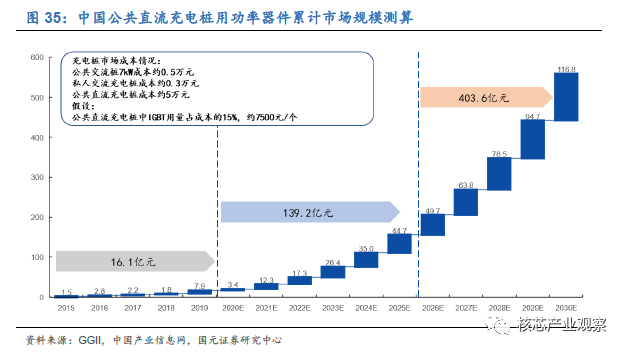
DC charging uses high-power charging. The system uses more power semiconductors than ordinary AC mode, and the demand for IGBTs is very large. Calculating the demand scale for power devices at public DC charging piles based only on cost assumptions, the cumulative market demand from 2020 to 2025 is about 14 billion yuan, and the market demand from 2025 to 2030 is about 40 billion yuan. In the next 10 years, the demand for power devices in the construction of DC charging piles will exceed 50 billion yuan.
1.3.3 Renewable energy power generation
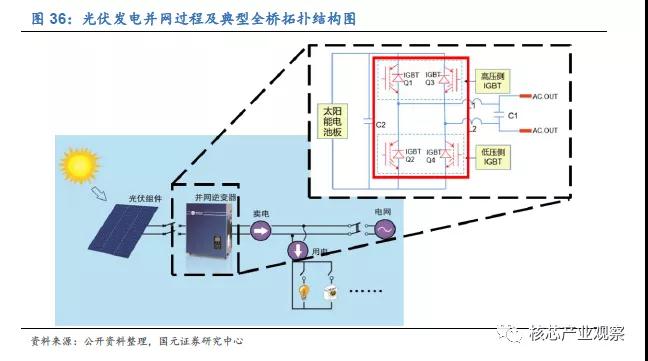
Photovoltaic power generation is the process of converting solar energy into electrical energy and introducing it into the grid. The system consists of solar cell components, batteries, and controllers. Since the photovoltaic power generation process generates direct current, a photovoltaic inverter is required to convert the direct current into alternating current that meets the requirements of the grid before it can be connected to the grid. Photovoltaic inverter is a key component of the entire solar power generation system, among which IGBT is the core device of photovoltaic inverter. Photovoltaic inverters have two basic functions: 1) Complete DC/AC conversion of current and connect it to the grid; 2) Improve and optimize the energy conversion efficiency of the photovoltaic system. The choice of inverter topology is related to the rated output power. High-voltage and high-power photovoltaic inverters can adopt multi-level topology, medium-power photovoltaic inverters adopt full-bridge and half-bridge topologies, and small-power photovoltaic inverters adopt forward and flyback inverter topologies.
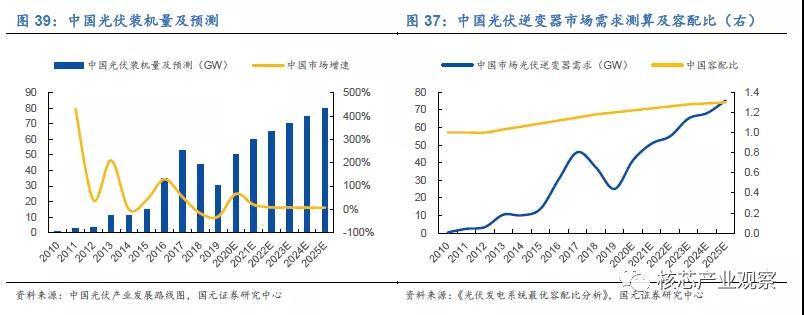
Photovoltaic power generation technology has huge room for cost reduction, rapid technological progress, and strong certainty of industrialization. It is one of the main low-cost clean energy power generation methods to be developed in the future. In 2019, China's newly installed photovoltaic capacity was 30GW. According to China's photovoltaic industry development roadmap, the compound annual growth rate of newly installed capacity in the next five years is estimated to be approximately 9.9%. In 2025, newly installed capacity is conservatively estimated to reach 65GW, and optimistically estimated to reach 80GW.
In order to achieve maximum economic benefits, the design capacity ratio of photovoltaic power stations is gradually increasing. In the early days, the photovoltaic system was designed with a capacity ratio of 1:1. Later, with technological innovation, increasing the capacity ratio will help improve the operating efficiency of the inverter and the revenue of the power station. Assuming that the photovoltaic inverter replacement cycle is 10 years, the annual photovoltaic inverter demand is mainly composed of new additions and replacements in that year. Based on assumptions, we estimate that China’s photovoltaic inverter market demand will be 75GW in 2025.
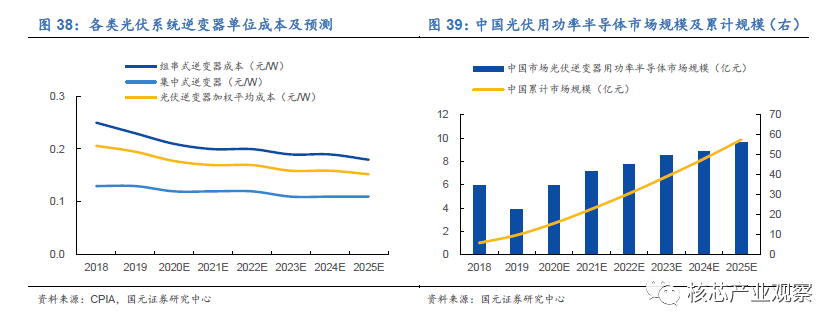
Photovoltaic inverters are generally divided into three categories: centralized, string and distributed. Due to the scale effect, the unit cost of the centralized type is relatively lower than that of the string type. The unit cost will trend downward as the technology matures and scale mass production. According to CPIA forecasts, the weighted average cost of domestic photovoltaic inverters in 2019 was approximately 0.2 yuan/W, and is expected to drop to 0.15 yuan/W in 2025. Assuming that the cost of power modules and discrete devices accounts for 9-10% of the total cost, China's demand for power semiconductors for photovoltaic inverters is estimated to be approximately 390 million yuan in 2019 and 961 million yuan in 2025. The cumulative domestic demand in the next five years is approximately 5 billion yuan.
1.3.4 Demand for higher performance drives the accelerated industrialization of third-generation materials
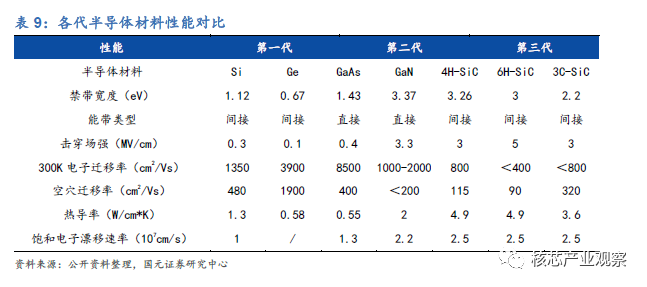
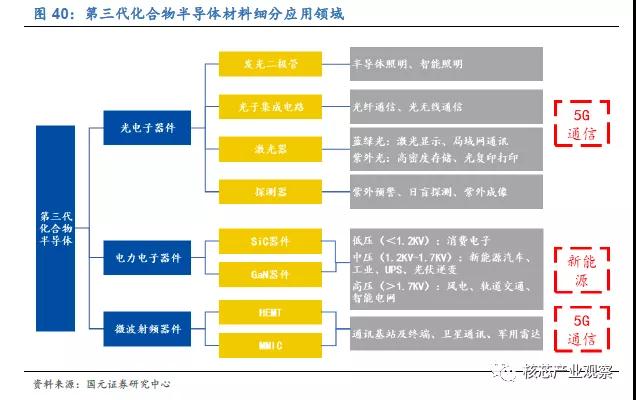
Because the third-generation materials have the characteristics of larger bandgap, higher electron saturation drift speed, excellent optoelectronic properties, high speed, high frequency, high power, high temperature resistance and high radiation resistance, the devices have great development potential in the fields of optoelectronics, radio frequency and power electronics. Currently, silicon-based semiconductor materials are close to physical limits due to their material properties. The third generation of compound semiconductor materials has rapidly entered the industrialization process. The preparation, manufacturing process and device physics of wide bandgap semiconductor materials represented by SiC and GaN have developed rapidly. SiC has the characteristics of high temperature resistance, high frequency, high power, and high voltage, and is mainly used in high voltage and drive fields, such as photovoltaic inverters, new energy vehicles, charging piles, etc.
GaN has higher power output and smaller area at high frequencies and is mainly used in the radio frequency field; GaN is expected to significantly improve applications such as power management, power generation and power output in medium and low voltage fields. The GaN power market is mainly driven by fast charging.
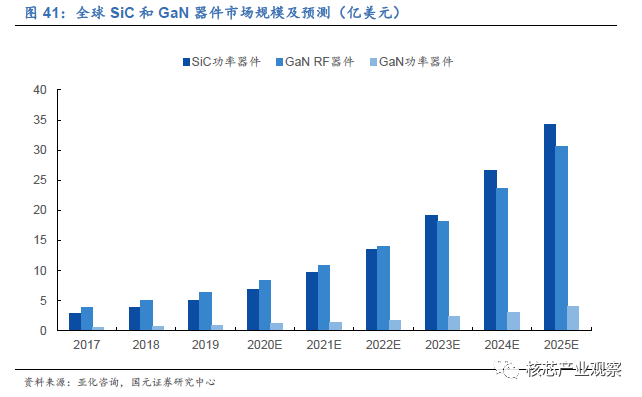
Benefiting from strong demand in downstream new energy vehicles, 5G, and consumer electronics, the global SiC and GaN device market is expected to grow at a high rate of 25%-40% in the next few years. According to ASIACHEM Consulting's estimates, the SiC power device market will be approximately US$500 million in 2019, and the market size will reach US$3.5 billion in 2025. In 2019, the GaN RF market will be approximately US$642 million, and the GaN power device market will be approximately US$90 million. In 2025, the RF device market will exceed US$3 billion, and the power device market will reach US$400 million.
1.4 The domestic power device industry has entered a golden period, with leading companies benefiting first
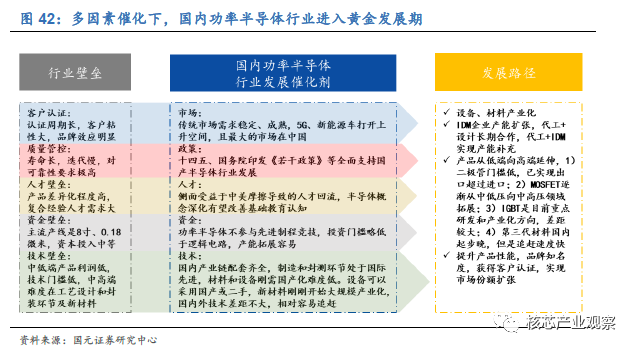
Catalyzed by multiple factors such as market demand, policy, talent, capital and technology, the domestic power semiconductor industry is expected to enter a golden development period in the next 3-5 years. Regardless of whether it is analyzed from multiple angles such as the difficulty of catching up with technology, the progress of industrialization layout, and the impact of external factors, power semiconductors are one of the segments with the fastest domestic substitution in the foreseeable future. In the case where the impact of the external environment is relatively small, the shortening of the technological gap and the expansion of production capacity have protected the trend of import substitution. At present, domestic power devices are rapidly replacing mid- and low-end products, and will continue to extend to mid- and high-end areas in the future.
There are four main development trends in the entire power device industry:
(1) Industry concentration increases, endogenous + extensional development trend. At present, the leading overseas manufacturers in the discrete device industry account for half of the global market and the pattern is stable. The domestic industry pattern is small, large and dispersed, with single technology and product layout. The inevitable trend in the development of the domestic industry is that a small number of companies with core competitive advantages will expand their product visibility and market share through continuous technology accumulation and independent innovation, and extend to the manufacturing and packaging end.
(2) In addition to the high growth rate of new markets, domestic companies are expected to benefit from the potentially huge space for import substitution. In recent years, my country has developed rapidly in the mid-to-low-end field, and the market for mid-to-high-end products has not yet opened. In the future, outstanding domestic companies in the industry will gain more development opportunities by virtue of their geographical, technological and cost advantages.
(3) Product performance requirements drive modular and integrated development. The development of the discrete device industry is driven by demand. In order to solve the needs for higher power conversion efficiency, stability, high voltage, high power and complexity, assembly modularization and integration have become the mainstream trend of technology development, and the design is more difficult.
(4) Emerging wide bandgap materials are in the early stages of industrialization, and it is relatively difficult for domestic countries to catch up. Wide bandgap materials represented by SiC and GaN have the advantage of breaking through the performance limits of traditional silicon devices and are extremely strategic and forward-looking. The technical barrier lies in the preparation of materials, and the technological gap between domestic and foreign countries is constantly narrowing.
Source: Core Industry Observation
Note: This article is reproduced from the Internet and supports the protection of intellectual property rights. Please indicate the original source and author when reprinting. If there is any infringement, please contact us to delete it.
Company phone number: +86-0755-83044319
Fax/FAX: +86-0755-83975897
Email: 1615456225@qq.com
QQ: 3518641314 Manager Li
QQ: 332496225 Manager Qiu
Address: Room 809, Building C, Zhantao Technology Building, No. 1079 Minzhi Avenue, Longhua New District, Shenzhen
Related Recommendations
Exclusive Interview with Li Gang of Yunfan Ruida: The Precision of Millimeter-Wave Radar Products and the Warmth of Humanity
2026-07-22
2474
RF Passion, Craftsman’s Journey: Over 30 Years of Steadfast Dedication — Interview with Kinghelm Chief Engineer Mr. Qin hongxiang
2026-06-26
2653





 粤公网安备44030002007346号