
























Service Hotline
News

News
Moore’s Law has not slowed down or expired and will continue for 10 years or more
2022-03-16
899
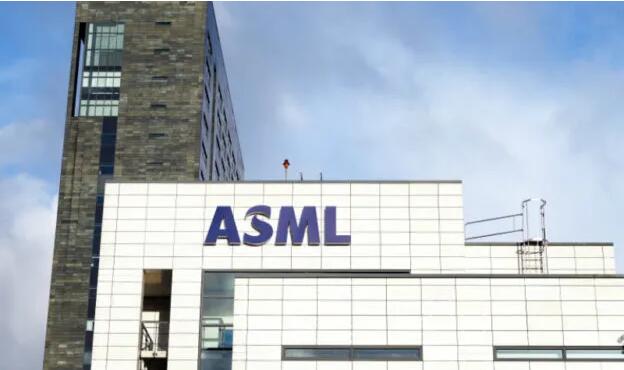 Recently, Reuters conducted an exclusive interview with ASML Vice President of Development Tony Yen to analyze ASML’s operations, culture, and product development.
Q: How would you describe ASML EUV and its functions.Answer: The machines we manufacture are photolithography tools that produce the chips that everyone needs. Currently TSMC, Samsung, and Intel are our three major customers.
Q: What makes ASML a leader in this field? There are obviously barriers to entry, such as upfront costs and technical skills. But why can't other companies copy it?Answer: ASML is rooted in Dutch culture. The company's determination, composition of engineers, management and customers are the factors that make it a leader. Although the Netherlands has a population of only 17 million, its citizens are all highly educated. ASML has many employees with PhDs and master's degrees, and the company is very international, and conversations in various languages can be heard in the restaurant, including Chinese, Russian, Eastern European, Spanish, Italian, German, etc. Because of its international nature, employees are attracted to the company culture, which is very important and will make the company focused on results and technology-driven development easy to achieve. The company's senior leaders all hold Ph.D.s or physicist degrees in physics and play key roles at ASML. They help ASML develop special equipment and machinery through physical knowledge, including providing EUV lithography machines for advanced chips, which is one of the keys for ASML to become a leader.
Q: When did ASML start considering developing EUV?Answer: Probably starting in 2000, the company decided to develop and produce large-scale photolithography machines. At that time, Japanese manufacturers did not do it because they felt that the EUV system was very complicated and they could not ensure that the EUV equipment was 100% functional. ASML has a German partner, Zeiss, which mainly produces optical systems and has a history dating back to 1850. ASML collaborates with Zeiss, which manufactures optical systems exclusively for ASML. ASML also funds many developments at Zeiss, so Zeiss can only sell semiconductor-related optical systems to ASML. ASML also acquired San Diego-based Cymer, another key player in making EUV work.
Q: How does ASML promote products to the market and then produce products that meet needs and specifications?Answer: From the early development stage, the two are mutual. Customers use ASML's early equipment, which is not very reliable. These machines are down 50% of the time, but they can improve the functions required to produce chips. If customers increase chip production or produce smaller chips, they must choose ASML machines, but these machines were not necessary equipment at the time. The first EUV was delivered to Samsung in 2010 and to TSMC in 2011. These are early machines. ASML has gone through a lot of research and development, and also lets customers know that ASML has been involved in the customer's product development process for a long time, giving them confidence in our equipment. For the earliest customers, ASML puts development tools on the client side and physically develops technology with customers. Based on mutual cooperation, ASML develops products that meet customer needs.
Q: Can you explain the development status of advanced processes 7nm, 5nm, and 3nm? And the state of transfer of advanced process technology?Answer: The most advanced process technology for mass production is the 5nm node, which is the current technology of TSMC and Samsung. Intel's 5nm process node is lagging behind, and even its 7nm process node is not yet in mass production. It must be noted that because Intel has higher-level design rules, Intel's 7nm node is equivalent to TSMC and Samsung's 5nm node. The related technologies are not exactly the same, and it is difficult to say which product is superior. It usually takes about 5 years for customers to move to more advanced manufacturing processes. ASML will develop goals mutually with customers. Although it cannot disclose the details, it will generally plan the product and then obtain permission from the board of directors to develop it. Once the product development successfully enters the mass production stage, and the export location is not a controlled country or region, mass production equipment is expected to be delivered within 2 years.
Q: This is a question you must be asked often, and one that will be exacerbated now: What do you think of Moore’s Law reaching its limits?
Answer: Many people say that Moore's Law has expired or is slowing down, but I don't think it is, and it is not slowing down. According to ASML, Moore's Law may continue for another 10 years, or even longer. And chip area shrinkage will continue for at least 10 years in the future. The practice of stacking chips that people talk about is called 3D integration, and TSMC and Samsung have also discussed it a lot. According to ASML, although 3D integration is taking place, 2D planar chip area shrinkage can still last for at least 10 years. To this end, ASML is also actively developing next-generation EUV lithography equipment.
Q: Is ASML considering investing in machine learning or 5G standards, and will this affect market demand? Is it too downstream for ASML?Answer: This distance is not too far, because Apple, Samsung, Qualcomm, etc. are all producing 5G chips. Huawei has entered the entity list, so its market position has been taken over by Xiaomi and other Chinese brands. Qualcomm's high-end chips produced through Samsung's 5nm process are now entering mass production, and ASML is also enjoying good results.
Q: What are your views on geopolitics?Answer: I am not a spokesperson, but ASML complies with all laws. If part of our machinery is made in the United States and someone is listed on the Entity List, we must comply with U.S. export laws. ASML US Public Relations Manager Brittney Wolff added that this is something ASML must consider very seriously because it has operations in many countries and regions. But ASML complies with local laws and regulations wherever it develops its business and has never encountered any challenges.
Disclaimer: This article is reprinted from "The World of Lithography People", which supports the protection of intellectual property rights. Please indicate the original source and author when reprinting. If there is any infringement, please contact us to delete it.
Company phone number: +86-0755-83044319
Fax/FAX: +86-0755-83975897
Email: 1615456225@qq.com
QQ: 3518641314 Manager Li
QQ: 332496225 Manager Qiu
Address: Room 809, Building C, Zhantao Technology Building, No. 1079 Minzhi Avenue, Longhua New District, Shenzhen
Related Recommendations
Exclusive Interview with Li Gang of Yunfan Ruida: The Precision of Millimeter-Wave Radar Products and the Warmth of Humanity
2026-07-22
2515
RF Passion, Craftsman’s Journey: Over 30 Years of Steadfast Dedication — Interview with Kinghelm Chief Engineer Mr. Qin hongxiang
2026-06-26
2686





 粤公网安备44030002007346号