
























Service Hotline
News

News
The trillion-dollar 5G market is being stirred: Reconstruction of connections for billions of users and the birth of the industrial Internet | 36Kr Annual Industry Research
2022-03-16
1897
Editor's note:
After leaving the magnificent 2020, we are about to usher in an exciting new decade full of hope and unknowns. The dual promotion of technology and capital is the main theme of this decade and is likely to become the main driving force of innovation in the next decade. Therefore, near the end of 2020, we launched the "Annual Industry Research" series, selecting the areas of greatest concern at the moment for systematic review. These industries may be rewriting the current new economic landscape, or they may reshape the future business or even international landscape, they may be of interest to 36Kr readers, or they may have a huge social impact. We also hope to use this method to "expand the boundaries infinitely" with my Krypton readers and "see the future better" together.
This article is part of this series. We chose 5G. The upgrade of communication technology every ten years not only means a competition in telecommunications infrastructure at the national level, but also means huge business opportunities. In fact, 5G is not only a communication technology revolution, but also a comprehensive industrial revolution. This article is mainly the first part of 5G research, focusing on the upstream industry. We will also launch the second part in the near future, focusing on 5G downstream applications.
The upgrade of communication technology every ten years not only means a competition in telecommunications infrastructure at the national level, but also means huge business opportunities. Research from market consulting firm IHS Markit shows that 5G will create $13.2 trillion in economic output by 2035.
Entering 2020, global 5G construction is ramping up and commercial trials are accelerating. As of the first three quarters of 2020, China has built 600,000 5G base stations and 110 million 5G package users. In the To B application market, focusing on 5G characteristics, 5G pilot projects in scenarios such as smart mines, smart ports, smart factories, and AVR are being implemented.
In fact, 5G is not only a telecommunications technology revolution, but also an industrial revolution. To put it simply, the dividends of 5G at this stage are still mainly concentrated in network construction. Its dividends can be summarized as technological innovation, independent controllability, and scale effect. But in the long run, 5G is an industrial revolution and may bring about a reshuffle of the 2B industry. The combination of communications, cloud computing, Internet of Things, and AI technology has truly taken shape for the “Industrial Internet.”
From the perspective of industrial revolution, the business opportunities of 5G are not only the dividends of hardware infrastructure and the potential of applications, but also the business opportunities under industrial changes.
This article will sort out the 5G upstream industry from the following aspects:
· 5G is not only a communication technology revolution, but also an industrial revolution
· China’s 5G commercial timetable and progress
· China’s 5G commercial investment budget in 2020
· 5G base station cost breakdown
· 5G base station operation and maintenance cost analysis
· Dismantling of 5G upstream bonus industry links
· Analysis of the 5G upstream domestic substitution process
5G is not only a revolution in telecommunications technology,
It is a comprehensive industrial revolution that is about to take place.
There is no doubt that 5G is a communication technology revolution. But from a long-term perspective, 5G is an industrial revolution.
1. The prototype of the industrial Internet emerges, redefining the business value evaluation system
In terms of network characteristics, 3G and 4G mainly solve communication between people, while 5G focuses on communication between people and things, especially things and things.
Before 5G networks, although there were NB-IOT+4G IoT solutions, they were still deficient in terms of latency and coverage, and in practice still could not fully meet commercial needs.
The Internet of Things involves the networking, analysis, and control of devices. After solving the "networking" problem, the analysis process began to "have something to follow." The Internet of Things has brought about a surge in data volume. Data has become the most important core asset. If data truly generates value, the original methods of business value evaluation in the mobile Internet era may change. Evaluation indicators such as DAU and ARRU will gradually become invalid, and a new evaluation system may gradually form.
Behind “control” is machine intelligence in a broader sense. Use data intelligence to control machines more accurately to complete feedback. Combining technologies such as artificial intelligence to mine the value of data and output intelligent decisions, thereby improving industrial efficiency.
Overall, the combination of communications with cloud computing, the Internet of Things, and AI technology, and the "industrial Internet" with intelligent decision-making capabilities have truly taken shape.
2. 80% of the real application scenarios of 5G are in the industrial Internet, behind which is a supply revolution.
As Minister of Industry and Information Technology Miao Wei said, 80% of 5G’s real application scenarios are in the industrial Internet.
Industry is the main battlefield of the real economy and the basis of commercial social supply. If 5G promotes the implementation of the industrial Internet, industrial informatization and intelligence will be simultaneously promoted, and industrial efficiency will be improved. This means that the supply of goods and services will be further sufficient and costs may be further reduced. Under oversupply, reliance on sales channels and methods may be further strengthened.
Industrial intelligence not only improves efficiency, but also reduces dependence on human intelligence and physical location. Combined with the improvement in video communication and AVR communication brought by 5G, combined with the improvement in cloud and edge intelligent computing capabilities, the "flow of people" is likely to be reduced.
3. Technological monopoly capitalism is further strengthened
If 4G technology monopoly capitalism has begun to take shape, 5G will further intensify this trend. "Device + edge + cloud + network" has become the new generation of ICT infrastructure and is a battleground for giants.
Nokia was a representative of terminal-network integration in the 2G era, but this integration began to break down in 3G. Focusing on China, with the beginning of 4G, manufacturers such as Huawei, Samsung, and Xiaomi have all seen this trend and have crossed over or tried to cross over. In the 4G era, cloud-network integration has gradually become popular, and cloud services and communication services have been integrated. In the 5G era, "device + edge + and + network" is likely to be further integrated.
At present, in the domestic market, on the cloud side, the one-super-multiple-strong pattern has been basically stable; on the network side, the pattern of Huawei, ZTE and the three major operators has basically formed; on the terminal test, China OV's dominant pattern may not undergo major changes in the short term, and Internet giants are trying to create new terminals through smart speakers. After the 5G "device + edge + cloud + network" is likely to be further integrated, the monopoly position of the giants will be further strengthened.
In terms of details, 5G construction costs are high, and downstream applications are currently unclear. This means that players with other resources such as power, property, cloud, and terminals, companies with customer resources, application scenarios, and companies with industry know-how are likely to participate in the "network", "edge", and "terminal" links, thereby gaining further advantages.
5G commercial timetable:
my country's 5G network construction progress exceeds expectations
1. 5G commercial timetable
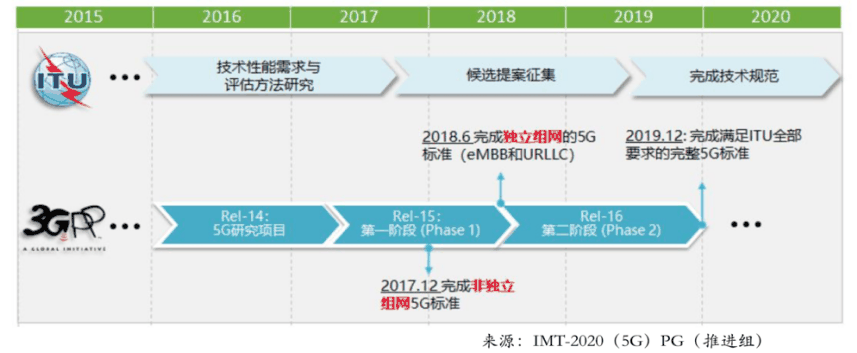
Pictures from the Internet
Entering 2020, global 5G has entered the preliminary commercial stage. The latest report from GSA shows that the number of confirmed commercial 5G networks in the GSA database reached 70 in April this year; in mid-September this year, the number of commercial 5G networks worldwide exceeded 100.
With the official issuance of 5G licenses in 2019, domestic 5G business has initially started. According to statistics from the Ministry of Industry and Information Technology, as of the end of March, 198,000 5G base stations have been built across the country. It is expected that by the end of 2020, the number of 5G base stations nationwide will exceed 600,000. But the actual progress exceeded expectations. In the first three quarters, we have achieved the set targets for the whole year. According to data from the Ministry of Industry and Information Technology, in the first half of 2020, my country built 257,000 5G base stations, with the total number reaching 410,000 as of the end of June; as of the third quarter, the total number of 5G base stations built in my country has increased to 600,000. China Mobile, one of the three major operators, also raised its full-year figures, increasing the number of new 5G base stations this year from 250,000 to 300,000.
The shipment volume of 5G terminal mobile phones is also gradually increasing. According to the Strategy Analytics report, global 5G mobile phone sales are expected to reach 250 million units in 2020, a year-on-year increase of 1282% from 2019 (18.2 million units); 5G smartphone shipments are expected to reach 450 million to 550 million units in 2021. According to a report by Counterpoint Research, China is the largest contributor to 5G mobile phones. In July this year alone, more than 79% of 5G mobile phone shipments came from the Chinese market. With the launch of thousand-yuan 5G mobile phones, its growth rate may further increase.
The scale of 5G users is gradually increasing. Statistics show that as of the end of August 2020, the number of 5G users in my country exceeded 110 million; among them, China Telecom's 5G user penetration rate reached 16%. Judging from the current statistical results of the entire communication operation, the cumulative number of 5G terminal connections currently exceeds 160 million, and the shipment of 5G mobile phones exceeds 100 million units.
At the same time, commercial 5G modules have also been launched, which can support applications in multiple industries such as 5G 8K TVs, 5K industrial production lines, and smart transportation.
2. The 5G commercial investment budget in 2020 is close to 200 billion yuan
The commercial use of 5G depends on the laying of 5G networks. According to public information, the 5G investment budget of the three major domestic operators and tower companies this year is close to 200 billion yuan.
According to the 2019 financial reports of the three major operators, in 2019:
· China Mobile has invested 24 billion yuan in 5G-related investments, built 50,000 5G base stations, and provided 5G commercial services in 50 cities;
· China Telecom has invested about 9.3 billion yuan in 5G, built 40,000 5G base stations, and shared more than 20,000 5G base stations with China Unicom, covering more than 50 key areas of commercial cities;
· China Unicom’s 5G capital expenditure is approximately 7.9 billion yuan, and it has opened 50,000 shared 5G base stations with China Telecom.
According to the edge computing community, the investment in 5G by the three major operators in 2020 will involve 500,000 base stations and more than 180 billion yuan in capital expenditures.
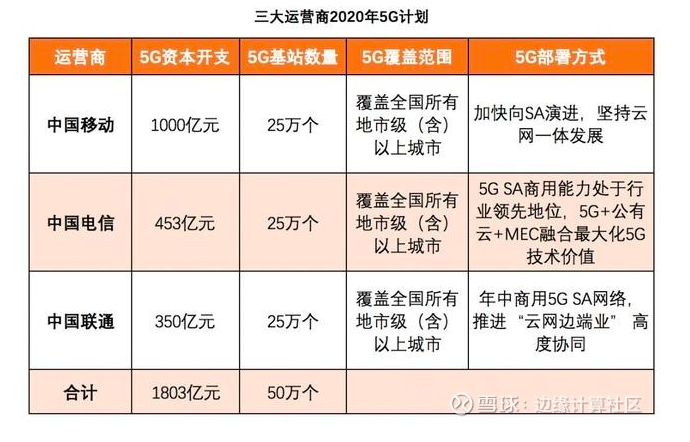
Image source: Edge Computing Community
3. 5G commercial investment schedule
Analysts Ouyang Shihua and Tang Hongyi of Guosen Electronics Research Team have previously analyzed 3G , several major nodes in the 4G era and their resulting cycles, it is believed that: the issuance of China's 3G/4G licenses stimulated the three major operators to significantly increase capital expenditures within 3-5 years; in January 2009, the issuance of 3G licenses and the construction of 3G base stations promoted a substantial increase in capital expenditures, with a cycle of four years; from December 2013 to February 2015, 4G licenses were issued, and 4G base station investment ushered in a new round of growth, reaching a peak in 2015, with a cycle of two years.
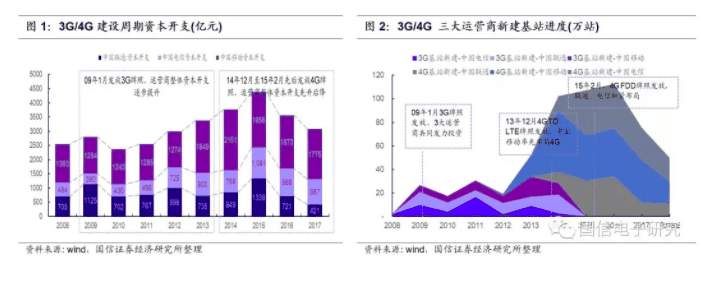
Picture from: Guoxin Electronics Research Team
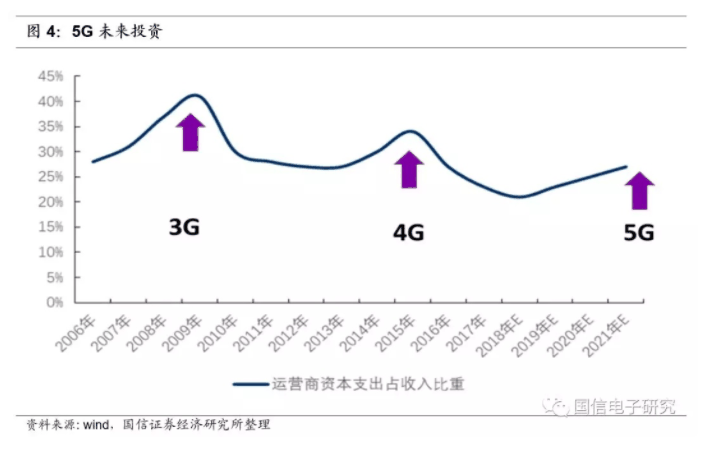
Picture from: Guoxin Electronics Research Team
In June 2019, the Ministry of Industry and Information Technology issued 5G commercial licenses to China Telecom, China Mobile, China Unicom, and China Radio and Television. China has also become the fifth country to officially commercialize 5G after South Korea, the United States, Switzerland, and the United Kingdom. Based on this calculation, combined with industry forecasts, 5G investment may reach its peak in 2022.
5G base station cost analysis
1. 5G base station construction cost analysis
5G is not only a technical problem, but also an economic arithmetic problem. 5G network construction costs are high. It is generally predicted that the domestic 5G network construction cost will exceed one trillion yuan.
At present, the 5G network is still in the construction period, and the three major operators and China Railway are the most important paying entities. Their dividends still focus on the upstream and midstream supply chains and providing solutions to reduce costs and increase efficiency.
Therefore, at this point in time, only by dismantling the construction costs of 5G networks can we capture the capital flow of the industry chain.
The 5G mobile communication network consists of three parts: core network, bearer network, and wireless network. The wireless network can be simply understood as a base station, and the bearer network mainly consists of routers/switches, optical fiber cables, and wavelength division equipment. The core network is essentially a very large program-controlled switch. The current construction focus is mainly on the laying of base stations, especially macro base stations.
In China, the base station construction part is undertaken by China Railway Group, and operators are charged rent based on the volume and space used. Therefore, we can simply make an inference from China Railway's financial data.
In fiscal year 2019, China Railway's total operating costs were 65.1 billion yuan, of which depreciation and amortization were 45.4 billion yuan, site rental costs were 600 million yuan, maintenance costs were 60 yuan, and labor costs were 5.86 billion yuan.
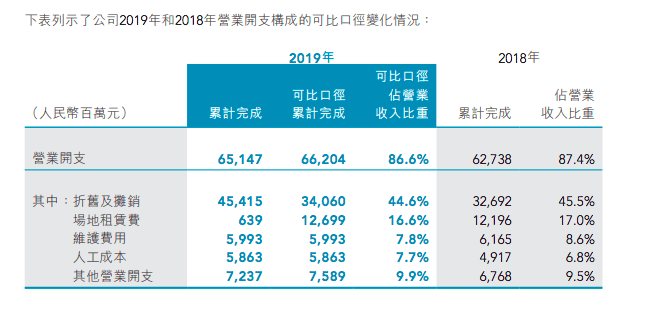
Image from: China Railway’s financial report
According to relevant industry statistics, the main direct investment in building a 5G base station mainly includes equipment costs, land rental costs, construction costs, operation and maintenance costs, etc. The cost is likely to be around 300,000 yuan.
According to the "China Mobile 2020 5G Phase II Centralized Procurement of Wireless Network Main Equipment" information, the purchase price of a 5G single station is approximately between 134,900 yuan and 161,200 yuan, and the average single base station price is 159,700 yuan.
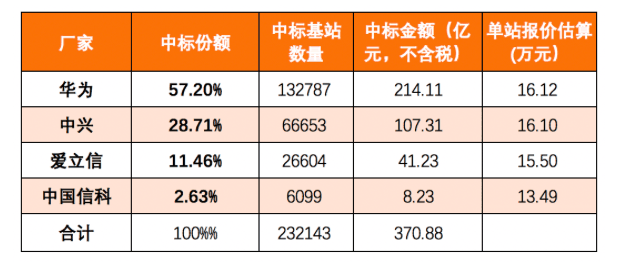
Picture from: Internet mercenary
In addition to base station equipment, energy systems often need to be configured, mainly including cabinets, power cabinets, energy storage systems, etc. According to public information and industry information, the prices are around 5,000 yuan, 5,000-10,000 yuan, and 30,000 yuan respectively, with a total investment of about 40,000 yuan.
In terms of construction costs, depending on the type of ironwork, the price ranges from tens of thousands to hundreds of thousands of yuan. Forum information in the communications industry mentioned that the cost of a floor-mounted pole base station without machine rooms and supporting facilities is likely to be around 10,000 yuan; the cost of a 50-meter-high ground tower with its own machine room and supporting facilities is likely to be around 400,000 yuan.
Land rental costs are also considered to be one of the current investments in 5G network construction. Dou Li, president of the China Tower Communications Technology Research Institute, once said that in the current critical stage of centralized 5G construction and some key construction projects, there are outstanding problems such as difficulty in site selection, difficulty in site entry, and high coordination fees and site rental fees. Forum information shows that rents in first-tier cities may sometimes reach 50,000 to 60,000.
Based on the above costs, the cost of a 5G base station is likely to be at least around 200,000-400,000. At present, operators are building 5G macro base stations, and most of them are adding 5G main equipment to existing 2/3/4G site sites. The actual cost should be lower than the cost of building a new base station. The cost of base stations in special environments has increased significantly. For example, the construction cost of each 5G base station on Mount Everest in 2020 is more than 1 million yuan, and the annual maintenance cost is about 160,000 yuan, of which the construction cost of a single 5G station exceeds 2 million yuan. Based on calculations based on the 2020 5G deployment plans and 5G investment data of the three major operators, the average deployment cost of each 5G base station is also in the price range of 320,000-400,000.
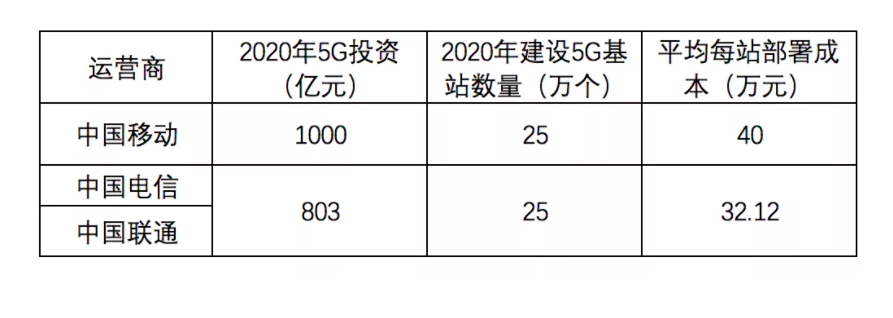
Picture from: Internet mercenary
2. Analysis of 5G base station operation and maintenance costs
Electricity bill is a major expense for the three major operators. According to public information, China Mobile's electricity expenses alone exceeded 50 billion yuan in 2017, and the total power consumption in 2018 reached 24.5 billion kilowatt-hours.
From 4G to 5G, the power consumption of a single 5G base station is likely to be 2-4 times that of 4G base stations. Theoretically, the number of 5G base stations is about 6 million. According to statistics from the Ministry of Industry and Information Technology, in 2019, the total number of 4G base stations in China reached 5.44 million. This means that the electricity bill of the 5G network is likely to be about three times that of 4G. Previously, Yan Binfeng, director of the Technical Committee of China Unicom Research Institute, also mentioned that it is expected that after the 5G network is completed, the electricity bill at the base station will be more than three times that of 4G.
Previously, Yang Fengyi, deputy director of the China Telecom Technology Innovation Center, publicly stated that the total electricity bill for mobile base stations of the three operators in 2018 was approximately 24 billion yuan. Based on this, it is speculated that after the 5G network is completed, the electricity bill at the base station will be about 80 billion yuan. Considering that the 6 million base stations of the 5G network will be constructed in seven years, and the peak period of network construction is generally within three or four years after the license is issued, electricity costs are likely to increase in the first three to four years.
In addition to base station electricity bills, data centers will also cause a large amount of power consumption. According to data from the website of the Ministry of Industry and Information Technology, as of the end of 2017, the total number of various types of data centers in use in my country had reached 285,000, and the annual electricity consumption exceeded 120 billion kilowatt hours, accounting for approximately 2% of my country's total social electricity consumption. Some people have briefly calculated before that the electricity bill and whether the data center is energy-saving determine the electricity bill of the data center. The electricity bill of a B-level data center alone will exceed 100 million yuan a year.
Because communication equipment cannot be powered off, in actual circumstances, the priority of ensuring the continued healthy operation of the equipment is higher than "energy saving" for a certain period of time; at the same time, communication equipment is professional, and companies that provide energy products and services do not have the ability to perform "energy saving optimization" from the equipment itself. Therefore, in the short term, energy saving on the base station side is not suitable as a business direction. In fact, some companies are already providing cooling solutions for computer room testing, such as Yilingjie.
Judging from the actual situation, the main driving force in the direction of 5G energy saving comes from equipment manufacturers and operators. For example, in order to cope with the huge pressure of energy consumption, China Mobile formed a project team early on to carry out research on energy-saving technology for base stations. Recently, China Mobile Research Institute also released the "5G Base Station Energy Saving Technology White Paper".
Dismantling of hot areas in the 5G upstream industry chain
Overall, the infrastructure dividends of 5G mainly come from the explicit factors of large-volume upgrading of technology and the expansion of usage scale, as well as the hidden factor of domestic substitution.
Next, we will also dismantle some of these specific subdivisions.
1. Small base station
In the trillion-level communication infrastructure market, communication equipment often takes the lead. Changjiang Securities analyzed that in 5G investment, the radio access network (RAN) accounts for at least 50%-70% of the total investment and is the highlight of 5G investment. The radio access network is composed of a large number of base stations.
Although there are differences in the forecast data on the number of macro base stations built in China in the 5G era, generally speaking, the number is more than 5 million units. Changjiang Securities predicts that China's construction scale will be around 4 million stations from 2020 to 2025 (the number of 4G base stations in China at the end of 2018 was 3.72 million stations). Based on the fact that China's base stations account for half of the world's base stations, the global 5G base station construction volume will be around 8 million. The analysis of Huatai Securities is more optimistic. According to the construction cycle of China's 5G network is 6 years (pre-commercial in 2019, official commercial in 2020, the construction cycle is 2020~2025), the number of 5G base stations is predicted based on the neutral assumption of base stations, and is likely to reach 5.064 million.
For a long time, the technical barriers to macro base station equipment have been high, and the four major companies represented by Huawei, ZTE, Nokia, and Ericsson have a stable industry position. But with the frequency change from 4G to 5G, small base stations have ushered in development dividends.
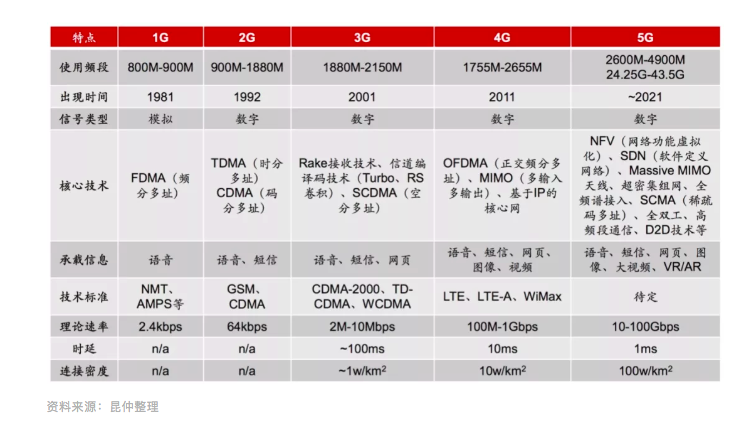
Picture from: Kunzhong
Small Cells began commercial use in the 3G era, mainly to supplement networks in areas with dense traffic. From 4G to 5G, the communication frequency band used has increased significantly, from 1755-2655MHz to 24.25G-43.5GHz. Generally speaking, the higher the spectrum, the closer it travels. In the 4G era, it was possible to achieve large-scale network coverage through macro base stations, but in the 5G era, the cost is basically unbearable.
According to relevant research, the current typical coverage radius of 4G base stations is about 1-3 kilometers. In actual cities, it is generally 500 meters, and in central urban areas it is about 200-300 meters. In particularly high-density areas, it even reaches the 100-meter level. Theoretically, the typical coverage radius of 5G base stations is about 100-300 meters. To achieve a high-quality user experience, the density may be higher. It is foreseeable that there are few operators around the world who can afford such high costs.
Considering that indoor scenarios currently require the most capacity, the networking model that achieves large-scale coverage through macro base stations in the 4G era is basically impossible to continue in the 5G era. Data shows that in the 4G era, 70%-80% of mobile traffic comes from indoors; at the same time, 80% of operator user complaints come from poor indoor signal quality.
The characteristics of small base stations at the beginning of their design - coverage distance of tens of meters and dense deployment in the area, meet the coverage and power consumption requirements of high-frequency communications in the 5G era. Some data believe that in the 5G era, the ratio of macro base stations to small base stations may reach 1:8. If the domestic demand for macro base stations is 4 million units, the average selling price of small base stations during the 5G construction cycle is 3,000 yuan/unit, and the market size can reach about 100 billion yuan.
Optimistic expectations for the development prospects of small base stations have promoted the activity of the primary and secondary markets. In the secondary market, the stock prices of companies with small base station business such as Bangxun Technology, Sanyuanda, Comba Communications, Chaoxun Communications, and ZTE have increased. In the primary market, companies such as Baicaibang, Mikas, Yunji Zhongzhi, ZTE Wangkun, etc. are also engaged in related product research and development.
However, according to the bidding information of the three major operators, bidding for 5G small base stations is not yet open.
2. Optical chip
The optical communication industry mainly consists of three parts: "optical devices, optical fiber cables, and optical equipment". Optical devices are the core of optical communication systems, and optical chips are also the core components of optical devices. Its performance and transmission rate directly determine the transmission efficiency of optical fiber communication systems. Its cost generally accounts for 30-50% of optical devices and shows an increasing trend.
As an important part of the industrial chain in main communication equipment, optical chips have also received attention. Optical chips mainly use the generation and absorption of photons accompanied by the internal energy level transition process of semiconductor materials (such as InP series and GaAs series, etc.) to achieve mutual conversion of photoelectric signals.
Industry insiders believe that the commercialization of 5G, the expansion of transmission network capacity in the telecom market, and the large-scale construction of base stations may bring about a direct market of billions of dollars.
On the one hand, due to the increase in 5G spectrum frequency, the attenuation of signals penetrating buildings increases, and the density of station construction will increase compared to the 4G era. The number of base stations is likely to reach at least 4-5 million. On the other hand, looking at a single base station, the base station architecture in the 4G era is mostly fronthaul-backhaul. In the 5G era, it may evolve into fronthaul-midhaul-backhaul. The number of optical modules required for a single base station will also increase, possibly reaching more than 8. The combination of the two is expected to drive a multi-billion dollar market.
China Mobile Investment Company has also made calculations in the report "Insights into 5G, Investing in the Future". According to estimates, assuming that the number of 5G macro base stations in my country reaches 2 million, the interface between the base station and the client side of the connected transmission equipment will require at least 4 million optical modules. Taking into account line-side interface optical modules, dedicated line user optical modules, data center optical modules, etc., it is expected that the entire 5G network will bring a demand for high-speed optical modules that will reach tens of millions. The total number of 5G optical modules is 2 to 4 times that of the 4G era.
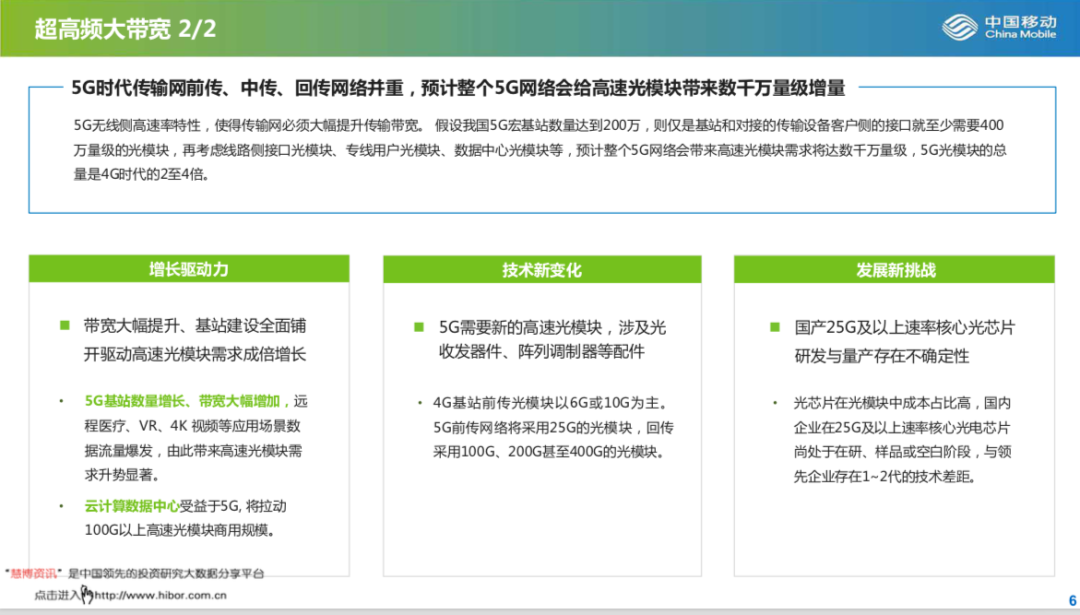
Picture from: China Mobile Investment Company’s “Insight into 5G, Invest in the Future” report
Generally speaking, the higher the speed of the optical chip, the higher the transmission efficiency of the optical fiber communication system, but the higher the difficulty of research and development and mass production. The design of high-speed optical chips needs to ensure signal quality while increasing the transmission rate. It will also become more difficult to control the frequency at which the laser turns on and off.
Thanks to the rapid expansion of the communications industry, the industry's emphasis on the localization of optical chips has also been increasing. In recent years, certain results have been achieved. For example, the localization rate of optical chips with a 10Gb/s rate is close to 50%, but the localization rate of 25Gb/s and above does not exceed 5%. It relies heavily on American and Japanese companies such as New Broadcom, MAOM, Mitsubishi, Sumitomo, and Oclaro, and has also become the focus of research and development for companies related to the primary and secondary markets in recent years.
In the secondary market, Guangxun Technology, Hisense Broadband, Huagong Zhengyuan, etc. have also entered the market through self-research or acquisition; in the primary market, Yunling Optoelectronics, Guanganlun, Changguang Huaxin, Zhongke Optical Core, Yuanjie Technology, Shijia Optoelectronics, Huaxing Semiconductor, Xinyun Optoelectronics, Guangzi Technology, Chenxiao Technology, Dalian Youxun, Corewave Micro, etc. are also engaged in related businesses.
3. RF front-end
5G terminals are ready to launch, and the radio frequency front-end is also considered to be a link with commercial value. Its dividends come not only from the increase in usage scale, but also from technological innovation.
In addition to the increased demand for radio frequency at base stations, 5G mobile terminals will also provide new opportunities for radio frequency front-end devices.
Qorvo predicts that in the next 10 years, 5G terminals will become the fastest growing part of the mobile phone industry. According to Strategy Analytics forecasts, 5G terminal shipments will increase from 2 million units in 2019 to 1.5 billion units in 2025. But it is not easy to design a 5G mobile phone with stable signals and support for multiple communication bands. Intuitively, the number of frequency bands that 5G mobile phones need to handle has increased significantly. Although the 5G standard has not yet been finalized, considering that 4G LTE has increased to 52 bands, it is likely to increase to more than 60 in 5G.
Secondly, 5G adds high-frequency signals, and the performance requirements for radio frequency front-end devices are also further improved. The application of MIMO and CA technologies in 5G further increases the complexity of filters and PAs. This also increases the value of the RF front-end accordingly. Market research agency Navian predicts that the market size of radio frequency front-end chips in mobile terminals alone will reach US$21.2 billion in 2020, with a compound annual growth rate of 15.4%.
Relevant analysis shows that for a 4G full-network mobile phone, the RF front-end package often contains 2-3 power amplifiers, 2-4 switches, and 6-10 filters, and its cost is about 8-10 US dollars. However, in the 5G era, the cost of the RF front-end package is likely to reach 25-40 US dollars, exceeding the main chip of the mobile phone.
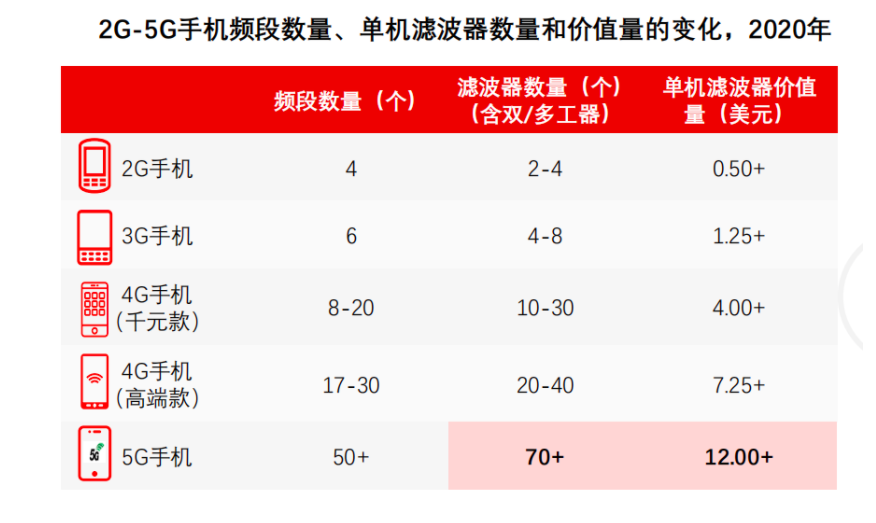
Picture from: UIS Capital
Radio frequency is considered to be the crown jewel of analog chips, and localization has been difficult to break through. It is reported that European and American manufacturers have occupied approximately 95% of the global RF market.
Radio frequency is generally composed of radio frequency devices such as power amplifiers (PA), filters, duplexers, radio frequency switches, and low noise amplifiers (LNA). Among them, filters account for the largest proportion of the device. Avago, Qorvo and other giants have a market share of about 95%. Domestic listed companies include Maijie Technology, etc., and non-superior companies include Deqing Huaying, Anhui Yunta, Haoda Electronics, Tianjin North, Zhouxun Technology, etc. The amount of power amplifiers is second, and the market is monopolized by Skyworks, Qorvo, Murata, etc. Domestic listed companies include Sanan, etc., and primary market companies include Vanchip, Huntersun, Guofeixiang, etc. In this aspect of switching, Israel's TowerJazz has a relatively high share, and domestic listed companies include Zhuosheng Micro.
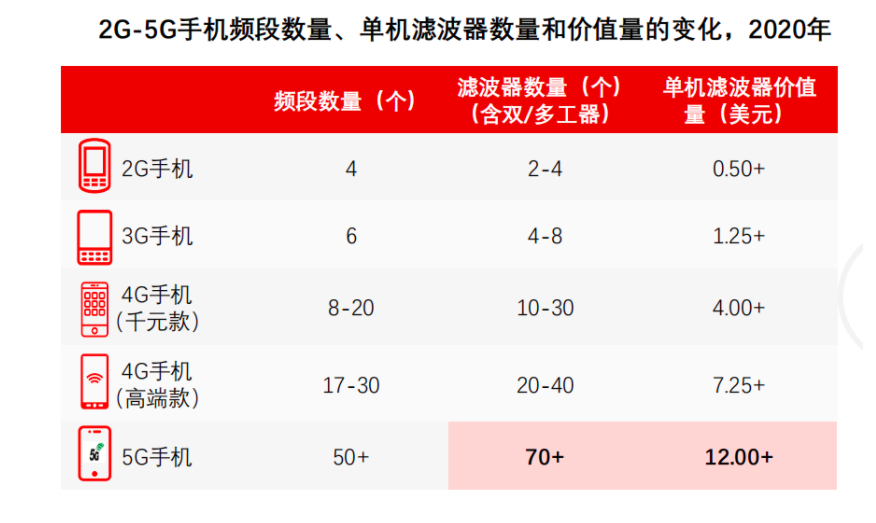
Picture from: UIS Capital
Analysis of domestic substitution in 5G upstream links
In addition to the commercial value of the communications industry, the strategic significance is obvious. With changes in international relations, 5G has become one of the hot spots in the game between great powers.
Domestic substitution has also become a topic that must be mentioned in this industry.
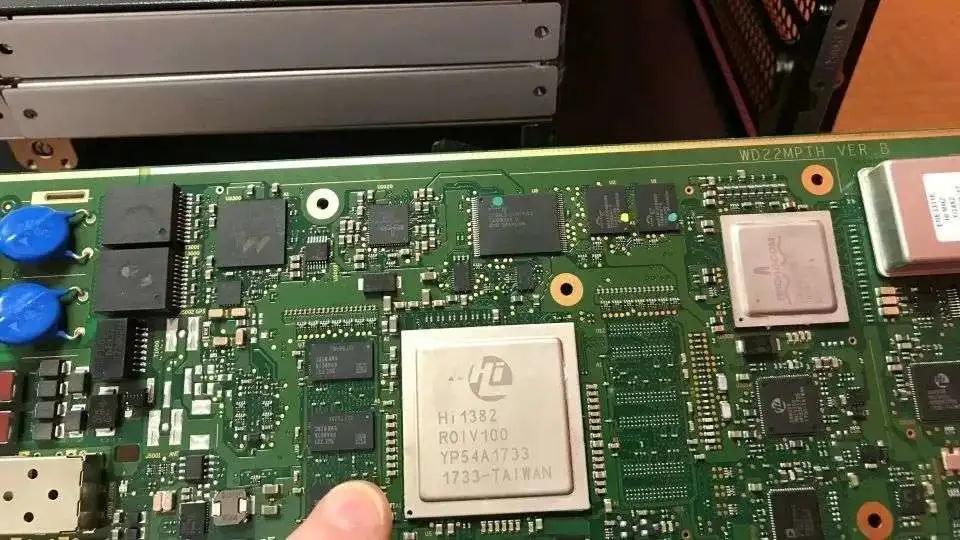
The link that gets the most attention in 5G is the base station. Overall, for the key components currently involved in 5G base stations, Huawei HiSilicon can basically complete independent research and development, and ZTE can complete part of the research and development. However, the most advanced process chips currently used in base stations have adopted the 7nm process, and are considering introducing the 5nm process. Huawei has entered the "entity" List", TSMC may not be able to produce new orders. ZTE is currently not affected because it has not entered the "Entity List"; if Huawei's 7nm Tiangang chip cannot be produced by SMIC, it may have to use 14nm process chips, and base station performance may be affected.
In September this year, professional investigation company Fomalhaut Techno Solutions assisted the Nihon Keizai Shimbun in dismantling Huawei's latest 5G base station and came to a similar conclusion. They found that the cost of Huawei's 5G base station unit is US$1,320, and the proportion of parts designed by mainland Chinese companies is about 48.2%. However, about 60% of the chips designed by Chinese manufacturers are manufactured by TSMC, and only about 10% of domestic parts are not affected by the ban at all.
This survey also shows that the proportion of US components used in Huawei's 5G base station chips has reached 27.2%, including FPGA chips (from Lattice, Xilinx), memory (from Cypress), switch chips (from Broadcom), amplifiers (from ADI), and store management chips (from TI, ON Semiconductor). South Korea supplies memory chips made by Samsung Semiconductor, while Japanese suppliers include TDK, Seiko Epson and Nichicon.
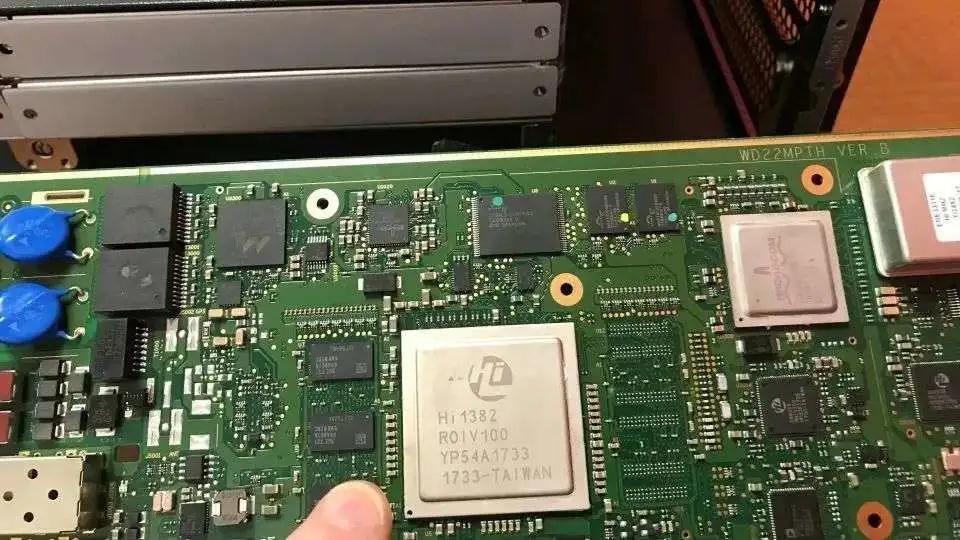
Picture: Huawei 5G base station chip unit
Research from the domestic market has similar conclusions. Taking the Cheung Kong Graduate School of Business Investment Research Center as an example, its research believes that domestic manufacturers such as key components and Huawei base station core chip HiSilicon have design capabilities, but such as 7nm Tiangang DSP chips and HiSilicon Kunpeng CPU chips were previously manufactured by TSMC, and SMIC may not all be able to meet the process and process requirements; PLLs (phase-locked loops) are mainly from ADI and TI, and domestic manufacturers have almost no alternatives; RF-related devices such as PA chips mainly include NXP, Sumitomo, and Infineon, and domestic manufacturers can only cover low-end products.
Picture from: Cheung Kong Graduate School of Business Investment Research Center
In the field of optical communications involved in 5G, domestic substitution of mid- to low-end products has been partially realized. The proportion of domestically produced Huawei and ZTE optoelectronic chips is still relatively small. At present, domestic manufacturers of optical component products above 25G are relatively less competitive.
In the direction of 5G mobile phone terminals, the proportion of domestic components is relatively high. However, the core chips of domestic 5G terminals are still manufactured by TSMC and are affected by the "entity list".
Professional investigation company Fomalhaut Techno Solutions assisted "Nihon Keizai Shimbun" in disassembling Huawei Mate 30 For 5G mobile phones, the results show that the proportion of Chinese-made parts used is 41.8%, which is 16.5 percentage points higher than the 4G version of the old model launched before the US sanctions; among them, the more difficult communication chips also partially use products developed by HiSilicon; in the 4G version, only a few parts such as glass shells are left, accounting for 11.2% of the US parts, accounting for 1.5% of the total. However, it is worth noting that Huawei's current mobile phone core processors, such as Kirin 980 and 990, use the 7nm process and are manufactured by TSMC, so they are also affected by the "Entity List".
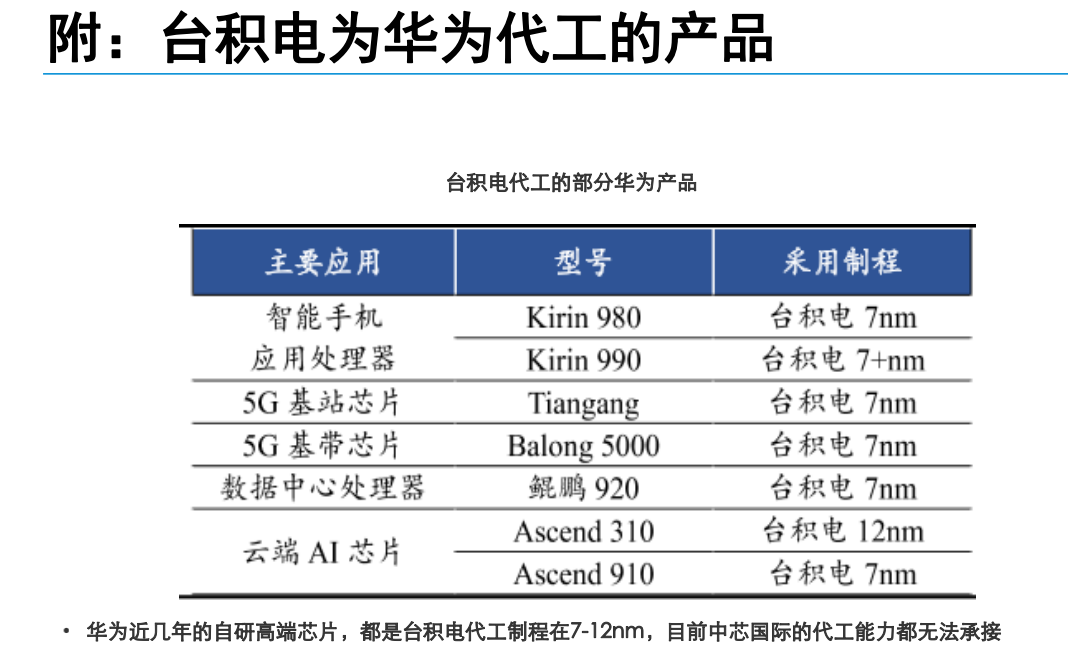
Image source: Investment Research Center of Cheung Kong Graduate School of Business
In addition, as for the operating system in smartphones, domestic manufacturers still use the open source Android operating system, but Google-owned applications such as Chrome, Gmail, and YouTube cannot be used, which may affect their overseas sales.
The iteration of the trillion-scale communications market often means dividends for the entire industry chain. The above part of this article only introduces some representative upstream links. In addition to the dividends from upstream infrastructure and terminal supply chain, more downstream applications have higher expectations. The report "Insight into 5G, Invest in the Future" estimates that upstream infrastructure investment may reach 3.3 trillion yuan in 2025, and downstream applications are expected to reach 6.6 trillion yuan; by 2030, these two figures may reach 6.3 trillion and 10.6 trillion, with the latter accounting for approximately 12.8% of China's GDP in 2017. Regarding the industry applications of 5G, we will also dismantle it in detail in the next report.
Note: This article is reproduced from the Internet and supports the protection of intellectual property rights. Please indicate the original source and author when reprinting. If there is any infringement, please contact us to delete it.
Company phone number: +86-0755-83044319
Fax/FAX: +86-0755-83975897
Email: 1615456225@qq.com
QQ: 3518641314 Manager Li
QQ: 332496225 Manager Qiu
Address: Room 809, Building C, Zhantao Technology Building, No. 1079 Minzhi Avenue, Longhua New District, Shenzhen
Related Recommendations
Exclusive Interview with Li Gang of Yunfan Ruida: The Precision of Millimeter-Wave Radar Products and the Warmth of Humanity
2026-07-22
3274
RF Passion, Craftsman’s Journey: Over 30 Years of Steadfast Dedication — Interview with Kinghelm Chief Engineer Mr. Qin hongxiang
2026-06-26
3310





 粤公网安备44030002007346号