
























Service Hotline
News

News
Summary of major bonding wire manufacturers in China
2022-03-16
1550
1
Semiconductor bonding wire products serve as electrical connection leads between chips and external circuits and are essential core basic raw materials in traditional packaging processes such as semiconductor integrated circuits, discrete devices, sensors, and optoelectronics.
This research report conducts research and forward-looking analysis on the development and future prospects of the semiconductor bonding wire industry in 2019 from the four main packaging applications of integrated circuits, semiconductor discrete devices, power semiconductors, and optoelectronic devices.
2
Domestic current situation of bonding wire1
1. Current status of packaging and testing market
According to data released by the U.S. Semiconductor Industry Association (SIA), global semiconductor sales in 2019 were US$100 million, a decrease of approximately 12.1% compared to 2018, and the first decline in many years. However, compared with the decline of the global semiconductor market, mainland China's semiconductor packaging and testing market, as the world's first echelon, is still bucking the trend and showing a growth trend. According to statistics from the Packaging Branch of the China Semiconductor Industry Association, the domestic IC packaging and testing industry grew slowly in 2019. The sales revenue of the packaging and testing industry increased from 196.56 billion yuan in 2018 to 206.73 billion yuan, a year-on-year increase of only 5.2%. Among them, China’s semiconductor packaging materials market reached 35.986 billion yuan, a year-on-year increase of 8.8%.
2. Bonding wire market demand
As a core component of semiconductor packaging and testing materials, from a global market perspective, the bonding wire industry is inevitably impacted by the overall slowdown in the growth of the global semiconductor market. However, in the Chinese mainland market, due to the adverse growth of the semiconductor packaging and testing industry, especially the rise in scale of the LED packaging market, bonding wires still have large demand growth. In 2019, the total demand for semiconductor packaging bonding wires in China's domestic market was 17.4 billion meters, a year-on-year increase of 6.7% in 2018.
1. Domestic demand for integrated circuit bonding wires
According to data released by relevant industry organizations and incomplete statistics collected from domestic manufacturers, the number of integrated circuit packaging in China reached 160 billion units in 2019, and the total demand for bonding wires was approximately 8.5 billion meters.
2. Domestic semiconductor discrete device bonding wire demand situation
In 2019, the number of packaged semiconductor discrete devices in China was 806.8 billion, and the total demand for bonding wires was 2 billion meters. Due to the rapid development of high-speed rail and energy vehicles, the demand for high-power devices has grown rapidly. Although the scale is not as large as that of low-power devices, it also has a certain effect on the growth of bonding wires themselves.
3. Demand for LED packaging bonding wires
The scale of packaging of optoelectronic devices such as LEDs is expanding rapidly. In 2019, China's domestically packaged LED lamp beads, special lighting modules, optical communication modules, infrared receiving and transmitting, ultraviolet LEDs, MIniLED and other emerging optoelectronic devices totaled 2.6 trillion units, and the demand for bonding wires was 6.8 billion meters.
3. Distribution and characteristics of China’s bonding wire industry
-
Production geographical distribution characteristics
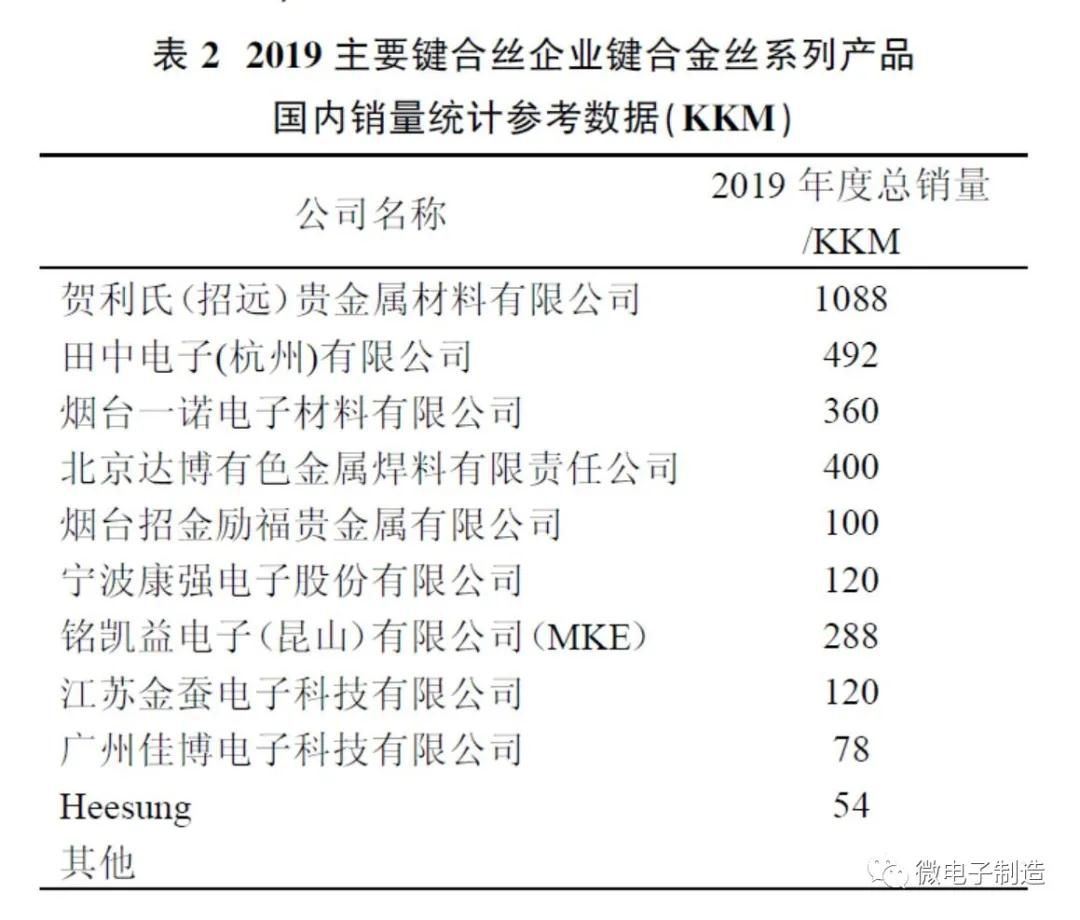
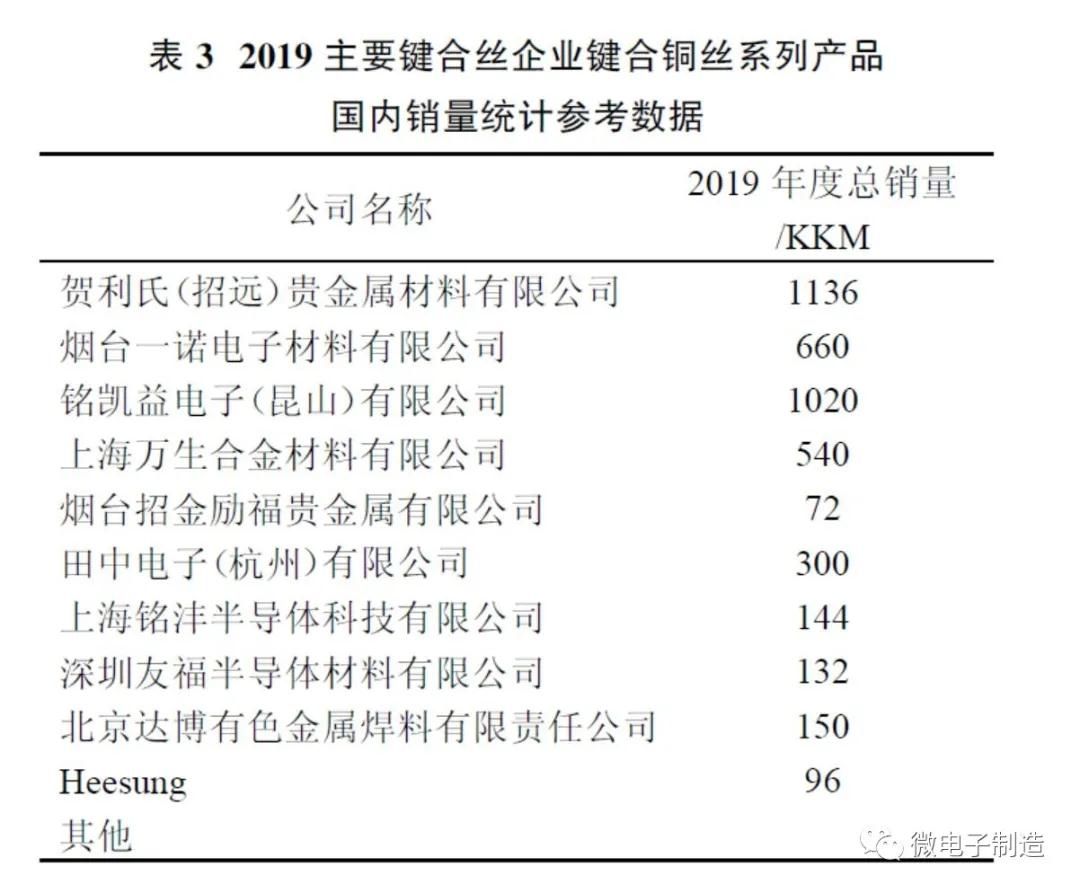
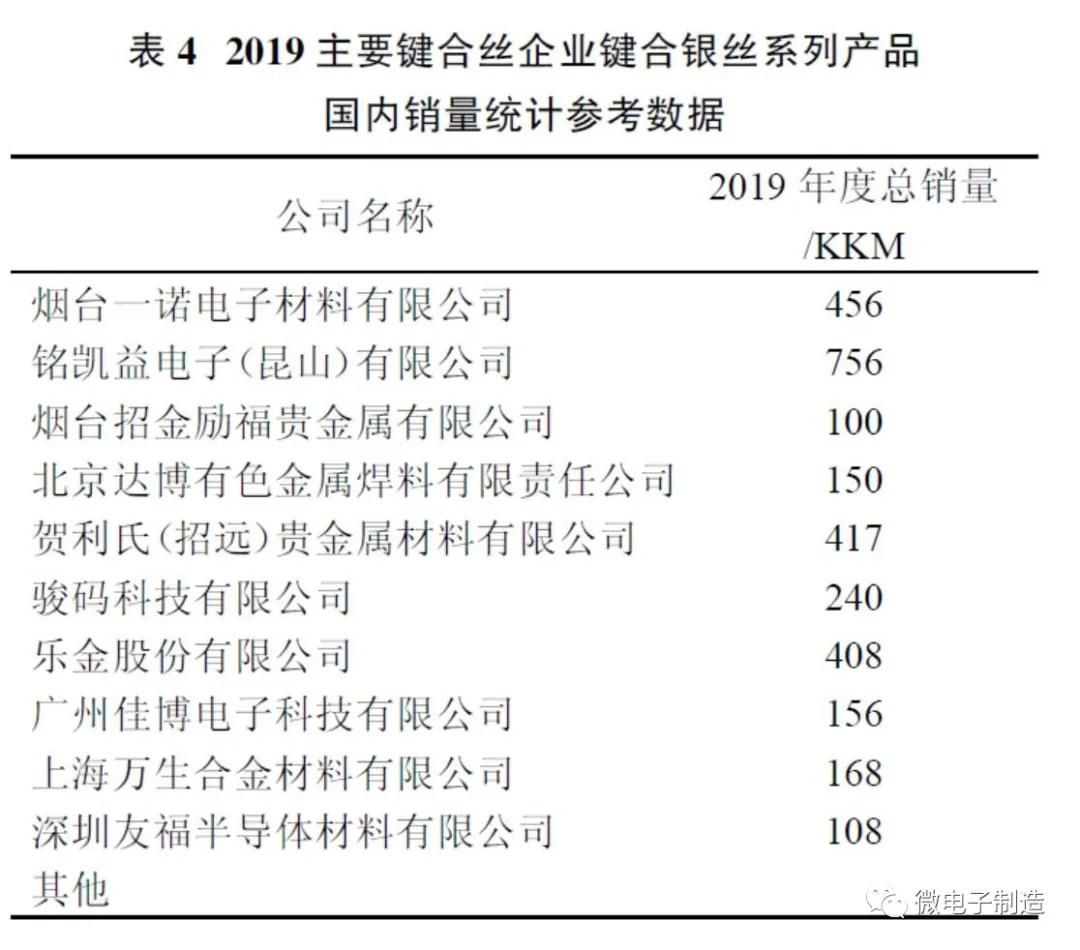
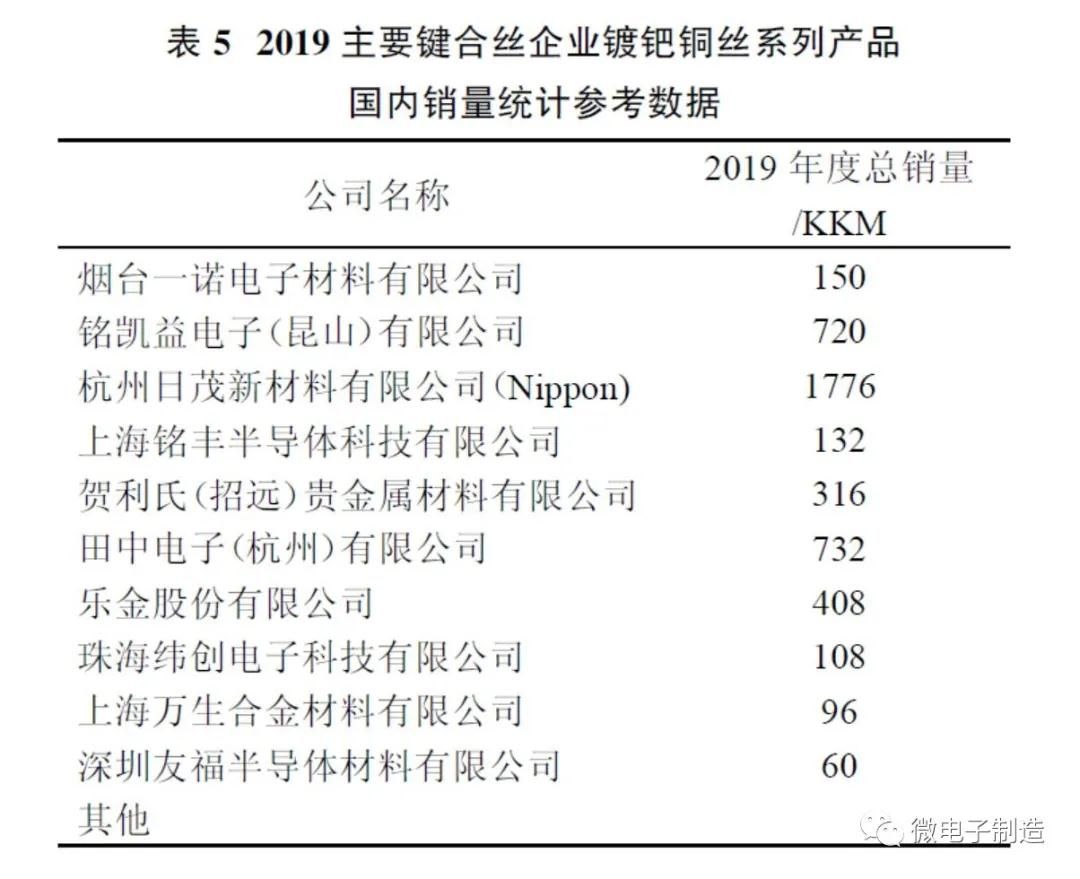
China is a major manufacturing country for semiconductor bonding wire products in the world. Whether it is a foreign brand or a domestic national brand, there are more than 20 bonding wire professional manufacturing plants of various sizes. Because bonding wire is a core material for semiconductor packaging, there are many product categories, complex application scenarios, high quality requirements, and product manufacturing has certain technical barriers and process difficulties. There are not many domestic companies engaged in the production and manufacturing of a full range of bonding wires. The products are relatively single or low-end, and the distribution of production areas is relatively scattered. Regional characteristics are not very obvious. In comparison, from the perspective of enterprise scale, development history and market radiation capabilities, foreign brand manufacturers still occupy the majority of the market share. Shandong is the most influential main producing area of China's bonding wire industry. It is home to several of the largest traditional bonding wire manufacturers in the country: Yantai Yinuo, Heraeus, Zhaojin Lifu, etc., meeting more than 30% of the country's market demand. Among them, Yantai Yinuo Electronics is a national enterprise with independent research and development capabilities and the largest production capacity among purely domestically funded brand enterprises. Due to the concentration of the semiconductor packaging industry in Jiangsu, Zhejiang and Shanghai, the bonding wire industry has also developed rapidly in recent years, becoming another major bonding wire producing area in China besides Shandong. Traditional bonding wire manufacturers include: MKE, Tanaka, Nippon..., mainly processing semi-finished products from foreign brands. In recent years, some emerging domestic manufacturers have also gradually emerged, such as Jiangsu Jincan Electronic Technology Co., Ltd. There are also manufacturers located in North China, South China and Southwest China, such as Guangzhou Jiabo Electronics, Guangdong Junma Technology, Shenzhen Youfu Electronics (Sichuan Weiner), etc., which are relatively small in scale or have relatively single product types.
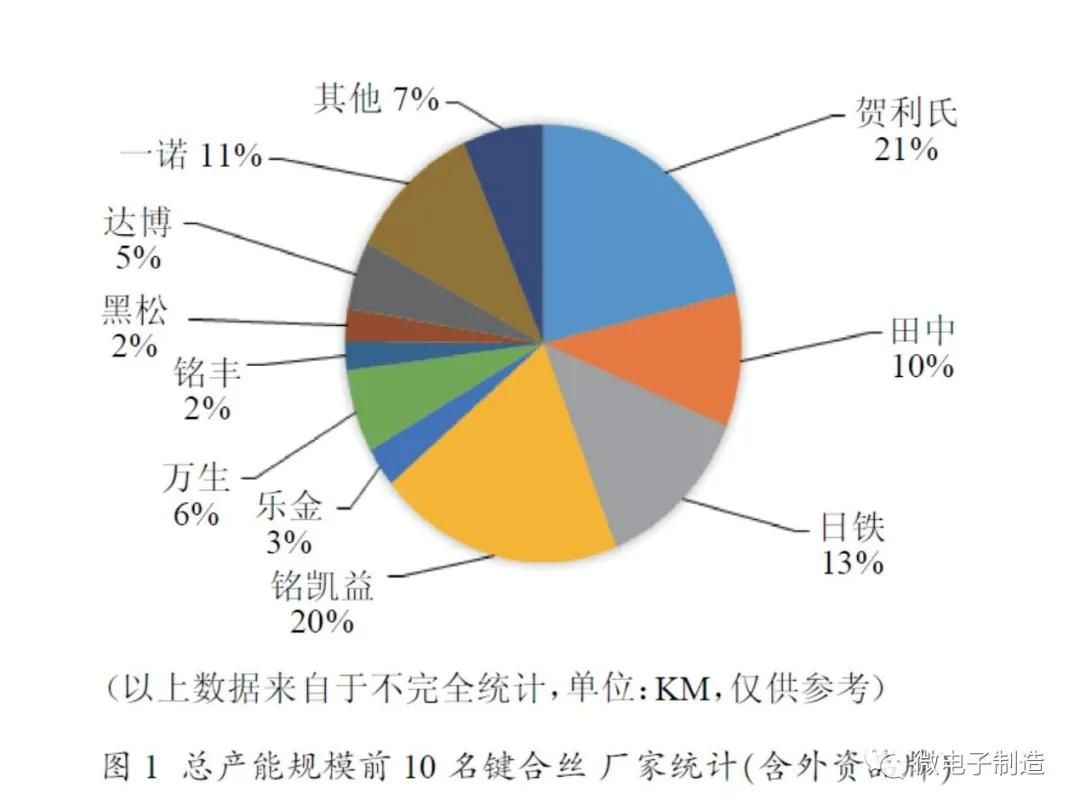
2 Market demand distribution
At present, the bonding wire market demand is mainly concentrated in the Yangtze River Delta, Pearl River Delta, and Bohai Rim. The southwest and northwest regions have also experienced rapid industrial adjustment and upgrading in semiconductor packaging in recent years, and have gradually become important areas for bonding wire demand. Domestic packaging and testing companies have expanded from the traditional pattern of being concentrated in the Yangtze River Delta, Pearl River Delta and the Beijing-Tianjin and Bohai Bay areas to the central and western regions, forming a four-legged stance. The central and western regions, especially Xi'an, Wuhan, Chengdu, Chongqing and other places, have regarded the IC industry as a strategic focus for development, and the packaging industry has achieved considerable development.
The Yangtze River Delta region mainly focuses on semiconductor integrated circuit packaging. There are many world-class international semiconductor integrated circuit packaging manufacturers in this region (Changdian Technology, Tongfu Microelectronics, ASE, Amkor, Silicon Precision, UTAC...). It is the largest application market for bonding wire in China, accounting for more than 70% of the total domestic demand for bonding wire. In recent years, the LED packaging industry in Zhejiang and northern Jiangsu has also risen rapidly, and the demand for bonding wires has further increased.
Jiangxi, the Pearl River Delta of Guangdong, and Fujian are the main production areas of China's LED packaging industry. There are many of the world's largest LED packaging manufacturing factories (Mulinsen, Nationstar Optoelectronics, Hongli, Changfang, Jufei, Ruifeng, Tiandian...). The packaging scale is even close to that of some major IC packaging factories. There are more than 1,000 large and small LED packaging factories in total. In addition, South China also has many well-known domestic integrated circuit packaging companies (Saifa, Qipai Technology, Fumman Group, Foshan Blue Arrow...) and many semiconductor discrete device packaging companies. The demand for bonding wire is the second largest market after East China.
The northwest and southwest regions are led by Tianshui Huatian Technology, one of the top three domestic integrated circuit packaging and testing companies. In recent years, Chongqing, Sichuan and other places have also accelerated the strategic layout of the semiconductor industry. The semiconductor packaging market is growing rapidly, and the demand for bonding wires is increasing.
In addition, the Beijing-Tianjin Bohai Sea region is also a market where large-scale integrated circuit packaging and well-known optoelectronic device packaging are concentrated (Beijing Vixon Semiconductor, Tianjin Freescale, Intel, Tianjin Vishay Semiconductor, Dalian AUK, Beijing Yimeixinguang...)
3 product categories
In terms of basic materials, there are four main types of bonding wire products that are currently widely used on the market: bonding gold wire, bonding copper wire, bonding silver wire, and bonding aluminum wire. Broken down from the alloy composition and composite structure, there are mainly pure gold wire, gold-silver alloy wire (also called high gold wire in the industry), silver alloy wire, pure copper wire, copper alloy wire, palladium-plated copper wire, gold-palladium copper wire (multiple metal coating), gold-plated silver wire, pure aluminum wire, silicon-aluminum wire, etc. Different types of bonding wire products have different performance, but they have batch use requirements in different packaging fields.
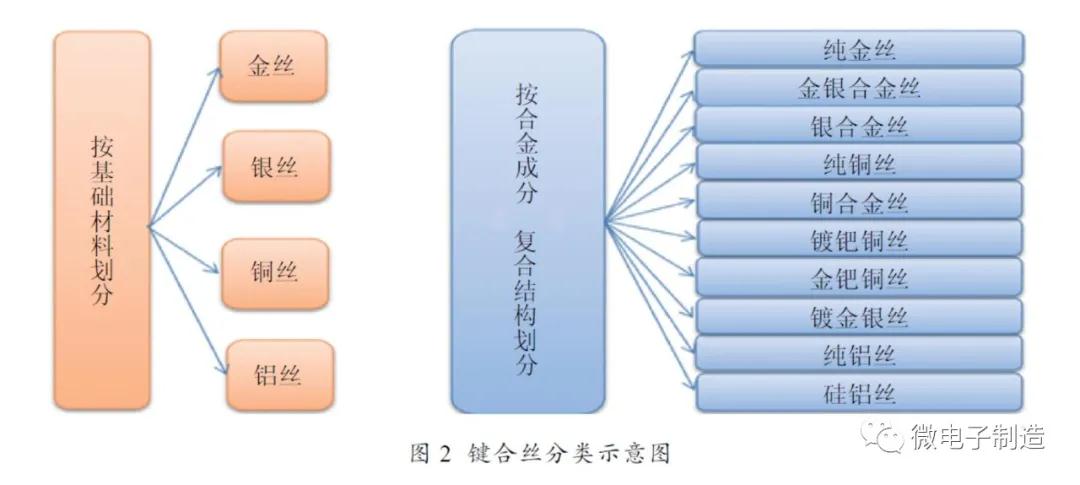
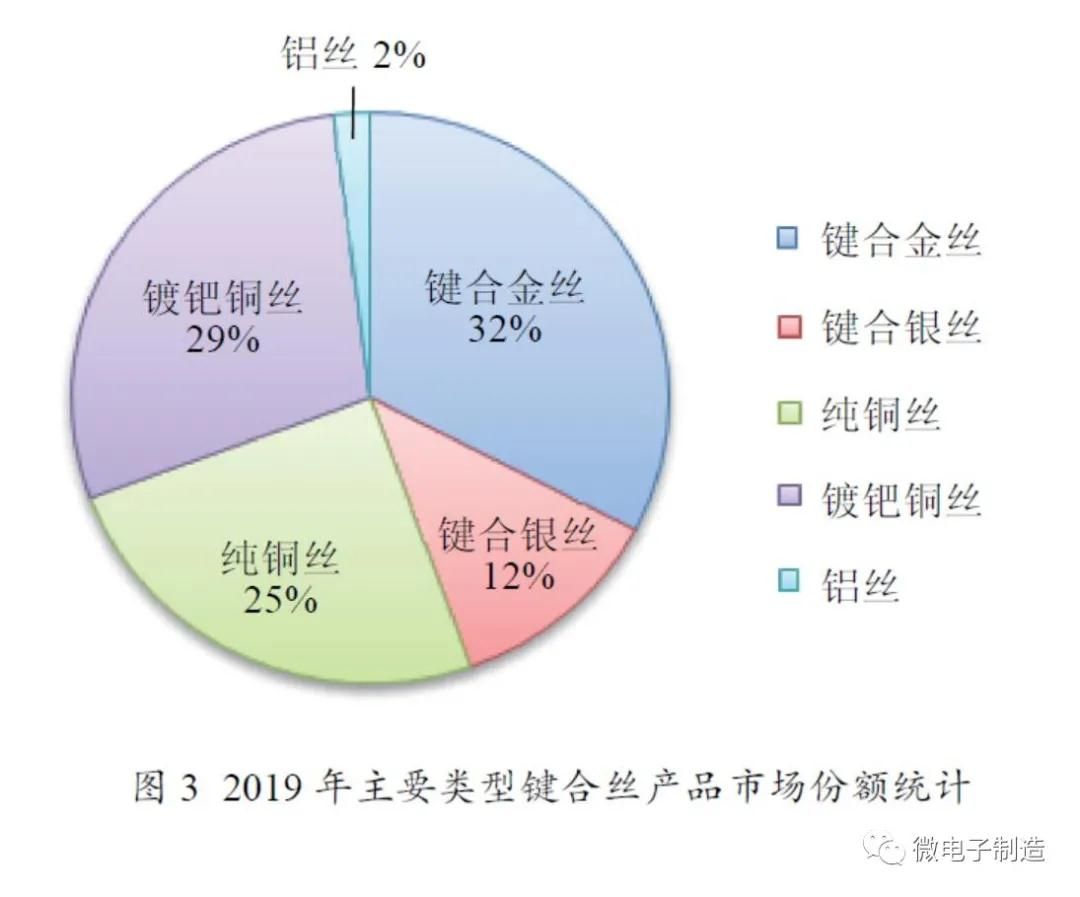
Bonding gold wire still occupies the high-end market due to its unique metal chemical stability and highly efficient process application advantages. It is currently mainly used in high-end IC products, military device modules, LED high-power lighting products, LED TV mobile phone backlight products, optical communication modules, infrared receiving and transmitting tubes, and camera module products. In 2019, bonding gold wire was replaced by low-cost copper wire series and silver wire series products in more and more market applications, and its share has dropped from the original 50% to 33%.
Bonding copper wire products have completely replaced bonding wire products in semiconductor discrete device packaging many years ago, and have gradually become mainstream in general integrated circuit packaging. RGB products for LED displays have also begun to become popular. The latest statistics in 2019 show that the market share of copper wire series products accounts for nearly 25% of the entire bonding wire market;
As a derivative of copper wire products, palladium-plated copper wire series products have begun to become the mainstream of bonding wires due to their higher corrosion resistance and excellent secondary welding characteristics. As the technology matures, its share of integrated circuits and LED packaging products is growing. The latest statistics have reached more than 29%. In the future, as the technology further matures, the industry’s demand for cost reduction increases, and the application of LED packaging products becomes more and more popular, the share of bonding copper wires and palladium-plated copper wires will continue to expand.
Bonding silver wire (silver alloy wire) is rapidly advancing in the application of various LED light source device products and some small flat IC packaging products due to its good bonding performance and cost advantages. As the technology matures and product application processes continue to be optimized, market applications will become more and more widespread, especially in low-power LED light source device products, which will gradually occupy a dominant position. In 2019, the market share of bonding silver wire was approximately more than 10%.
The bonded aluminum wire series is divided into two types: pure aluminum wire and silicon-aluminum wire. It is mainly used in power semiconductor devices (IGBT, MOSFET, UPS, power triode), LED digital tube products, and COB surface light sources. With the development of rail transit, high-speed rail power, aerospace, and shipbuilding With the rise of strong current control industries such as ship drives, smart grids, new energy, AC frequency conversion, wind power generation, and electric vehicles, IGBT products, known as the representative products of the third technological revolution of power devices, are widely used. The pure aluminum wire market size will still maintain a high growth momentum in 2019. In addition to being used in traditional digital tube products and some soft-encapsulated integrated circuits, silicon-aluminum wire products have also been used in the past two years with the development of the electric vehicle industry. Full-digital display automotive instrument assemblies have also become a new market application direction for silicon-aluminum wire products. In addition, bonded aluminum wire has also begun to gain more and more applications in memory card products in recent years due to its good bonding properties and high moisture resistance. In recent years, a new type of aluminum strip product with better performance has begun to be widely used in some high-end products, becoming a powerful substitute for traditional aluminum wire products.
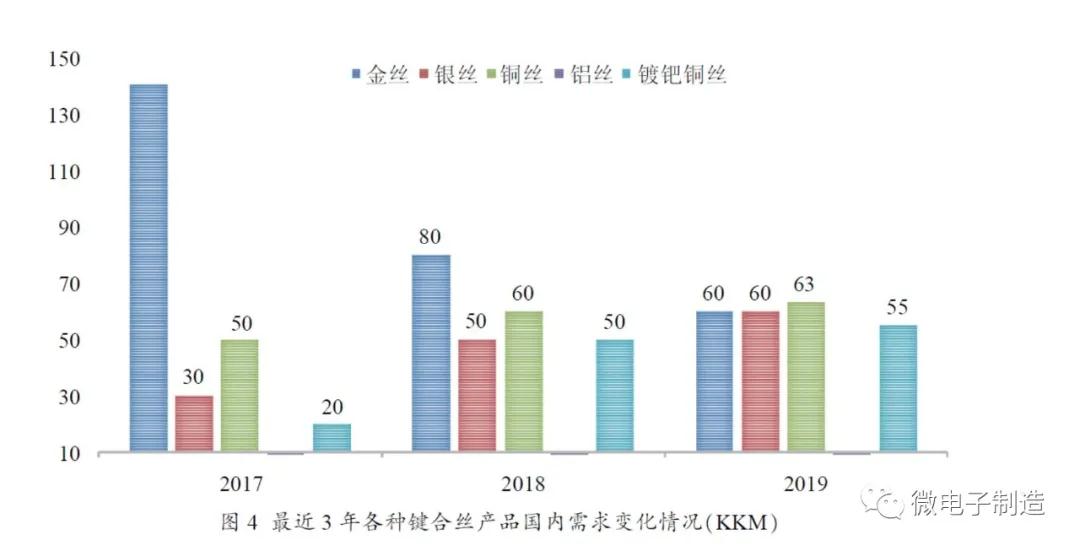
4 Data analysis of major bonding wire manufacturers in China (classified by different types of bonding wires)
5. Improvement of technological innovation capabilities
At present, domestic bonding wire manufacturers have broken through the bottleneck and are at the forefront of the world in the innovation and improvement of low-cost bonding wires: copper wires and silver-plated palladium copper wires. Especially in high-reliability copper alloy wires and silver alloy wire products, they have become industry leaders. In this regard, Yantai Yinuo Electronics is the leader among domestic peers. Other domestic bonding wire manufacturers have also begun to increase investment and market expansion in the innovation and improvement of low-cost new bonding wires.
6 Market Analysis
As a core raw material, bonding wire is closely related to the development of the semiconductor packaging industry. In 2019, the trade friction that began between China and the United States had a huge impact on the global economy, especially the semiconductor industry. The semiconductor packaging market has been in such an economic downturn environment for a long time, and the overall growth rate has declined. As of the end of last year, because integrated circuit packaging was in a buffer period in the market, the direct impact of trade friction had not yet appeared directly, but LED packaging was greatly affected by the Sino-US trade friction. Although the bonding wire market still maintains growth, the actual market demand is far lower than expected. In addition, the proportion of low-cost bonding wires such as copper wire and silver wire replacing gold wire products is increasing, resulting in an increase in supply volume, but the actual sales amount has dropped significantly. This is also an inevitable trend in the cost reduction of semiconductor packaging materials.
In addition, the advanced packaging technology without wire bonding gradually replaces the traditional packaging process using bonding wire welding in some fields, which is bound to compress the market size of the bonding wire industry to some extent in the future. This is also the market growth pressure that all bonding wire practitioners have to face, but it is foreseeable that this situation will not have much impact in the short term.
7 Problems
Due to the particularity of the products, the bonding wire industry has less room for expansion and development. Its development relies more purely on the support of the upstream packaging industry, so its survival risks are relatively high. Based on comprehensive market research and feedback from practitioners, the entire bonding wire industry has the following problems:
Although bonded copper wire and bonded silver wire products have low-cost advantages, their performance still needs further breakthroughs and improvements.
Most domestic bonding wire manufacturers do not pay much attention to product research and development or have no product research and development capabilities. They are accustomed to adopting the method of crossing the river by feeling the stones to forcefully promote immature products. As a result, packaging customers often lose confidence in domestic brand bonding wires, which is not conducive to the sustainable development of enterprises.
Disorderly competition in the market and irrational product prices hinder the healthy development of enterprises.
3
Development trends and prospects
The global semiconductor industry is in a transition period. Moore's Law is gradually coming to an end and costs are rising, prompting the industry to rely on IC packaging to expand profits beyond Moore's era. Therefore, packaging processes will move to more sophisticated and cutting-edge standards, driven by widespread demand for higher integration; the slowdown of Moore's Law; and megatrends such as transportation, 5G, consumer, storage and computing, IoT (including industrial IoT), artificial intelligence (AI), and high-performance computing (HPC). Miniaturization, complexity, and integration of device packaging will become a trend. In order to adapt to the development of electronic products in the direction of miniaturization, thinness, intelligence, and high reliability, new semiconductor packaging technologies continue to emerge. New technologies put forward higher requirements for bonding wires, prompting the production of new bonding materials, which in turn promote the advancement of packaging technology. The two complement each other and promote the development of the semiconductor packaging industry.
1 Product Development Trend
Low cost: As electronic digital products have fully entered the low-profit era, the semiconductor packaging and testing industry as the upstream supply chain is facing greater cost pressure, and choosing low-cost bonding wire products has become an inevitable choice.
High reliability: Although bonded copper wire and bonded silver wire products have solved the cost problem, the disadvantages of copper and silver metal materials such as poor corrosion resistance and rapid IMC generation are inevitably highlighted in product applications. Therefore, the production and development of low-cost products with high reliability is the direction of bonding wire companies' efforts.
High workability: Also for the reason of cost reduction, packaging companies have put forward increasingly higher requirements for the bonding efficiency of bonding wire products. Improving the workability of bonding wire products has become an important research and development topic for manufacturing companies.
Ultra-fine wire diameter and high strength: As chip sizes become smaller and smaller, end products become thinner and lighter, and operating frequencies become higher and higher, the application of ultra-fine wire diameter bonding wire products is being strongly promoted; the increasingly narrow spacing between bonding wires requires bonding wires to have better bonding force and arc-forming capabilities; coupled with the continuous popularization and development of multi-chip stacked packaging products, bonding wires are required to have higher strength to meet the operating requirements of low arc length arcs.
Green environmental protection: Ensuring the green environmental protection of products must be a hard target for bonding wire products.
2 Mainstream product technology research and development directions
1. Research and development direction of bonded gold wire products
Fine pitch, fine wire diameter, low arc length, high strength, high temperature resistance, and alloying: As integrated circuits and discrete devices develop toward multi-lead packaging, high integration, and miniaturization, gold wire bonding needs to have narrower pitches and longer bonding distances, and the requirements for heat-affected zones are more stringent. Research on products with ultra-fine wire diameter, ultra-high strength, high temperature resistance, and low arc length and better arc-forming performance is still the direction in which bonding gold wire products need breakthroughs. In addition, for the sake of cost reduction, the production of gold alloy wire products with properties similar to those of pure gold wire through alloying solutions is also one of the directions for the research and development of gold wire products.
2. Research and development direction of bonding copper wire and palladium-plated copper wire
Anti-oxidation, alloying, and ductility: The defects of copper wire being prone to oxidation and excessive hardness have always been the biggest obstacles restricting its use. Solving the oxidation resistance of copper-based materials, reducing hardness, increasing toughness, and optimizing secondary welding performance are the directions in which bonded copper wire products need to be further improved. Solving the weldability of solder joints with palladium-plated copper wire, improving the balling quality and the uniform adhesion of the surface palladium layer will be the direction that enterprises need to make further breakthroughs and improvements.
3 Product development direction of bonding silver wire
Small alloying, high reliability, anti-sulfidation, anti-fatigue, and increased toughness: Due to the requirements of cost reduction and improvement of electrical conductivity, small alloying is the trend of bonding silver wires. How to ensure good mechanical properties, improve reliability, anti-sulfurization, fatigue resistance, and maximize product toughness on the basis of small alloying is the direction of future enterprise research and development.
4 Product development direction of bonded aluminum wire
Improve reliability, new aluminum strip product demand, new product application demand: The application requirements of bonded aluminum wire are narrow, and the demand for product innovation is relatively low, but it also faces some new challenges: In order to improve product reliability, existing manufacturers require The bonding wire will not desolder when pulled back; many chip processes require ultra-soft aluminum wire to eliminate bonding damage to sensitive soldering areas or fragile chips; the application of aluminum ribbon products is becoming more and more common; electric vehicle batteries require thick aluminum wire bonding technology, and IGBT products are extremely popular. All need to continue to innovate and develop bonded aluminum wire products to improve corrosion resistance and welding reliability to adapt to market development.
3 Market Outlook
Affected by the international situation of Sino-US trade friction and the general climate of the COVID-19 epidemic, the downward trend of the semiconductor economy will be more obvious in 2020. However, with the further implementation of the national response strategy, the semiconductor industry will surely coexist with pressure and opportunities, and the bonding wire industry will surely seek development and progress amidst opportunities and challenges.
4 Conclusion
No matter how the market changes, insisting on independent innovation, insisting on laying a solid foundation, accumulating strength, and moving forward steadily is the only correct way to develop the healthy development of the national semiconductor industry. As an important part of the entire semiconductor industry chain, the bonding wire industry must also keep pace with the times, seize the opportunity, and strive to achieve new leaps.
Note: This article is reproduced from the Internet and supports the protection of intellectual property rights. Please indicate the original source and author when reprinting. If there is any infringement, please contact us to delete it.
Company phone number: +86-0755-83044319
Fax/FAX: +86-0755-83975897
Email: 1615456225@qq.com
QQ: 3518641314 Manager Li
QQ: 332496225 Manager Qiu
Address: Room 809, Building C, Zhantao Technology Building, No. 1079 Minzhi Avenue, Longhua New District, Shenzhen
Related Recommendations
Exclusive Interview with Li Gang of Yunfan Ruida: The Precision of Millimeter-Wave Radar Products and the Warmth of Humanity
2026-07-22
3285
RF Passion, Craftsman’s Journey: Over 30 Years of Steadfast Dedication — Interview with Kinghelm Chief Engineer Mr. Qin hongxiang
2026-06-26
3316





 粤公网安备44030002007346号