























Đường dây nóng dịch vụ
Tin tức

Tin tức
Đằng sau "Nỗi đau cốt lõi của Trung Quốc": 9 người Trung Quốc này có thể làm rung chuyển ngành công nghiệp chip toàn cầu!
2022-03-17
699
Mainland China has been "stuck in semiconductors" for a long time. This is not because the Chinese are not good at making semiconductors.

Nói chính xác hơn, Trung Quốc đại lục đã bị "mắc kẹt" trong một thời gian dài.
Cho đến nay, ngành công nghiệp chip toàn cầu vẫn có ba mô hình phát triển:
-
Loại thứ nhất hoàn toàn độc lập với khâu thiết kế chip đến sản xuất, ví dụ như Intel và Samsung;
-
Loại thứ hai chỉ thực hiện thiết kế chip, còn việc sản xuất được hoàn thành bởi các nhà máy đúc chip, chẳng hạn như ARM, AMD, Qualcomm, Huawei HiSilicon, v.v.;
-
Loại thứ ba là những người không tự thiết kế mà tập trung vào việc hoàn thành quá trình sản xuất chip cho các công ty thiết kế chip, chẳng hạn như TSMC, SMIC, v.v.
Regardless of the above model, as far as the development of the entire chip industry is concerned, its core is the two parts of design and manufacturing.Điểm yếu của chip sản xuất tại Trung Quốc đại lục là do những thiếu sót trong thiết kế và sản xuất, nhìn chung là sự lạc hậu.
Về thiết kế chip, trước khi căng thẳng giữa Trung Quốc và Hoa Kỳ leo thang, các công ty Huawei HiSilicon và Unisoc của Trung Quốc đại lục đã đạt đến quy mô và tiêu chuẩn đẳng cấp thế giới.
Such as Huawei HiSilicon. According to research agency data, in the first quarter of 2020, Huawei HiSilicon surpassed Qualcomm for the first time and became the number one mobile phone chip in the Chinese market. It also ranked among the top ten global semiconductor companies for the first time with sales of US$2.67 billion.
Tuy nhiên, lệnh trừng phạt của Mỹ đã khiến Huawei HiSilicon nhanh chóng bị loại khỏi danh sách sau khi từng đứng thứ mười trên thế giới trong một thời gian ngắn.
Trong bảng xếp hạng mới nhất của TRI (Viện Nghiên cứu Topology), một tổ chức nghiên cứu tại Đài Loan, dựa trên doanh thu quý 2, trong số mười nhà sản xuất thiết kế chip hàng đầu thế giới, không có công ty nào đến từ Trung Quốc đại lục lọt vào danh sách.
Về lĩnh vực sản xuất chip, Trung Quốc đại lục thậm chí còn yếu hơn.
Theo ông Zhang Zhongmou của TSMC, công nghệ sản xuất chip ở Trung Quốc đại lục đang tụt hậu so với TSMC ít nhất năm năm. Năm năm có vẻ không phải là thời gian dài, nhưng trong ngành công nghệ phát triển nhanh chóng, đặc biệt là trong bối cảnh "nếu bạn tiến bộ, người khác sẽ tiến bộ hơn nữa", đây là một con số cực kỳ khắc nghiệt.
Ngành công nghệ là một ngành cạnh tranh khốc liệt để thu hút nhân tài hàng đầu, và điều này đặc biệt đúng đối với các ngành công nghệ cao như sản xuất chip. Điểm yếu của Trung Quốc đại lục trong lĩnh vực sản xuất chip thường khiến người ta có ấn tượng rằng người Trung Quốc không giỏi trong lĩnh vực này.
Is this really the case? Quite the opposite is true.
Dù là thiết kế hay sản xuất chip, người Trung Quốc (bao gồm cả người Trung Quốc sinh ra và lớn lên ở Trung Quốc đại lục, cũng như người Trung Quốc sinh ra ở nước ngoài) đều có khả năng cạnh tranh trên thế giới về chủng tộc và nguồn gốc, thậm chí còn cạnh tranh nhất ở một số khía cạnh.
The Chinese not only occupy most of the world's chip design and manufacturing markets, but also control the direction of most technologies. It can even be said that the current world's top war in the chip industry is actually a war between Chinese and Chinese.
In terms of chip manufacturing, Taiwan Semiconductor Manufacturing Co., Ltd. alone accounts for more than 50% of the global market. In other words, all other competitors in the world combined are not as big as it, including South Korea's Samsung and Intel, and there is no hope of competing with it in the short term.
In terms of chip design, the Chinese control most of the world.
In the ranking of the world's top ten chip design manufacturers released by TRI in 2020, eight of the leaders are Chinese.Hầu hết trong số họ cũng nắm bắt và dẫn đầu xu hướng mới nhất của ngành công nghiệp hiện tại, và là những người có sức ảnh hưởng mạnh mẽ nhất trong việc phá vỡ mô hình truyền thống của ngành công nghiệp chip.
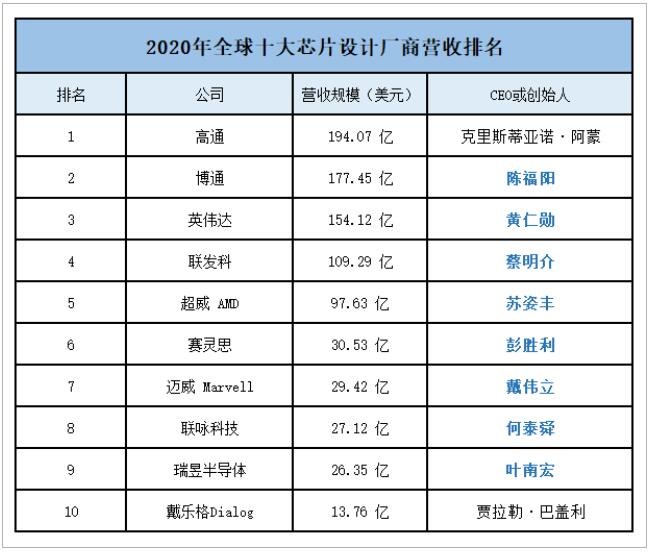
Ai cũng quen thuộc với câu chuyện về cách TSMC vươn lên dẫn đầu ngành sản xuất chip toàn cầu. Hôm nay, chúng ta hãy cùng tìm hiểu về tám công ty Trung Quốc đang tự hào đứng vững trong ngành thiết kế chip thế giới.

In 1983, today's "AI Godfather" Huang Renxun was still a young man on the university campus.
Huang Renxun sinh năm 1963 tại Đài Bắc, tỉnh Chiết Giang, Trung Quốc, và sau đó sang Hoa Kỳ du học. Năm 1983, trước khi chính thức nhận bằng tốt nghiệp, ông đã đến thẳng Thung lũng Silicon và trở thành kỹ sư chip tại AMD.
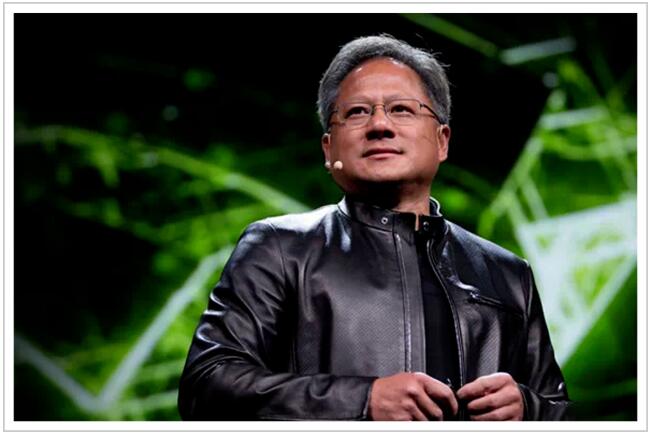
▲Huang Renxun
Thời điểm đó, ngành công nghiệp máy tính đang trên đà phát triển, Intel vẫn còn là một công ty nhỏ, và Microsoft vừa mới bán hệ điều hành MSDOS cho IBM.
In the same year, another man named Tsai Ming-chie, later known as the "godfather of Taiwan's chip design industry," chose to leave the Institute of Electronics of Academia Sinica in Taiwan and join UMC, which had just been established for three years.
Ten years later, Huang Renxun founded the now world-famous NVIDIA with the encouragement of two friends, but their start was not smooth: the first product NV1, which took two years to launch, did not make waves. In order to survive, the company had to lay off employees, shrinking from more than 100 people to more than 30 people. It can be said that they tasted the bitter fruit of failure as soon as they launched.
Cai Mingjie also faced a major and difficult choice in his life at this time.
Năm 1996, UMC chuyển mình thành một xưởng sản xuất chip chuyên nghiệp. Tuy nhiên, do có cả bộ phận sản xuất OEM và bộ phận thiết kế riêng, nên đã có những nghi vấn về việc bộ phận thiết kế chip của họ biển thủ các thiết kế của khách hàng. Vì vậy, UMC quyết định tách riêng bộ phận thiết kế chip.
The opportunity was presented to Cai Mingjie, who had been working at UMC for almost 14 years. At that time, the multimedia department headed by him decided to separate from UMC and establish a subsidiary, MediaTek. Cai Mingjie became the chairman and began to take charge of his own business.
As the first chip design company in Taiwan, China, UMC has a presence like the Whampoa Military Academy in the semiconductor industry. In addition to MediaTek, two of the top ten chip design giants in the world are also inextricably linked to UMC, namely Novatek Technology and Realtek.
In 1997, UMC Commercial Products Division declared its independence and became the predecessor of Novatek Technologies.
Mặc dù Realtek không hoàn toàn ra đời từ UMC, nhưng một số người sáng lập ban đầu, Ye Boren, Ye Nanhong và các bạn cùng lớp của họ đều là kỹ sư nghiên cứu và phát triển tại UMC. Năm 1987, họ nhận được vốn đầu tư từ anh trai của Ye Boren và thành lập Công ty TNHH Bán dẫn Realtek tại Đài Loan.
At about the same time, in 1995, another future chip design giant, Maiwei, was born in California, USA.
Công ty Maiwei được thành lập bởi ba người trẻ tuổi, bao gồm Dai Weili, khi đó 33 tuổi, chồng bà, Zhou Xiuwen, một người Hoa kiều Indonesia, và em trai bà, Zhou Xiuwu. Dai Weili cùng cha mẹ di cư từ Thượng Hải đến San Francisco, Hoa Kỳ năm 17 tuổi. Bà cũng là người phụ nữ duy nhất sáng lập một công ty bán dẫn lớn trên thế giới vào thời điểm đó.
Maiwei was founded in the living room of Dai Weili's home. The initial start-up capital of US$350,000 came from his parents and friends. In order to ensure that the engineers hired were well paid, the three main founders did not take a salary. But they quickly achieved profitability in 3 to 4 years and were listed on Nasdaq in 2000.
Đầu thế kỷ, những tập đoàn khổng lồ mới nổi lên nhanh chóng, nhưng các tập đoàn khổng lồ truyền thống lại gặp khó khăn.
In 2006, veteran chip design giant AMD fell into financial crisis due to large-scale mergers and acquisitions, and has suffered losses for five consecutive years since then. After four successive CEOs, Su Zifeng, a Chinese-American, took office at a critical moment to help AMD reverse its decline.
Xilinx was also in the same situation, and the Chinese American Peng Shengli was appointed as CEO. He is also the first Chinese CEO in the history of Xilinx.
Broadcom, công ty thiết kế chip lớn nhất thế giới, đã được nhà sản xuất chip Avago mua lại vào năm 2015. Sau sáp nhập, công ty mới sẽ tiếp tục sử dụng tên "Broadcom", và chủ tịch kiêm giám đốc điều hành mới của công ty sẽ là ông Chen Fuyang, người gốc Hoa Malaysia, hiện là chủ tịch kiêm giám đốc điều hành của Avago.
So far, five chip design companies founded by Chinese, including MediaTek, Nvidia, Maiwei, Novatek and Realtek, and three chip design giants controlled by Chinese, including AMD, Xilinx and Broadcom, have all appeared.
A new world is beginning to brew, and the Chinese are scrambling to seize the top of the chip design field in different ways.
The chip design industry is undergoing rapid changes. Qualcomm and Intel, which are also engaged in chip design and manufacturing business, have always maintained their position as giants. After Chinese CEOs gained a foothold, these two giants naturally became their targets.
The first one to be targeted was Qualcomm. In 2017, Chen Fuyang, who had just owned Broadcom for two years, became ambitious again and directly announced that he would move Broadcom's headquarters from Singapore to the United States, making Broadcom an American company. This move, which seems to show goodwill to the US government, is actually to make it easier for the snake to swallow the elephant next time.
After becoming a U.S. company, relevant M&A transactions can be conducted directly without review by the U.S. Foreign Investment Review Committee.
Sure enough, just a few days after Chen Fuyang announced that he would move Broadcom's headquarters to Pennsylvania, the United States, Broadcom issued an announcement saying that it would acquire Qualcomm for US$105 billion. After the negotiations between the two parties failed, Chen Fuyang even sought to nominate multiple directors on the board of directors to gain control of Qualcomm's board of directors. The acquisition was finally abandoned until then-U.S. President Trump intervened to stop it.
Broadcom is not the only one eyeing Qualcomm. Another giant, MediaTek, is also frequently launching fierce attacks.
According to data from the research organization Counterpoint, in the third quarter of 2020, MediaTek surpassed Qualcomm in global smartphone chip market share and topped the world for the first time.
This is not the first time MediaTek has led Qualcomm. Since 2007, mainland China has begun to issue Internet licenses for mobile phones, and many small mobile phone brands have emerged. MediaTek, which is more cost-effective, is favored.By 2008, half of MediaTek's revenue came from mobile phone chips, and it also had a record of surpassing Qualcomm in the mainland market.
In addition to Qualcomm, Intel is also a favorite opponent of Chinese CEOs.
In 2000, Nvidia began to challenge Intel. Jen-Hsun Huang once proposed "Huang's Law" against the "Moore's Law" of Gordon Moore, one of the founders of Intel, that is, Nvidia's products are upgraded every six months and their functions double. This technology update speed is twice as fast as "Moore's Law".
Not long ago, Nvidia also announced the launch of its first data center CPU based on ARM technology, directly competing with Intel. Prior to this, Intel had dominated the CPU market with its central processing units.
AMD, which was revived under the leadership of Su Zifeng, has not let go of Intel. In 2017, ADM launched Ryzen chips to compete with Intel's 8th generation Core. With its extremely high price advantage, AMD's market share was once on par with Intel, and even surpassed Intel.
While fighting with Qualcomm and Intel, these Chinese companies are also engaging in fierce competition within themselves. Among them, the most eye-catching ones are the old rivals Huang Renxun and Su Zifeng.
Trước khi trở thành lãnh đạo của AMD, Su Zifeng không nổi tiếng lắm. Khi mới nhậm chức, có tin đồn bà là cháu gái của Huang Renxun, vừa là họ hàng vừa là đối thủ. Mối quan hệ này thường được dùng làm chủ đề bàn tán, nhưng sau đó Su Zifeng đã phủ nhận điều này.
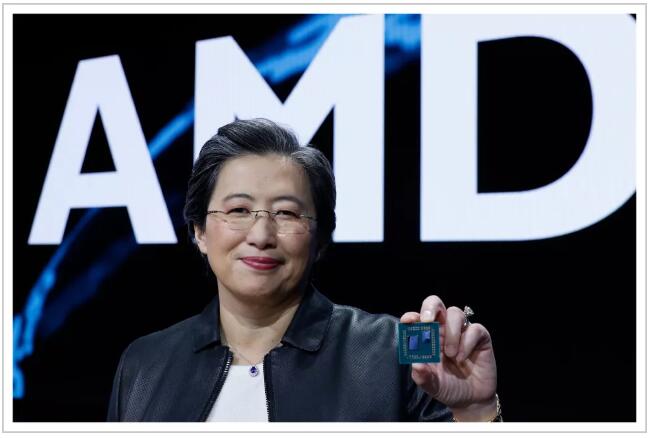
▲Tô Tử Phong
Tình thân chỉ là giả tạo, nhưng sự cạnh tranh khốc liệt thì có thật.
Huang Renxun once said bluntly, "AMD's new graphics card is very ordinary, there are no surprises. If our graphics card turns on DLSS, it will be completely destroyed. If we turn on real-time ray tracing, we can defeat it."
Su Zifeng responded in the interview: "I guess he hasn't seen this card yet!" implying that Huang Renxun used force to discredit it.
Năm 2020, cuộc cạnh tranh giữa hai công ty leo thang. Đầu tiên, Nvidia tuyên bố mua lại ARM với giá 40 tỷ đô la Mỹ, nhắm vào thị trường trung tâm dữ liệu. Sau đó, AMD ngay lập tức tuyên bố mua lại Xilinx với giá 35 tỷ đô la Mỹ, một công ty đã tham gia sâu vào thị trường trung tâm dữ liệu trong nhiều thập kỷ.
Trò chơi "cá lớn nuốt cá bé" vẫn tiếp diễn trong ngành công nghiệp bán dẫn, và bạn có thể trở thành "mồi" của kẻ khác nếu không cẩn thận. Ví dụ, AMD đã thâu tóm Xilinx, và Maiwei đã giành được khách hàng lớn Cisco từ Broadcom. NVIDIA cũng từng là mục tiêu thâu tóm của AMD trong thời kỳ hoàng kim của mình. Trước khi bị AMD mua lại, đã có tin đồn trên thị trường rằng Xilinx từng cân nhắc việc mua lại AMD.
Trong quá trình thi đấu, một số người bị loại vì đối thủ quá mạnh, một số khác lại không đủ cẩn trọng để đánh giá tình hình. Tóm lại, việc bị loại là điều không thể tránh khỏi.
For example, in April 2016, Maiwei Company announced the resignation of President Dai Weili and CEO Zhou Xiuwen after laying off 1,200 employees worldwide. In February 2021, it was reported that Renesas Electronics Group agreed to acquire the British company Dialog Semiconductor for 67.50 euros per share.
Struggle is a struggle, and one fact cannot be ignored, that is:The Chinese can do a good job in semiconductors.
Nếu ngành công nghiệp bán dẫn của Trung Quốc đại lục muốn bắt kịp, điều không thể thiếu chính là nhân tài.
At the beginning of the founding of New China, top talents in the semiconductor industry overcame all difficulties and returned to China, once laying a leading foundation.
In 1950, Wang Shouwu, who was teaching at Purdue University in the United States, decided to return to China and make his own contribution to the development of the country. Although he encountered various difficulties from the Truman administration, he still tried his best to return to China on the grounds of returning to his hometown to visit his mother.
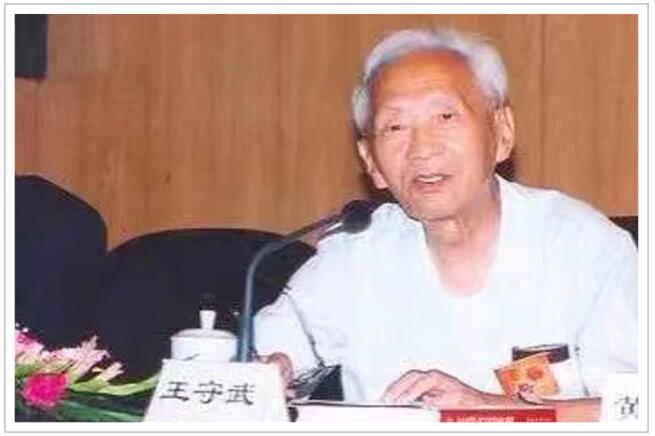
▲ Vương Thủ Vũ
Năm đó, Xie Xide từ Viện Công nghệ Massachusetts, Xia Peisu từ Đại học Edinburgh, Tang Dingyuan từ Đại học Chicago, Huang Chang từ Đại học Harvard, Lin Lanying từ Đại học Pennsylvania và những người khác cũng đã cố gắng hết sức để trở về quê hương.
Những tài năng hàng đầu trong lĩnh vực bán dẫn thời bấy giờ đã tự chế tạo thiết bị và biên soạn tài liệu giảng dạy sau khi trở về Trung Quốc, đào tạo lứa sinh viên đầu tiên trong lĩnh vực bán dẫn của Trung Quốc mới, đặt nền móng cho ngành công nghiệp bán dẫn của nước ta.
Đáng tiếc là, do năng lực công nghiệp hóa không theo kịp trong những năm 1980, ngành công nghiệp bán dẫn của Trung Quốc đại lục không còn cách nào khác ngoài việc tụt hậu. Vào thời điểm đó, châu Âu, Hoa Kỳ, Nhật Bản và Hàn Quốc đã nắm bắt cơ hội phát triển và tiếp tục lớn mạnh hơn.
When the mainland wanted to catch up, it discovered that the gap could no longer be narrowed in a short time.
Fortunately, in today's global semiconductor industry, there are a large number of Chinese engineers, and Chinese account for the majority of core technology positions in top chip design companies. These senior engineers are indispensable talents in the chip industry.
Ông Yin Zhiyao, chủ tịch Công ty Thiết bị Bán dẫn Vi mô Trung Quốc, cho biết ông đã phát hiện ra điều này khi còn làm việc tại Intel.AnhCác trưởng nhóm và quản lý của các viện nghiên cứu nội bộ của Tel đều là người Trung Quốc, và những người trực tiếp tham gia nghiên cứu và phát triển công nghệ cũng là người Trung Quốc. Cấu trúc bóng bán dẫn 5nm và 3nm cũng do giáo sư người Trung Quốc Hu Zhengming đề xuất.
"Although the gap between us and European and American countries in the semiconductor field is at least three generations of technology, it only takes 5-10 years to recover from this disadvantage. If the Chinese can achieve such achievements in the United States, as long as they are willing to contribute to the country, they will definitely be able to achieve technological breakthroughs at home." Yin Zhiyao once said publicly.
For a long time, Asians have been deeply discriminated against in the United States, and only a few can reach the top of the industry pyramid.
Tại Hoa Kỳ, có một thuật ngữ đặc biệt được sử dụng để mô tả rào cản thăng tiến vô hình mà người châu Á phải đối mặt, được gọi là "trần tre". Ý nghĩa chung là trong một công ty, các nhóm dân tộc khác nhau đảm nhiệm các vị trí khác nhau, và ranh giới giữa các vị trí này thường rất khó vượt qua. Đặc biệt đối với người châu Á, hầu hết họ đều ở vị trí thấp nhất, một số ít ở cấp trung, và rất ít người có thể vươn tới đỉnh cao.
Especially today, anti-Chinese sentiment is rising in the United States, and the development space of Chinese overseas has once again been squeezed. This may also be an opportunity for us to further attract outstanding talents and solve the "core shortage problem".
Đã đến lúc cần suy nghĩ kỹ về cách thu hút và tạo ra mối quan hệ đôi bên cùng có lợi với những tài năng này!
Tuyên bố miễn trừ trách nhiệm: Bài viết này được đăng lại từ "Integrated Circuit Frontier". Bài viết này chỉ thể hiện quan điểm cá nhân của tác giả và không đại diện cho quan điểm của Sacco Micro hay ngành công nghiệp. Bài viết chỉ được đăng lại và chia sẻ nhằm mục đích bảo vệ quyền sở hữu trí tuệ. Vui lòng ghi rõ nguồn gốc và tác giả khi đăng lại. Nếu có bất kỳ sự vi phạm nào, vui lòng liên hệ với chúng tôi để xóa bỏ.
Số điện thoại công ty: +86-0755-83044319
Số fax: +86-0755-83975897
Email: 1615456225@qq.com
QQ: 3518641314 Quản lý Li
QQ: 332496225 Quản lý Qiu
Địa chỉ: Phòng 809, Tòa nhà C, Tòa nhà Công nghệ Zhantao, Số 1079 Đại lộ Minzhi, Khu Longhua Mới, Thâm Quyến
Khuyến nghị liên quan
Phỏng vấn độc quyền với Li Gang của Yunfan Ruida: Độ chính xác của sản phẩm radar sóng milimét và lòng nhân ái
2026-07-22
2557
Hẹn gặp lại năm sau! | Tóm tắt những điểm nổi bật của Slkor tại electronica China 2026
2026-07-14
2249





 粤公网安备44030002007346号