
























Service Hotline
News

News
Behind "China's Core Pain": These 9 Chinese can shake up the global chip industry!
2022-03-17
699
Mainland China has been "stuck in semiconductors" for a long time. This is not because the Chinese are not good at making semiconductors.

China, strictly speaking, mainland China, has been "trapped" for a long time.
So far, the global chip industry still has three development models:
-
The first one is completely independent from chip design to manufacturing, such as Intel and Samsung;
-
The second type only does chip design, and manufacturing is completed by foundries, such as ARM, AMD, Qualcomm, Huawei HiSilicon, etc.;
-
The third type is those who do not do design themselves but focus on completing foundry manufacturing for chip design companies, such as TSMC, SMIC, etc.
Regardless of the above model, as far as the development of the entire chip industry is concerned, its core is the two parts of design and manufacturing.The weakness of mainland China's chips is due to deficiencies in design and manufacturing, and is an overall backwardness.
In terms of chip design, before the tension between China and the United States, mainland China's Huawei HiSilicon and Unisoc were already reaching world-class scale and standards.
Such as Huawei HiSilicon. According to research agency data, in the first quarter of 2020, Huawei HiSilicon surpassed Qualcomm for the first time and became the number one mobile phone chip in the Chinese market. It also ranked among the top ten global semiconductor companies for the first time with sales of US$2.67 billion.
However, U.S. sanctions caused Huawei HiSilicon to quickly fall off the list after briefly ranking tenth in the world.
In the latest rankings by TRI (Topology Research Institute), a research organization in Taiwan, based on second quarter revenue, among the world's top ten chip design manufacturers, no company from mainland China is on the list.
In terms of chip manufacturing, mainland China is even weaker.
According to TSMC Zhang Zhongmou, mainland chip manufacturing technology lags behind TSMC by at least five years. Five years may not seem like a long time, but in the rapidly advancing technology industry, especially in the context of "if you make progress, others will make greater progress", this is an extremely cruel number.
The technology industry is an industry that competes for top talents, and this is especially true for high-tech industries such as chips. Mainland China's weakness in the chip field often gives people the impression that the Chinese are not good in this field.
Is this really the case? Quite the opposite is true.
Whether it is chip design or manufacturing, Chinese people (including Chinese born and raised in mainland China, as well as Chinese born directly overseas) are competitive in the world in terms of race and ancestry, and are even the most competitive in some aspects.
The Chinese not only occupy most of the world's chip design and manufacturing markets, but also control the direction of most technologies. It can even be said that the current world's top war in the chip industry is actually a war between Chinese and Chinese.
In terms of chip manufacturing, Taiwan Semiconductor Manufacturing Co., Ltd. alone accounts for more than 50% of the global market. In other words, all other competitors in the world combined are not as big as it, including South Korea's Samsung and Intel, and there is no hope of competing with it in the short term.
In terms of chip design, the Chinese control most of the world.
In the ranking of the world's top ten chip design manufacturers released by TRI in 2020, eight of the leaders are Chinese.Most of them also grasp and lead the latest direction of the current industry, and are the most powerful disruptors to subvert the traditional pattern of the chip industry.
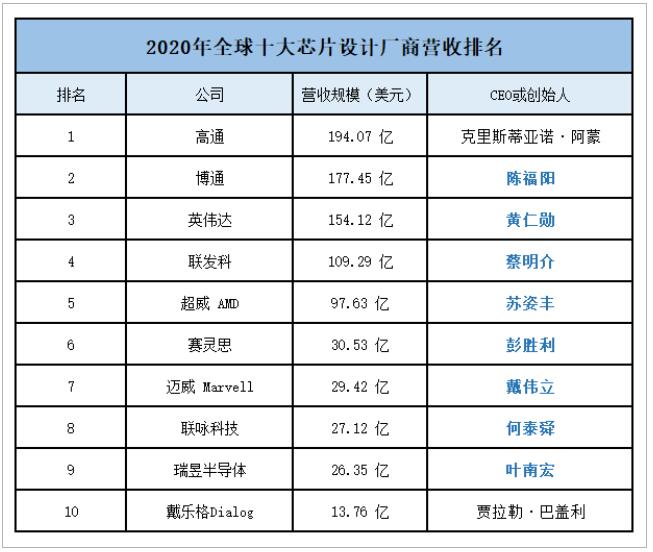
Everyone is familiar with the story of how TSMC reached the top of global chip manufacturing. Today, let’s get to know these eight Chinese who stand proudly in the world’s chip design industry.

In 1983, today's "AI Godfather" Huang Renxun was still a young man on the university campus.
Huang Renxun was born in Zhejiang in 1963 in Taipei, China, and later went to the United States to study. In 1983, before he officially received his diploma, he went straight to Silicon Valley and became a chip engineer at AMD.
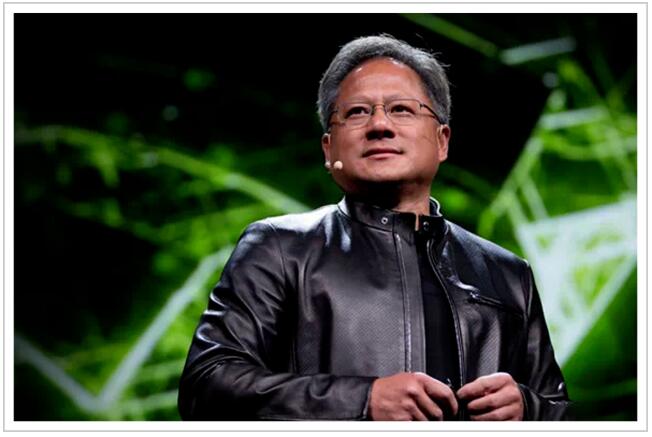
▲Huang Renxun
At that time, the computer industry was in the ascendant, Intel was still a junior, and Microsoft had just sold MSDOS to IBM.
In the same year, another man named Tsai Ming-chie, later known as the "godfather of Taiwan's chip design industry," chose to leave the Institute of Electronics of Academia Sinica in Taiwan and join UMC, which had just been established for three years.
Ten years later, Huang Renxun founded the now world-famous NVIDIA with the encouragement of two friends, but their start was not smooth: the first product NV1, which took two years to launch, did not make waves. In order to survive, the company had to lay off employees, shrinking from more than 100 people to more than 30 people. It can be said that they tasted the bitter fruit of failure as soon as they launched.
Cai Mingjie also faced a major and difficult choice in his life at this time.
In 1996, UMC transformed into a professional wafer foundry. However, because it has both an OEM production department and its own design department, it was questioned that its chip design department had embezzled customer designs. Therefore, UMC decided to spin off its chip design department.
The opportunity was presented to Cai Mingjie, who had been working at UMC for almost 14 years. At that time, the multimedia department headed by him decided to separate from UMC and establish a subsidiary, MediaTek. Cai Mingjie became the chairman and began to take charge of his own business.
As the first chip design company in Taiwan, China, UMC has a presence like the Whampoa Military Academy in the semiconductor industry. In addition to MediaTek, two of the top ten chip design giants in the world are also inextricably linked to UMC, namely Novatek Technology and Realtek.
In 1997, UMC Commercial Products Division declared its independence and became the predecessor of Novatek Technologies.
Although Realtek was not completely born out of UMC, several of its original founders, Ye Boren, Ye Nanhong, and their classmates were all R&D engineers at UMC. In 1987, they received investment from Ye Boren's brother and founded Realtek Semiconductor Co., Ltd. in Taiwan.
At about the same time, in 1995, another future chip design giant, Maiwei, was born in California, USA.
Maiwei was founded by three young people, including Dai Weili, 33 years old at the time, her husband, Indonesian overseas Chinese Zhou Xiuwen, and her brother Zhou Xiuwu. Dai Weili immigrated from Shanghai to San Francisco in the United States with her parents at the age of 17. She was also the only female founder of a major semiconductor company in the world at that time.
Maiwei was founded in the living room of Dai Weili's home. The initial start-up capital of US$350,000 came from his parents and friends. In order to ensure that the engineers hired were well paid, the three main founders did not take a salary. But they quickly achieved profitability in 3 to 4 years and were listed on Nasdaq in 2000.
At the beginning of the century, new giants grew rapidly, but traditional giants had a hard time.
In 2006, veteran chip design giant AMD fell into financial crisis due to large-scale mergers and acquisitions, and has suffered losses for five consecutive years since then. After four successive CEOs, Su Zifeng, a Chinese-American, took office at a critical moment to help AMD reverse its decline.
Xilinx was also in the same situation, and the Chinese American Peng Shengli was appointed as CEO. He is also the first Chinese CEO in the history of Xilinx.
Broadcom, the world's largest chip design company, was captured by chip manufacturer Avago in 2015. After the merger, the new company will continue to use the name "Broadcom", and the company's new president and CEO will be Avago's president and CEO, Malaysian Chinese Chen Fuyang.
So far, five chip design companies founded by Chinese, including MediaTek, Nvidia, Maiwei, Novatek and Realtek, and three chip design giants controlled by Chinese, including AMD, Xilinx and Broadcom, have all appeared.
A new world is beginning to brew, and the Chinese are scrambling to seize the top of the chip design field in different ways.
The chip design industry is undergoing rapid changes. Qualcomm and Intel, which are also engaged in chip design and manufacturing business, have always maintained their position as giants. After Chinese CEOs gained a foothold, these two giants naturally became their targets.
The first one to be targeted was Qualcomm. In 2017, Chen Fuyang, who had just owned Broadcom for two years, became ambitious again and directly announced that he would move Broadcom's headquarters from Singapore to the United States, making Broadcom an American company. This move, which seems to show goodwill to the US government, is actually to make it easier for the snake to swallow the elephant next time.
After becoming a U.S. company, relevant M&A transactions can be conducted directly without review by the U.S. Foreign Investment Review Committee.
Sure enough, just a few days after Chen Fuyang announced that he would move Broadcom's headquarters to Pennsylvania, the United States, Broadcom issued an announcement saying that it would acquire Qualcomm for US$105 billion. After the negotiations between the two parties failed, Chen Fuyang even sought to nominate multiple directors on the board of directors to gain control of Qualcomm's board of directors. The acquisition was finally abandoned until then-U.S. President Trump intervened to stop it.
Broadcom is not the only one eyeing Qualcomm. Another giant, MediaTek, is also frequently launching fierce attacks.
According to data from the research organization Counterpoint, in the third quarter of 2020, MediaTek surpassed Qualcomm in global smartphone chip market share and topped the world for the first time.
This is not the first time MediaTek has led Qualcomm. Since 2007, mainland China has begun to issue Internet licenses for mobile phones, and many small mobile phone brands have emerged. MediaTek, which is more cost-effective, is favored.By 2008, half of MediaTek's revenue came from mobile phone chips, and it also had a record of surpassing Qualcomm in the mainland market.
In addition to Qualcomm, Intel is also a favorite opponent of Chinese CEOs.
In 2000, Nvidia began to challenge Intel. Jen-Hsun Huang once proposed "Huang's Law" against the "Moore's Law" of Gordon Moore, one of the founders of Intel, that is, Nvidia's products are upgraded every six months and their functions double. This technology update speed is twice as fast as "Moore's Law".
Not long ago, Nvidia also announced the launch of its first data center CPU based on ARM technology, directly competing with Intel. Prior to this, Intel had dominated the CPU market with its central processing units.
AMD, which was revived under the leadership of Su Zifeng, has not let go of Intel. In 2017, ADM launched Ryzen chips to compete with Intel's 8th generation Core. With its extremely high price advantage, AMD's market share was once on par with Intel, and even surpassed Intel.
While fighting with Qualcomm and Intel, these Chinese companies are also engaging in fierce competition within themselves. Among them, the most eye-catching ones are the old rivals Huang Renxun and Su Zifeng.
Before becoming the leader of AMD, Su Zifeng was not that famous. When she first took office, there were rumors that she was Huang Renxun's niece, a relative and a rival. This relationship was often used as a talking point, but Su Zifeng later denied this relationship.
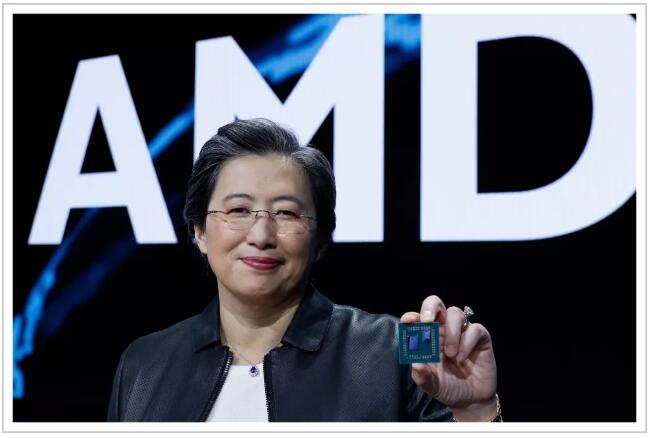
▲Su Zifeng
The kinship is fake, but the fierce competition is real.
Huang Renxun once said bluntly, "AMD's new graphics card is very ordinary, there are no surprises. If our graphics card turns on DLSS, it will be completely destroyed. If we turn on real-time ray tracing, we can defeat it."
Su Zifeng responded in the interview: "I guess he hasn't seen this card yet!" implying that Huang Renxun used force to discredit it.
In 2020, the game between the two companies escalated. First, Nvidia announced a US$40 billion acquisition of ARM, targeting the data center market. Then AMD immediately announced a US$35 billion acquisition of Xilinx, which has been deeply involved in the data center market for decades.
This game of big fish eating small fish continues to play out in the semiconductor industry, and you may become someone else's "food" if you are not careful. For example, AMD swallowed up Xilinx, and Maiwei took over the major customer Cisco from Broadcom. NVIDIA was also a target of AMD's acquisition during its glory days. Before being acquired by AMD, there were rumors in the market that Xilinx had considered acquiring AMD.
In the process of competition, some are because the opponents are too strong, and some are because they are not careful enough to judge the situation. In short, elimination has become inevitable.
For example, in April 2016, Maiwei Company announced the resignation of President Dai Weili and CEO Zhou Xiuwen after laying off 1,200 employees worldwide. In February 2021, it was reported that Renesas Electronics Group agreed to acquire the British company Dialog Semiconductor for 67.50 euros per share.
Struggle is a struggle, and one fact cannot be ignored, that is:The Chinese can do a good job in semiconductors.
If the mainland's semiconductor industry wants to catch up, the most indispensable thing is talent.
At the beginning of the founding of New China, top talents in the semiconductor industry overcame all difficulties and returned to China, once laying a leading foundation.
In 1950, Wang Shouwu, who was teaching at Purdue University in the United States, decided to return to China and make his own contribution to the development of the country. Although he encountered various difficulties from the Truman administration, he still tried his best to return to China on the grounds of returning to his hometown to visit his mother.
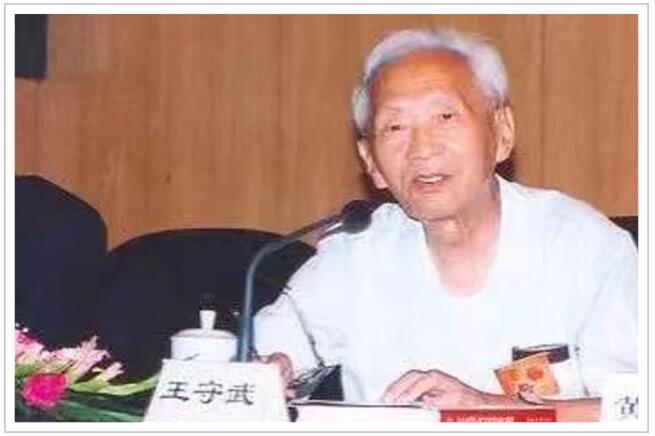
▲Wang Shouwu
That year, Xie Xide from the Massachusetts Institute of Technology, Xia Peisu from the University of Edinburgh, Tang Dingyuan from the University of Chicago, Huang Chang from Harvard University, Lin Lanying from the University of Pennsylvania and others also tried their best to return to their motherland.
These top semiconductor talents at the time made their own equipment and compiled teaching materials after returning to China, training the first batch of students in the semiconductor field of New China, and laying the foundation for our country's semiconductor industry.
Unfortunately, because the industrialization capabilities could not keep up in the 1980s, the mainland's semiconductor industry had no choice but to fall behind. At that time, Europe, the United States, Japan and South Korea seized the opportunity in development and continued to grow bigger and stronger.
When the mainland wanted to catch up, it discovered that the gap could no longer be narrowed in a short time.
Fortunately, in today's global semiconductor industry, there are a large number of Chinese engineers, and Chinese account for the majority of core technology positions in top chip design companies. These senior engineers are indispensable talents in the chip industry.
Yin Zhiyao, chairman of China Micro Semiconductor Equipment Company, said that he discovered when he was still working at Intel,BritainThe team leaders and managers of Tel's internal research institutes are all Chinese, and those who are actually engaged in technology research and development are Chinese. The 5nm and 3nm transistor structures were also proposed by Chinese professor Hu Zhengming.
"Although the gap between us and European and American countries in the semiconductor field is at least three generations of technology, it only takes 5-10 years to recover from this disadvantage. If the Chinese can achieve such achievements in the United States, as long as they are willing to contribute to the country, they will definitely be able to achieve technological breakthroughs at home." Yin Zhiyao once said publicly.
For a long time, Asians have been deeply discriminated against in the United States, and only a few can reach the top of the industry pyramid.
In the United States, there is a special term used to describe an invisible promotion barrier faced by Asians, called the "bamboo ceiling." The general meaning is that in a company, various ethnic groups occupy different positions, and the boundaries between these positions are usually difficult to break. Especially for Asians, most of them are at the bottom, a few are at the middle level, and very few can reach the top.
Especially today, anti-Chinese sentiment is rising in the United States, and the development space of Chinese overseas has once again been squeezed. This may also be an opportunity for us to further attract outstanding talents and solve the "core shortage problem".
It’s time to think carefully about how to attract and win-win with these talents!
Disclaimer: This article is reprinted from "Integrated Circuit Frontier". This article only represents the author's personal views and does not represent the views of Sacco Micro and the industry. It is only reprinted and shared to support the protection of intellectual property rights. Please indicate the original source and author for reprinting. If there is any infringement, please contact us to delete it.
Company phone number: +86-0755-83044319
Fax/FAX: +86-0755-83975897
Email: 1615456225@qq.com
QQ: 3518641314 Manager Li
QQ: 332496225 Manager Qiu
Address: Room 809, Building C, Zhantao Technology Building, No. 1079 Minzhi Avenue, Longhua New District, Shenzhen
Related Recommendations
Exclusive Interview with Li Gang of Yunfan Ruida: The Precision of Millimeter-Wave Radar Products and the Warmth of Humanity
2026-07-22
2559
RF Passion, Craftsman’s Journey: Over 30 Years of Steadfast Dedication — Interview with Kinghelm Chief Engineer Mr. Qin hongxiang
2026-06-26
2725





 粤公网安备44030002007346号