
























Service Hotline
News

News
Three companies dominate the global semiconductor software industry
2022-03-17
850
"Shishuoxinyu" has been with you for 873 days
In the past two years since 2019, due to the continuous fermentation of incidents such as Huawei HiSilicon and SMIC, semiconductor technology with chip as the core has entered the streets from the laboratory and once became a national topic. Liu Gesong of Guangfa Fund, which has a heavy position in semiconductors, has also become a public fundraiser.
At the same time, the names of a number of overseas technology giants have been increasingly exposed, becoming essential topics for after-dinner discussions: Dutch ASML, which monopolizes photolithography machines, China's Taiwan Semiconductor Manufacturing Co., Ltd., which has the right to speak on OEMs, and American Qualcomm, which is a selling point for Android phones...
But there is a segmented software productEDA (Electronic Design Automation), little is known about it. But in fact, EDA is as important to global semiconductors as TSMC, which is a foundry, and ASML, which is a lithography machine. It is not an exaggeration to call it the software vitality of semiconductors.
So far,The core companies that are making money from this semiconductor software industry are three companies of American origin——Synopsys, Cadence, Mentor Graphics, they have dominated the ups and downs of the global semiconductor industry with a stable gross profit margin of close to 80% in the past 30 years.
01
The ultimate division of labor creates EDA
The global market size of EDA is only about US$10 billion, but to truly understand this industry, we must put it in the context of the entire semiconductor market (the market size is close to US$500 billion), starting from the entire industry chain.
In order to turn sand (silicon) into magic and finally make almost omnipotent integrated circuits (chips), engineers need to use the most cutting-edge technology in every aspect of semiconductor manufacturing. Precisely because every field needs to push technology to the extreme, the semiconductor industry has formed an extremely special business model——The ultimate division of labor.
Looking from upstream to downstream, the semiconductor industry chain can be divided into asset-light IC design (also called fabless factory), asset-heavy manufacturing, packaging and testing. Among them, chip design companies are typically characterized by light assets and high technology. Representative companies include Qualcomm (NASDAQ: QCOM), NVIDIA (NASDAQ: NVDA), etc. They only need to hand over the designed chip layout to the middle and lower reaches of the industry chain for manufacturing and packaging testing. In order to better support these chip design companies in completing chip design work, supporting professional software and intellectual property packages, namely EDA and IP, have gradually evolved. This part is now also completed by specialized manufacturers.
IP has been explained in the article about ARM before. The focus of this article is on EDA, and IP is just brought.
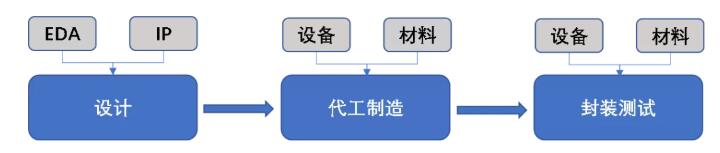
Figure 1: Semiconductor industry chain, data source: drawn by Brocade Research Institute
For the semiconductor industry, the essence of extreme division of labor is a risk-sharing mechanism. After all, no company can overcome all technical difficulties in the semiconductor industry, and the industry chain spares no effort to refine the division of labor, allowing each participant to push technology to the extreme in their own field.
Taking a detailed look at the history of the development of the semiconductor industry, there are three business model innovations that profoundly reflect the ultimate division of labor in the semiconductor industry and have a profound impact on the development of the industry:
【1】The manufacturing process is separated out, which has epoch-making significance.
Separating the manufacturing process has greatly lowered the threshold for chip manufacturing, making it possible for even the poor grass-roots teams to counterattack. Take TSMC, which focuses on foundry manufacturing, as an example. By mastering cutting-edge precision manufacturing technology, it has become a powerful promoter of Moore's Law.
Precisely because TSMC has solved manufacturing problems, startups do not necessarily need to choose the asset-heavy IDM (Integrated Device Manufacture) model. Most of them turn to fabless, that is, fabless design companies. After gathering a few smart design engineers, they can roll up their sleeves and start working.
In this field, the most representative company born is the famous TSMC, and mapped to the A-share market is SMIC. Everyone knows a lot about this section, so I won’t go into details here.
Figure 2: TSMC
【2】The birth of professional software liberated IC design engineers
But the reality is that TSMC alone is not enough. Since when designing a chip, hundreds of millions of transistors and related circuits may need to be laid out in a small space per square centimeter. Obviously, this is far beyond the ability of human manual operation. In order to complete automated drawing, EDA software came into being.
EDA, the full name of Electronic Design Automation, is electronic design automation. When engineers design chips, they only need to use programs to plan chip functions, and then use EDA tools to convert the programs into actual circuit design drawings. Therefore, EDA is essentially a special industrial software, but it is famous for its application in the chip field and has become an essential toolbox for every chip design engineer.
Monopolistic companies in this field are not well known to everyone. The main representative companies are Synopsys, Cadence and Mentor. There is no corresponding domestic company listed yet, but BGI Jiutian, Guangliwei, etc. are receiving guidance from securities companies. We will see their IPOs in the future.

Figure 3: Synopsys
【3】With the development of the industry, the concept of IP is gradually born.
The innovation of design automation is not limited to the birth of EDA. During the process of designing chips, engineers found that many things can be reused, that is, "modular". Therefore, some companies that only do this part specialize in designing IP cores (Intellectual Property Core).
IP core refers to a design macro module with independent intellectual property rights that can be reused in chip design. These mature and reliable IP solutions can realize a specific function, allowing chip design companies to purchase IP cores for design, which once again greatly simplifies the chip design process. After evolution, IP core has become the basic unit in system design.
The most famous company in this field is ARM, which we have explained in detail in our previous article "ARM: Running out of time for the Chinese team"; it is particularly worth mentioning that many of the top IP companies are EDA companies. In fact, this is easy to understand, because companies that make automated design software every day already know the IP core very well. Now among A-share listed companies, there is also a company whose main business is IP core——VeriSilicon(SH:688521)。
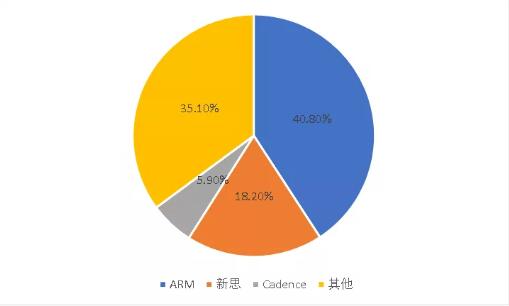
Figure 4: Global semiconductor IP market landscape (2019), source: IPnest
It is precisely because of the above three important business model innovations that the chip industry has formed a completely different business model from the traditional industry. A simplified diagram of the entire design process is shown below. IC design companies, foundry companies, EDA software companies & IP providers work closely with each other, forming a very strong iron triangle relationship, and jointly complete rapid product development and iteration, which also greatly reduces the cost of chips.
Thanks to EDA, IP and foundry, the threshold for entrepreneurship in the industry has been significantly lowered, and we have been able to see that many domestic companies can rise rapidly in more than 10 years. Companies that have been discussed a lot, such as Weill Technology, Shengbang Technology, GigaDevice, Hengxuan Technology, Star Semiconductor, etc., all adopt this model without exception.
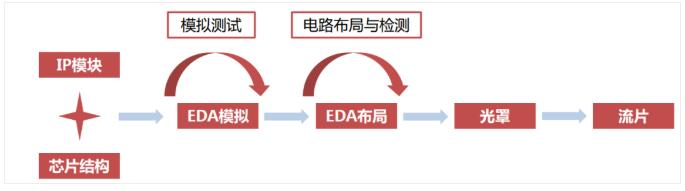
Figure 5: Product production process of Fabless mode chip design companies, source: Semiconductor Industry Observation, Founder Securities
02
I am very young, but I am the lifeblood of semiconductors
【1】I am small, but I am crucial
Unlike the foundry market, which is as high as nearly 100 billion US dollars, EDA and IP in the semiconductor field are indeed extremely segmented fields. Since they are at the top of the chip industry chain, their market size is actually very small. After decades of development, the global EDA market will reach the threshold of tens of billions of dollars; the IP market space is even smaller, and the revenue of leading ARM, which is close to 40% of the global market share, is only less than 2 billion US dollars.
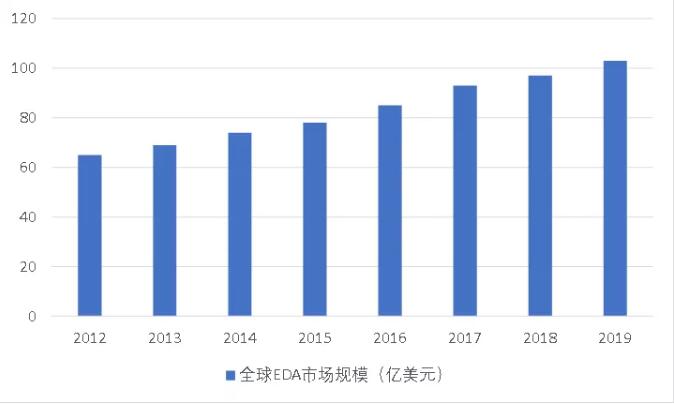
Figure 6: The global EDA market size is only about 10 billion US dollars. Source: EDAC
Although small, it is no exaggeration to say that without EDA and IP, the world's technological development will stagnate.
existSynopsysOn the official website of , there is a picture that depicts this relationship very accurately:Although the total market size of EDA and IP is only more than 10 billion US dollars, the entire electronic system of 1.65 trillion US dollars is based on this, forming a typical inverted pyramid model.. In other words, without EDA and IP, the entire pyramid will collapse.
Moreover, EDA and IP are very, very difficult to make. It requires constant iterations as the chip process shrinks, process parameters change, etc., and the underlying code requires a large number of updates for each iteration. Nowadays, with the advent of the era of artificial intelligence and the Internet of Things, and under the constraints of the post-Moore era, innovation in this field is also facing greater challenges.
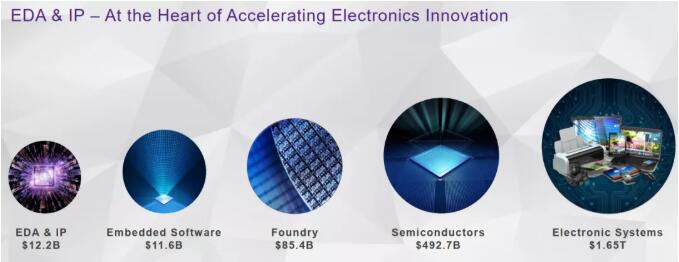
Figure 7: EDA and IP are the core of semiconductor innovation, source: Synopsys official website
[2] Examining the gap in basic research between China and the United States from the perspective of EDA&IP
It is precisely because the technical barriers in this industry are getting higher and higher over time,There are currently only three giants left in the EDA field, namely Synopsys, Cadence, and Mentor Graphics., these three "old companies" with a history of more than 30 years can be said to be the originators of EDA:
-
Synopsys: Founded in 1986, it is an American company founded by a team of General Electric engineers led by Aart de Geus. In 2008, it became the world's number one EDA software tool leader and continues to this day, with annual revenue exceeding US$3 billion in recent years.
-
Cadence: Founded in 1988, it is an American company. As early as 1992, the company had become the leader in the EDA industry. However, it was overtaken by Synopsys in 2008, with current revenue exceeding US$2 billion.
-
Mentor: Founded in 1981, it is the earliest American company. The comprehensiveness of EDA tools is weaker than that of Synopsys and Cadence, so the revenue scale is around US$1 billion, but it is relatively ahead in some areas such as PCB design tools. Mentor was acquired by Siemens of Germany in 2016.
The above three giants are all companies of American origin, with a combined market share of more than 70%. This was exactly when Huawei encountered a blockade. The industry was worried that if the sales of EDA software were restricted, China's chip design industry would go into shock. And we, it can be said that there is nothing we can do about this.
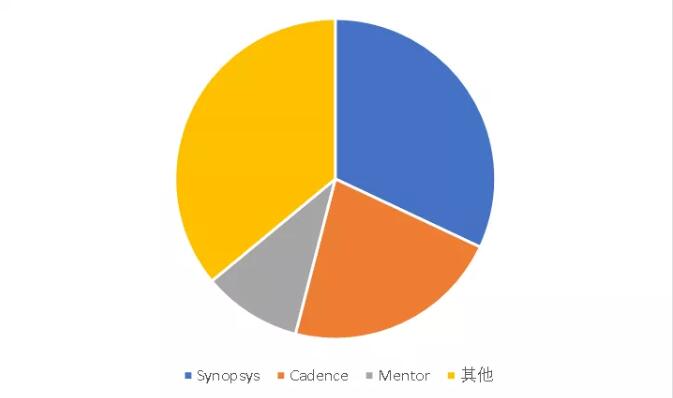
Figure 8: Global competitive landscape of EDA software, source: Qianzhan Industry Research Institute
Naturally, some people will ask, since it is software, if it is restricted, can I make each cracked version first? The answer is no. As mentioned earlier, EDA software does not remain unchanged after being written. With changes in downstream applications, changes in materials, and improvements in manufacturing processes, EDA needs to constantly iterate to update the process library, most frequently once a month. To give an analogy that may not be appropriate, if your office requires major upgrades every month before it can be used, then there will naturally be no room for pirated versions to survive.
In addition to being basically impossible to crack, this software has extremely high user stickiness. On the one hand, EDA software accounts for a small part of the cost items of these companies and is not price sensitive at all. It is very critical, so customers generally will not change suppliers unless they have to. On the other hand, the essence of EDA is to provide customers with a package of tool kits to solve problems. These overseas leaders can provide one-stop services.
Therefore, relying on intellectual property rights with moats, Synopsys and others can reap the dividends of the development of the semiconductor industry.
At present, Chinese EDA companies are still in their infancy. Well-known companies include BGI9, Guangli Micro, and Boda Micro. However, their manufacturing processes are above 20nm and they cannot provide a full set of tools. As a result, they are quite passive in the competition and face many challenges. But behind the challenges are greater opportunities. With the rise of independent brands in the domestic semiconductor industry and the emphasis on intellectual property rights, domestic EDA companies finally see the opportunity to turn around.
03
A Stone From Another Mountain: Using Synopsys as a Reference
Know yourself and your enemy, and you can fight a hundred battles without danger.
Synopsys, as the absolute leader in the EDA field, has been at the top for 13 years. In addition, the company has rapidly developed its IP business in response to industry development trends in recent years, and currently ranks second in the world after ARM in the IP field. EDA and IP are the vital gate of semiconductors, so it is no exaggeration to say that Synopsys is the gatekeeper of the vital gate. Brocade Research Institute will try to deconstruct Synopsys, the leading EDA&IP company, from a financial perspective.
【1】Financial data is as stable as fake
According to the company's earliest financial data that can be found in 1991, the first reaction after analysis is that it is stable. We select two indicators: the company’s revenue and gross profit margin:
1) Revenue has grown steadily from US$40 million to US$3.7 billion, with an average annual growth rate of 17%. You can hardly see the shadow of cycles in it. There has been no year of revenue decline after 2005;
2)The gross profit margin is even more exaggerated. In the past 30 years, regardless of changes in the company's revenue volume and business structure, it has remained stable at around 80%, which looks like a fake.
According to the company's latest semi-annual financial report, in the first half of fiscal year 2021, the company's revenue was US$2 billion, a year-on-year increase of 17.6%, and its gross profit margin was 79%, which is once again in line with its consistent financial performance in the past 30 years. It has to be said in amazement: Brother, stable.
It is under the steady growth that the company's market value has grown from the initial US$400 million to the current US$38 billion, becoming an out-and-out "bull stock".
Another leading company, Cadence(Cengteng Electronics)It also shows similar characteristics. The reason why there are such magical financial operating indicators is because the technical barriers in this industry are extremely high, customers are extremely sticky and are not sensitive to price. These companies are able to maintain income despite droughts and floods, and make stable money while lying down.
But it is precisely for this reason that you hardly need to expect these companies to have disruptive innovations, nor do you need to expect explosive growth in a certain year. They are basically a green train with high safety, moving forward at a leisurely pace. Of course, this has also become one of the key points of criticism for the company. After all, most of the people who study this field are growth stock hunters.
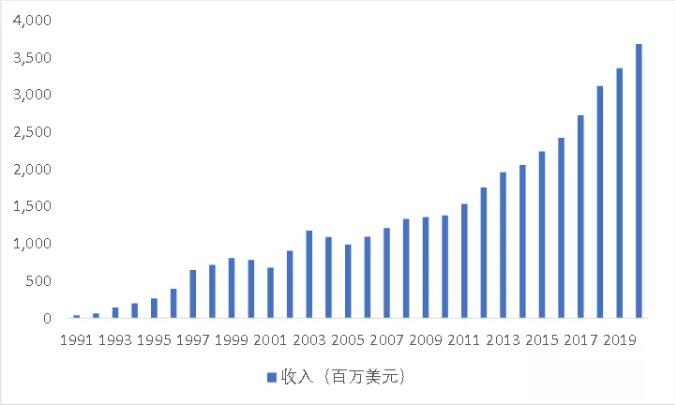
Figure 9: Synopsys revenue, data source: Bloomberg
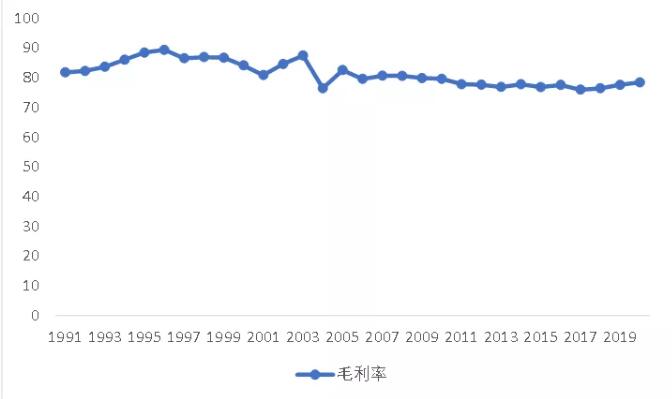
Figure 10: Synopsys gross profit margin, data source: Bloomberg
【2】Secrets to establishing competitive advantages in the EDA industry:Crazy piles of engineers and crazy buying of technology
As mentioned in the previous section, the company's growth rate and gross profit margin are surprisingly stable, which is basically quite an alternative existence in the technology industry. The technology industry we are familiar with is more like the companies depicted in "Top of the Wave". Each has been leading the trend for several years. Ups and downs and ups and downs are the norm. However, these green cars in the EDA field have been operating steadily for more than 30 years and are still standing. It is easy to infer from the results that this is an industry with a moat. Otherwise, 80% of the gross profit margin would have been pulled down by new entrants.
Back to Synopsys, its biggest advantage lies in its comprehensiveness. It has XA on the analog front end, VCS on the digital front end, sign-off tools on the back end, etc., and some of the tools are very powerful. It monopolizes 90% of TCAD device simulation (note: the core bottom layer of EDA software) and 50% of DFM process simulation. If downstream customers didn't need to support multiple suppliers, Synopsys would theoretically have a higher market share.
The secret to supporting Synopsys' competitive advantage is oneThe business model of crazy engineers, piling up intelligence-intensive talents, the result is high R&D expenses.
As mentioned earlier, due to the need for constant updates and iterations, EDA requires extremely exaggerated R&D investment. 1/3 of Synopsys' annual revenue needs to be invested in R&D. By 2020, the absolute amount of annual R&D investment will be as high as nearly 1.3 billion US dollars. In the future, as the industry's technical challenges increase, labor costs will become more and more expensive, and 1.3 billion is just the starting point of a new stage.
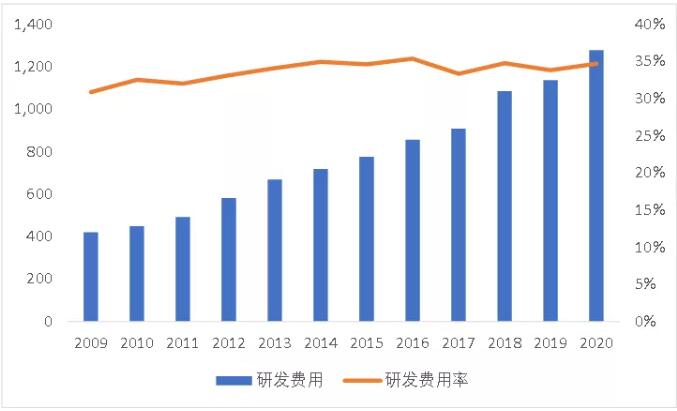
Figure 11: Synopsys’ extremely high R&D expenses, source: Bloomberg
In addition to internal research and development, this industry also needs constant external mergers and acquisitions. Since its establishment in 1986, Synopsys has made 80 mergers and acquisitions., the targets of mergers and acquisitions are basically products and companies that have been proven successful by the market. Technology integration is carried out through mergers and acquisitions. Longer and Longsan Cadence (Chenteng Electronics) and Mentor Graphics (Mentor International) have also conducted more than 60 mergers and acquisitions respectively.
On the surface, mergers and acquisitions appear to be the acquisition of other companies and an investment behavior, but in fact they are the externalization of R&D expenses as an effective supplement to internal R&D.
It is precisely by relying on high-level internal R&D and continuous external mergers and acquisitions that Synopsys has achieved a business model that is easy to defend but difficult to attack, enabling it to achieve stable growth and make money on its own.
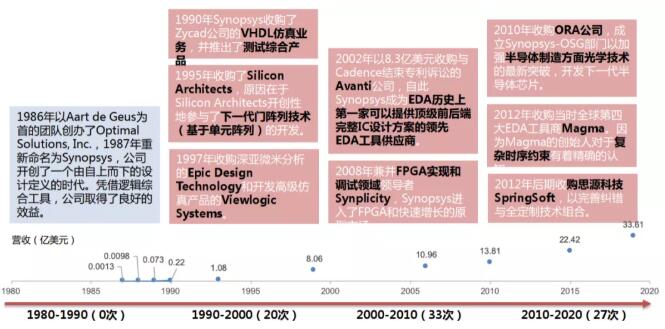
Figure 12: Important acquisitions by Synopsys, source: Founder Securities
【3】The Chinese market will become the new main battlefield for EDA
In the past, the Chinese market was an insignificant existence, but in recent years, with the emergence of domestic chip design companies, revenue from China has become an important source of Synaptics.In fiscal year 2020, China’s revenue accounted for 11.4% of the company’s revenue(Note: This ratio is also similar to the autonomy rate of Chinese chips), becoming the second largest market after the United States.
In the future, with the rise of China's chip design industry, as the gatekeeper of semiconductor software, Xinsi's revenue share in China will continue to increase, and China will become an important source of its growth. Of course, domestic EDA companies are obviously also eyeing this big opportunity. As they gradually go public, they may make bigger moves. We still need to wait for their disclosure of prospectuses before we can have more interpretations.
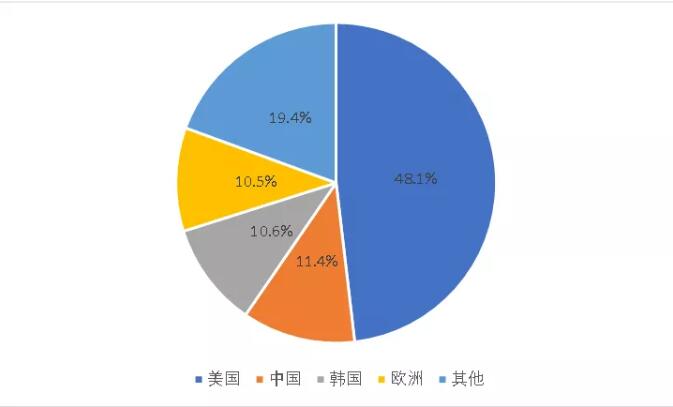
Figure 13: Synopsys revenue broken down by geography (fiscal year 2020), Source: Synopsys
But one thing that needs attention is that with the rapid awakening of localization awareness and the overwriting of the wave of dividends for domestic engineers, whether Synopsys can copy its business model of making money around the world to China is indeed a huge question mark.
After all, there is an old saying in China,How can I allow others to sleep soundly on the couch?。
Disclaimer: This article is reproduced from "Shishuoxinyu". This article only represents the author's personal views and does not represent the views of Sacco Micro and the industry. It is only for reprinting and sharing and supports the protection of intellectual property rights. Please indicate the original source and author for reprinting. If there is any infringement, please contact us to delete it.
Company phone number: +86-0755-83044319
Fax/FAX: +86-0755-83975897
Email: 1615456225@qq.com
QQ: 3518641314 Manager Li
QQ: 332496225 Manager Qiu
Address: Room 809, Building C, Zhantao Technology Building, No. 1079 Minzhi Avenue, Longhua New District, Shenzhen
Related Recommendations
Exclusive Interview with Li Gang of Yunfan Ruida: The Precision of Millimeter-Wave Radar Products and the Warmth of Humanity
2026-07-22
2534
RF Passion, Craftsman’s Journey: Over 30 Years of Steadfast Dedication — Interview with Kinghelm Chief Engineer Mr. Qin hongxiang
2026-06-26
2696





 粤公网安备44030002007346号