
























Service Hotline
News

News
The results of the first "Electronic Components Out of Stock Survey" in 2021 are released: Ten top findings and three suggestions
2022-03-16
968
1. Manufacturing companies actively participate and survey company samples are effective
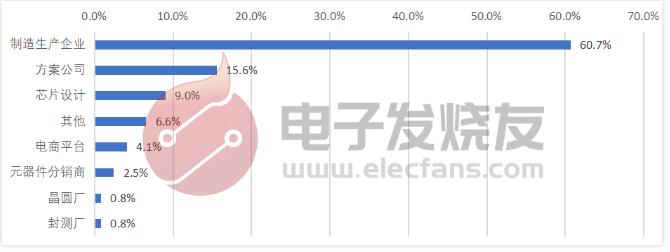
2. The ratio of R&D and managers is high, and front-line feedback is direct on the truth about the industry.
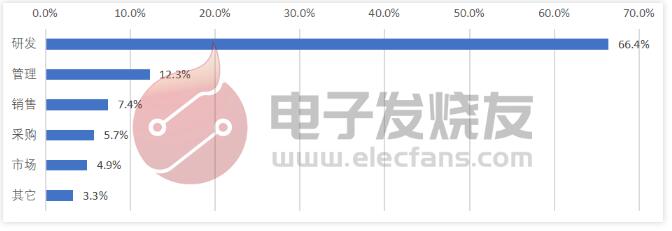
From the above two data, we can see that this survey has received strong support and response from R&D engineers from terminal manufacturing companies and solution design companies, and can basically reflect the first-line and real feedback of the current electronic manufacturing R&D personnel on the shortage of electronic components.
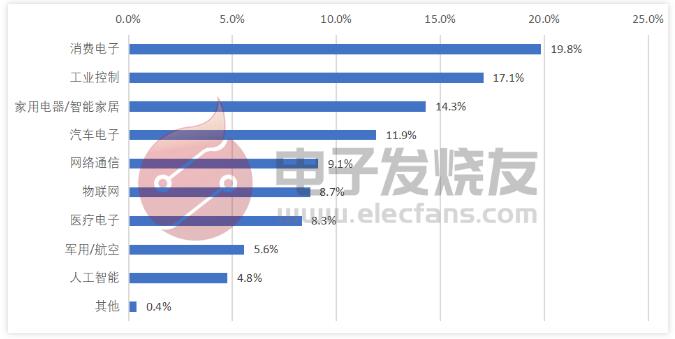
3. The interviewed companies cover all walks of life, and the shortages involve all walks of life.
The survey shows that nearly 50% of companies have annual revenue of less than 50 million yuan, 11.5% of companies have annual revenue of 50 million to 100 million yuan, and 12.3% have annual revenue of 100 million to 300 million yuan. This shows that small and medium-sized enterprises are more concerned about the shortage of components, and the impact of the shortage on small and medium-sized enterprises is also greater.
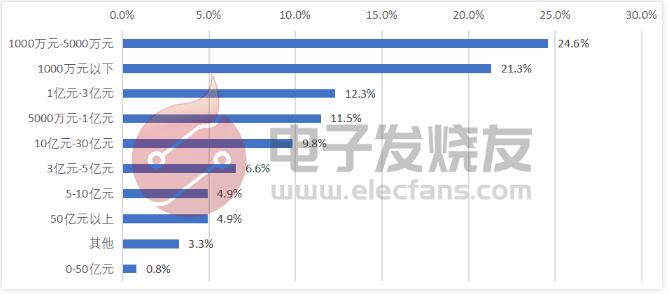
Data source: Electronic Enthusiast Network's "Survey on Electronic Components Out of Stock in 2021"
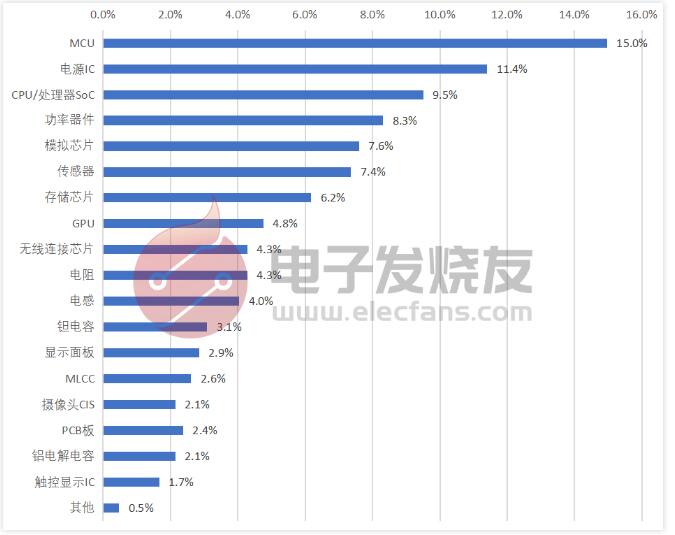
4. MCUs and power ICs are most out of stock. Passive components that were often out of stock in previous years have little impact this time.
However, products such as MLCC and PCB, which were in short supply during the shortages in the previous two years, did not show particularly prominent shortages this year.
5. Out-of-stocks have existed since last year, but will break out in full force in 2021
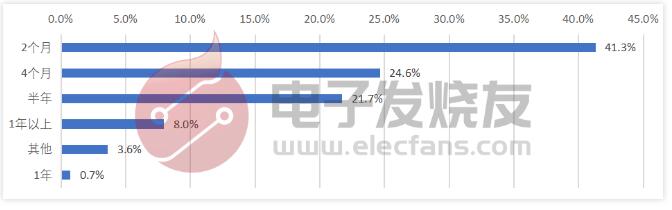
Generally speaking, the normal delivery time for MCUs, power ICs, power devices, etc. is 8 weeks. Obviously, from the survey situation, it has become a common phenomenon that the delivery time is longer, and the proportion of delivery time exceeding 4 months and half a year has exceeded 45%. It can be seen that the entire delivery time situation is very serious.
Many companies have reported that they have been out of stock for half a year or even more than a year. However, the slow response of the supply chain this time is related to the ongoing epidemic and is certainly related to the deintermediation in recent years.
Data source: Electronic Enthusiast Network's "Survey on Electronic Components Out of Stock in 2021"
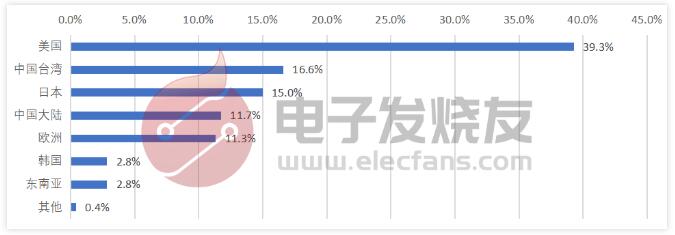
6. Over 50% of original factories in the United States and Taiwan are out of stock, and the situation is not good.
Data source: Electronic Enthusiast Network's "Survey on Electronic Components Out of Stock in 2021"
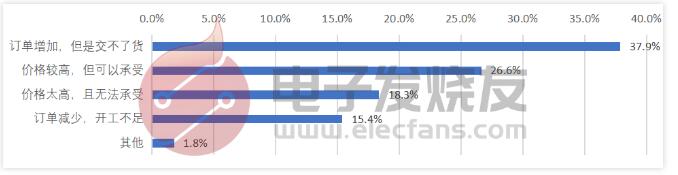
7. Orders continue to increase and shortages coexist at the same time, and the situation is grim
Data source: Electronic Enthusiast Network's "Survey on Electronic Components Out of Stock in 2021"
8. Finding alternative materials and new suppliers is the primary action in the short term, and redesigning the plan is the mid-term plan.
Out-of-stock companies are looking for alternative materials and more suppliers in the short term, which are good market opportunities for domestic ICs. A reshuffle of the market is inevitable. At present, the redesign plan is a mid-term response strategy, and there have been no companies that have laid off employees or closed down. As the shortage continues, we will continue to pay attention to the development of the industry.
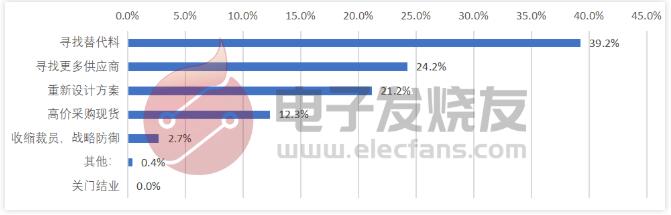
Data source: Electronic Enthusiast Network's "Survey on Electronic Components Out of Stock in 2021"
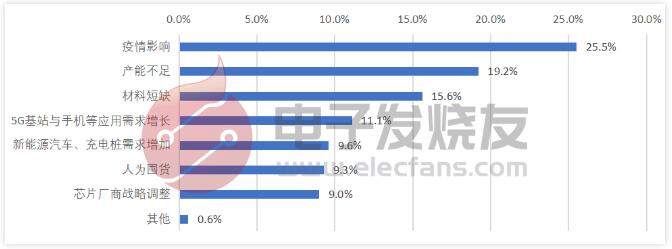
9. The top three reasons for shortages are global, and it is difficult for Chinese companies to deal with them alone.
In addition, the explosion of domestic demand, including the growth in demand for 5G and new energy vehicles, is also one of the causes.
In addition, artificial stockpiling and strategic adjustments by chip manufacturers have also exacerbated the outbreak of shortages to some extent.
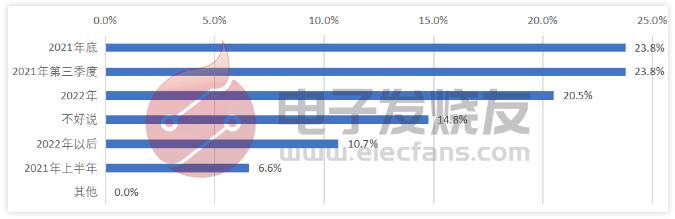
10. The shortage is pessimistic and is unlikely to be resolved in the first half of 2021.
The vast majority of people believe that the time point will be in the third quarter of 2021 and beyond, with more than 45% believing that it will be from the third quarter of 2021 to the end of the year, and 20.5% of the respondents chose 2022.
According to the overall forecast, shortages will continue in the first half of 2021. It began to ease in the third quarter, but the situation may not become clear until 2022.
This once again confirms the previous view of
Research summary
It can be said that in the shortage wave, the most injured are the small and medium-sized enterprises. Generally speaking, since the original supply of semiconductors is more inclined to large customers, small and medium-sized enterprises lack stable supply chain support. Especially during periods of shortage, not only is it difficult to obtain chips, but they are also susceptible to interference from rising prices in the trade market. Therefore, for small and medium-sized enterprises, the shortage situation has hit them harder and put more pressure on them.
How to solve it? Of course it's difficult. Time is running out, so we would like to make three suggestions for now:
Nowadays, the most lacking chips such as MCUs and power ICs are mostly in mature design solutions. It seems that the chips cannot be obtained based on the original solutions. Therefore, when electronic engineers choose to redesign the solution, it is recommended to choose some newer brands of chips. They may not be from mainstream suppliers, but they also have certain strength, and there is currently no shortage of these chips. For example, the most used MCU abroad is STMicrochipCypress. Obviously, they have the most previous solutions and the greatest demand, and the shortage is definitely the most serious. But there are also some brands that are less popular and difficult to recommend. During the interview, the author learned that they previously had a large stock of MCUs as standard products, and they still have stocks on hand. If the R&D engineers are not particularly busy with new projects, why not consider changing to a new MCU to make a solution?
The second is to consider using domestic materials. Take MCUs as an example. There are several new MCUs in China that have wafer partners and their own supporting peripheral devices. Overall, the supply and design difficulties are relatively low. Once cooperation begins, the security of the supply chain is more guaranteed than that of foreign countries.
Third, as a media that has long served the electronic design and manufacturing industry, it still calls on public opinion to calm down. Whether it is the epidemic, materials or production capacity, they are all very global issues. Complete localization in the short term is unrealistic. The electronics industry is the industry with the highest technological content and has always been a global division of labor. As the largest application manufacturing base, China should not expect to be able to solve supply chain problems domestically like the production of clothing, shoes, or crops. Regarding supply chain issues in electronics production and manufacturing, cooperation with foreign companies has been the mainstream for a long time. Randomly advocating the view of comprehensive substitution cannot solve the problem.
Disclaimer: This article is reprinted from "Electronics Enthusiast", which supports the protection of intellectual property rights. Please indicate the original source and author when reprinting. If there is any infringement, please contact us to delete it.
Company phone number: +86-0755-83044319
Fax/FAX: +86-0755-83975897
Email: 1615456225@qq.com
QQ: 3518641314 Manager Li
QQ: 332496225 Manager Qiu
Address: Room 809, Building C, Zhantao Technology Building, No. 1079 Minzhi Avenue, Longhua New District, Shenzhen
Related Recommendations
Exclusive Interview with Li Gang of Yunfan Ruida: The Precision of Millimeter-Wave Radar Products and the Warmth of Humanity
2026-07-22
2510
RF Passion, Craftsman’s Journey: Over 30 Years of Steadfast Dedication — Interview with Kinghelm Chief Engineer Mr. Qin hongxiang
2026-06-26
2679





 粤公网安备44030002007346号