























Service Hotline
News

News
The global SiC industry landscape is quietly changing!
2022-03-17
1119
Internationally, due to its broad application prospects in new energy vehicles, photovoltaic power generation, smart grids, consumer electronics, aerospace and many other fields, the important strategic significance of silicon carbide materials has been widely valued. Advanced Western countries such as the United States, the European Union, Japan and South Korea have successively launched multiple development plans and R&D projects to promote the development of their own silicon carbide industry and consolidate their leading position in the future.
Looking back at the development history of the silicon carbide industry, the American CREE company once seemed like an insurmountable mountain, monopolizing more than 80% of the global silicon carbide material market share for a long time. However, in recent years, American II-VI, American GT advanced, German Sicrystal, Japanese Showa Denko, and some latecomers from China (mainly including China Electronics Semiconductor Materials Company, Tianke Heda, Shandong Tianyue, etc.) have launched challenges to CREE. At the end of 2018, although CREE's market share had declined, it was still as high as 62%. In 2020, CREE's market share dropped sharply again by 17% to 45%.
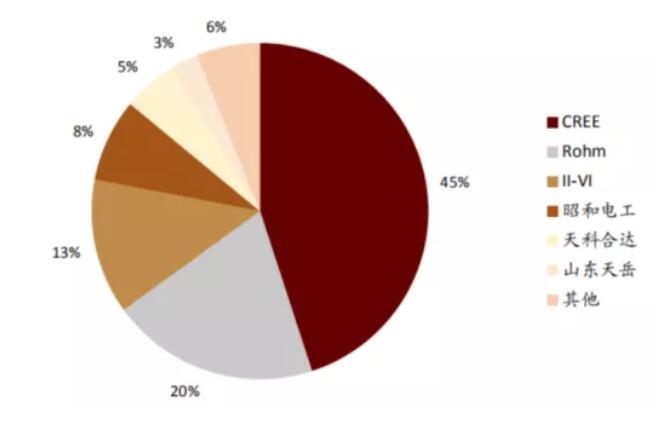
Figure 1 Global N-type silicon carbide substrate market share in 2020
CREE "loses its deer and the whole world chases it". In recent years, the "little brothers" who used to be in the shadow have sharpened their knives and caught up.
Showa Denko expanded production six times, with an annual output of nearly 110,000 pieces
Showa Denko expanded production six times, with an annual output of nearly 110,000 pieces
From 2012 to 2019, Showa Denko (SDK) has expanded its silicon carbide wafer production capacity six times. In September 2012, Showa Denko increased its production capacity of 4-inch silicon carbide epitaxial wafers by 2.5 times to 1,500 wafers per month, and announced that it would accelerate the development of 6-inch silicon carbide epitaxial wafers. In June 2016, Showa Denko continued to expand its silicon carbide epitaxial wafer production capacity and began mass production of HGE wafers, with a monthly output of 3,000 wafers. In September 2017 and January 2018, Showa Denko carried out two more production expansions. In July 2018, Showa Denko further expanded its production capacity, increasing its HGE production capacity from 5,000 wafers per month to 7,000 wafers per month. In February 2019, Showa Denko increased its silicon carbide wafer production capacity to 9,000 pieces per month. In 2021, Showa Denko announced that it had signed a supply contract with Infineon.
II-VI layout is 8 inches, optimistic about the domestic market
Although CREE is still very strong, it is an indisputable fact that its monopoly position in the field of silicon carbide materials is declining. There are many reasons here. I only want to talk about two objective reasons here:
The destruction of monopoly is the inevitable result of the upstream and downstream game
In the semiconductor industry chain, the downstream links close to the customer terminal often have a higher say. For giants such as STMicroelectronics and Infineon, they must learn to check and balance upstream companies to avoid the situation of "big stores bullying customers". In the past, CREE, a company that dominated the silicon carbide substrate industry, had long been regarded as a thorn in its side and a thorn in its side.
Facts speak louder than words. Judging from past experience, in the semiconductor material industries such as large silicon wafers, photoresists, CMP materials, wet chemicals, and target materials, there has never been a dominant situation after the market structure stabilized. The most common one is the market structure of two superpowers and multiple strong players (such as Shin-Etsu and Shengco in the large silicon wafer industry, JSR and Tokyo Onka in the photoresist industry, etc.).
Breaking the monopoly is an inevitable choice for the development of the industrial chain
As the saying goes, "Be born in sorrow and die in happiness." Before 2017, although the price of silicon carbide materials also dropped significantly, compared with industries with sufficient competition such as photovoltaic silicon and sapphire, the speed of price reduction at that time was still criticized by industry insiders, so that by 2019, the average price per amp of silicon carbide devices was still about 5 times that of benchmark silicon devices. Objectively speaking, CREE's monopoly at that time did hinder the long-term development of the entire industry. Therefore, the gradual breaking of monopoly is a need for the ecological development of the entire industry, and it is also an inevitable choice.
Regarding the future, I would like to share some of my guesses:
First, due to various games between upstream and downstream, it is expected that CREE’s market share in the field of silicon carbide materials will further decline in the future until it drops to about 30%. In the future, the field of silicon carbide materials may replicate the industrial competition pattern of two superpowers and multiple powers. The industrial concentration ratio (HHI) of the entire silicon carbide materials industry is expected to be stable between 0.2-0.3, just like many semiconductor material industries such as large silicon wafers, photoresists, CMP materials, and targets. Second, the decline in industrial concentration will inevitably mean that market competition will become more intense. In the future, the price of silicon carbide substrates may continue to decline at a rate of about 15% per year. In the long run, substrate price reduction will have positive significance for the development of the entire silicon carbide industry. If this trend continues, external competitive factors such as gallium nitride and gallium oxide will be difficult to pose a substantial threat to the silicon carbide industry. For silicon carbide substrate companies, perhaps the biggest threat will come from downstream device manufacturers. In the current competitive environment of the industry chain, it may be a wise choice for companies like Sicrystal and Norstel to lock in profits in advance.Third, I am personally optimistic about the long-term development of my country's third-generation semiconductor industry. At present, YOLE has only announced the market share ranking of low-resistance silicon carbide in 2020. The market share of Chinese companies has increased by about 360%. If semi-insulating substrates are taken into account, the market share of Chinese companies may exceed 10%; China Electronics Semiconductor Materials Company, Hebei Tongguang and other units may also be selected into the TOP 10. In the future, we are particularly optimistic about companies with strong capabilities and complete industrial chains such as China Electronics Technology (subsidiary China Electronics Semiconductor Materials Company mainly focuses on materials) and Sanan Optoelectronics. Thanks for reading!
Disclaimer: This article is reproduced from "Lu Jingxin City". This article only represents the author's personal views and does not represent the views of Sacco Micro and the industry. It is only for reprinting and sharing and supports the protection of intellectual property rights. Please indicate the original source and author for reprinting. If there is any infringement, please contact us to delete it.
Company phone number: +86-0755-83044319
Fax/FAX: +86-0755-83975897
Email: 1615456225@qq.com
QQ: 3518641314 Manager Li
QQ: 332496225 Manager Qiu
Address: Room 809, Building C, Zhantao Technology Building, No. 1079 Minzhi Avenue, Longhua New District, Shenzhen
Related Recommendations
Exclusive Interview with Li Gang of Yunfan Ruida: The Precision of Millimeter-Wave Radar Products and the Warmth of Humanity
2026-07-22
2531
RF Passion, Craftsman’s Journey: Over 30 Years of Steadfast Dedication — Interview with Kinghelm Chief Engineer Mr. Qin hongxiang
2026-06-26
2694





 粤公网安备44030002007346号